Five Catholic missionaries who were abducted in Cameroon’s war-ravaged North West region on June 19 have been released, 24 hours after they were taken.
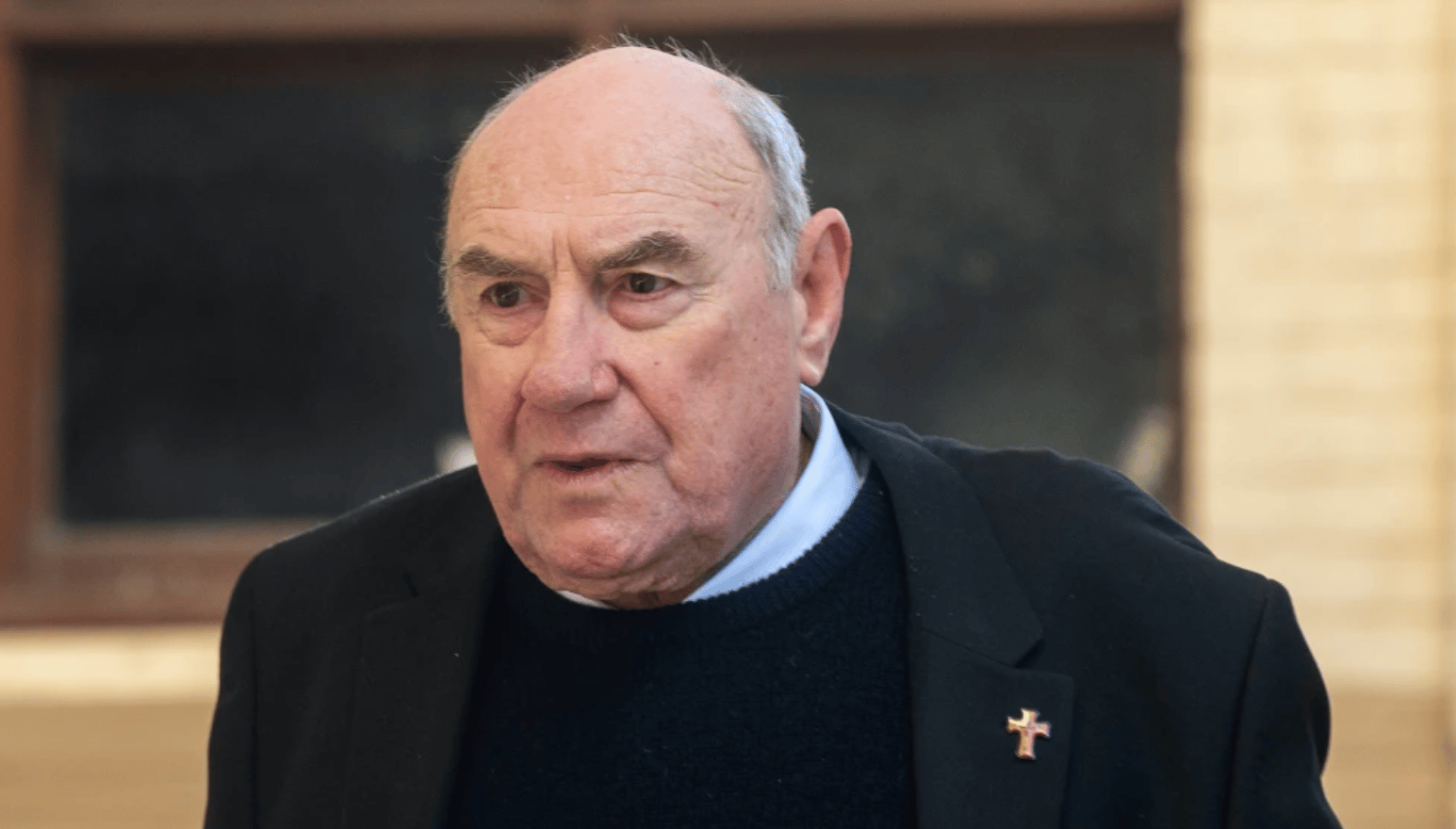
The two priests, two religious sisters, and an 84-year-old Mill Hill missionary, Huub Welters, were taken while returning from Fundong where they had attended the ordination of two Mill Hill priests that took place at St. Jude parish.
The kidnappers released a video of the abductees who were forced to address Pope Leo XIV, complaining that the message of peace he brought to Cameroon had not been heeded by Cameroonian authorities.
“We want to tell the pope that the message of peace he brought has not been put into practice,” one of the abducted sisters says in the video.
“We also want to say that we were not taken for ransom payment,” the sister says in French. “We were taken just to send a message to the Pope, to tell him that the peace message he brought to Ambazonia hasn’t been implemented,” she also says.
Ambazonia is the name of the putative republic separatists in Cameroon’s English-speaking North West and South West regions say their new country will be called once they secede and form a new nation.
This was not the first time Welters has been kidnapped.
Welters, a Dutch missionary who has served in the Diocese of Bamenda for over five decades, was kidnapped along with his driver in April.
They were freed two days later.
The latest kidnapping has again brought the separatist crisis in Cameroon’s Anglophone regions into the global spotlight.
Rooted in Cameroon’s colonial history, the separatist struggle escalated in 2016 after a government crackdown on lawyers and teachers in the two English-speaking regions, who took to the streets to protest the overwhelming influence of French in Anglophone schools and courts.
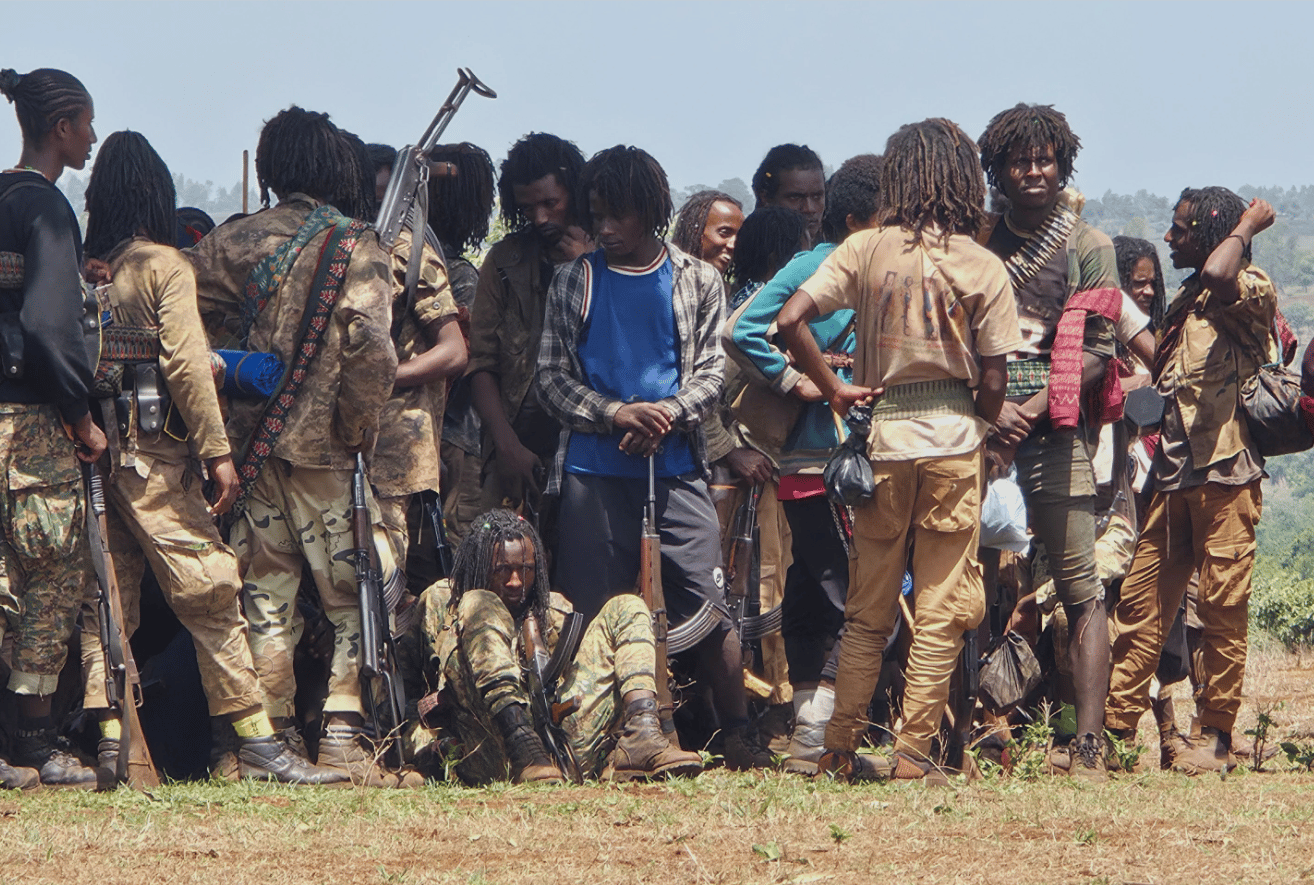
The government’s hardline stance led to the growth of an armed separatist group that has since been fighting for the creation of an Ambazonian nation.
Now in its tenth year, the fighting has claimed the lives of least 6500 people and the displacement of about a million others. In addition, thousands of schools have been shuttered, hospitals destroyed, women raped and the social fabric of society shattered.
The crisis however dates back to the colonial period.
Cameroon, once a German colony, became administered by Britain and France after the fall of Germany in the First World War in 1916. France got 80% of the territory and Britain got 20%.
The French-speaking part of Cameroon got its independence in 1960 as La Republique du Cameroun. The English-speaking part of the country or the British Cameroons got theirs in 1961, with the caveat was that they would join the already independent, La Republique du Cameroun.
The two sides agreed to a federal system of government, but that system lasted only for ten years.
In 1972, the federal system was abrogated in a disputed referendum in favor of a unitary system.
Cameroon’s English speakers have always argued that single event marked the beginning of their marginalization by the predominantly francophone administration. And so, the violence that escalated in 2016 was decades in the making.
In light of the worsening crisis, Pope Leo XIV in his visit to Cameroon made it a point of duty to travel to the epicenter of the violence: Bamenda, the capital of the country’s North West region.
In both words and symbols, the Holy Father called for a cessation of violence.
“I am here to proclaim peace,” Pope Leo XIV told a cheering congregation at the Bamenda metropolitan cathedral.
“The masters of war pretend not to know that it takes only a moment to destroy, yet a lifetime is often not enough to rebuild,” the pontiff said.
“We must make a decisive change of course,” Leo said, “a true conversion that will lead us in the opposite direction, onto a sustainable path rich in human fraternity.”
“Peace is not something we must invent,” he said. “It is something we must embrace by accepting our neighbor as our brother and as our sister.”
“We do not choose our brothers and sisters,” Leo said. “we simply must accept one another.”
“Let us walk together, in love, searching always for peace,” the pope said.
Accompanied by representatives of the Bamenda community, the pontiff then released seven doves as a sign of peace, each of the doves bearing a ring labeled with one of the gifts of the Holy Spirit.
“Let us all say a prayer to the Lord, that peace will truly reign among us, that as we release these white doves — a symbol of peace — that God’s peace will be upon all of us, upon this land, and keep us all united in his peace,” he said.
By chance, the pope’s dove bore the name ‘Piety.’
The Archbishop of Bamenda, Andrew Nkea Fuanya recently told Crux Now that while the other six doves flew away into the horizon, Piety flew 16km to the Seminary of Bambui from which the doves were taken.
“It went to the cage where it had been taken that morning, entered the cage and laid down very peacefully waiting for the rector to come back,” Nkea told Crux Now.
Nkea described the behavior of the dove not merely as a curiosity, but as a spiritual sign.
“It is a sign that just as the Pope’s dove found its way back home,” he said, “so too might the people of Cameroon find their way back to peace and unity.”
What steps to peace?
There are concerns public authorities in Cameroon seem not to have heeded the pope’s message of peace – concerns evidenced by the recent kidnapping of the Catholic missionaries – but the Catholic Church in Cameroon has been doing what it can to make sure that “the Pope’s words do not get wasted,” as Archbishop Nkea later put it.
During their 51st Plenary Assembly in Yaoundé, Catholic Bishops took a number of measures to keep the message of peace alive.
Among other things, they resolved to publish all the pope’s speeches in Cameroon and make them available to Cameroonians in both official languages, something Nkea told Crux Now would act as “a constant reminder” to Cameroonians of the necessity for peace.
The bishops also resolved to establish a study group to draft a specific roadmap to peace in the conflict-affected North West and South West regions.
The bishops have also released what they call “a catechism of the electors” to guide the electorate ahead of local elections later this year, understanding that disputed elections are always a potential source of violence.
Acknowledging that years of violence have deprived young people of basic schooling, the bishops committed to expanding the reach of the Church’s Catholic Education commission to secure safe classrooms and academic continuity.
Describing the creative capacity of Cameroon’s youth as “invaluable assets” for building a prosperous society, the bishops urged dioceses to create spaces where young leaders can spearhead social cohesion initiatives.
In addition, the bishops committed to ensuring that young people act as community mediators and not as targets for recruitment into armed groups. They directed local youth chaplaincies to run inter-communal dialogue sessions to break down tribal and regional biases.
The bishops then designated the Lay Apostolate and the Justice and Peace episcopal commissions to oversee the localized deployment of these initiatives. These bodies will be organizing youth-centric workshops, socio-economic empowerment schemes, and local peace committees across all dioceses.
Archbishop Nkea noted that some of these reforms are critical to enhancing peace, explaining that the Anglophone regions do not need the “fragile quiet of ceasefires,” but “peace poured in concrete: peace that can be walked on, schooled in, and eaten at night without fear.”