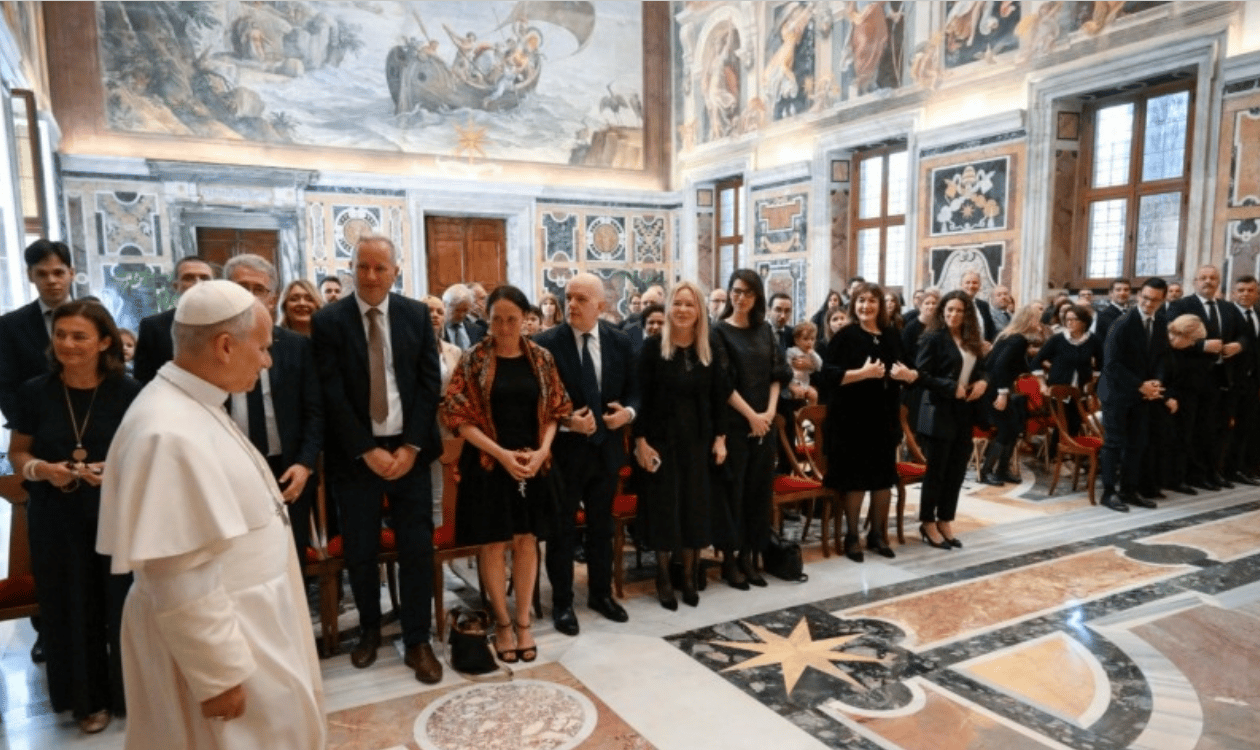
Pope Leo XIV has said that the demographic crisis in Europe can be partly explained by the European Union (EU)’s rejection of Christianity, and “contradictory” family-friendly policies that promote abortion and discriminate against motherhood.
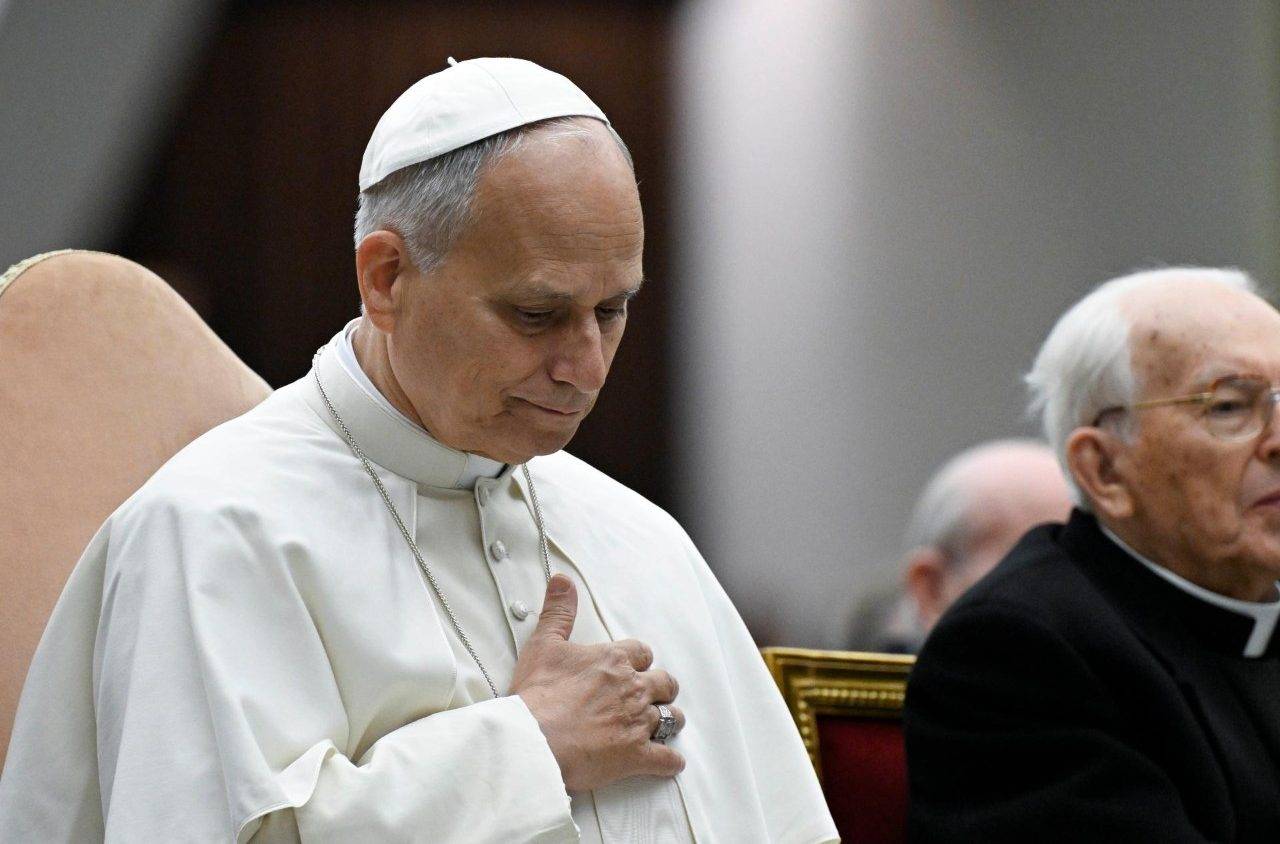
Speaking to members of the European Parliament’s Demography Intergroup on Monday, the pope emphasized that the undermining of Christianity had contributed significantly to the demographic problem.
“[O]ver recent decades, we can see that a rejection of the Christian inspiration of the founding fathers of the EU institutions has led to a time of drastic sterility, not only because too many have been deprived of the right to be born, but also because there has been a failure to pass on the material and cultural tools that young people need to face the future,” he said.
“As a result, we are not infrequently faced with the contradictory claims of purportedly family-friendly policies, which simultaneously promote discrimination against motherhood, exalt abortion as a right, and undermine the very foundation of the desire to start a family. Happily, there are wonderful exceptions with us today!” the pontiff added.
According to the latest demographic report by Eurostat, in 2025 the EU’s median age reached 44.9 years and in 2024, the birth rate was 7.9 births per 1,000 people. Since 2004, all EU countries have recorded declining birth rates.
In this context, Pope Leo quoted the late Pope Francis, who said Europe is an “old continent” which is “no longer because of its glorious history, but because of its advancing age.”
“The problems resulting from zero-growth demographics are many and complex, and include, not least, the pandemic of loneliness. Moreover, demographic data are not merely statistics, but speak of fatherhood, motherhood and children. And children are the future!” Pope Leo said.
The role of the family
The pope said that any solution to the demographic crisis had to have the family at its heart, which is founded on marriage between a man and a woman.
“At the heart of these pressing challenges, and the key to providing solutions, lie the fundamental dignity of all persons and the role of the family in society. As Saint John Paul II reminded us, the family is ‘the first and irreplaceable school of social life’ and is founded on marriage between a man and a woman, a reality that unites the personal and public dimensions,” he said.
“For only by respecting and promoting this central place of the family, and applying the principle of subsidiarity, is it possible to avoid the two extremes of excessive state intervention and individualism,” he added.
Pope Leo was speaking at the Conference on the Family and Demography held in Rome, also attended European Commissioner for the Mediterranean, Dubravka Šuica; the Italian Minister for Family, Natality and Equal Opportunities, Eugenia Roccella; and the OSCE Special Representative on Demographic Change and Security, Gudrun Kugler.
He tasked those present “with fostering the shared responsibility and active role of families in social, political, and cultural life.”
Looking forward
The pope said that a “fresh springtide” for the family was needed, which could be brought about by changes in policy, philosophy, and culture.
“Finally, this approach is not a matter of returning to social models of the past, but of providing the men and women of our time with the unchanging principles that can surely guide them in answering the fundamental questions asked in every age: What is the meaning and value of human life; what is an authentic human society; and what kind of world do we want to hand on to future generations,” he said.
“In this regard, national and EU policies need to be developed and formulated in partnership with civil society,” he added.
The pontiff highlighted how groups like the Federation of Catholic Family Associations in Europe (FAFCE) and the Commission of the Bishops’ Conferences of the European Union (COMECE) and worked with the Demography Intergroup, showing how groups with their “own area of competence” can “work together to secure effective change that will enhance the quality of life for all.”
“This is the impetus Christians are bringing to the European project, so that policies look to human persons in their entirety and always promote the dignity of human beings,” Pope Leo said.
“In this way, a genuinely human path can be opened for resolving the demographic crisis, oriented toward the common good, and the wellbeing of future generations. Indeed, only a fresh springtide for the family can transform the winter chill of our ageing populations!” he added.f