ROME – A pastor serving in the heart of Silicon Valley has said the Vatican’s efforts to build bridges with major tech giants, while slow going, are not being ignored and sees this engagement as key to the future of the artificial intelligence industry.
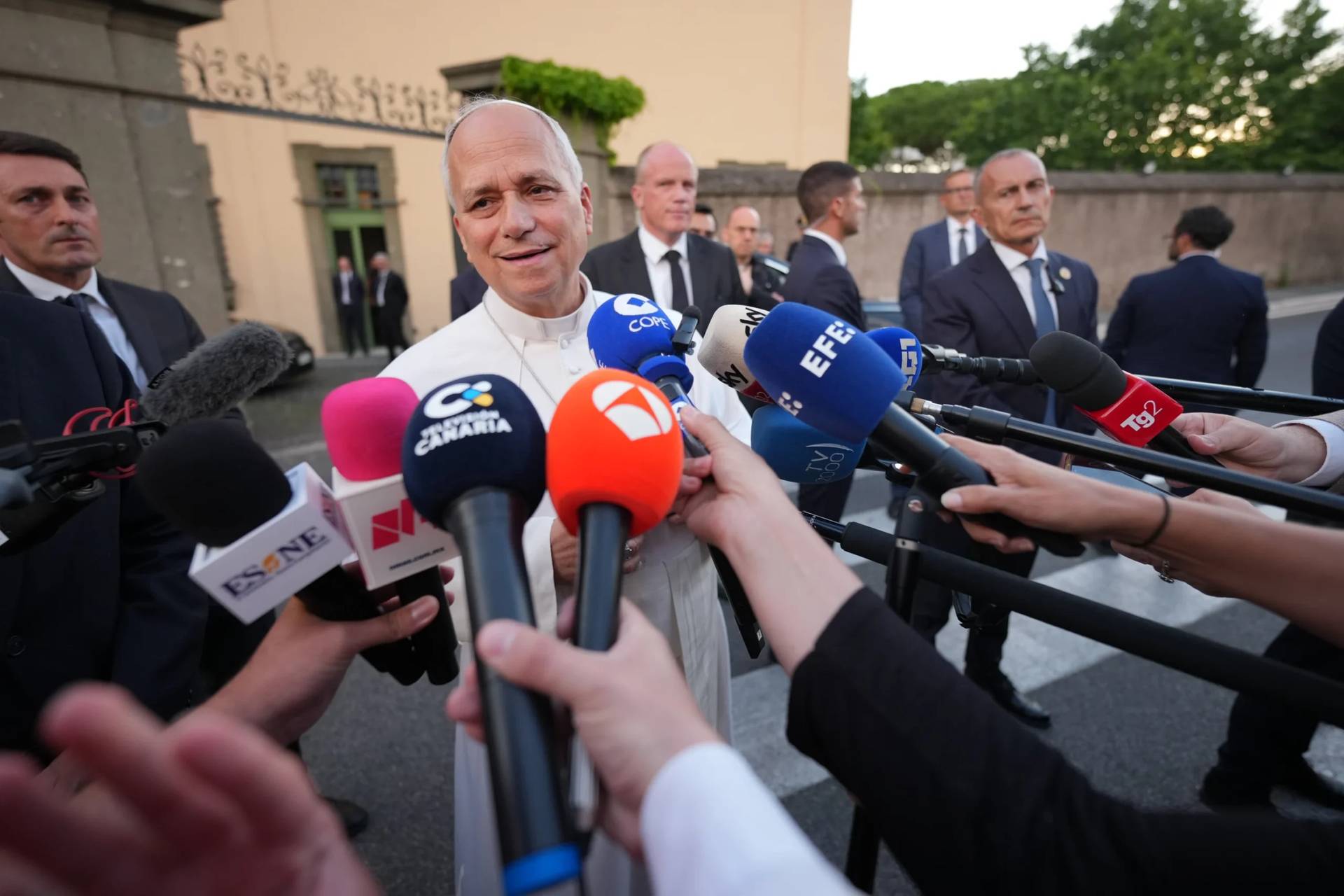
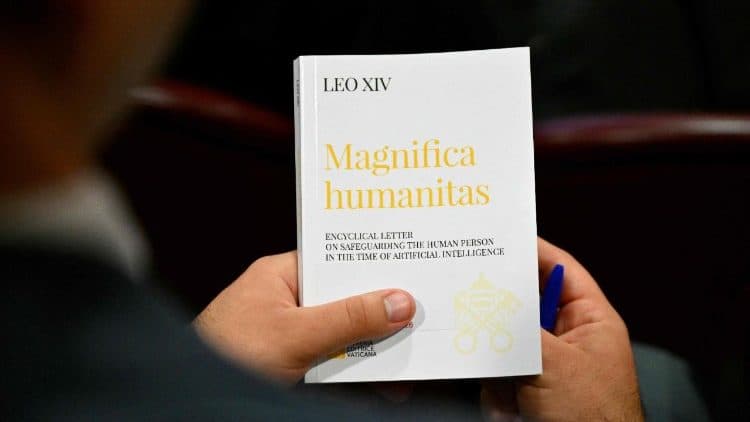
Speaking to journalists following the May 25 presentation of Pope Leo’s new encyclical, Magnifica Humanitas on humanity in the era of AI, Father Brendan McGuire said major tech organizations are heeding Vatican warnings in AI, particularly the need to proceed with caution.
RELATED: Leo in new AI text condemns ‘culture of power’ that fuels war
Pastor of St. Simon parish in Los Altos, California, in the heart of Silicon Valley, McGuire has been involved in discussions between the Vatican and tech organizations for the better part of a decade, including monthly meetings attended by Vatican officials, including Irish Archbishop Paul Tighe, Secretary of the Dicastery for Culture and Education.
“I have met with them consistently over many years, and then intensely over this last year, and I will tell you I have seen men and women – and not just Anthropic, of other companies, of AI companies – of genuine goodwill who are trying to do the right thing,” he said.
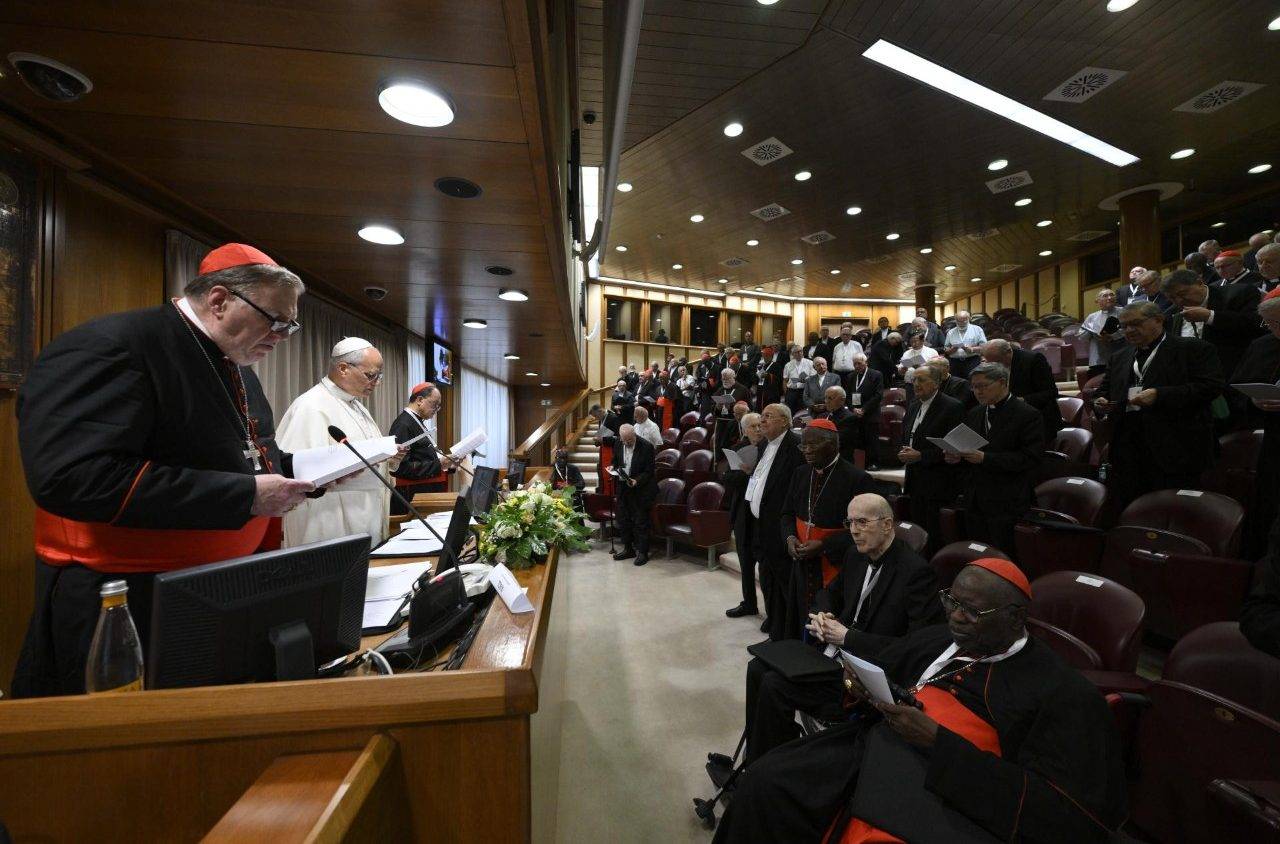
Anthropic, an American AI company based in San Francisco and focused on AI safety, was invited to a seat at the Vatican’s official presentation of the papal encyclical, which was also attended by Pope Leo himself, marking the first time a pope had participated in the presentation of an encyclical.
Acknowledging that good intentions are not always enough, McGuire said that “unless we have those good intentions we’re not going get anywhere. So, we need to meet the good intention and then have a dialogue.”
Many involved in developing AI technologies, he said, “see something in what they’re developing that is concerning them. Maybe even frightening them. Maybe even making them in awe because of something brilliant that you have discovered.”
“What they have asked for is partnership, and it would be morally reprehensible to us to not partner with them and listen to them,” he added.
RELATED: Leo says the use of AI must not inhibit human dignity or create ‘new colonialism’
Christopher Olah, Anthropic’s co-founder, spoke at Monday’s presentation, saying every major AI lab, even with good intentions, is subject to various forms of pressure, including geopolitical pressure, the pressure to stay commercially viable, and plain ambition to push boundaries.
For this reason, he said, “if we want this technology to go well, it is enormously important that there be people outside those incentives – people who care about things going well, who are paying close attention, who are willing to say hard things, who are willing to be our earnest, thoughtful, critics.”
One thing Anthropic and faith leaders they’ve engaged with on the present and future of AI, he said, is that “if this technology is coming, it must go well – for our common home, and for the children to come.”
Pope Leo on Monday thanked Olah for accepting the Vatican’s invitation to participate in the presentation, and said he was happy to accept Anthropic’s invitation “to walk together, to listen and to speak and together to find the way for humanity, in this time of artificial intelligence.”
“What a great sign of hope that, with our differences, we can listen to one another…this interchange clearly bespeaks the gravity of the moment, as well as confidence that, together, we can discern the major questions of our time, and so, the future of humanity,” he said.
“Only together – those who design systems and those affected by them, richer countries and poorer ones, institutions and individuals, power centers and peripheries – will we be able to build a future, not for a privileged few, but for the entire human family,” he said.
McGuire in his comments to journalists acknowledged that there is often a tendency to see big tech as “the enemy.”
“I get that, but let me tell you: I come from Ireland … we had warfare in Northern Ireland and people would say, anyone who had a conversation with the enemy, was the enemy,” he said, voicing his belief that this mindset “wrong, it’s misguided.”
If both sides want peace, “you’re gonna have to dialog with the perceived enemy,” McGuire said, saying those who view big tech companies as an enemy must still engage in dialogue, because “they are building our future with or without us.”
Asked by Crux Now how many tech companies and organizations have been involved in background talks in the years leading up to the encyclical, and what made Anthropic stand out, McGuire said there have been “small, one-on-one talks” with several companies for the past seven to nine years.
Bishop Tighe, he said, for several years attended Minerva talks in California to engage with the tech world in Silicon Valley, and that many meetings with representatives of tech organizations have also been held in Rome.
“Those are executives who come to the Vatican and had conversations, all behind the scenes,” McGuire said, saying this has included representatives from “across the whole of the industry, not just AI.”
For the past few years, the discussion has focused more exclusively on AI models, he said, recalling a two-day session in which he, Tighe, and Brian Green, director of technology ethics at the Markkula Center for Applied Ethics at Santa Clara University, participated.
One day was dedicated to conversation with Anthropic, and the second day included discussions with other AI companies, including OpenAI and Google’s Gemini.
“It’s not as broad as I would like it, but it’s a great starting place. Now with this document, we’re hoping that it will now really move to another level,” McGuire said, referring to the papal encyclical.
Asked what made Anthropic stand out enough to receive the only invitation for an AI company to speak at the official presentation of the document – a choice many found highly controversial – McGuire said it came down to how the company “regards safety.”
“If you look at the safety interpretability, they have the most engineers than any of the other companies put together. All of them. There’s only probably a hundred in the world. 60 of them work at Anthropic…that’s 60% of the entire industry,” he said.
He lauded the commitment made to safety and the cost involved in developing safety measures, saying the church is calling on other AI companies “to do the same.”
“We want safety. We want interpretability. We want them to understand it as much as possible,” he said.
The Vatican offered an exclusive invitation to Anthropic after the company had a dispute with the United States government earlier this year over ethical concerns regarding the use of its technology.
In March, the U.S. Department of Defense and the Trump administration demanded that Anthropic’s AI model, Claude, be accessible without restrictions for all lawful Pentagon purposes.
The company’s CEO, Dario Amodei, refused due to ethical concerns over the potential use of the tech for autonomous legal weapons or mass domestic surveillance, prompting the Pentagon to designate the company a “supply chain risk.”
Described as an unprecedented label for an American tech company, the label, typically reserved for foreign adversaries, prevented defense contractors from using Claude models for military work.
Anthropic then sued the DoD over the designation and won a preliminary injunction in a San Francisco federal court, protecting its First Amendment rights.
Following the dispute, the White House held talks with Anthropic leadership to explore possibilities for safe collaboration, with a recognition that advanced AI tech is too important for the government to exclude.
After these talks, Anthropic offered its AI models to the DoD at a moderate cost, with a commitment to supporting national security missions while also ensuring critical safeguards.
Some criticized the Vatican’s decision to give Anthropic the only seat at the table for Monday’s presentation as tantamount to giving the company an award, and an opportunity to use the occasion to boost its own profile.
Speaking to the press on background ahead of the encyclical’s release, one Vatican official defended the decision to invite Anthropic, saying, “It’s not unusual to invite someone from the outside. The time has come.”
“You can’t invite everyone. We had one place, and we’re happy Anthropic accepted,” he said, noting that both the Vatican and Anthropic have received “a lot” of criticism over the decision.
However, the official insisted that “you can’t dialogue with everyone, you have to dialogue with one. You’re not rejecting others, you are choosing one.”
“I think it’s cool,” the official said, adding, “we’ll take the criticism.”
In his speech, Olah said that key questions raised by the encyclical and its challenge to big tech and governments alike include a duty to the poor, as “There is a real possibility that AI will displace human labor at a very large scale.”
“If that happens, supporting those displaced will be a moral imperative of historic proportions,” he said, and also pointed another problem the pope’s text flagged, which is that AI tech “is concentrated in a handful of wealthy nations.”
One question the tech world will have to ask itself, he said, is, “How can we ensure the gains of AI are shared globally? We do not have a mechanism for this.”
He also said there is need for moral imagination and ambition in terms of human flourishing, and that, “If AI models are going to be widespread, what does it look like for humans, families, and the world to flourish?”
“These are not questions a lab can answer. They are questions traditions like yours have carried for millennia, and we need you to keep carrying them into this new moment in history,” he said.
Olah noted that AI models continue to stupefy the labs that create them, with the scientists developing the tech finding “things that are mysterious, even unsettling.”
“We find structures that mirror results from human neuroscience. We find evidence of introspection. We find internal states that functionally mirror joy, satisfaction, fear, grief, and unease. I don’t know what that means, but I think it warrants ongoing discernment,” he said.
All of society, including religious communities, civil society, scholars and governments, he said, must take the pope’s challenge to “push events in a better direction” seriously.
“We need informed critics who will tell the labs when we are failing. We need moral voices that the incentives cannot bend,” he said, calling the presentation “a powerful illustration of the form this global project of good will might take.”
In his remarks to the press, McGuire said he believes the tech industry is willing to hear the Vatican out and is willing to sacrifice at least part of its bottom line to slow things down and ensure that AI development is done right.
He noted that Anthropic has vowed to give 80 percent of its wealth away, admitting that the remaining 20 percent is still “a lot of money.”
“I’m not trying to whitewash that,” he said, but voiced his opinion that “they are trying their hardest, and we need to meet them.”
“This technology is developing, and if we want to influence it, we need do so now. It’s in the moment right now where it is still malleable. It is still changing. You can make changes to this and if we can get in now to make changes for the good, then we will all benefit,” he said.
Follow Elise Ann Allen on X: @eliseannallen