
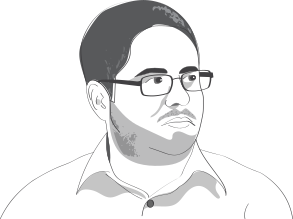

SÃO PAULO, Brazil – After a highly contested presidential race in Colombia, far-right candidate Abelardo de la Espriella was elected with a margin of less than 1 percent over left-wing candidate Iván Cepeda, a difference of about 250,000 votes.
With the country literally split in two, the Church has been calling for reconciliation, but that will not be an easy task.
De la Espriella, a 47-year-old lawyer who became famous for his ties to right-wing paramilitary groups and for representing high-profile defendants in corruption cases, has continued to send signals of radicalism in the ten days since the election results were announced.
De la Espriella has said, for instance, that he will not meet with outgoing President Gustavo Petro before taking office on Aug. 7. Petro endorsed Cepeda as his successor.
Such a meeting between the outgoing president and the incoming leader has traditionally symbolized a harmonious presidential transition in Colombia.
Colombian observers have argued that the atmosphere in the South American nation remains as tense as it was during the campaign, which was marked by verbal attacks from both sides and a widespread resort to violence as a political symbol.
One billboard displayed during the campaign notoriously depicted De la Espriella kneeling on Cepeda’s neck.
A declared ally of U.S. President Donald Trump and Israeli Prime Minister Benjamin Netanyahu, De la Espriella has questioned Colombia’s membership in international organizations such as the United Nations.
He has also pledged not to engage in peace talks with communist guerrilla organizations, such as the National Liberation Army (known by the Spanish acronym ELN), saying instead that he will force them to submit to the state.
Over the past decades, successive Colombian governments have negotiated peace with such organizations. Petro launched his “total peace” initiative, pledging to reach agreements with guerrilla groups, paramilitary organizations and other armed actors. The Church participated in all of those negotiations.
The suspension of talks with the ELN in 2025, after several months of efforts, became a symbol of the failure of Petro’s “total peace” plan. Armed organizations continue to launch attacks against military and civilian targets and to control vast territories across the country.
Despite the difficulties on the horizon, the Church’s message remains unchanged: a call for peace, reconciliation and care for the most vulnerable members of society.
“From the Church’s perspective, the most important challenge will be to govern for all Colombians, especially those living on the margins, listening to the country’s diverse voices and promoting a culture of encounter instead of confrontation,” Father Hector Henao, the Bishops’ Conference’s longtime delegate for peace negotiations, told Crux Now.
Henao said De la Espriella will “inherit a country with great expectations, but also with open wounds,” where issues such as security, violence in various regions, the fiscal situation, access to healthcare and restoring trust in institutions will be among the government’s top priorities.
“But the country needs political differences not to become irreconcilable enmities. Democracy does not end with elections. A new stage begins that demands dialogue, respect for institutions, the pursuit of the common good and the ability to build consensus,” Henao said.
Father Jairo Gelvez Tarazona of the Diocese of Tibú – an area that became the epicenter of violence in Jan 2025, when clashes between two guerrilla organizations left dozens dead and displaced thousands of people – believes the one-month deadline imposed by De la Espriella for all armed groups to surrender is unrealistic.
Gelvez told Crux Now he is not entirely pessimistic about the possibility of change, even under present circumstances.
“If total submission does not happen,” Gelvez said, “perhaps some channels of dialogue and genuine proximity can still be established, hopefully with serious intentions on the part of both the government and the armed groups to achieve peace.”
Time will be needed to heal wounds and rebuild trust, Gelvez said, but the Church will continue to promote dialogue.
“He will have to govern for all Colombians, and that must translate into concrete actions in the territories, which need investment to lift people out of poverty,” he said.
Without opportunities for young people, they will continue joining armed organizations, Gelvez warned.
“Teenagers have no positive prospects for the future. Those groups promise them things they cannot actually provide, but they believe them anyway,” he said.
The Church will play a major role during De la Espriella’s presidency by continuing to defend human rights and human dignity while pointing to alternative paths, said Diego Arias, a lay Catholic and expert on peacebuilding in Colombia.
“The Church has never been perceived as a progressive or left-wing institution in Colombia. I think it can build a good relationship with the government, leaving room for cooperation,” Arias told Crux Now.
He is concerned about De la Espriella’s categorical assertion that he will not negotiate with any armed group, given that peace through dialogue remains a valuable option.
“He was elected on that platform [of zero dialogue], so it is a legitimate mandate. But half the country still believes in negotiation, despite the failure of Petro’s ‘total peace’ policy. We have to give him time to govern, but perhaps a reasonable solution would be to recognize the shortcomings of the dialogue process while preserving the progress that has already been achieved,” he argued.
If the president-elect eventually decides to return to the negotiating table, “the Church’s door will certainly be open.”
“The Church is fully willing to help the two Colombias that emerged from this election talk to one another and walk together again,” Arias said.