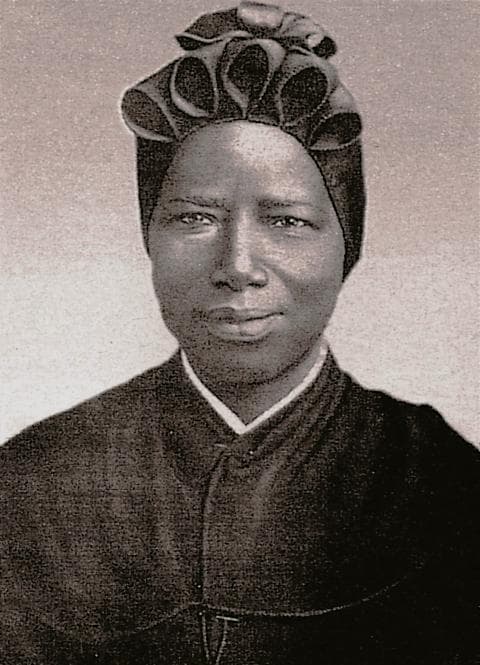
As the the February 8 feast day of St. Josephine Bakhita approaches, voices across Africa are joining in a worldwide campaign of prayer, reflection, and action against human trafficking.
The annual event honors the legacy of a woman who endured the brutality of enslavement in Sudan to become a Canossian sister and the patron saint of all who suffer in bondage today.
Leading the campaign is PACTPAN- the Pan-African Catholic Theology and Pastoral Network that has set up what it calls an ‘Army against Trafficking in Persons in Africa.’
According to the coordinator of the ‘army’, Sr. Leonida Katunge, the idea is to turn the very tools traffickers use to recruit their victims into weapons against the scourge.
“Human traffickers increasingly use social media and digital platforms to deceive, recruit, and exploit vulnerable people, especially young people seeking work, education, or a better life,” Katunge told Crux.
“False job offers, fake travel opportunities, and online grooming have become powerful tools of harm,” she explained.
Katunge said this year’s campaign has an “intentional focus” on turning the tables.
“We are reclaiming the same digital tools used to cause harm and transforming them into instruments of protection and hope,” she said.
The strategy, termed “digital evangelization,” is multi-faceted. The coalition will use social media to share truthful, life-saving information, promote safe and informed migration, raise public awareness about traffickers’ recruitment tactics, and amplify messages that uphold human dignity, freedom, and hope.
“The same platforms that traffickers use to recruit will now be used to educate, warn, and safeguard,” Katunge said.
She emphasized that the campaign’s primary goal is empowerment, not fear.
“Our objective,” Katunge said, “is to ensure that people, especially the youth, can make informed choices and recognize danger before it becomes exploitation.”
“What is used to harm,” Katunge said, “can also be used to heal.”
The scale of the problem
Across Africa, the fundamental rights of countless individuals are shattered by the scourge of human trafficking. This modern-day slavery thrives in the fertile ground of poverty, instability, and inadequate justice systems. Tragically, the continent is a primary source, transit route, and destination for this trade, with most exploitation occurring not abroad, but within Africa’s own borders.
An estimated 7 to 9.2 million people in Africa live in modern-day slavery, accounting for approximately 23% of global human trafficking, with women and children disproportionately affected, though men and boys also fall victim to the scourge.
The dangers notwithstanding, members of Katunge’s ‘army’ were eager to talk about the reality of the problem in their respective countries.
In Nigeria, a recognized hub for trafficking, the problem is both vast and complex. “Human trafficking is a serious and widespread problem,” said Sr. Georgina Pemii of the St. Thomas parish in Nwofe, an administrative district in Abakaliki, Ebonyi State, Nigeria (about 150 miles northeast of Port Harcourt).
“Nigeria,” Pemii told Crux, “is a source, transit, and destination country, with women and girls trafficked for sexual exploitation and children forced into labor and domestic servitude.”
Pemii attributes the crisis to a toxic mix of poverty, unemployment, illiteracy, gender inequality, and weak law enforcement. She says the causes come together to create fertile ground for traffickers to exploit the most vulnerable.
Grim realities across the continent
This grim reality is echoed in neighboring countries like Togo, where activist Horgnite Nantchi Polo notes that trafficking is widespread in certain areas, driven not just by poverty but by “the pursuit of easy money and membership of organized criminal groups, such as jihadist and terrorist groups.”
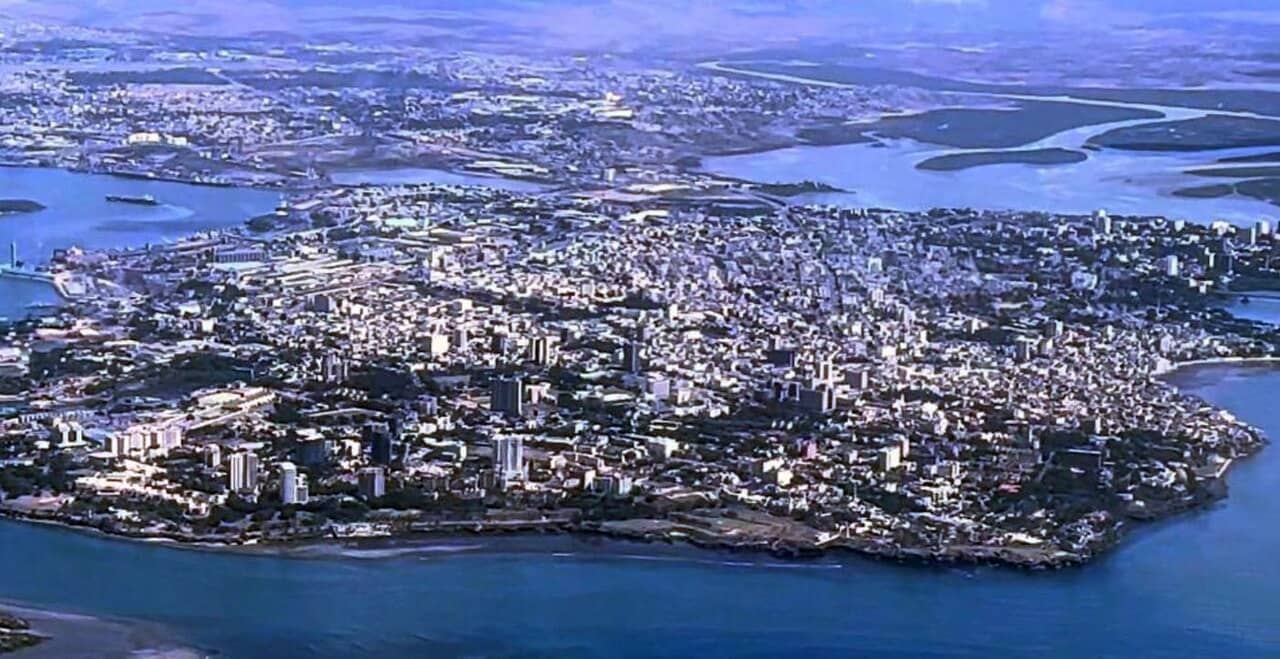
In The Gambia, meanwhile, pastoral worker Sergent Gomez from the western port city of Banjul said the nation remains on a “Tier 2” watch list, with 56 trafficking cases reported in the last year. Only three convictions were secured, he said.
Tier 2 is the middle ranking of a three-tier system used by the US State Dept. to gauge compliance with anti-trafficking benchmarks outlined in the Victims of Trafficking and Violence Protection Act, a US law first passed in the year 2000. Tier 1 indicates full compliance, while Tier 2 indicates significant ongoing efforts and Tier 3 indicates general failure to meet standards.
“The primary drivers,” Gomez said, “are forced labor and sexual exploitation.”
St. Josephine Bakhita: an inspiration
Amidst this struggle, St. Josephine Bakhita has remained a powerful source of inspiration. Her story of being abducted into slavery, enduring immense suffering, and ultimately finding freedom and faith serves as a spiritual and moral anchor for many.
For Gomez, St. Josephine Bakhita’s journey is deeply personal. “St. Bakhita’s journey from a life of suffering to a legacy of hope challenges us to redefine our understanding of fortune,” he said.
“Her level of resilience,” he said, “is nothing less than a miracle worth emulating.”
“It inspires me to speak for those who do not have a voice and to amplify the cry of those whose suffering is not loud enough,” he told Crux.
St. Josephine Bakhita inspires concrete action in countries across the continent.
In Nigeria, Pemii advocates for a “multi-dimensional approach,” including robust prevention campaigns, economic empowerment, stronger law enforcement, and international cooperation.
In Togo, the story of Josephine Bakhita “inspired the creation of a school dedicated to educating young people,” said anti-trafficking campaigner Horgnite Nantchi Polo.
“We must encourage school attendance and create legal jobs to escape the naivety and poverty that lead them into these misadventures,” he said.
“Educate yourself on the indicators of human trafficking,” he urged citizens, “support local initiatives, and raise awareness in your community.”
Taken together, these voices paint a picture of a continent fighting a battle on multiple fronts—from policy halls in capital cities to classrooms in local villages.
Katunge said the continent is united by a shared crisis and the enduring legacy of a saint who refused to be broken.
She said her ‘army’ is working to ensure that digital and physical spaces become sanctuaries of dignity, not traps of deception, and that every person can claim the freedom St. Bakhita ultimately found.