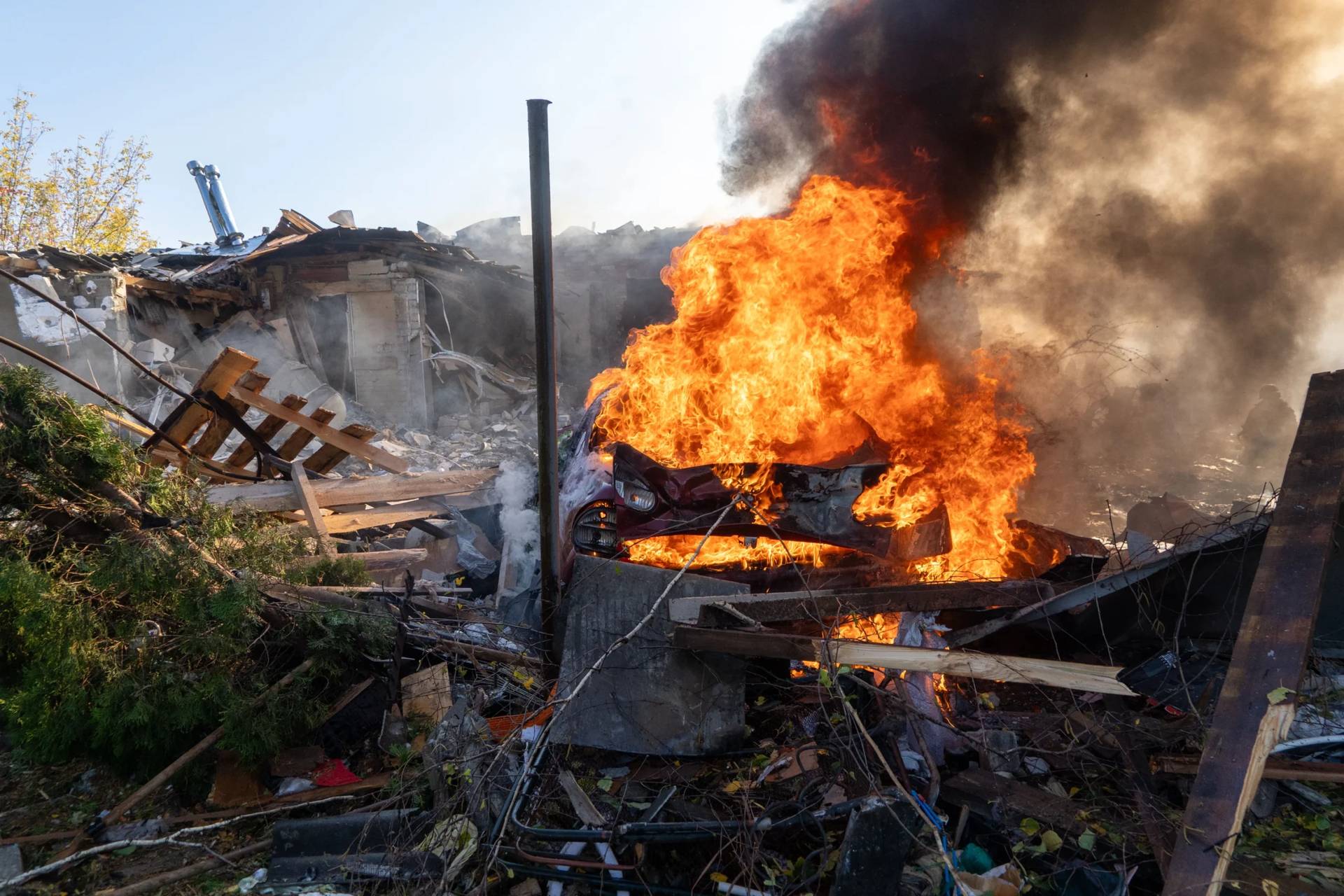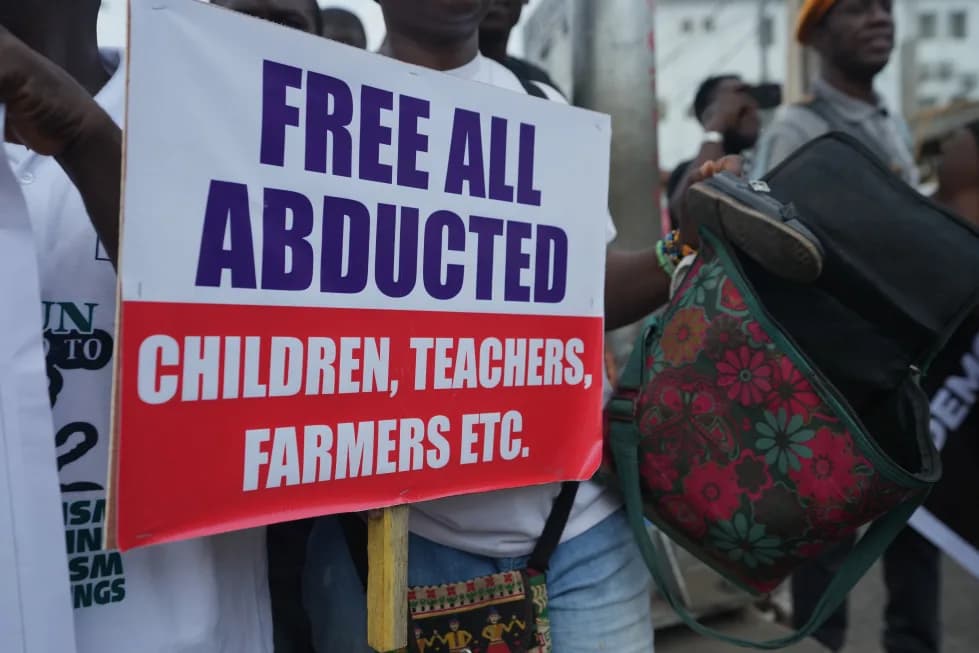
Nigeria’s Catholic Bishops have condemned the mass kidnapping of over 60 Muslims during Friday prayers earlier this month, calling the escalating violence across the country an “unabated trail of blood and terror.”
Gunmen stormed the Kpenya Mosque in the Borgu Local Government Area of Niger State around 1:00 PM GMT on August 21, after first attacking the nearby villages of Gidan-Zana and Kpenya.
Residents blamed the Lakurawa armed group, a faction notorious for kidnappings, cattle rustling, and forcing captives to accept an extremist version of Islam.
The attack came just a week after a similar assault on a mosque in Sokoto State left at least 32 worshippers dead, including the Imam.
In an August 27 statement sent to Crux Now, the Catholic Bishops’ Conference of Nigeria (CBCN) also expressed sorrow at the killing of 47 people in Ukum, Benue State, saying attacks on places of worship have reached an “intolerable crest.”
“Whether in a mosque, a church, a marketplace, or the quiet of their homes, Nigerians are still being slaughtered, traumatized, and displaced with impunity,” the bishops said.
Emphasizing interfaith unity, the clerics stood in “firm solidarity with our Muslim brothers and sisters,” demanding the immediate and unconditional release of the abducted worshippers.
“An attack on any place of worship constitutes an attack on our collective humanity.”
The broader scale of the crisis is staggering.
According to Amnesty International, at least 1,100 people were abducted in Nigeria between January and April of this year, with survivors frequently reporting torture, starvation, amputation, and rape.
A recent mid-year report by the International Society for Civil Liberties and the Rule of Law (Intersociety) estimates that 2,550 Christians and 1,050 moderate Muslims have been killed since January.
The report further details the destruction of 300 churches, the hacking to death of 10 pastors, and the forced conversion of over 800 Christian captives.
Open Doors’ recent World Watch List similarly found that Nigeria accounted for a staggering 72% of all Christians killed globally for faith-related reasons.
Emeka Umeagbalasi, Intersociety’s director, warned that the infrastructure of Christianity is being systematically dismantled.
He cited the closure of over 30 parishes in Benue State, the flight of 16 priests from their rectories in Taraba State, and the burning of 90 churches in the Minna Diocese as pointers to the existential danger facing Christianity in Nigeria.
“Christianity is in danger in Nigeria,” Umeagbalasi told Crux Now, warning that without urgent intervention, the faith could be eradicated in the region within a century.
“The statistics regarding Catholic priests are shocking,” he said.
“In Taraba State, for instance, our recent data shows that between September of last year and the middle of this year, under the Bukuru Diocese alone, 16 Reverend Fathers have been forced to flee their pastoral homes, and eight have had their rectories demolished,” Umeagbalasi also said.
“In Benue State,” he said, “more than 30 Catholic churches and parishes are presently shut down,” while in Taraba state, “over 127 churches were attacked and shut down, and more than 100,000 parishioners were forced to flee.”
“In Niger State,” Umeagbalasi continued, “in Minna Diocese, 90 churches were attacked, destroyed, or burned to ashes.
The CBCN acknowledged recent government efforts but urged political and security leaders to do more until citizens’ safety is guaranteed.
They urged the bandits, terrorists, kidnappers, and their sponsors, to “stop the bloodshed! Human life belongs to God alone… You cannot build a future on the tears of innocent persons.”
The political class has also joined in calls for urgent and swift action from the president.
The minority caucus leader in the House of Representatives is urging the president to launch a sustained comprehensive military offensive against terrorists, bandits and other criminal groups operating across Northern Nigeria.
Hon. Fredrick Agbedi, and the caucus spokesman, Hon. Afam Victor Ogene said Nigerians were being killed in their homes, farms and communities, while children were being abducted from schools and entire communities displaced by violence.
“This is no longer a situation that can be addressed principally through statements of condemnation after every attack. Nigeria requires a sustained, coordinated and overwhelming security response,” the lawmakers said.
“We are calling on the President to lock down the affected theatres of operation, dominate the territory and sweep the forests, hideouts and criminal enclaves where terrorists and bandits operate,” they also said.
“Such an operation,” they said, “must be intelligence-led, professionally executed and sustained until the criminal elements are neutralized and the abducted citizens rescued.”
President Bola Ahmed Tinubu has pledged to pursue the attackers, ordering a manhunt for those responsible for both the Borgu kidnappings and the Ukum killings.
“Those who carried out this cowardly attack on defenseless Nigerians are enemies of peace and enemies of humanity, who will not go scot-free,” the president said in a statement.
Drafting peace in a fractured nation
Nigeria’s Office of the National Security Adviser (ONSA) has appointed a team of experts charged with developing a comprehensive National Peace Framework.
The National Peace Framework, whose secretariat is hosted by The Kukah Center founded by Bishop Mathew Hassan Kukah of Sokoto Diocese, will evaluate and address both entrenched and emerging threats in a nation plagued by insurgency, banditry, and deepening sectarian divides.
“We are tasked with merging multiple peace frameworks into one national blueprint to guide future interventions across the country,” said Fr. Dr. Atta Barkindo, Executive Director of the Kukah Centre, and member of the high-level expert team.
“Beyond providing a standardized guide, it creates an oversight mechanism to hold government agencies accountable for their funded peace mandates. We have until October to deliver this, with an option to extend our work into the implementation phase,” he told Crux Now.
______