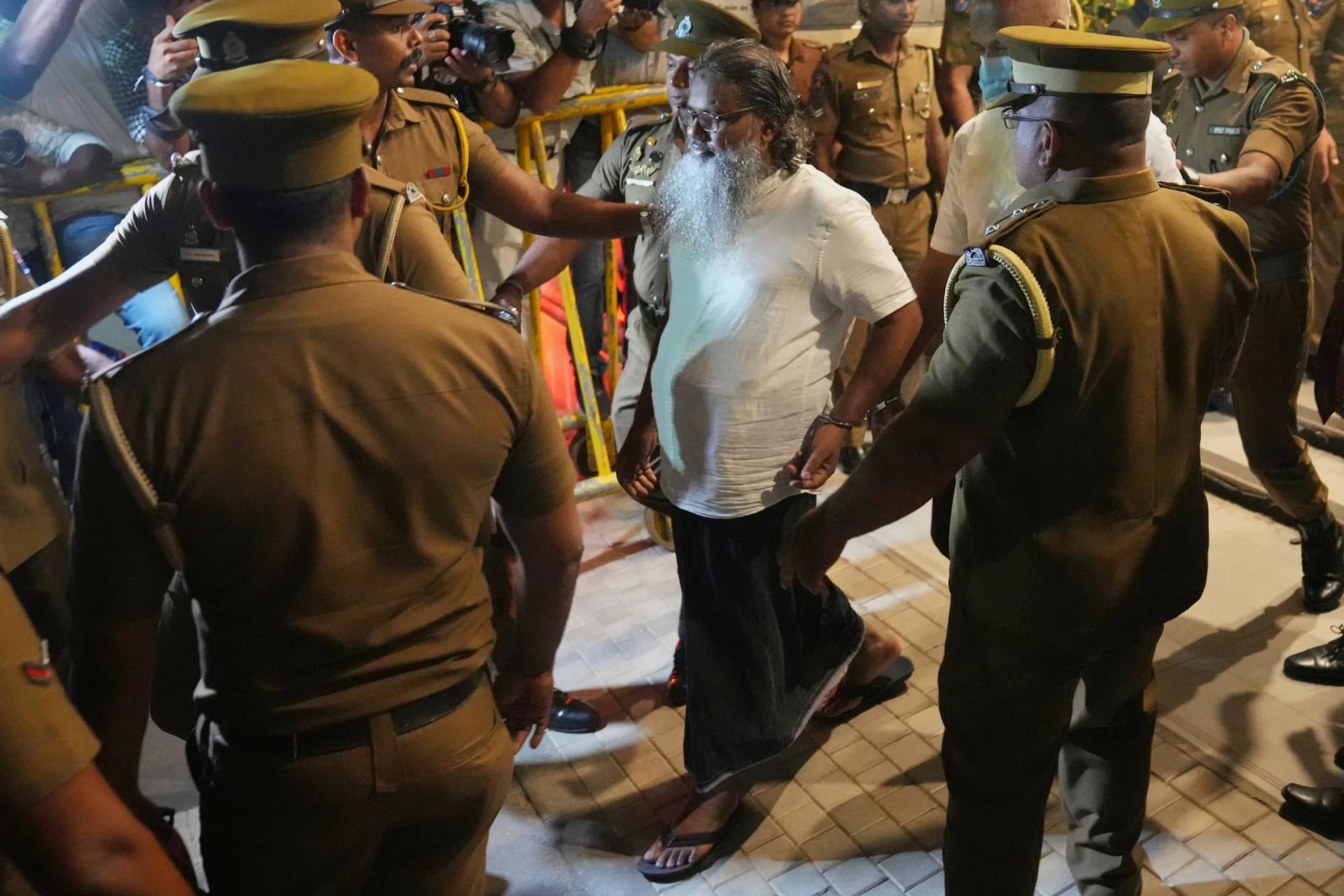
Malaysian authorities detained more than 100 Rohingya asylum seekers on Monday in Kuala Lumpur, after the group had been evicted from their settlement in the coastal state of Penang.
The asylum-seekers had made the journey from Penang, more than 200 miles northwest of Kuala Lumpur, to the office of the UN High Commission for Refugees in the capital city.
Reports say the group consisted of 113 refugees –110 of them Rohingya – some of whom, at least, were documented with the UNHCR.
Penang regional police issued a statement saying the refugees moved “voluntarily” with the assistance of state and federal authorities, but Reuters cited refugees who said local residents had driven them from their dwellings.
Reuters reported the refugees as saying they traveled to the capital by bus, in the night between Sunday and Monday, in hope of obtaining resettlement assistance from UNHCR.
Police in the capital reportedly removed the refugees and their belongings from their position outside the UNHCR office and took them to police headquarters.
Malaysian Prime Minister Anwar Ibrahim made a statement on the incident, in which he said the detention of the refugees in the capital came in the wake of citizen complaints.
“No one has the right to take over any part of the city,” Ibrahim said in a video posted to social media.
The Rohingya: A persecuted people
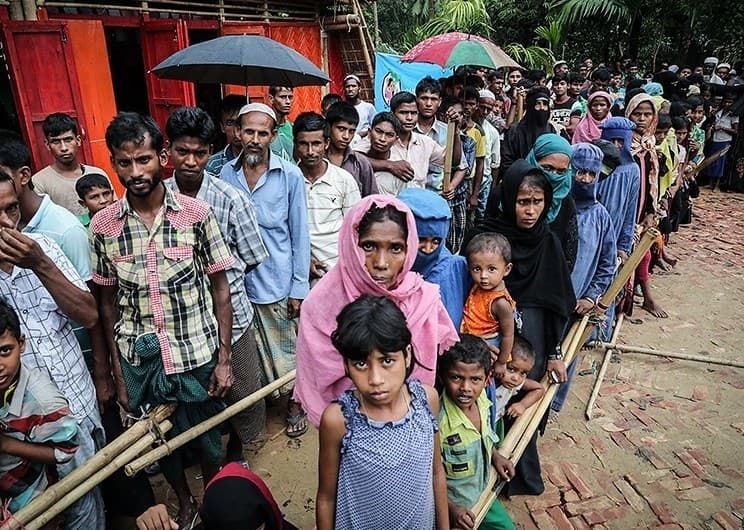
The Rohingya are a predominantly Muslim ethnic group from Rakhine State in predominantly Buddhist Myanmar. The Rohingya have faced frequently horrific persecution for decades.
A particularly intense and gruesome wave of persecution began in the summer of 2017, during which nearly a quarter-million Rohingya fled Myanmar for other countries.
Many Rohingya undertook a many days’ journey through the jungle to reach safety, while others attempted to cross the Bay of Bengal in makeshift craft to reach Bangladesh. Some of the refugees did both, and many perished during the flight.
Pope Francis decried the violent persecution in August 2017, as news of its ferocity made its way around the world, and he visited Myanmar in November of that same year, in the midst of the crisis.
International rights observers have called the 2017 persecution a genocide.
Nearly a decade later, there are more than 1.2 million Rohingya refugees displaced and stateless, the majority of them in Bangladesh, with more than 125 thousand registered refugees in Malaysia.
RELATED: Caritas, Catholic youth lead flood emergency response in Bangladesh
In late September of last year, the Holy See’s secretary of state for relations with states, Archbishop Paul Richard Gallagher, addressed the ongoing crisis in remarks to a high-level meeting at the UN in New York.
Gallagher noted the “generous” humanitarian response of neighboring host nations, but highlighted the grave threat the suffering people continue to face in frequently appalling conditions.
“[C]ountless Rohingya continue to face severe conditions,” Gallagher told the high-level meeting, “in particular women and children, currently living in overcrowded refugee camps.”
Gallagher called for urgent increase in short-term humanitarian assistance. He also called for urgent address of the underlying causes in order to alleviate dependence on international assistance.
“[T]here is an urgent need to work on long-term solutions,” Gallagher said in 2025, “with a view to addressing the root causes of the crisis and moving towards national reconciliation and integration.”