August 9 is the United Nations’ International Day of the World’s Indigenous Peoples, this year dedicated to preserving the Indigenous knowledge systems that have sustained the well-being of Indigenous Peoples for generations.
“Rooted in holistic worldviews that connect territory, spirituality, community and ways of life,” the UN says of this year’s focus, “they encompass values, practices and forms of care that have been developed and passed on over time.”
Throughout the world, there is a specific focus on midwifery under the theme: “Honoring Indigenous Midwives: Safeguarding Life and Well-being.”
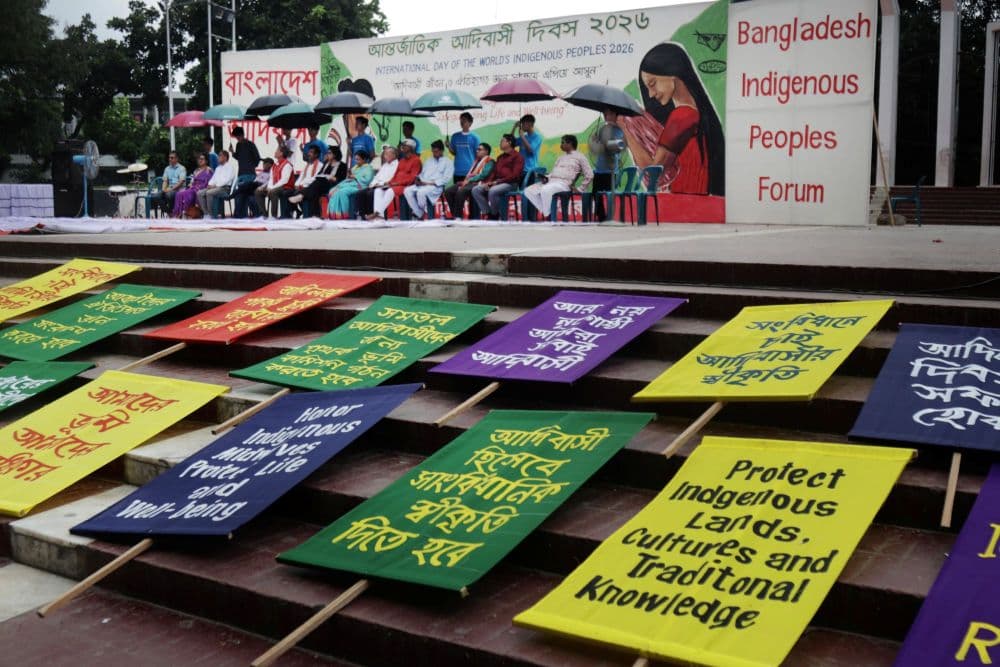
In Bangladesh, however, organizers are using the celebration to demand constitutional rights, land rights and other rights for Indigenous People.
Bangladesh is a country of 180 million people, the vast majority of them Muslim, while more than half of the country’s 600,000 Christians belong to various Indigenous groups.
The Indigenous Peoples of the country planned discussions, rallies, cultural programs, and the Day was also being celebrated by various Catholic-run schools, colleges, and churches.
The Catholic Church in Bangladesh has been working for years to support Indigenous Peoples through education, healthcare, and assistance with land rights problems.
Nevertheless, Garo indigenous rights activist Theophil Nokrek believes that the church needs to do more for Indigenous People.
“The Church is playing an unparalleled role in educating indigenous people. But I think the Church can play a stronger role in advocating for the rights of indigenous people both at home and abroad,” said Nokrek.
Father Hubert Liton Gomes, secretary of the Integral Human Development commission of the Catholic Bishops’ Conference of Bangladesh, believes the Church has always worked to protect the rights of not only Christians but also all indigenous peoples.
“The Catholic Church has kept the door of education open to all people. Where indigenous people are definitely given priority,” Father Gomes told Crux Now.
The priest said the government of Bangladesh should ensure the constitutional rights, land rights and other rights of indigenous peoples.
The Holy Cross priest believes indigenous peoples are currently seen as quite advanced politically. “Then, if politicians, Indigenous leaders, and the Catholic Church take joint steps,” he said, “I hope that Indigenous peoples will get their rights.”
“I am optimistic and the Church is always ready to come forward to protect the rights of indigenous peoples. However, indigenous peoples have to come forward with initiative.” Father Gomes added.
The International Day of Indigenous Peoples was organized by the Bangladesh Indigenous Forum at the Central Shaheed Minar in the capital Dhaka. Garo, Mamra, Chakma, Santal, Tripura, Hajong, Munda, Chak, Bam, Lusai, Rakhine and other indigenous peoples participated in this Day.
Although the Bangladesh government has not yet constitutionally recognized all Indigenous Peoples in the country, there are 50 small ethnic groups that enjoy some recognition.
According to the preliminary report of the Population and Housing Census 2022, the total population of these listed and other small ethnic groups is about 1.6 million, which is about 1 percent of the total population of the country.
However, indigenous leaders believe the actual number is closer to four million.
Leaders complained at the International Day of Indigenous Peoples event that due to the reluctance of the government and the state, Indigenous Peoples are still not getting their constitutional rights.
Sanjeeb Drong, General Secretary of Bangladesh Indigenous Forum and human rights activist, said in his speech on the International Day of the World’s Indigenous Peoples, for the past three decades, we have been agitating for the establishment of the right of indigenous peoples to self-determination.
“More than four million indigenous peoples live in Bangladesh. We believe that the Bangladesh state will give constitutional recognition to protect the rights of indigenous peoples to their language, identity, land, culture and self-identity.” Drong, a Catholic Garo Indigenous, said.
He mentioned that due to the coexistence of different ethnic groups, Bangladesh is rich in diversity of language, culture and tradition.
“This diversity is the beauty and strength of Bangladesh,” he said, “therefore, the state must take effective initiatives to ensure the land and cultural rights of indigenous peoples.”
The first meeting of the United Nations Working Group on Indigenous Peoples was held on this day in 1982. Later, on December 23, 1994, the United Nations General Assembly declared August 9 as the International Day of the World’s Indigenous Peoples.
______
You are reading this Crux Now article for free. You can register for our free daily newsletter here, and you can become a Crux Now supporter for full access to all our premium content here. To find out more about why becoming a Crux Now supporter is a great idea, go here.