Donald Trump’s public attacks on the pope have been well-documented. Many have noticed the irony: The head of an administration full of prominent Catholics engaging in personal insults against the leader of the Catholic Church.
Europe is witnessing a similar trend.
Many of the new far-right parties – or populist right, as some prefer – sweeping across Europe, position themselves as defenders of Christian civilization. Paradoxically, this sometimes puts them in conflict with the bishops of their countries, particularly on immigration.
And often, caught in the middle of this are some Catholics who feel drawn to these parties.
Vox and the Spanish bishops
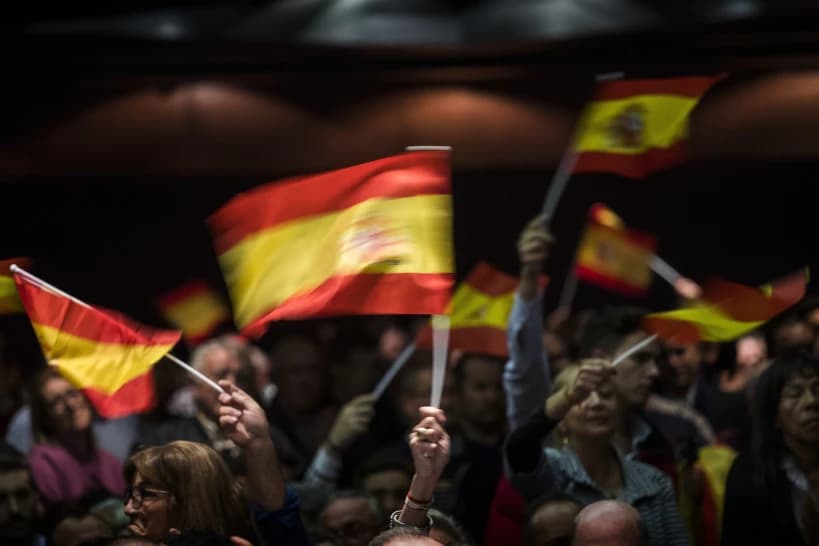
The public conflicts between Vox’s leader, Santiago Abascal, and the Spanish bishops are a good example of this growing trend. Further, the fact that Vox says it stands for Catholic values and that many of its high-ranking members are practicing Catholics makes the phenomenon more interesting.
Last summer, the local council in Jumilla, Murcia, controlled by Vox and PP (Spain’s center-right party) voted for a motion that allowed for the banning of Islamic festivities in the town, in particular the collective prayer with which the Muslim community celebrates the end of Ramadan and the “Feast of the Lamb.” This prompted a statement from the Spanish Bishops’ Conference condemning the move, saying that “imposing such restrictions for religious reasons constitutes discrimination that has no place in democratic societies.”
Archbishop Joan Planellas of Tarragona, president of the episcopal conference of Catalan dioceses, said of the debate that “a xenophobe cannot be a true Christian.”
Abascal was not happy. Speaking on a right-wing YouTube channel, he accused the bishops of taking a soft line on immigration and the growing influence of Islam in Spanish society because of their dependence on government funding. The charge echoed one made by U.S. Vice President JD Vance in January, when he suggested that the American bishops’ criticism of President Trump’s immigration policies was driven by financial interests.
Hostilities resumed in April this year. In an interview, Bishop José Mazuelos of Canarias said, “If one wants to be Christian — and not only Christian, but human — one has to attend to and care for migrants.”
Abascal responded directly on X (formerly Twitter). “Some people who profit from illegal immigration should leave the palace and go down to see the consequences it has for Spaniards—for healthcare, security, wages, and taxes,” he said.
Bishop García Magán, the secretary general of the bishops’ conference, at a later press conference, defended Mazuelos from Abascal’s attack, and even suggested it strayed into the realm of “slander.”
Catholics in Vox
Recent polling by the Center for Sociological Research (CIS), a Spanish public research institute, found that 75 percent of Vox voters identify as Catholic – 39 percent of that group say they are practicing and 61 percent non-practicing. Only 6 percent of Vox voters identify as atheist. In the last four local elections, Vox won 16.9 percent of the vote in Extremadura, 18.9 percent in Castile and León, 17.9 percent in Aragón, and 13.8 percent in Andalusia.
So why are Catholics voting for them? Crux Now spoke with Anna*, a 30-year-old Catholic who is a supporter of Vox, who explained that “it is the only Spanish political party that defends the right to life” as opposed to PP, which holds an “ambiguous position.”
“As a political party, Vox has quite a few members of parliament, local councilors, and grassroots members who come from pro-life movements and who publicly identify themselves as both Catholic and pro-life,” she added.
“I support a separation of Church and State, while also remembering Spain’s ideological foundations as a Catholic country and maintaining certain privileges that the Church should continue to have,” she said.
Further, she said that as someone who opposed the recent regularization of 500,000 migrants in Spain, she thinks the bishops are wrong about immigration. But she added a caveat that they are right from the point of view of “someone who has read Jesus’ teachings and would like to imitate Him.”
However, Anna was concerned by Abascal’s attacks on the bishops. “I do not believe his [Abascal] words should be treated as dogma, and ultimately he is just another Spanish citizen, whether he is the leader of a political party or not,” she said.
“As citizens and parishioners, we may disagree with the statements and actions of the bishops, but we should still respect them. They possess an authority that we do not have—including Santiago Abascal and any political leader,” she added.
Using Christian imagery?
Srdjan Vucetic, Professor at the Graduate School of Public and International Affairs at the University of Ottawa and co-author of the book World of the Right: Radical Conservatism and the Global Order, told Crux Now that he didn’t trust the use of Christian imagery by parties such as Vox, Reform, and the Law and Justice Party in Poland.
“Populist far-right parties mobilize ‘Christian’ or sometimes ‘Judeo-Christian’ imagery as a way of claiming ‘national’ and ‘civilizational’ distinction vis-à-vis their opponents – ‘liberal universalism’, ‘Islam’, etc.,” he said.
“They claim to defend the so-called Christendom, but they don’t care much for Christ,” he added.
“Vox in Spain is a case in point: its leaders love to talk about a ‘Reconquista,’ the nineteenth-century term for the 15th-century Christian victory against the Muslim emirates of the Iberian Peninsula. But this is done not in celebration of Spain’s Christian identity so much as a way of stoking fears of Muslim immigration,” Vucetic said.
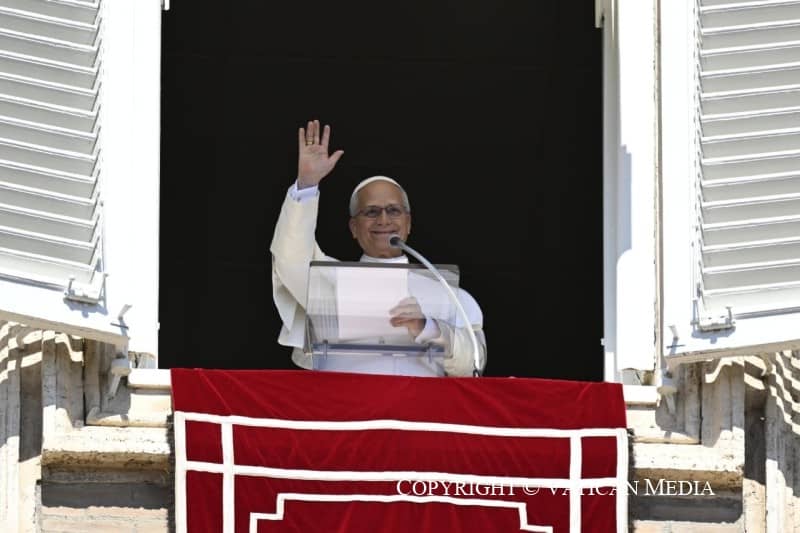
Pope Leo XIV wrote a letter to priests in Madrid in February this year touching on this, saying that in Spain “faith runs the risk of being instrumentalized, banalized, or relegated to the realm of the irrelevant.”
This could be interpreted both as a repudiation of those on Spain’s left who seek to sideline religion from the public square and those on the right who seek to leverage Catholicism to garner votes.
While Vox and the Spanish bishops are a good example, they are by no means the only ones. Germany has also seen public fights between the Christian churches and the far-right, and, in many ways, these have been more vehement than in Spain.
The far-right Alternative for Germany (AfD) has threatened to reduce funding to the churches if they get in power, while the Catholic Church has banned AfD members from working for the church, calling the party “unelectable.”
In September, in Saxony-Anhalt, there will be a local election in which the AfD is well-positioned to win. In the build-up to the election, the Catholic Church in the area launched the “Vote Consciously” initiative, calling on voters to avoid populist rhetoric and extremism.
At the launch of this initiative, Bishop Gerhard Feige of the Diocese of Magdeburg, in the state of Saxony-Anhalt, said: “We are particularly challenged when hatred and incitement, as well as populist or extremist positions, become increasingly socially acceptable.”
Feige expanded on these comments to Crux Now, saying that “the poison of mistrust and social division must be met again and again by the churches with the gift of trust and the hope of living together.”
Feige said the AfD is no friend of the Christian churches in Germany, even if it does use religious imagery from time to time. “The churches are attacked by the AfD as part of the establishment. For example, the party claims in press releases that we have fallen victim to the ‘rainbow ideology,’ that we are collaborating with the state, and that we should be abolished,” he said.
Research group Wahlen found that the AfD received 18 percent of its votes from Catholics. Further, in a 2021 federal election, 8 percent of Catholics voted for the party. Feige’s advice for these Catholic voters was stark: they “should respond to that feeling by reading and learning.”
“They should read the AfD’s election program in Saxony-Anhalt,” Feige continued, “as well as the party’s numerous press releases, in which it has not only defamed the Church as ‘sent by the devil’ or ‘godless,’ but has also explicitly called on ‘all true Catholics … to save their faith’ by leaving ‘this Catholic Church.’”
Looking forward
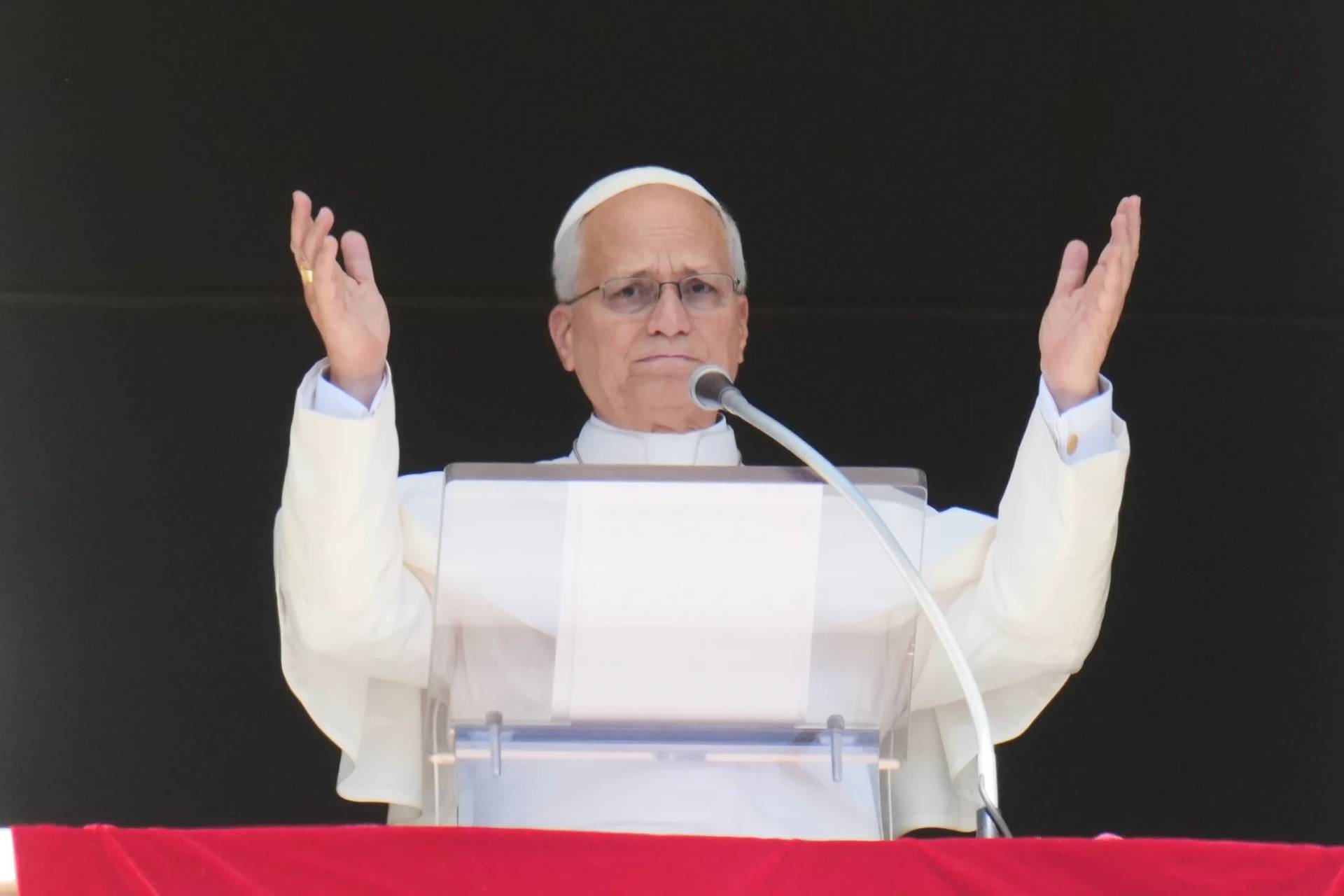
In recent times, some have noted a slight softening in the Church’s rhetoric. Conservative commentators were recently quick to highlight when the pope said, “I believe that a State has the right to regulate its borders.”
“I am not saying that everyone must be allowed to enter without order, sometimes creating in destination countries situations more unjust than those they left behind,” he added. But he also said that migrants mustn’t be treated “worse than house pets or animals,” as he argued is often the case in Western countries now.
Archbishop Luis Argüello of Valladolid, and president of the Spanish Episcopal Conference, also sounded a slightly new tune in May. Speaking about Vox, he said, “There are no irreconcilable differences with anyone.” He said it was important for the Church to keep the lines of dialogue open with all political parties.
However, he also criticized Vox’s support of the “national priority” – the idea that government funding should go to charities that support Spaniards over those that support migrants.
Feige showed no signs of compromising. He compared the conflict in Europe between the parties and the bishops with that between Donald Trump and Pope Leo. He quoted to Crux Now Italian Jesuit Antonio Spadaro, who since 2024 has served as Undersecretary of the Vatican Dicastery for Culture and Education and said that Trump’s attacks were a “sign of powerlessness.”
Spadaro also said it shows that the “moral force of the Church” is “a space in which power is measured against a standard it cannot control.”
There are differences between the various new parties, but one constant is a strong aversion to immigration. And while there is some nuance in the catechism regarding the obligations of the immigrant to their new country, Vucetic said he doesn’t see a change in the Church’s position, as it is grounded in “a moral imperative to welcome immigrants based on human dignity and God-given rights.”
“What’s more likely to see is more church leaders publicly disagreeing with the ever-more radicalized leaders of the far-right,” he added.
Feige’s concluding remarks give credence to Vucetic’s prediction. “Christ will surely not ask us at the end of our lives: ‘Did you take sufficient care of yourselves and successfully defend Western civilization?’ Rather, his question will be: ‘What did you do for my sisters and brothers who fled to you in need and distress?’” the bishop said.
*Name has been changed.
**This story has been edited after publication to reflect a more accurate rendering of Pope Leo XIV’s Spanish-language phrase, …tratarlos peor que las mascotas de casa o los animales.