Pope Leo XIV offered prayers for Ceuta on Sunday, in the aftermath of a migrant border surge sent the Spanish city into turmoil and raised tensions over migration throughout the European Union.
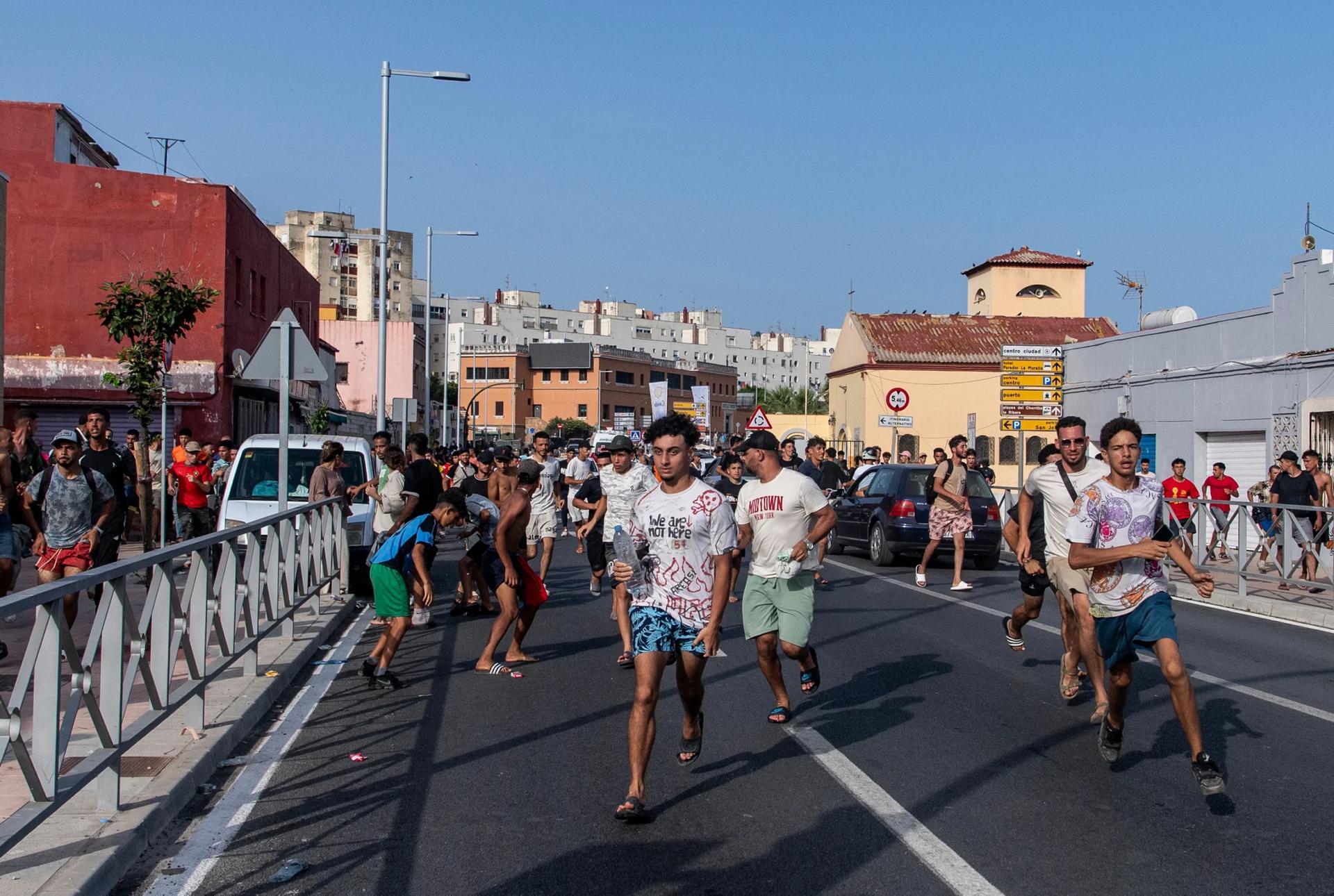
The pontiff said he was “following with concern the alarming situation in Ceuta,” where as many as 60 thousand migrants charged the frontier of the autonomous peninsular Spanish city on the North African side of the Strait of Gibraltar, and wreaked havoc for several days.
Situated where the Mediterranean Sea meets the Atlantic Ocean, Ceuta is a multicultural city of roughly 84 thousand inhabitants bordered to the south and west by Morocco, from which the migrants came.
Spain’s socialist government is widely seen as having a more open – even permissive – immigration policy than many other EU nations, and in January of this year announced plans to grant legal status to potentially hundreds of thousands of persons already living and working in the country without authorization.
At least 72 migrants perished during the surge between Thursday and Friday.
Spanish authorities said some of the victims died by drowning while a stampede crushed others. The mass incursion caused a humanitarian crisis – and reignited debate over immigration in Europe and beyond.
Leo prayed on Sunday “that, through the intercession of Our Lady of Africa, solutions may be found to bring peace, stability and justice.”
On Wednesday of last week, in a brief television interview with Spanish-language Telemundo, the pope had delivered a message of hope to migrants everywhere, encouraging them “[t]o seek, certainly, how to live in an orderly way.”
Welcoming migrants was a core message of Leo’s visit to Spain from June 6 to 12, during which he spoke strongly in favor of the dignity of migrants, especially during a stop in the Canary Islands – a papal first – to meet with migrants and those welcoming them there.
RELATED: In Canary Islands, pope puts a spotlight on tragedies of migration
On Saturday, Spanish authorities installed a 1,600-foot-long sea barrier along the border separating Ceuta from Morocco.
By Sunday morning, shops were open in the Spanish city, which prides itself on its culture of harmonious coexistence among Christians, Muslims, Jews and a tiny Hindu population present in the city for more than a century.
Spanish Coast Guard vessels were still searching for bodies in the water, while locals continued to discuss what to do and who is to blame for the incident.
Immigration hard-liners rallied in the city over the weekend, and locals turned out to hear them, while EU interior ministers scheduled an urgent meeting for Tuesday to discuss the incident.
Late last week, in the midst of the border surge, Italy temporarily suspended its borderless travel arrangement with Sapin under the EU’s Schengen Agreement.
“This is an extraordinary measure,” Meloni said on social media, “adopted to safeguard national security and prevent possible repercussions for our Nation.”
Meloni said the Schengen suspension would be “kept in force only for the time necessary, with particular attention to limiting any impact on summer tourist flows.”
“In parallel,” the prime minister said, “Italy is ready to support every European initiative to assist Spanish institutions as needed to restore full control of the Union’s external borders and to address the ongoing situation with determination.”
Spanish prime minister Pedro Sánchez issued a letter over the weekend, decrying “fake news” and “disinformation” surrounding the border surge and saying the Spanish Army had succeeded in seeing “virtually all” the migrants to Morocco.
Ireland, which currently holds the rotating EU presidency, called the Tuesday virtual meeting of interior ministers after 22 of the EU’s 27 members issued a joint appeal for “coordinated action and the strengthening of external borders” following the Ceuta incident.
Pope Leo XIV offered his prayers from the Apostolic Palace in the Vatican on Sunday following the Angelus.
“Let us continue to pray for peace,” Leo also said, “that wars may cease throughout the world and diplomatic solutions to conflicts may be found.”
“Let us remember all the victims of hostilities,” continued, “especially the weakest and most defenseless: children, the elderly and the sick.”
“May the Lord comfort those who suffer and bless the work of those who bring aid and consolation,” the pontiff said.
——–
You are reading this Crux Now article for free. You can register for our free daily newsletter here, and you can become a Crux Now supporter for full access to all our premium content here. To find out more about why becoming a Crux Now supporter is a great idea, go here.