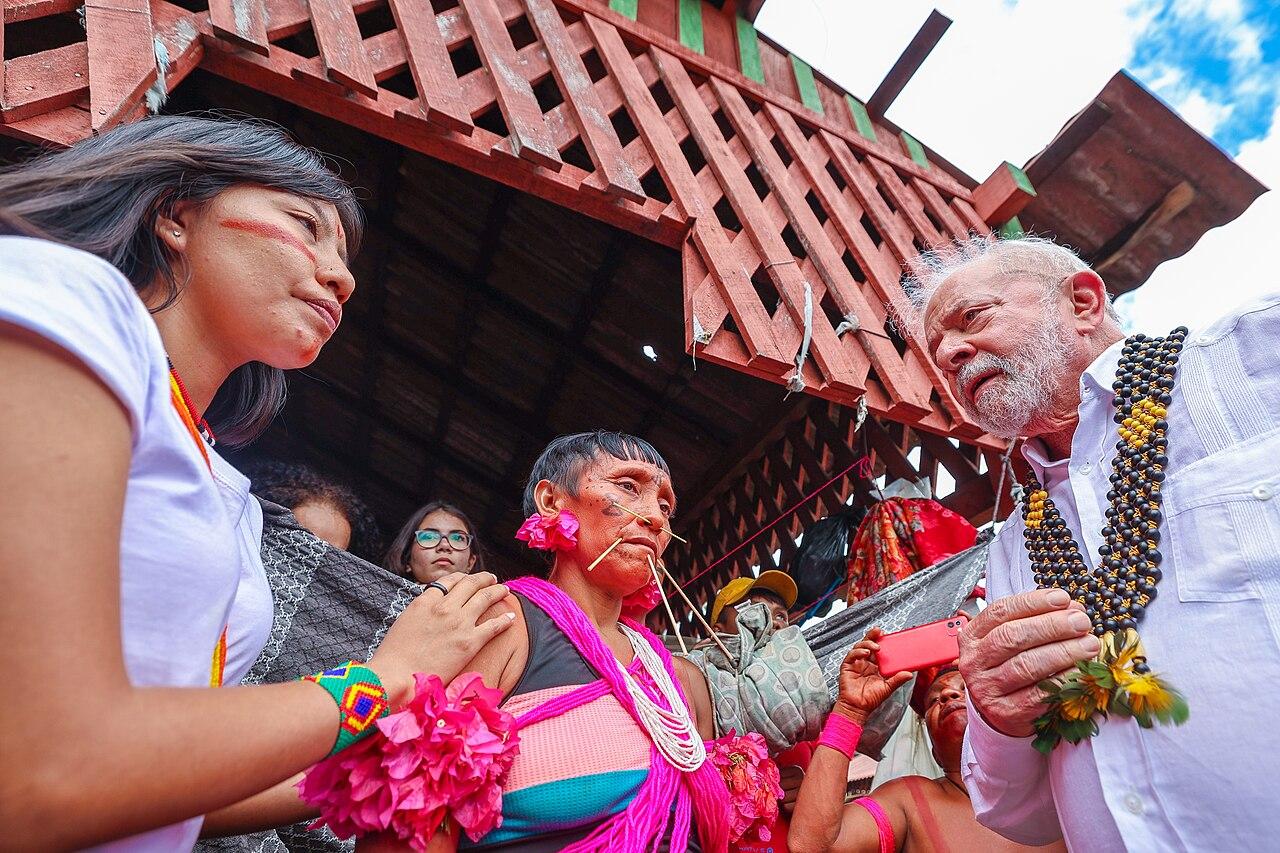
SÃO PAULO – Pope Leo XIV has lent his support to the Yanomani people as they work with partners to recover from humanitarian crisis and attendant challenges in the Amazon.
The pontiff sent a message on June 17 to the Amazonian Indigenous group, which held a general assembly last week to discuss ongoing challenges as the people continue to work toward recovering from a severe humanitarian crisis over the past three years.
In his letter, sent by Cardinal Pietro Parolin through the Vatican nuncio to Brazil, Archbishop Giambattista Diquattro, the pontiff expressed his closeness to the Yanomami people and offered them his blessing.
“The Holy Father was pleased to learn of the Eighth Assembly of the Yanomami People and assures his prayers that this event may contribute ever more effectively to strengthening the unity of peoples around their traditional values and principles, rooted in the unique and incomparable dignity of the magnificent humanity shared by all,” said the message.
The letter was addressed to Bishop Evaristo Spengler of the Diocese of Roraima, who heads the Pan-Amazon Ecclesial Network (known by the Portuguese acronym REPAM). It concluded with the pope’s blessing upon the entire Yanomami people.
The assembly was organized by Hutukara, one of the Yanomami people’s associations, led by renowned Yanomami spiritual leader Davi Kopenawa. His son, Dario Kopenawa, was elected as the organization’s new president during the gathering. Hutukara has been on the front line in denouncing invasions of Yanomami territory, especially during the 2019-2023 crisis.
During those years, a combination of widespread malaria and other diseases, along with the contamination of local waterways and soil by toxic chemicals, led to widespread hunger and numerous deaths.
At least 538 children under the age of 5 died during that period, and nearly 500 of those deaths were considered preventable.
Analysts and Church missionaries said that much of the crisis was caused not only by the lack of state services, but especially by the massive invasion of Yanomami territory by illegal miners.
Covering 9.6 million hectares of Amazon rainforest, the Yanomami territory in Brazil is roughly twice the size of Switzerland. It borders Venezuela and is home to about 27,000 Yanomami people. At the beginning of 2023, the territory was estimated to contain around 20,000 illegal miners.
The miners caused severe environmental damage, contaminating rivers, soil, and the air with toxic substances. Hunting and fishing were severely impacted by the pollution, and farming became impossible in many parts of the territory.
The pits opened by the miners proved catastrophic. Filled with stormwater, they became ideal breeding grounds for mosquitoes that spread malaria.
Organizations such as Hutukara and Urihi, both led by Yanomami activists, continually denounced the humanitarian crisis, but no significant measures were taken by former President Jair Bolsonaro’s administration.
When President Luiz Inácio Lula da Silva took office in January 2023, he created a task force to provide proper healthcare to the Yanomami people and expel the intruders from their territory.
Since then, conditions among the Yanomami have improved considerably. However, shortcomings in healthcare services and the persistent presence of groups of invaders have continued to generate pressure on the government.
“Healthcare assistance has largely improved over the past months. Even the cases of malaria declined,” Junior Hekurari, a community activist and leader of the Yanomami association Urihi, told Crux Now.
In the first months of 2026, Hekurari noticed a rise in whooping cough cases and reported it to the authorities. Once again, the outbreak was linked to deficiencies in government-provided healthcare services. In some areas, vaccines were not reaching all communities and residents.
“After we pressured the government, things changed. Additional healthcare professionals were sent and services improved,” he said.
After most of the intruders were expelled in 2023, the problems associated with illegal mining diminished significantly. However, pockets of illegal mining activity have continued to exist and periodically create new challenges.
That is the case now.
According to Hekurari, illegal mining operations are currently being conducted near the border with Venezuela. Yanomami communities on the Venezuelan side of the border have repeatedly complained about Brazilian miners crossing into their territory.
“We sent a letter a couple of weeks ago to the Brazilian authorities, especially to the Ministry of Foreign Affairs. On the Venezuelan side, there is no healthcare assistance and no effective means of expelling the illegal miners,” he said.
The pontiff’s message was not sent out of the blue.
The Church has a long history of accompanying the Yanomami and supporting them during critical moments.
“The Catholic Church has always sought to strengthen the Yanomami people through a sustained presence,” explained Ugandan-born Father Robert Franks, who lives in a Catholic mission among the Yanomami.
Over the past decades, Franks said, this support has taken many forms. One of the most important has been the defense of Indigenous peoples’ rights, especially the rights to land, healthcare, education, and the preservation of their cultural identity.
“During the most difficult periods, such as the expansion of illegal mining, the spread of diseases, and humanitarian crises, the Church has served as a voice denouncing the violations suffered by the Yanomami people, mobilizing society, engaging with public authorities, and promoting networks of solidarity in defense of life,” Franks explained.