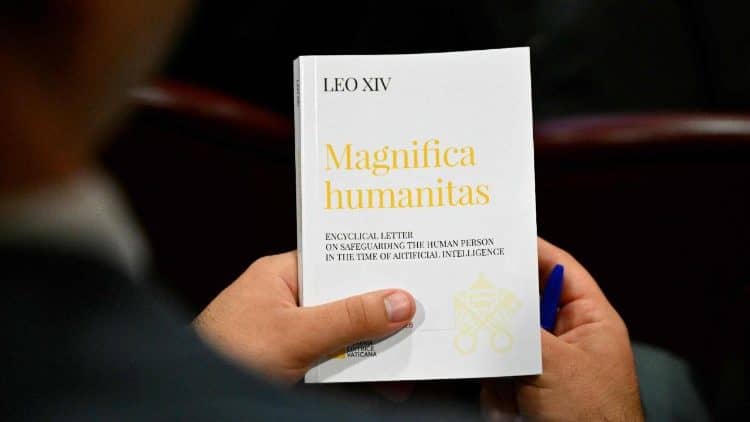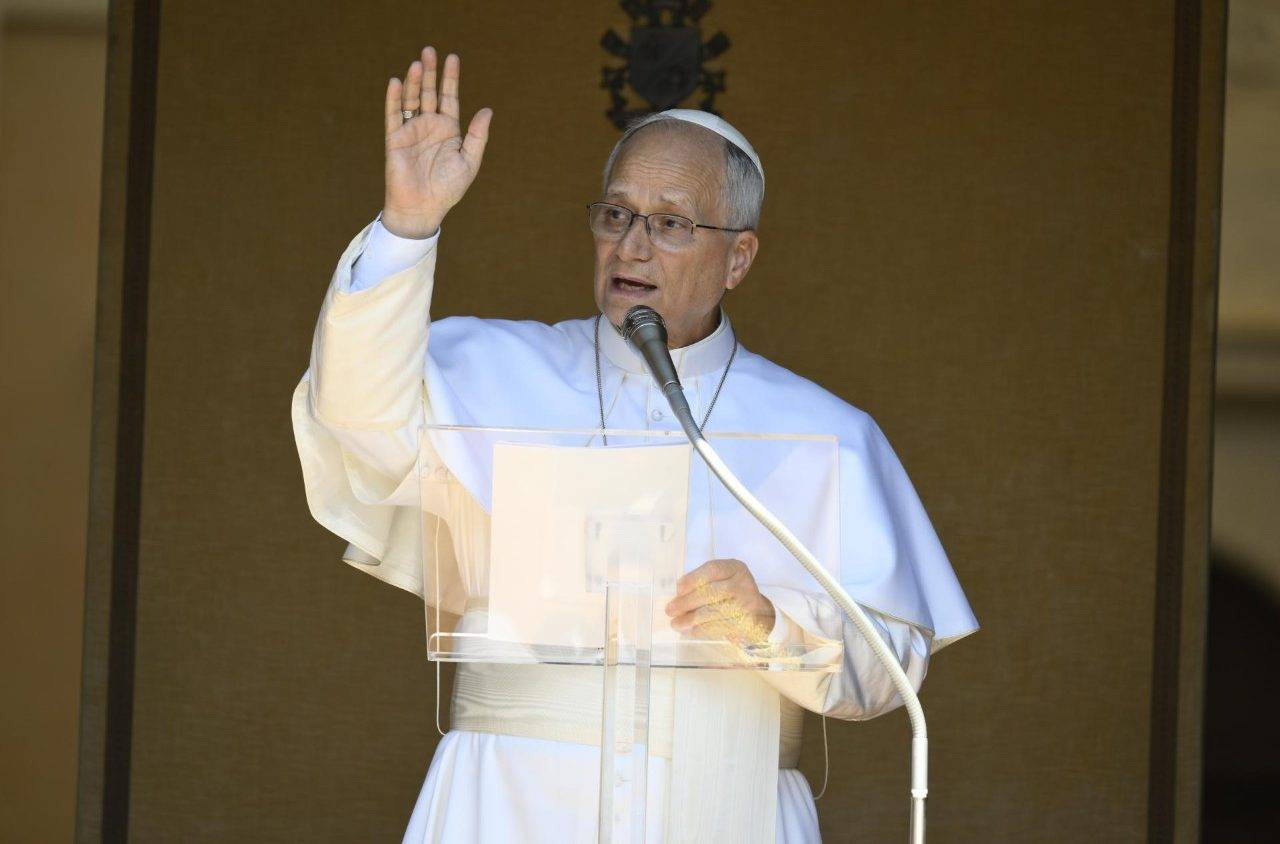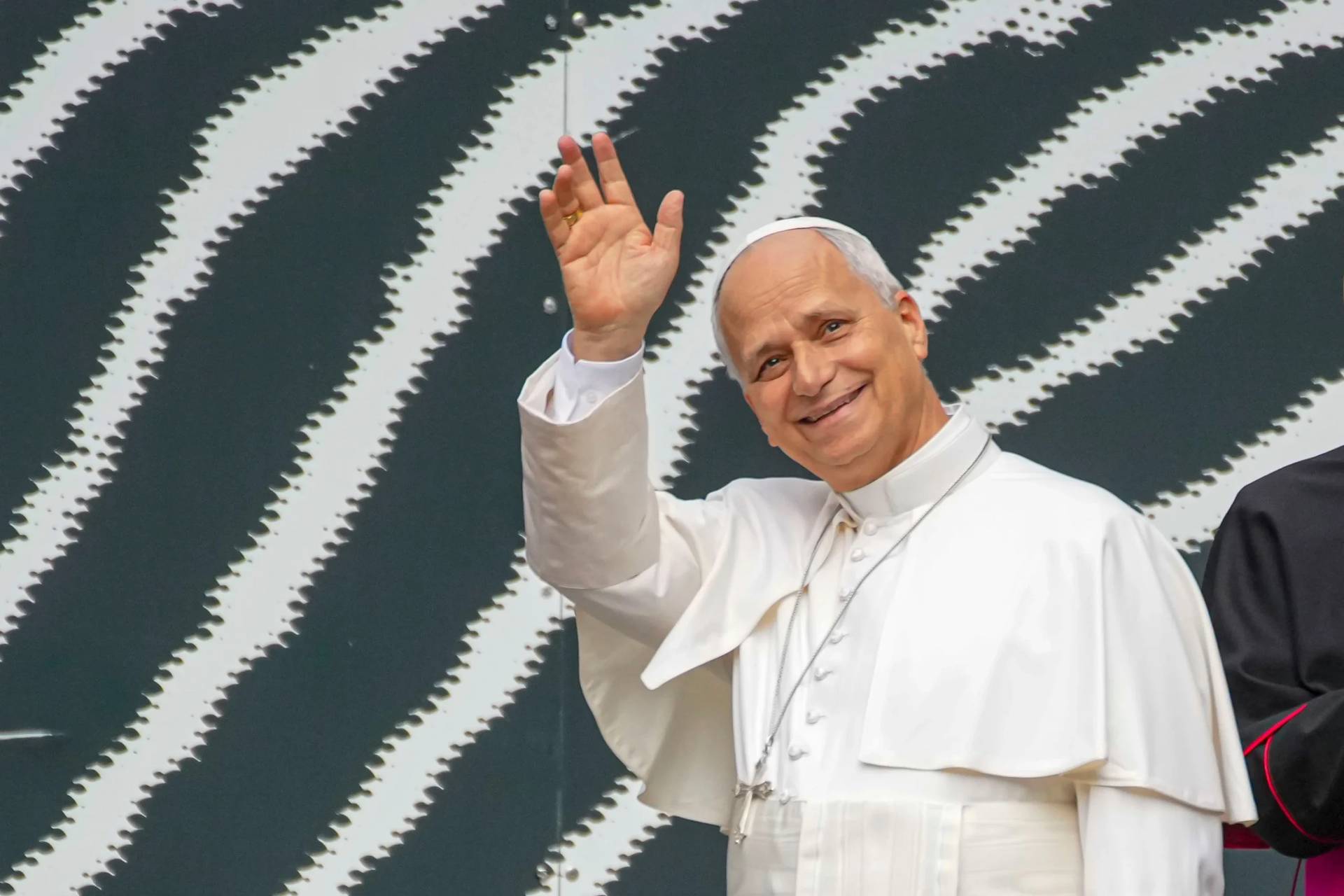
In his landmark document, Magnifica Humanitas, Pope Leo XIV acknowledged the Church’s long failure to condemn slavery as a “wound in Christian memory.”
“It is impossible not to feel deep sorrow,” Leo XIV wrote in his encyclical letter, “when contemplating the immense suffering and humiliation endured by so many in stark contrast to their immeasurable dignity as persons infinitely loved by the Lord.”
“For this,” Leo wrote, “in the name of the Church, I sincerely ask for pardon.”
The apology has stirred global discussion, but for those on the front lines of modern exploitation, the question remains: Do his words change the reality on the ground?
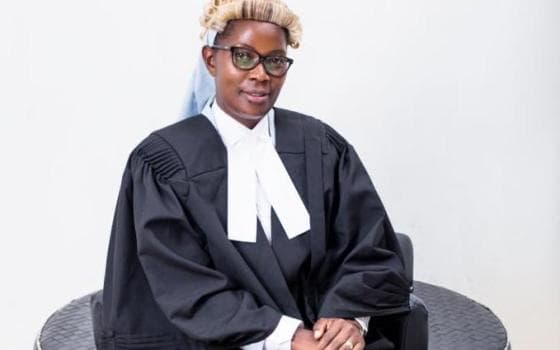
“For many Africans, descendants of enslaved peoples, and survivors of exploitation today, this apology matters profoundly,” said Sister Leonida Katunge, a renowned African religious sister of the Sisters of St. Joseph and an anti-trafficking advocate who leads what she calls an “Army against Human Trafficking.”
“But apologies alone are never enough,” the religious told Crux Now . “Repentance must become structural,” she said. “We need theological conversion, economic justice, institutional reforms, and pastoral action.”
“The Church,” Katunge said, “must now move from confession to restoration,”
In a wide-ranging interview with Crux Now, the Kenyan religious sister discusses the emotional weight of the pope’s reckoning with history, the direct line she sees between 15th-century papal bulls and the supply chains of today, and the lingering scars of colonialism that leave African communities vulnerable.
She challenges the global Church to move from charity to prophetic resistance, urges Western consumers to recognize their complicity, and explains why she believes the traffickers of today are simply using new tools to enact an ancient logic of commodification.
Following are excerpts of Crux Now‘s interview with Sister Leonida Katunge.
Crux Now: Pope Leo XIV’s Magnifica Humanitas describes the Church’s historical failure to condemn slavery as a “wound in Christian memory.” What were your immediate emotions upon hearing this apology, and does this acknowledgment feel sufficient to address the centuries of silence?
Sr. Leonida Katunge: My first reaction was deeply emotional. I felt sorrow, relief, and hope at the same time.
Sorrow because the Church, which should have stood unequivocally on the side of human dignity, often remained silent or complicit during some of history’s darkest moments. Relief because a pope finally named this wound publicly and directly. And hope because truth-telling is the beginning of healing.
When Pope Leo XIV acknowledged that the Church’s silence became “a wound in Christian memory,” he was not simply making a historical observation. He was engaging in an act of moral repentance. For many Africans, descendants of enslaved peoples, and survivors of exploitation today, this apology matters profoundly.
But apologies alone are never enough. Repentance must become structural. We need theological conversion, economic justice, institutional reforms, and pastoral action. The Church must now move from confession to restoration. The credibility of the Gospel depends not only on words of sorrow but on concrete solidarity with the oppressed today.
The pope explicitly referenced the 15th-century papal bulls that authorized the subjugation of people in Africa and the Americas: What bearing does the history he referenced have on the present day, in which we still see economic exploitation and labor trafficking?
The language has changed, but the logic often remains the same.
Those papal bulls treated African bodies and lands as commodities for extraction and profit. Today, many multinational systems still approach Africa primarily as a source of cheap labor, minerals, fertile land, and vulnerable populations. The mentality that once justified slave ships now hides behind exploitative trade agreements, illegal mining networks, forced labor supply chains, and digital recruitment scams.
A trafficked child in a cobalt mine in Congo is connected to the same global logic that once filled slave ships crossing the Atlantic. A young African woman trafficked to the Middle East under false promises of employment experiences a modern version of human commodification.
Pope Leo XIV is correct to draw a direct line between historical slavery and modern trafficking. We cannot separate the past from the present. History mutates; it rarely disappears.
Crux Now: Besides slavery, colonialism was another Western sin committed against African peoples. Drawing examples from the likes of the King of Belgium’s historical theft of the Congo, how did colonialism impact – how does it continue to impact – Africa’s development?
Sr. Leonida Katunge: Colonialism did not merely steal resources; it disrupted the soul of nations.
The Congo under King Leopold II remains one of history’s greatest atrocities. Millions died through forced labor, violence, and terror while Europe enriched itself through rubber extraction. But the deeper damage was institutional. Colonial powers dismantled indigenous systems of governance, weakened local economies, manipulated ethnic identities, and created artificial borders that still fuel instability today.
Many African economies were designed not for internal development but for external extraction. Railways often led not to villages but to ports for exportation. Education systems frequently prepared Africans for servitude rather than leadership. Even today, many African nations remain trapped in debt systems, unequal trade structures, and dependency models rooted in colonial economics.
The tragedy is that political independence did not always bring economic liberation.
Beyond the physical theft of resources, how did the colonial era erode the social and family structures in Africa that now make our communities so vulnerable to traffickers?
African societies were historically communal. Identity was rooted in family, clan, spirituality, and mutual responsibility. Colonialism disrupted these systems through forced labor migration, urban displacement, imposed taxation, missionary paternalism, and cultural humiliation.
Families were separated. Traditional mechanisms of protecting children and vulnerable women weakened. Communal land systems collapsed. Economic hardship forced many into survival migration.
Traffickers thrive wherever social fragmentation exists. When communities lose trust, identity, and economic stability, vulnerability increases dramatically. Today, traffickers exploit precisely these fractures: poverty, unemployment, family breakdown, weak governance, conflict, and desperation.
One of the greatest tragedies is that many victims are trafficked not by strangers, but through networks involving relatives, neighbors, or trusted intermediaries. That breakdown of communal protection is part of colonialism’s lingering wounds.
While the historical trans-Atlantic slave trade is well documented, the world often turns a blind eye to the current scale of human trafficking on the continent. Can you paint a picture of the reality on the ground today? Who are the primary victims, and where are they being taken?
Human trafficking in Africa today is a humanitarian crisis hiding in plain sight.
The victims are overwhelmingly the poor, the displaced, women, children, migrants, refugees, and increasingly unemployed youth. Some are trafficked into domestic servitude in the Gulf States. Others are forced into prostitution in Europe and North Africa. Children are trafficked into mining, agriculture, street labor, online sexual exploitation, or forced begging.
Conflict zones have become recruitment grounds. Refugee camps are highly vulnerable spaces. Social media platforms and AI-generated recruitment schemes are increasingly used to lure victims with false promises of scholarships, jobs, modeling contracts, or overseas employment.
Many disappear quietly. Their suffering remains invisible because the global economy benefits from cheap labor, undocumented workers, and disposable human beings.
What pains me most is that trafficking survivors often return home carrying shame while the systems and networks that exploited them continue untouched.
The pope warns that failing to respond to trafficking makes us complicit. In what ways do you see global powers and multinational corporations engaging in a form of “neo-colonialism” that relies on the continued enslavement or cheap labor of African people?
Neo-colonialism functions through economic dependence and invisible exploitation.
Many corporations profit from supply chains they intentionally refuse to investigate deeply. Minerals extracted through child labor power modern technologies. Agricultural systems rely on underpaid laborers. Some global industries depend on migrant workers whose rights are barely protected.
When wealthy nations close legal migration pathways while benefiting from undocumented labor, they create fertile ground for trafficking. When corporations seek maximum profit with minimal accountability, human beings become expendable.
We must ask difficult moral questions: Who benefits from cheap African labor? Who profits from unstable governments? Who gains when Africa exports raw materials but imports finished products at inflated prices?
Modern slavery survives because it remains economically useful to powerful systems.
What is your message to the average consumer in the West who benefits from cheap labor or goods produced by trafficked Africans?
My message is simple: your choices are never morally neutral.
Every consumer must ask: Who made this product? Under what conditions? At what human cost?
We are connected through a global moral economy. The suffering of a trafficked worker in Africa is not distant from the comfort of consumers elsewhere. Pope Leo XIV reminds us that indifference itself can become a form of complicity.
I am not calling for guilt alone. I am calling for ethical consciousness. Consumers must demand transparency, support fair trade, pressure corporations toward accountability, and recognize that human dignity cannot be sacrificed for convenience or profit.
You have famously established what you call an “Army against Human Trafficking in Africa.” What inspired this military metaphor, and what does this “Army” actually look like in practice?
I use the word “Army” intentionally because trafficking is organized, strategic, transnational, and ruthless. We cannot fight it casually.
But this is not an army of violence. It is an army of conscience, education, advocacy, and protection. It includes religious sisters, lawyers, teachers, survivors, youth leaders, catechists, journalists, psychologists, social workers, and ordinary citizens.
We train communities to identify trafficking patterns. We educate young people about fake recruitment schemes. We accompany survivors through healing and reintegration. We advocate for stronger laws and cross-border cooperation. We collaborate with parishes, schools, dioceses, and grassroots organizations.
The traffickers are organized. The defenders of human dignity must become even more organized.
Given that the pope admitted the Church’s past institutional failure, what specific role must the Catholic Church in Africa play now to dismantle these networks? Is the local Church doing enough?
The Church in Africa must move from charity alone to prophetic resistance.
Many dioceses and religious congregations are doing extraordinary work already. Religious sisters, in particular, are often on the frontlines rescuing survivors, sheltering victims, and educating vulnerable communities.
But there is still a disconnect in some places between Church leadership and the lived realities of the poor. Human trafficking is not always preached about from the pulpit. Some clergy still see it as merely a social issue rather than a theological crisis touching the very image of God in humanity.
The Church must integrate anti-trafficking work into seminaries, Catholic education, pastoral planning, youth ministry, and Catholic social teaching. Silence is no longer morally acceptable.
The encyclical speaks of the profound historical pain that continues to impact vulnerable populations. When you rescue survivors, how much of their healing requires addressing not just personal trauma, but collective, intergenerational trauma?
Healing is never only individual.
Many survivors carry inherited wounds rooted in generations of poverty, violence, displacement, racism, and historical humiliation. Trauma is often collective. Some communities have normalized exploitation because suffering has persisted for so long that it appears inevitable.
Survivors need psychological healing, yes. But they also need restoration of dignity, identity, trust, spirituality, and belonging. Many ask profound spiritual questions: “Where was God?” “Why was I treated like an object?” “Do I still have value?”
This is where theology matters deeply. The Christian message must proclaim not only salvation after death but dignity in the present moment. Every survivor must rediscover that they are not merchandise. They are sacred.
Pope Leo XIV has drawn a direct line from the slave ships of the 15th century to the trafficking routes of the 21st. Looking forward, what concrete steps do African governments and the international community need to take to ensure that the next century isn’t defined by another form of enslavement?
First, governments must treat trafficking as a national security and human dignity crisis, not merely an immigration issue.
Second, Africa needs stronger educational and economic opportunities for young people. Desperation is the trafficker’s greatest weapon.
Third, there must be serious international accountability for corporations benefiting from exploitative labor chains. Human rights cannot remain optional guidelines.
Fourth, survivor-centered policies are essential. Survivors need protection, rehabilitation, legal support, and economic reintegration.
Fifth, faith communities, traditional leaders, educators, and civil society must work together. This battle cannot be left to governments alone.
Finally, we must recover a moral vision of humanity. Pope Leo XIV’s Magnifica Humanitas reminds us that every person possesses inviolable dignity because every person reflects the image of God.
If the 15th century reduced Africans to cargo, then the 21st century must become the century in which Africa’s humanity is fully defended, restored, and honored.