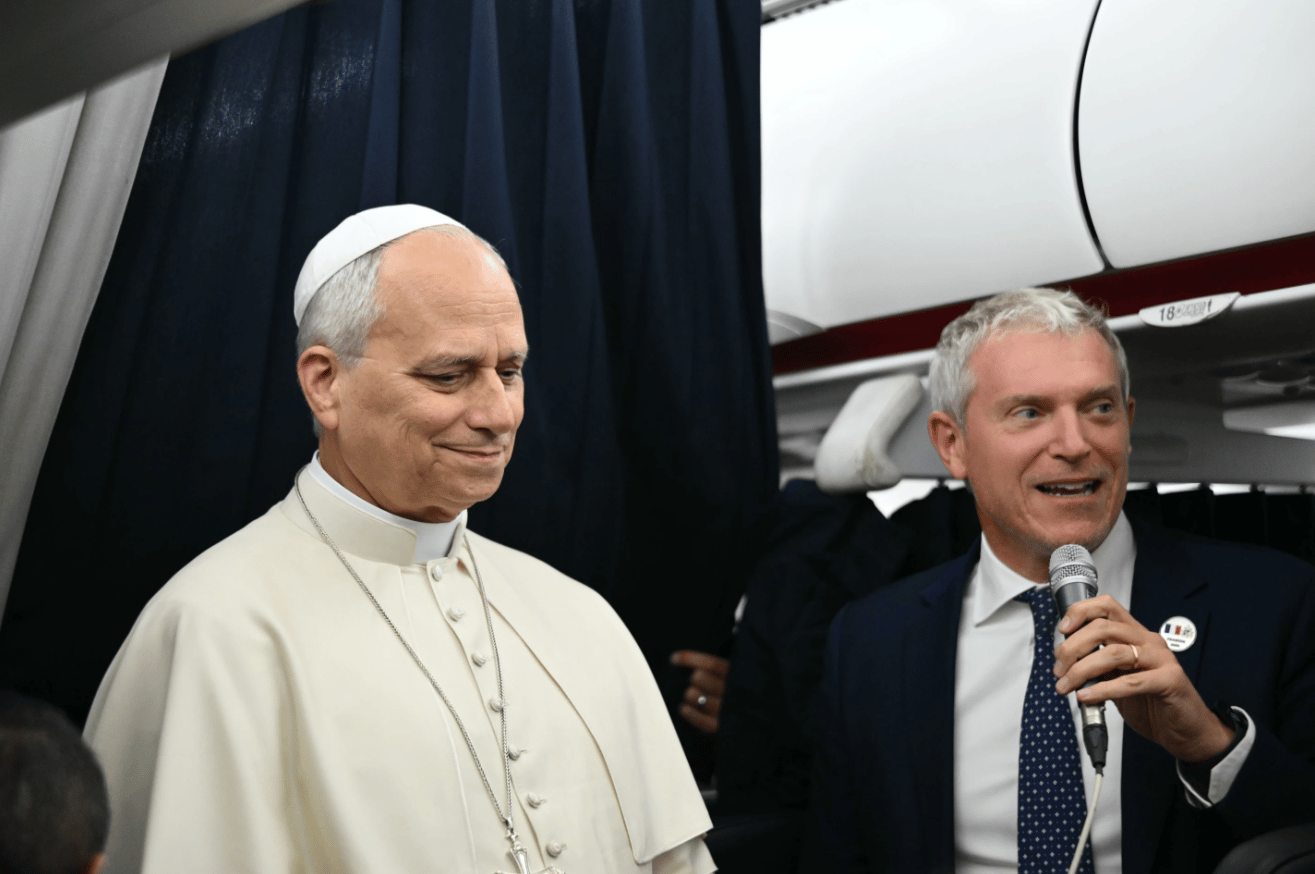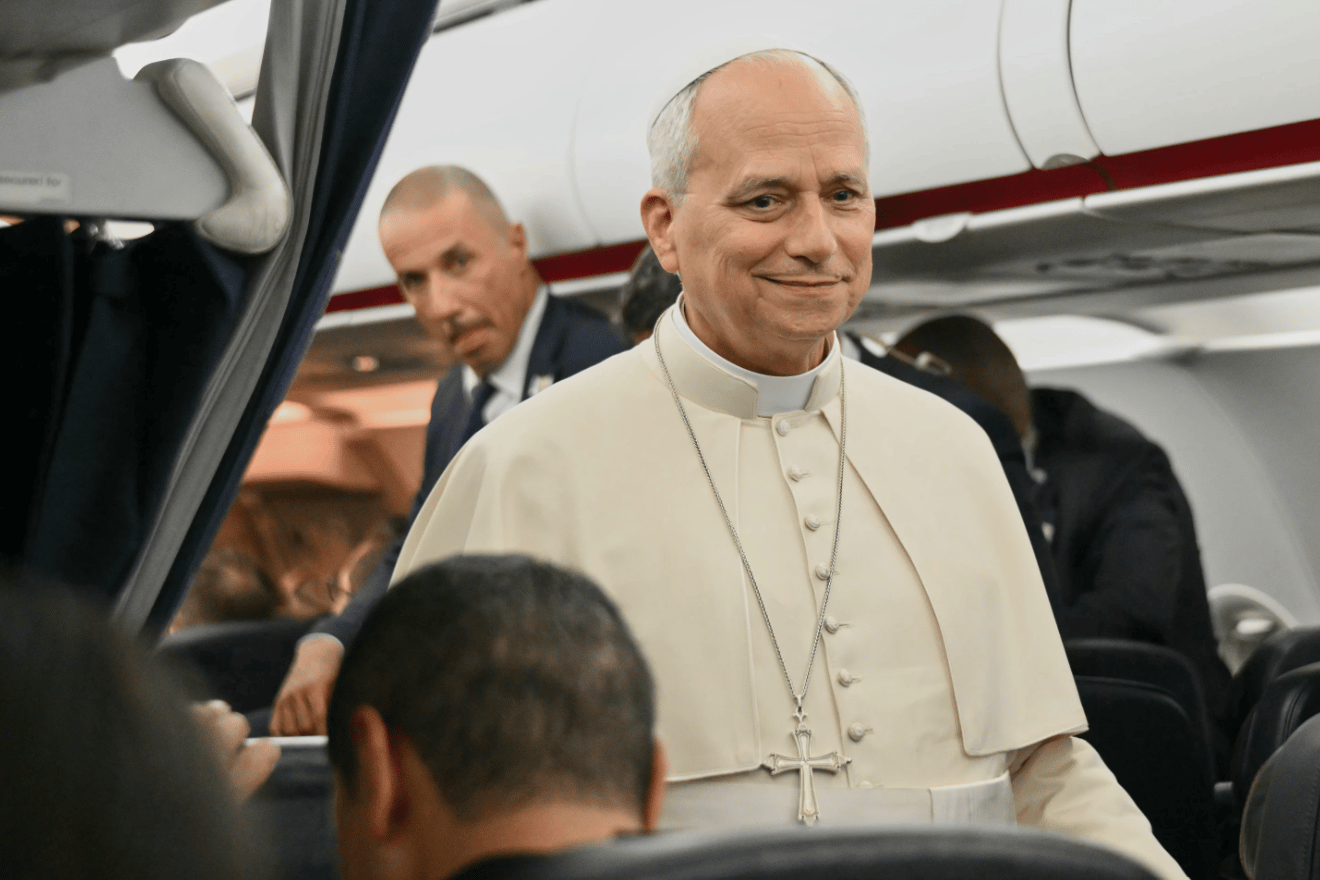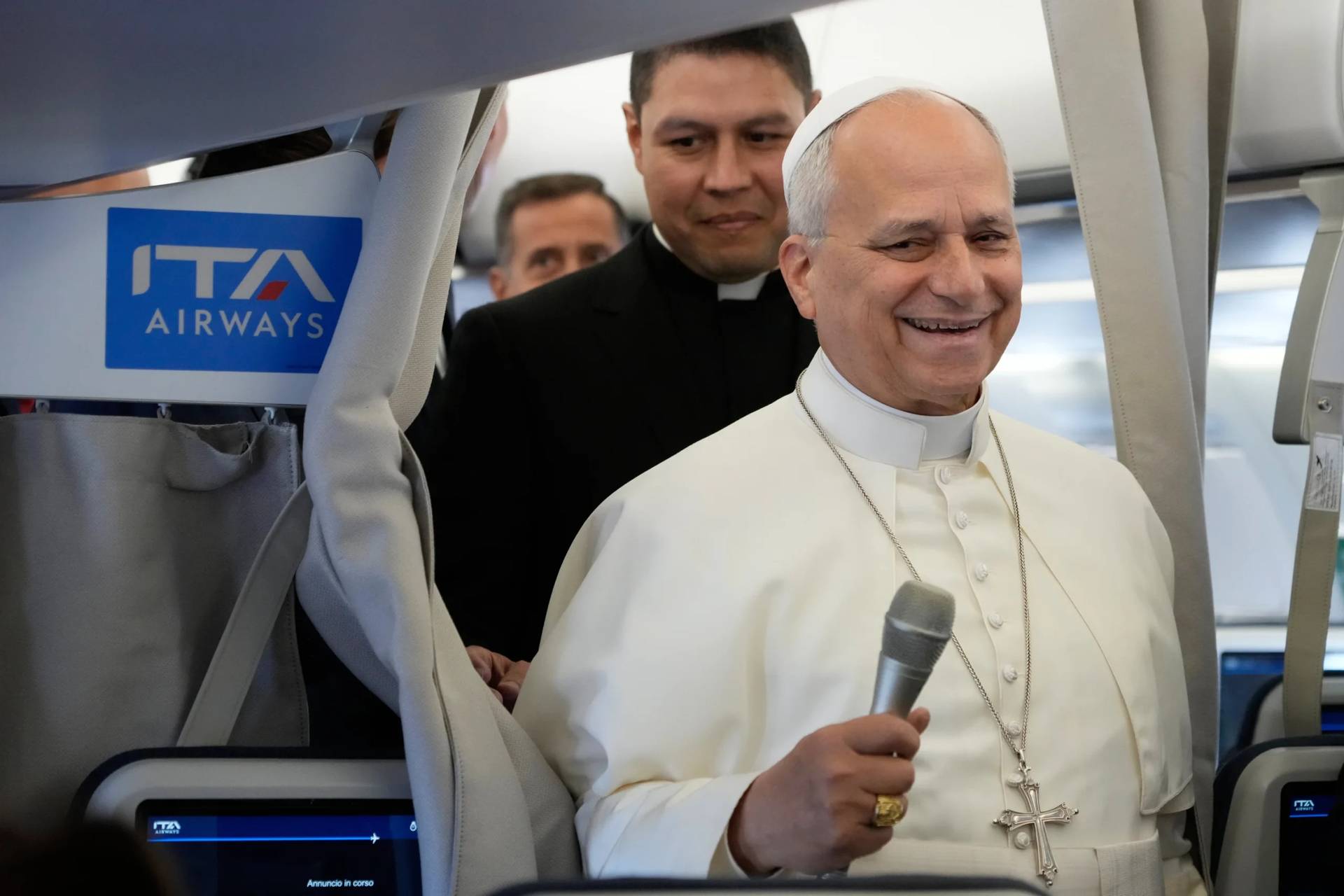
ABOARD THE PAPAL PLANE – While traveling from Istanbul to Beirut Sunday, Pope Leo XIV lamented that Israel has refused a two-state solution to its longstanding conflict with Palestine and voiced hope for progress in the Ukraine peace process.
Responding to questions from two Turkish journalists on board his Nov. 30 flight, the pope said he and Turkish President Recep Tayyip Erdogan discussed the current conflicts in Ukraine and Gaza during their private meeting on Thursday.
“The Holy See for many years has publicly supported a proposal for a two-state solution,” he said when asked specifically about the conflict in Gaza, where a tenuous ceasefire has been in place since Oct. 10, and about the longstanding Israel-Palestine conflict.
“We all know that right now Israel does not accepted that solution, but we see it as the only solution that could offer a solution to the conflict they continually live,” he said.
Leo said the Holy See is also a friend of Israel and is trying “with both sides to be a mediating voice that can help to draw close to a solution with justice for all.”
The two-state solution is something Leo said he discussed with Erdogan, saying, “Turkey has an important role that it can play in this.”
Pope Leo said the same applies to the ongoing war in Ukraine, noting that Erdogan has also played an important role in facilitating dialogue between Russia and Ukraine in recent months.
“Unfortunately, we’ve not yet seen a solution, but today there are concrete proposals for peace, and we hope that President Erdogan, with his relationship with the presidents of Ukraine, Russia and the United States, can help in this sense to promote dialogue, a ceasefire, and see how to resolve this conflict, this war in Ukraine,” he said.
Leo’s remarks came as a high-level Ukrainian delegation was slated to meet Sunday with US officials in Florida to continue discussions on a peace proposal put forward by US president Donald Trump.
Asked what role Turkey specifically can have in the regional and global peace process, the pope pointed to the religious diversity of Turkey as an example of how to coexist peacefully in spite of differences.
“To have come to Turkey and of course now to Lebanon on this trip, there was a special theme of being a messenger of peace, of wanting to promote peace throughout the region,” he said, adding, “Turkey has a number of qualities about it” that can help in this regard.
Turkey is majority-Muslim nation, and yet the Christian community, while “a very small minority,” is able to live in peace.”
“That is one example of what we would all be looking for throughout the world. In spite of religious differences, in spite of ethnic differences, in spite of many other differences, people can indeed live in peace,” Leo said.
Leo noted it has not always been the case historically in Turkey, but said discussing the issue with Erdogan and seeing the interreligious coexistence in action was “one important element of my visit there.”
Pope Leo also discussed the possibility of another largescale ecumenical encounter in Jerusalem in 2033, to commemorate the 2000th anniversary of Jesus’s resurrection from the dead.
This was a suggestion that came up during the ecumenical commemoration of the 1700th anniversary of the Council of Nicaea, celebrated Friday in modern-day Iznik and during a private meeting with the leaders of various Christian communities Saturday.
“We spoke of potential future encounters,” the pontiff said. “One would be the year 2033, two thousand years of redemption, two thousand years since the Resurrection of Jesus Christ, which is an event which all Christians want to celebrate,” he said.
Leo said this idea “was welcomed” by the various participants, and that while no invitation has yet been issued and there are still eight years left to plan, “it was a very nice encounter because Christians of various traditions were present and they also wanted to participate in this sense.”
Follow Elise Ann Allen on X: @eliseannallen