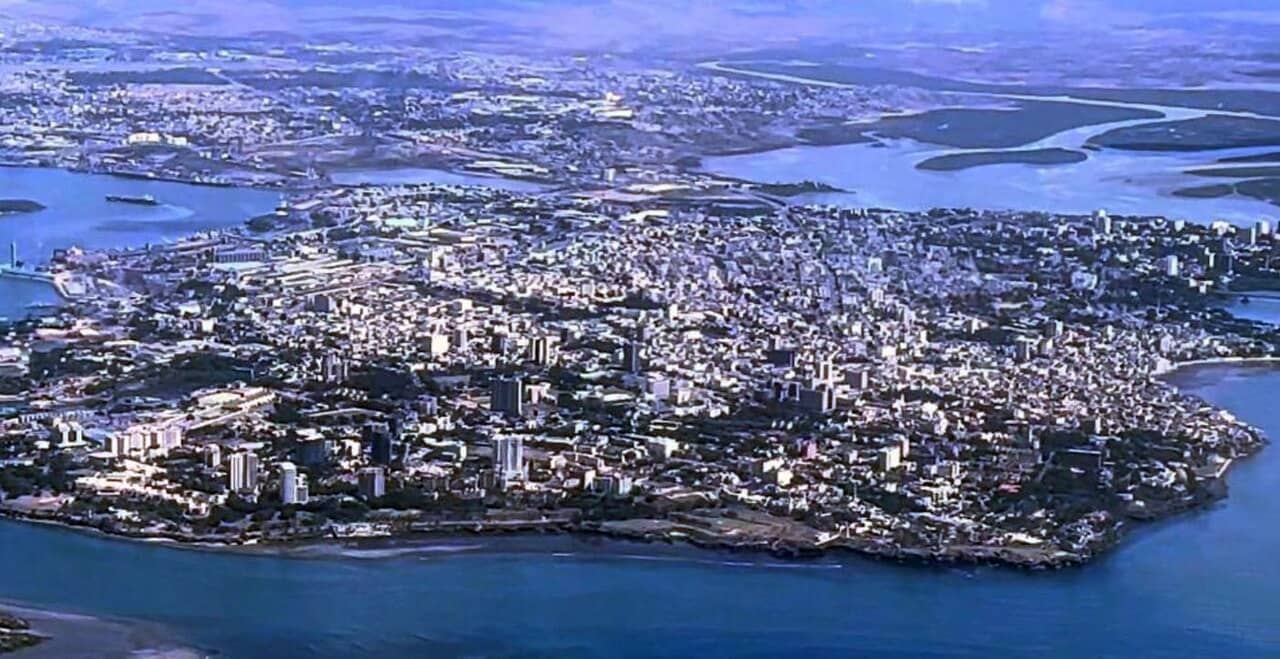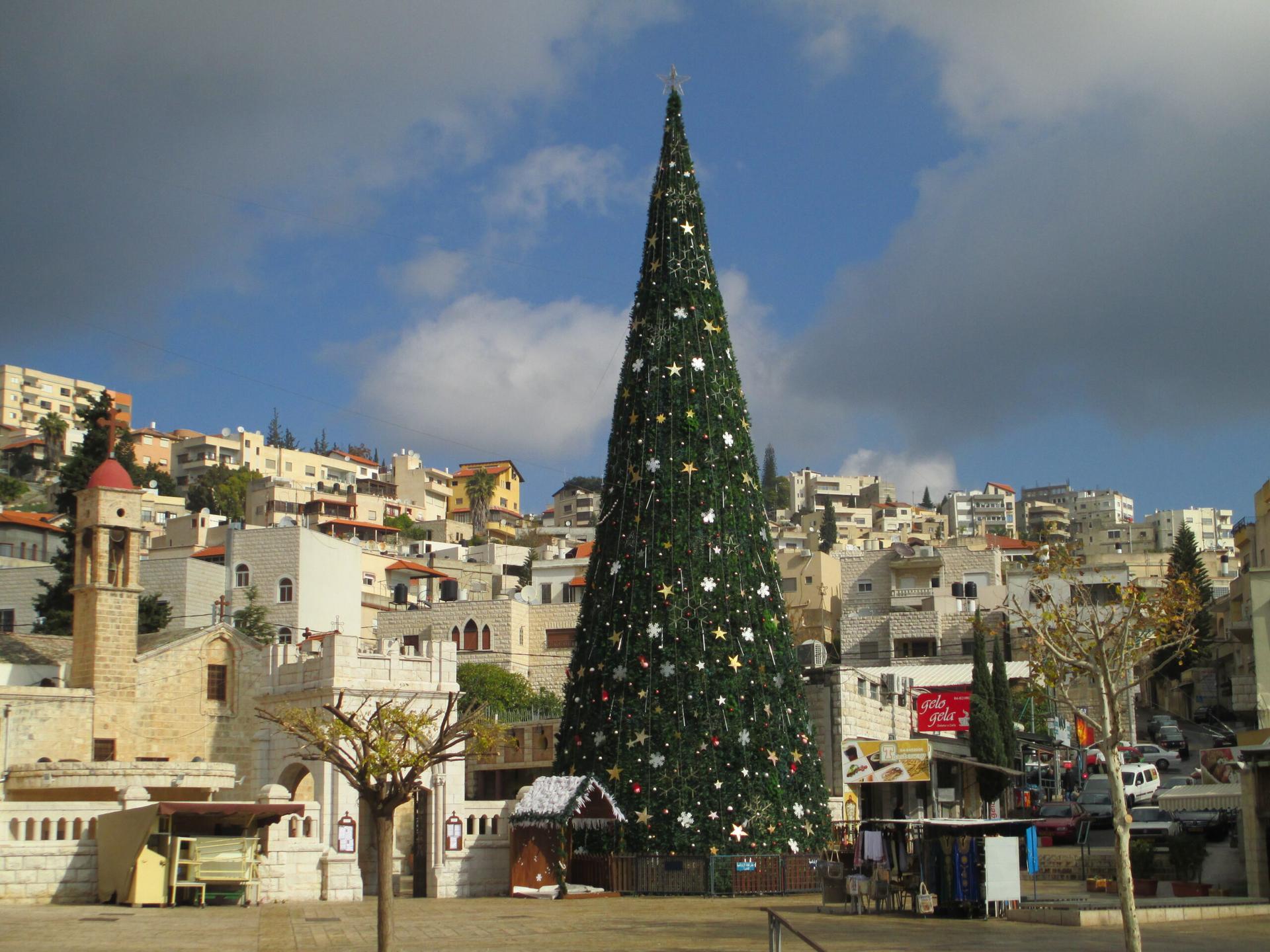
For the last two years, Nazareth, the hometown of Jesus Christ, has not been able to properly celebrate Christmas.
Due to the war in Gaza, there has not been a tree in the village square, and the Christmas market has not been open. This year, things have changed for the better.
Nazareth is known as “the Arab capital of Israel,” and has a majority Arab population of over 77,000 people, which is over 30 percent Christian.
“You can feel that people are waiting for Christmas,” said Yasmeen Mazzawi, an Arab Catholic.
“People finally feel they can get out of their homes, not stay near bomb shelters all the time. They want quiet days. They want to celebrate like they used to,” she said.
The Gaza War broke out following an Oct. 7, 2023, surprise attack by Hamas militants that left 1,200 Israelis dead and more than 250 taken as hostages.
Israel immediately launched a retaliatory offensive in Gaza to oust Hamas from leadership, with the subsequent conflict resulting in the deaths of nearly 70,000 people in Gaza, according to Palestinian estimates.
A shaky peace process was begun earlier this year, and pilgrims began returning to the Holy Land.
RELATED: Christmas spirit returns to Bethlehem after ceasefire in Gaza
Bethlehem – the place where Jesus was born – is located in the West Bank, but Nazareth is where the Holy Family lived and where Christ grew up, and Nazareth is in Israel proper.
“For me, Nazareth is home,” Mazzawi said.
She said it was important to recognize the religious diversity in Israel.
“First, there are Christians not only Arabs in Israel. Israel is very diverse. Many people from different backgrounds and communities share the same religion. Christians in Israel are not only Arabs,” she told Crux.
“For the Arab community, a peaceful Christmas is deeply important for our community in Nazareth, emotionally, spiritually, and socially. For many families at Christmas, it is not only a holiday for us, but it is a core part of our identity and faith,” she said.
“It’s a time where we put Jesus’s birth in the center in our prayers, our family gatherings and welcoming others. This is the peace that we find during this holiday. When Christmas is peaceful, it allows people to celebrate openly, attend church, walk in the streets, and gather without fear and tension, this brings a sense of emotional relief,” Mazzawi also said.
She said for Nazareth specifically, the celebration this year “brings together this peace and joy to the people, especially because many people from out of the country come and from out of the city come and visit as well.”
RELATED: Israeli Arab Catholic describes working with Israel’s aid agency
“It’s really nice because Nazareth is an Arab city. I think this is amazing for Christian Arabs living in Israel to see people coming and visiting and celebrating with us. A peaceful Christmas gives the room to breathe and reconnect and hold onto hope while honoring faith and traditions in this amazing, beautiful, holy place in the city of Nazareth,” she told Crux.
Mazzawi said it was important to remember Christians in Israel are not specifically Arab, but from other communities.
“I think this is amazing when you see many people from so many different communities driving all the way from the center, from the south, coming up to the north to Nazareth to celebrate,” she said.
“This is the beauty of this season, and it’s important for me to highlight that in the center is the birth of Jesus, celebrating this amazing season all together brings this peace, hope, and joy to the community,” she added.
Mazzawi is an Israeli citizen, and serves as a volunteer paramedic with Magen David Adom, Israel’s emergency services system.
Together with colleagues from all backgrounds — Jews, Christians, Muslims, and Druze — she responds to emergencies across the entire Galilee region.
“We already all work together. The first thing that came to mind is values. When we focus on the shared values, the daily cooperations and I would call it human dignity rather than our differences between Muslim, Christians and Jews, I think this bridges the gap as we focus on the similarities and the shared values. A great way to show that is at Magen David Adom,” she told Crux.
“At Magen David Adom, we work together, Jews, Muslims, Christians, and Bedouins, the people from the whole mosaic and different backgrounds who lives in Israel,” she said.
RELATED: Catholic actress Patricia Heaton receives award for her support of Israel
“What connects between us is the respect for human life, the compassion, the charity, the responsibility, peace, and the goal of saving the lives of people that we do not know. We never ask who the patient is. We do our best for the patient not knowing where the patient comes from, what religion or what background,” Mazzawi added.
She also pointed out that Israeli Jews are celebrating Hanukkah December 14–22 this year. Hanukkah is the “festival of lights” for Jews, where they remember rededication of the Temple in Jerusalem described in 2 Maccabees in the Old Testament.
On eight consecutive nights, Jews gather with family and friends to light one additional candle in the menorah candelabra.
“You can see this happening in a very great picture at Magen David Adom working side by side and volunteering together. During Hanukkah, we are celebrating Christmas and Hanukkah. Jews are celebrating Hanukkah and Christians are celebrating Christmas,” she said.
“When they light a candle of Hanukkah, they usually have the candle lighting at each and every Magen David Adom station, people who show up are not only Jews, but many people that volunteer and work at the same time and have the same shift at the same time as lighting the candles are also Arabs, Jews, and Christians,” she told Crux.
She said they all attend as part of respect and sharing community.
“We all show up, we all listen, we all participate. And in Christmas, the Christmas market, many Jews coming, many Muslim people come and share with us the celebration,” she said.
“I think this is a great picture at Magen David Adom to show how Jews, Muslims, and Christians work together, and focusing on the shared community and the shared values is a great way for us to better work together in the Holy Land, Israel, and the whole world. Christians, Jews, and Muslims, we can work best together when we as different communities see one another first as human beings, neighbors, friends, and families,” Mazzawi told Crux.
Follow Charles Collins on X: @CharlesinRome