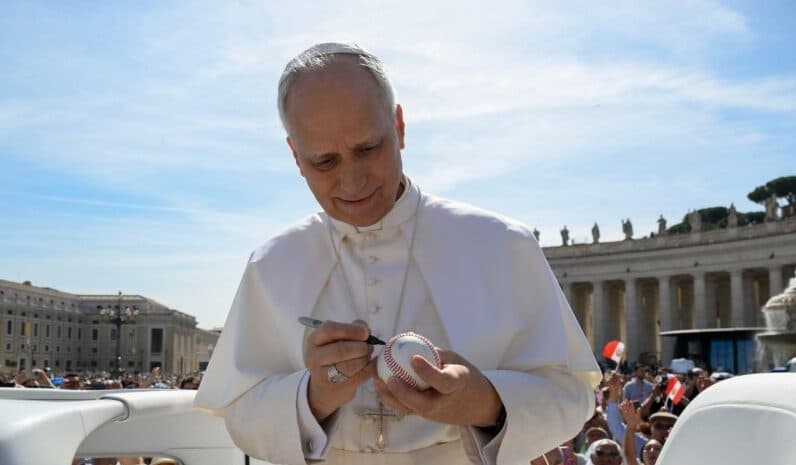
On Wednesday, March 25, Major League Baseball opened the 126th season of the Modern Era. The game has seen a lot changes in my adulthood, introducing inter-league games and changing the size of certain areas, but most of this stuff in inside baseball.
“Inside baseball” as an expression has come to indicate the minutiae of any complex system, the subtleties and intricacies of which are only important to people with specialized knowledge and specific, pertinent expertise and are lost on the casual observer.
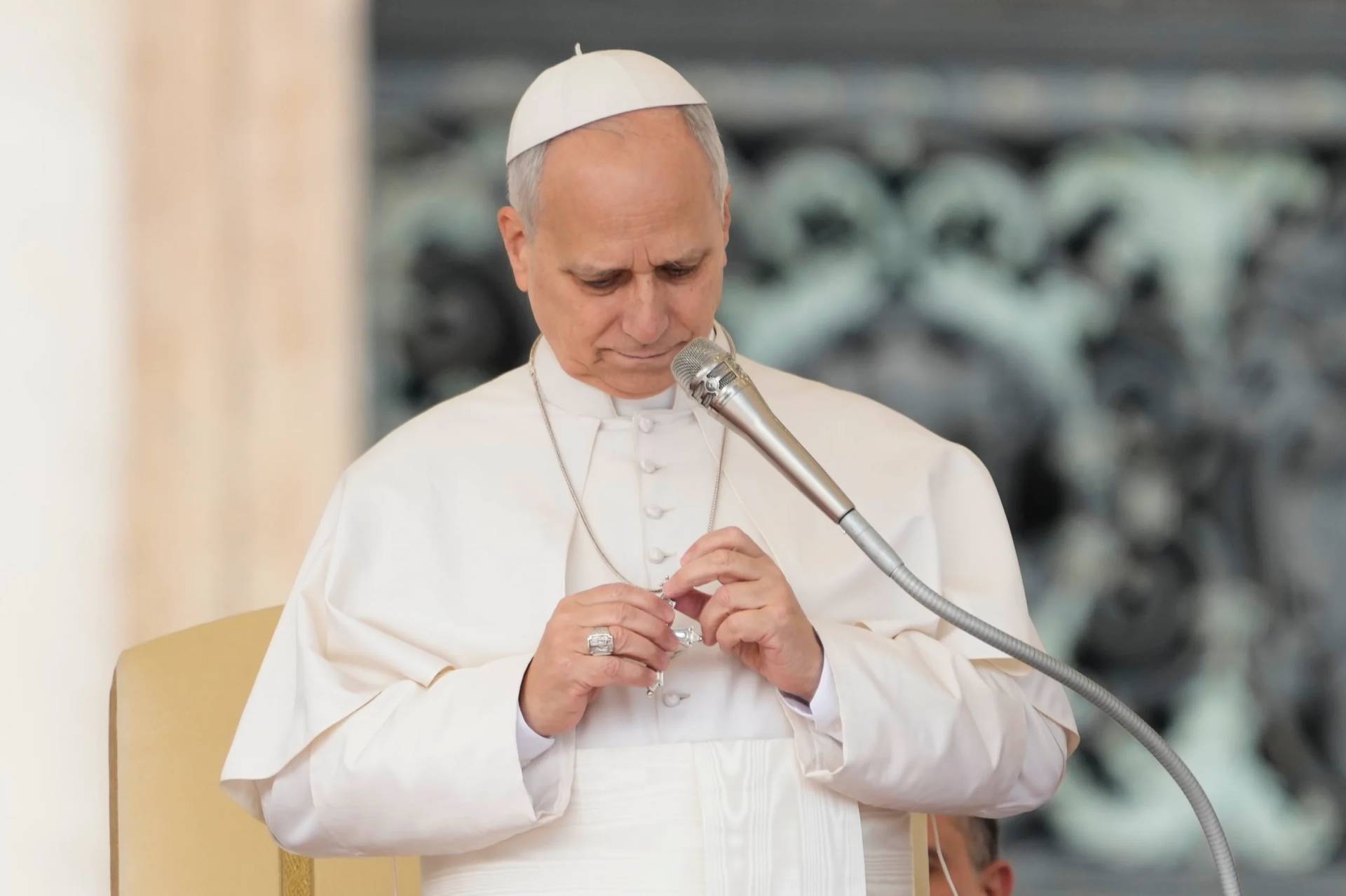
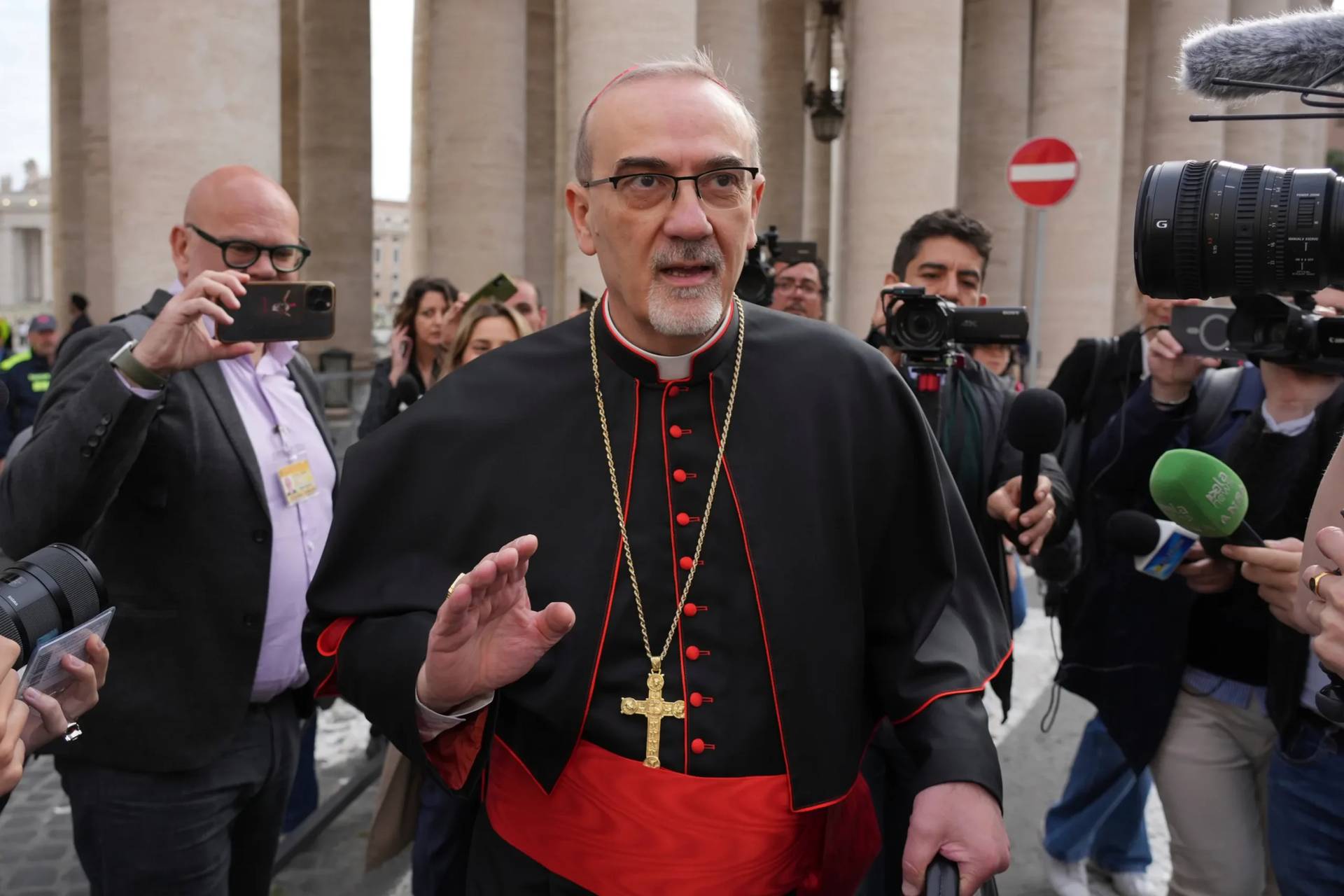
I thought of the expression on Opening Day last week, in connection to a letter from the Vatican’s cardinal secretary of state, Pietro Parolin, to the bishops of France as they entered their plenary assembly last week.
“Inside baseball” and Parolin’s letter
Parolin sent the letter at Pope Leo XIV’s request and said some very important things. The coverage of the letter was mostly confined to the Catholic press, however, and the Catholic press coverage focused on one issue – liturgy – that is quintessential Catholic inside baseball.
We’ll get to that, but it is worth looking first at what Parolin had to say about the other two issues: Catholic education, and the abuse of minors.
“The Holy Father has taken note of the topics you intend to address,” Parolin wrote, “several of which have drawn his interest,” including Catholic education and the bishops’ efforts to confront the painful legacy of clerical abuse and coverup in the country.
“While respecting the convictions of all and maintaining a spirit of broad welcome,” Parolin wrote, “the Pope encourages you to defend with determination the Christian character of Catholic education, which – without reference to Jesus Christ – would lose its very reason for being.”
The Catholic school system in France is very large and very popular, with roughly 8,500 primary and secondary schools serving 2 million students. About a third of French children will attend a Catholic school during their formative years.
Parolin’s remarks also came in the context of shifting social attitudes toward Catholic identity in schools.
A survey conducted by the Institut français d’opinion publique (IFOP) published results in September of last year, showing two thirds of respondents liked the idea of having Catholic school as an option.
Only 39 percent of respondents, however, found it “legitimate for Catholic establishments to offer spiritual time during schooling.”
“Conversely,” the IFOP report stated, “45 percent believe that this practice is not justified.”
53 percent of respondents – a clear majority – rejected the notion that Catholic understanding of the human person and relationships should inform and determine the content of courses regarding “affective, relational and sexual life,” while only 29 percent favored the idea that Catholic schools should teach the Catholic vision of human nature.
Another fact of French national life shades perceptibly into the second issue Parolin mentioned.
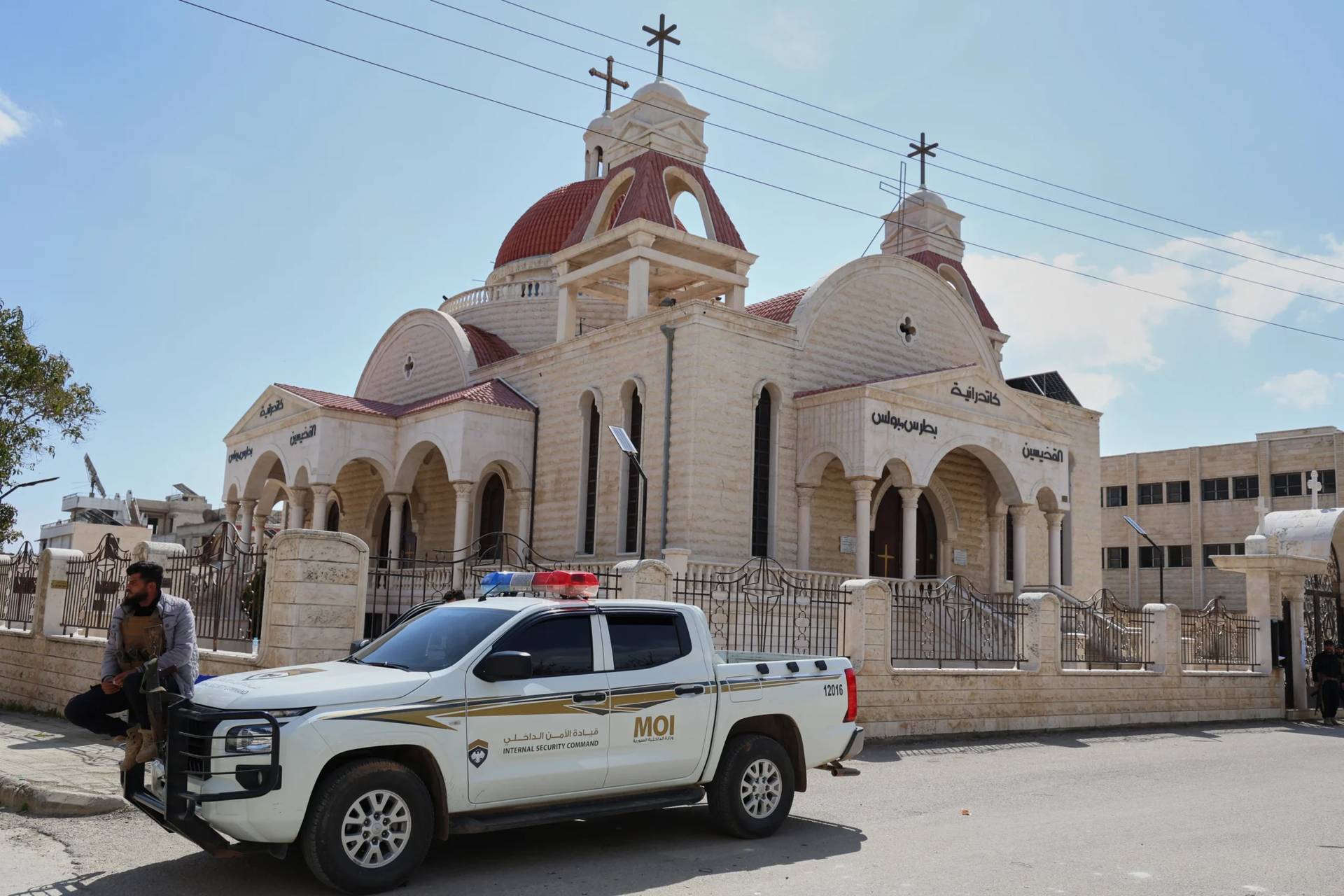
A major and long-simmering scandal centered on a prestigious Catholic boarding school erupted in 2023, when numerous former students at the Institution Notre-Dame de Bétharram (Le Beau Rameau since 2009) came forward with allegations of serious abuse by clerics and lay staff at the school.
There have been more than 200 complaints alleging abuse at Bétharram between the 1950s and the 2000s. The scandal contributed to the ouster of a prime minister in 2025 – François Bayrou, a former education minister whose children attended Bétharram, one of whom claimed abuse at the school – and to calls for more direct state control over Catholic schools in France.
“Your work unfolds in a context of growing hostility toward Catholic institutions and increasing challenges to their distinctive identity,” Parolin wrote, and that is a hard fact to face, one best faced squarely.
The peculiarities of the French situation vis à vis the present and future of Catholic education are such, that it really cannot be taken as a microcosm of the challenges facing the Catholic educational project everywhere.
Still, there is a world-in-a-nutshell quality to the challenges facing Catholic education in France, where the bishops have to figure out how to get out of their own way without giving way to increasingly hostile cultural trends and currents.
Abuse and coverup – a painful legacy and open wounds
Regarding the bishops’ efforts to confront abuse and coverup, Parolin noted “the process of reparations you have undertaken with determination.”
“It is essential to persevere over the long term in prevention efforts and to continue showing the Church’s care for victims and God’s mercy toward all,” Parolin wrote.
“It is fitting,” Parolin also wrote, “that priests guilty of abuse be not excluded from this mercy and remain part of your pastoral reflection.”
“After several years of painful crises,” Parolin wrote, “the time has come to look resolutely to the future and to offer the priests of France – who have been deeply tested – a message of encouragement and trust.”
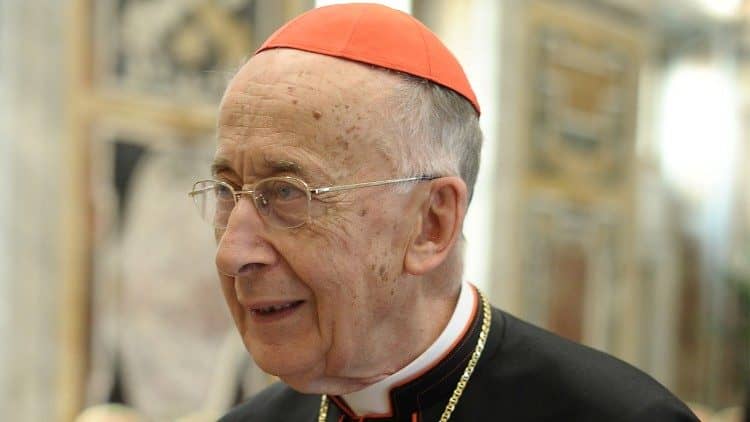
Those are hard truths to hear, but they are more easily spoken than accomplished, especially in a country still reeling from major high-profile scandals like that of the disgraced Cardinal Jean-Pierre Ricard who kept his red hat and – subject to the decision of the local bishop – his faculties to minister within the confines of the diocese where he resides, even though he admitted to molesting a fourteen-year-old girl.
In the event, Bishop Emmanuel Gobilliard of Digne, where Ricard was residing at the time, did not grant him permission.
Archbishop of Bordeaux from 2001-2019, Ricard received the red hat from Pope Benedict XVI in 2006. He was a prominent figure in France and a powerful one in Rome.
In February of 2022, less than a year before Ricard admitted to “reprehensible” behavior toward his teenaged victim when he was a parish priest in the 1980s, Ricard was the man Pope Francis sent to investigate the Foyers de Charité when it emerged that one of the Foyers’ co-founders, André Marie Van Der Borght, was an abuser.
Ricard resigned the post “for health reasons” only a few weeks after taking the job.
News of Ricard’s malfeasance reached the public late in 2022, and news of the restrictions placed on Ricard reached the public through France’s La Croix newspaper in September of 2023.
La Croix reported that the Vatican had imposed restrictions on Ricard during the spring of 2023, but the measures – according to which the confessed child molester would remain a cleric and a cardinal, though he lost the right to say Mass publicly outside his diocese of residence for a period of at least five years, renewable – were not made public either by the Vatican or the French bishops.
So, restoring morale among the rank and file of French Catholics – faithful as well as clergy – is not merely a matter of looking forward. That is the case everywhere, but the particulars of the French situation set the difficulties of the proposition in high relief.
Liturgy – quintessential Catholic inside baseball
Parolin also told the French bishops Pope Leo is “particularly attentive” to “the delicate question of the liturgy,” specifically “in the context of the growth of communities linked to the Vetus Ordo.”
Vetus Ordo is Latin for “Old Order” and indicates the Traditional Latin Mass. More broadly, it indicates the liturgical practice of the Church before the sweeping 1969 reforms of Pope St. Paul VI.
When Paul VI promulgated new liturgical books, he also took the unusual step of making it very difficult – though not impossible – to use the older books.
For decades, small communities of Catholics devoted to the older form of worship struggled within the Church, while other groups broke entirely from the Church.
New priestly communities dedicated to the older form have also grown up, and significant numbers of young people in recent decades have been attracted to the older form of worship.
These days, not many Catholics – even regularly practicing Catholics – are aware of these communities or the controversy surrounding the liturgy.
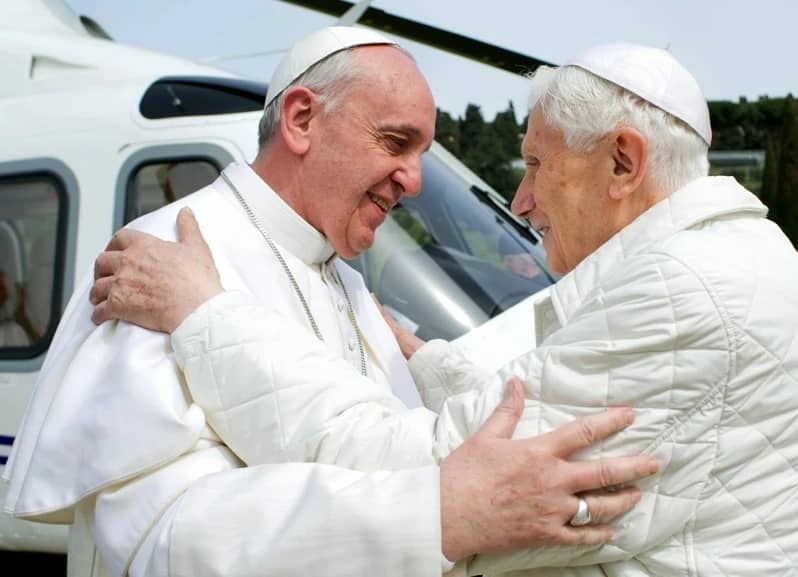
In 2007, after decades of often begrudging toleration from Church leaders, Pope Benedict XVI issued Summorum Pntificum, a motu proprio allowing the free use of the missal and other liturgical books promulgated by Pope St. John XXIII in 1962, the last missal published before the Vatican Council II and the reforms that followed, culminating in Paul VI’s missal of 1969.
The move greatly pleased and encouraged communities devoted to traditional worship, but only fourteen years later, with his own motu proprio of 2021, Traditionis custodes, and subsequent legislation, Francis abrogated Benedict’s liberalizing reform and greatly restricted the ability of bishops to permit the use of the 1962 Missal.
Benedict XVI had made the older books available to priests who wanted to use them, because he wanted all Catholics to feel at home in the Church and hoped to heal the divisions and lingering acrimony over the implementation of the new books.
Francis abrogated Benedict’s liberalizing reform because he had come to believe that bishops around the world were facing serious difficulties from communities devoted to the Traditional Latin Mass, and so felt he had to act to protect the unity of the Church.
Traditional communities did not disappear overnight, and bishops around the world had different responses to Francis’s restrictions. Some implemented them with great alacrity, while others sought by various means to accommodate traditional communities under the new terms and others basically ignored the new rules from Rome.
When Leo XIV was elected, people on every side of the issue wondered what he would do.
In the meantime, Vatican beat reporter Diane Montagna obtained and published an internal Vatican document with survey responses regarding the reception of the Traditional Latin Mass in dioceses around the world.
The document indicated that most bishops were not opposed to the reforms of Pope Benedict, and made it appear that Pope Francis’s restrictions had been issued under false pretenses.
“It is troubling,” Parolin wrote in his letter to the bishops of France, where there is a strong presence of traditional Catholics, “that a painful wound remains within the Church regarding the celebration of the Mass, the very sacrament of unity.”
“Healing it will require a renewed way of looking at one another,” Parolin wrote, “marked by deeper understanding of differing sensibilities—so that brothers, enriched by their diversity, may welcome one another in charity and in the unity of faith.”
Through his cardinal secretary of state, the pontiff is asking the French bishops to model a solution to the controversy that does not require yet another round of legislation from Rome.
It isn’t the first time Leo has looked to a group of senior Church leaders for help on the question.
Ahead of the January 7-8 consistory in Rome, Leo asked four curial cardinals to prepare briefs on four issues, one of which was liturgy, and then asked the cardinals to pick two issues to discuss over their two days together.
The cardinals punted on liturgy.
“May the Holy Spirit inspire you with concrete solutions that generously include those sincerely attached to the Vetus Ordo,” Parolin wrote, “while respecting the liturgical orientations of the Second Vatican Council.”
Parolin is telling the French bishops he will follow their lead, if they put their heads together and come up with a workable solution to the problem.
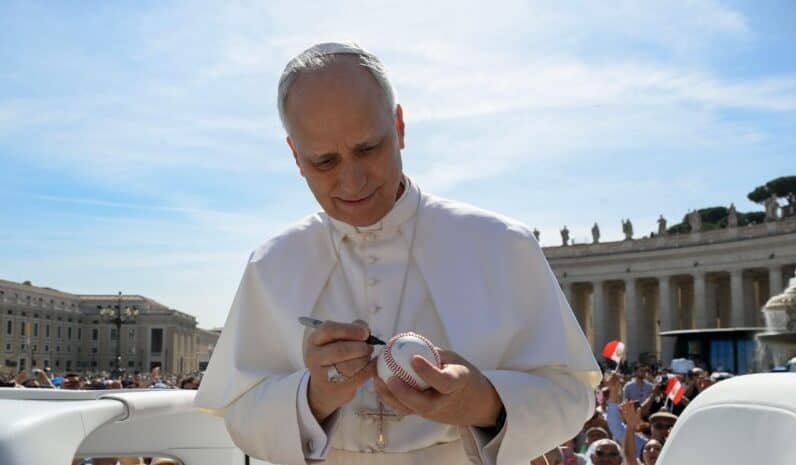
In case you’re interested, my San Francisco Giants played the New York Yankees in the 2026 season opener, and got themselves trounced, 7-0. As of this writing, my Giants still haven’t scored a run in the 2026 season.
Follow Chris Altieri on X: @craltieri