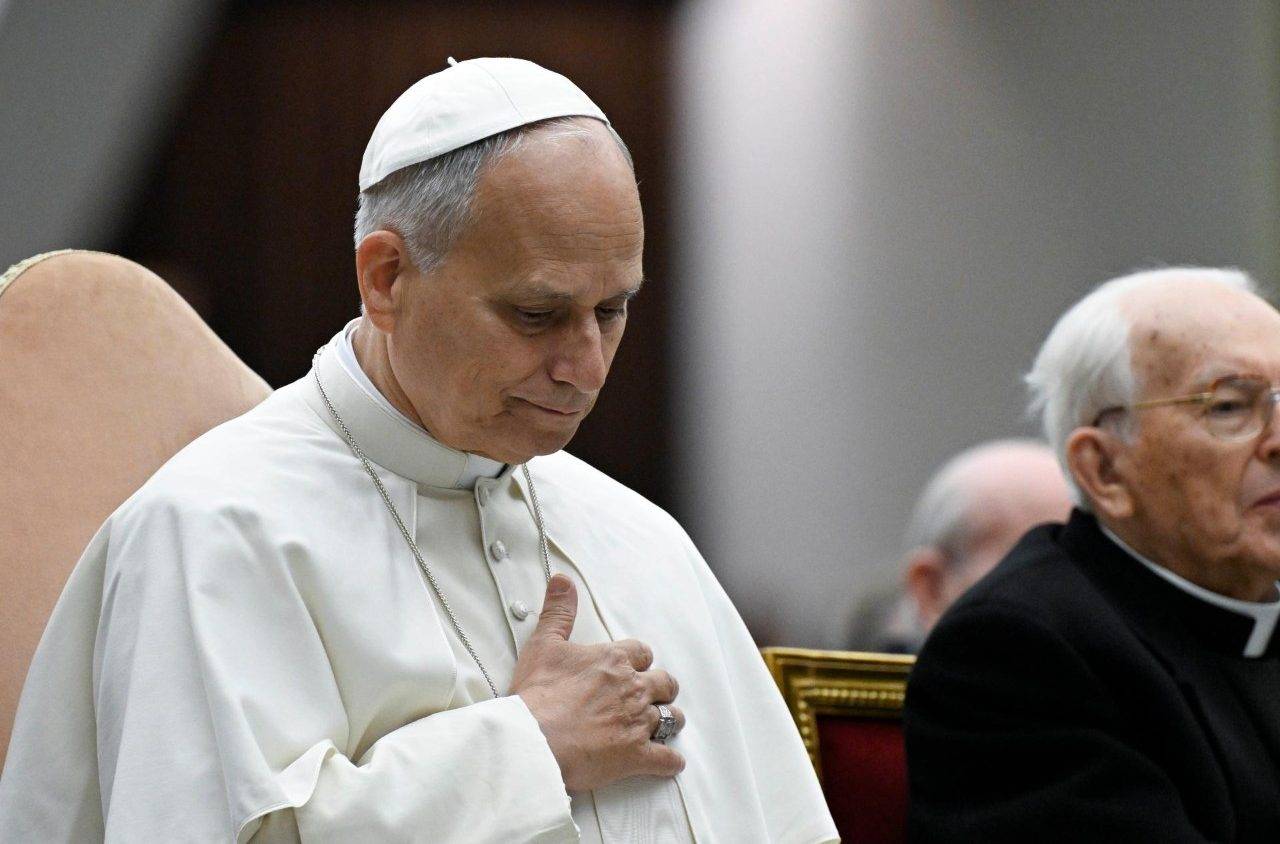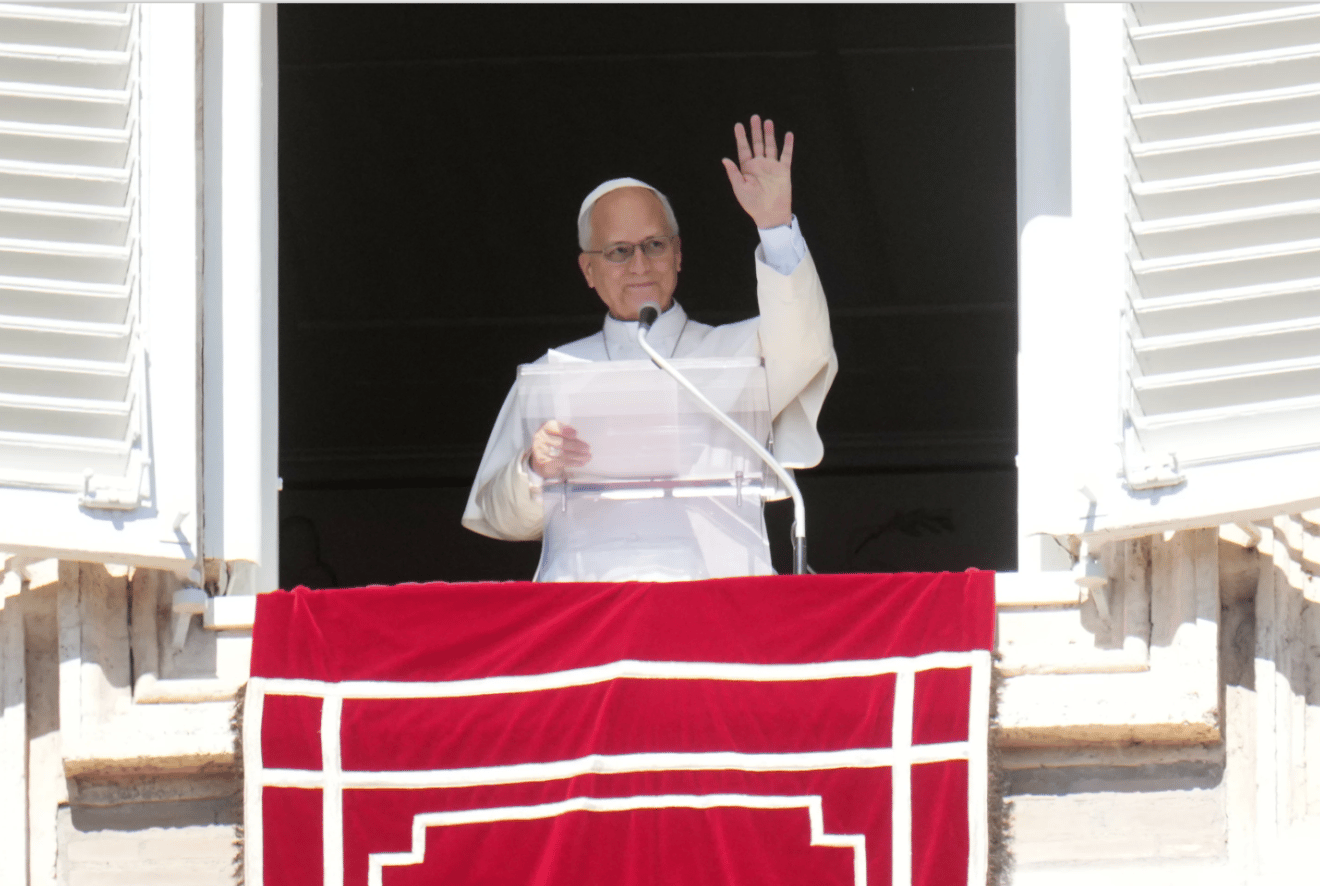
ROME — U.S. Secretary of State Marco Rubio made a fence-mending visit to the Vatican on Thursday to underscore strong bilateral ties, after U.S. President Donald Trump’s broadsides against Pope Leo XIV for his opposition to the Iran war angered the Holy See and sparked ongoing sparring between them.
The U.S. State Department said that the meetings with Leo and the Vatican’s top diplomat covered peace in the Middle East and “underscored the strong relationship between the United States and the Holy See,” and reflected the “enduring partnership” between them.
In a statement, the Vatican said the two sides then exchanged views on current events “with particular attention to countries marked by war, political tensions, and difficult humanitarian situations, as well as on the need to work tirelessly in favor of peace.”
Rubio, a practicing Catholic, had an audience first with Leo, which was complicated at the last minute by Trump’s latest criticism of the Chicago-born pope. Leo has pushed back, calling out Trump’s misrepresentations of his views on Iran and nuclear weapons, and insisting that he’s merely preaching the biblical message of peace.
RELATED: Rubio walks diplomatic tightrope as Trump attacks Pope Leo
During a 2½-hour visit, Rubio then met with the Vatican secretary of state, Cardinal Pietro Parolin, who on the eve of his visit had strongly defended Leo and criticized Trump’s attacks in understated diplomatic terms.
“Attacking him like that or criticizing what he does seems a bit strange to me, to say the least,” Parolin said Wednesday.
After the meetings, the U.S. State Department said that Rubio and Parolin discussed “ongoing humanitarian efforts in the Western Hemisphere and efforts to achieve a durable peace in the Middle East. The discussion reflected the enduring partnership between the United States and the Holy See in advancing religious freedom.”
In a separate statement about the audience with Leo, U.S. State Department spokesman Tommy Pigott said that the two discussed the situation in the Middle East “and topics of mutual interest in the Western Hemisphere. The meeting underscored the strong relationship between the United States and the Holy See and their shared commitment to promoting peace and human dignity,” he said.
The Vatican didn’t immediately comment on the audiences.
Rubio also has meetings Friday with Italian Premier Giorgia Meloni and Foreign Minister Antonio Tajani. Those meetings might not be much easier for Washington’s top diplomat, given both have strongly defended Leo against Trump’s attacks and have criticized the Iran war as illegal — drawing the president’s ire.
Rubio insisted this week that the visit had been in the works for a while, but that “obviously we had some stuff that happened.”
A mission to smooth ties
The tensions began when Trump lashed out at Leo on social media last month, saying the pope was soft on crime and terrorism for comments about the administration’s immigration policies and deportations as well as the Iran war. Leo then said that God doesn’t listen to the prayers of those who wage war.
Later, Trump posted a social media image appearing to liken himself to Jesus Christ, which was deleted after a backlash. He has refused to apologize to Leo and has sought to explain away the post by saying that he thought the image was a representation of him as a doctor.
Rubio said that Trump’s recent criticisms of Leo were rooted in his opposition to Iran potentially obtaining a nuclear weapon, which he said could be used against millions of Catholics and other Christians.
Leo has never said Iran should obtain nuclear weapons and that the Catholic Church “for years has spoken out against all nuclear weapons, so there is no doubt there.”
“The mission of the church is to preach the Gospel, to preach peace. If someone wants to criticize me for announcing the Gospel, let him do it with the truth,” Leo said late Tuesday, after Trump again accused him of being “OK” with Iran having a nuclear weapon.
By Thursday, tensions seemed to have eased.
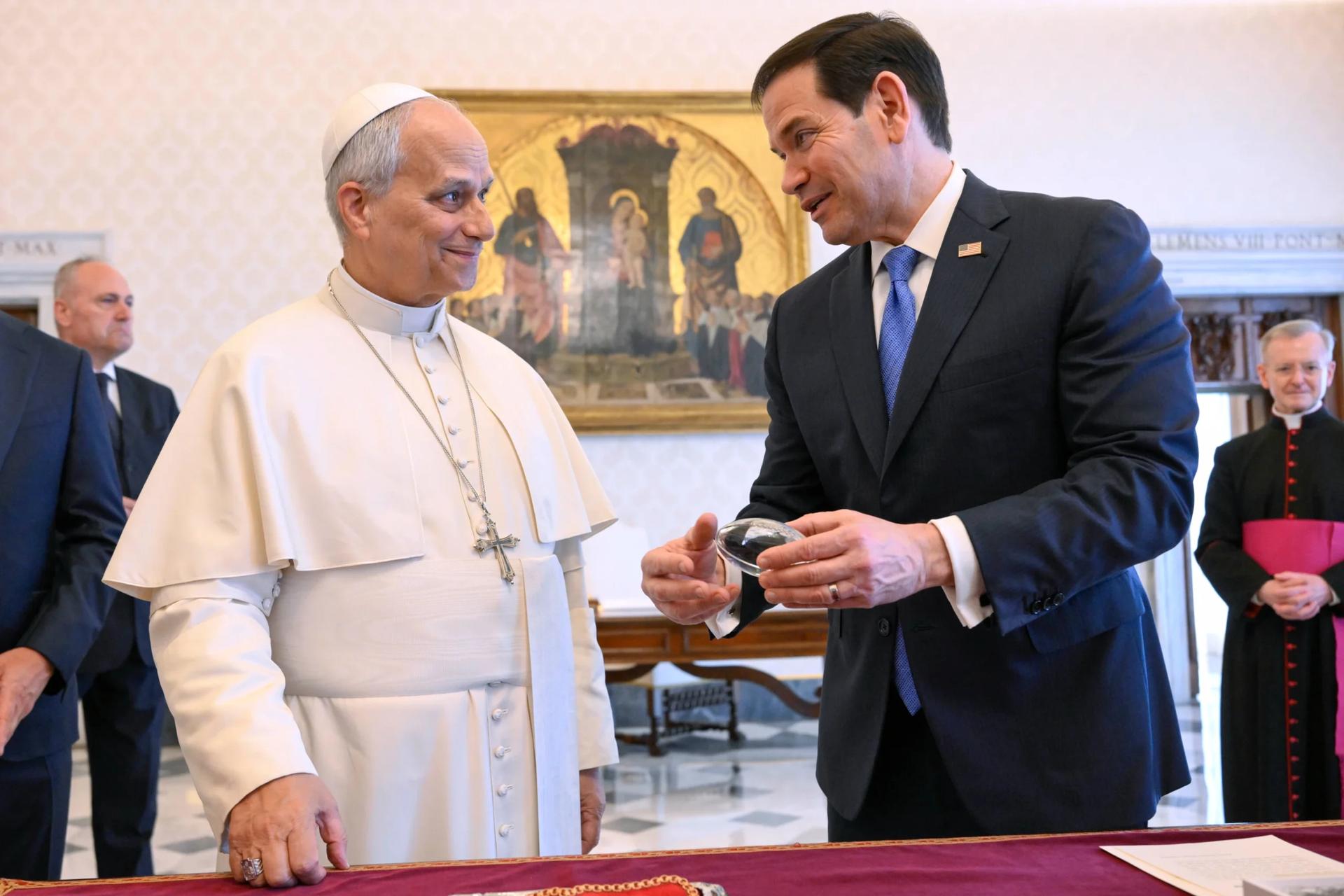
In the exchange of gifts at the Vatican, Rubio presented Leo with a small crystal football paperweight. He acknowledged Leo’s known allegiance to the Chicago White Sox, saying “you’re a baseball guy, but it has the seal of the State Department,” on it.
“What to get someone who has everything?” he joked as he picked the paperweight up.
Leo, for his part, gave Rubio a pen apparently made of olive wood — “olive being of course the plant of peace,” Leo said — with his coat of arms on it and a picture book of Vatican artworks.
Rubio has often been called on to tone down or explain Trump’s harsh rhetoric. Trump also has criticized Meloni and other NATO allies for a lack of support for the Iran war, recently announcing plans to withdraw thousands of American troops from Germany in the coming months.
Vatican seen as willing to have dialogue
Giampiero Gramaglia, former head of the ANSA news agency and its onetime Washington correspondent, said that he didn’t expect much to come out of Rubio’s visit for Italian or Vatican relations. He, and other Italian commentators, believe Rubio instead was looking to smooth over relations with the pope for his own political ambitions, as well as the upcoming midterm U.S. congressional elections and 2028 presidential race.
“I doubt Rubio has the role of conciliator for Trump,” he told Italy’s Foreign Press Association. “I have the perception that Rubio’s mission is more about himself” and his political ambitions as a prominent Catholic Republican.
Father Antonio Spadaro, undersecretary in the Vatican’s culture office, said that Rubio’s mission wasn’t to “convert” the pope to Trump’s side. Rather, Washington “has come to acknowledge — implicitly but legibly — that (Leo’s) voice carries weight in the world that cannot simply be dismissed.”
“The situation created by President Trump’s remarks required a high-level, direct intervention, conducted in the proper language of diplomacy: a semantic corrective to a narrative of frontal conflict with the church,” he wrote in an essay this week.
Cuba is also on the agenda
Rubio said that topics other than the Iran war were on the agenda for the Vatican visit, including Cuba. The Holy See is particularly concerned about the Trump administration’s threats of potential military action there following its January ouster of Venezuelan President Nicolás Maduro.
Trump has said frequently that Cuba could be “next,” and even suggested that once the Iran war is over, naval assets deployed in the Middle East could return to the United States by way of Cuba.
Rubio is the son of Cuban immigrants and a longtime Cuba hawk.
“We gave Cuba $6 million of humanitarian aid, but obviously they won’t let us distribute it,” Rubio said. “We distributed it through the church. We’d like to do more.”
Matthew Lee, the AP’s diplomatic writer, reported from Washington.