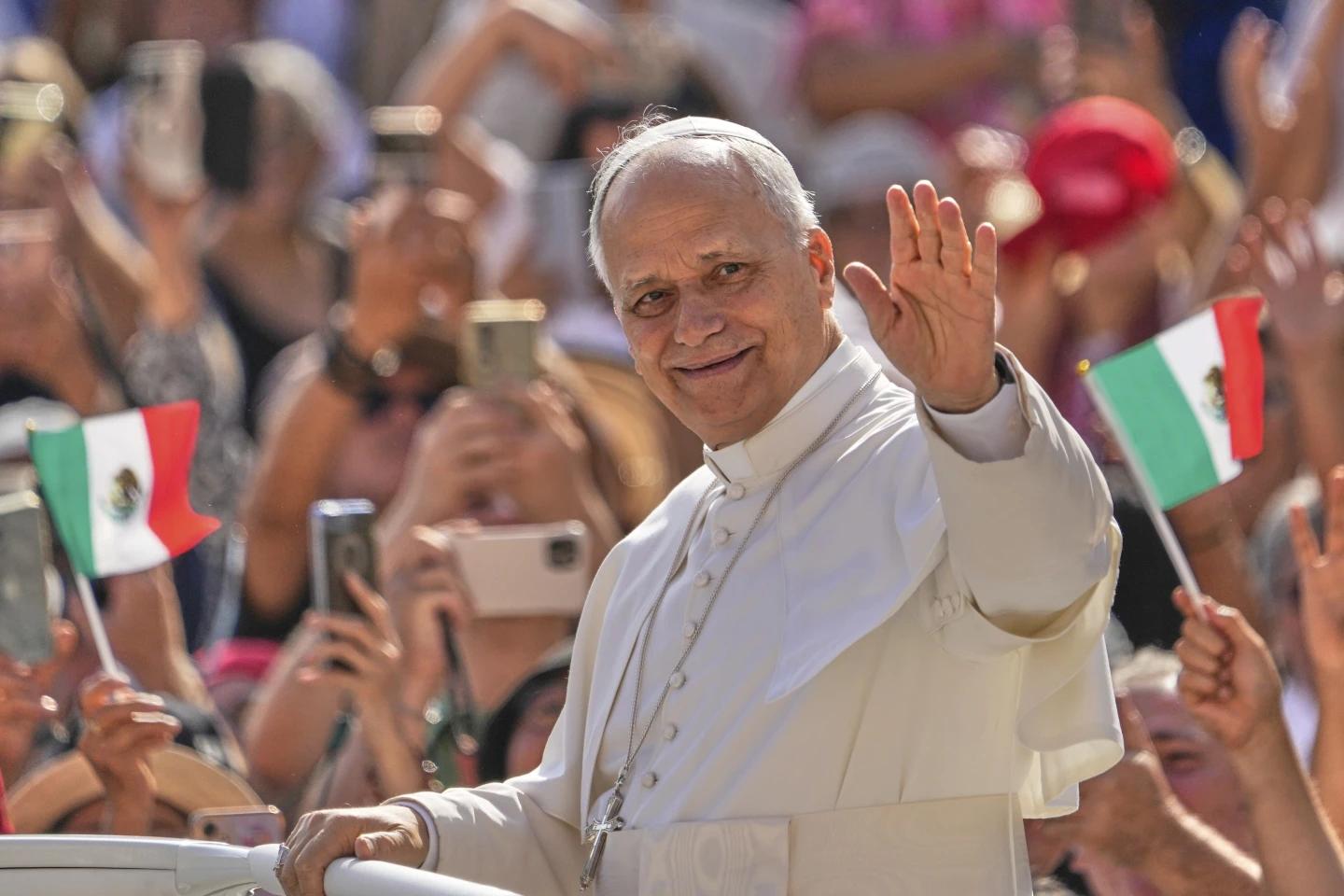
ROME – When Pope Leo XIV embarks on his six-day trip to Spain, he will be traveling to a country struggling to overcome deep polarization and political divisions, as well as a church battling a growth in secularism.
Pope Leo will be in Spain from June 6 to 12, visiting Madrid, Barcelona and the Canary Islands, and stopping in Las Palmas and Tenerife to highlight the plight of migrants making the perilous journey from Africa into Europe.
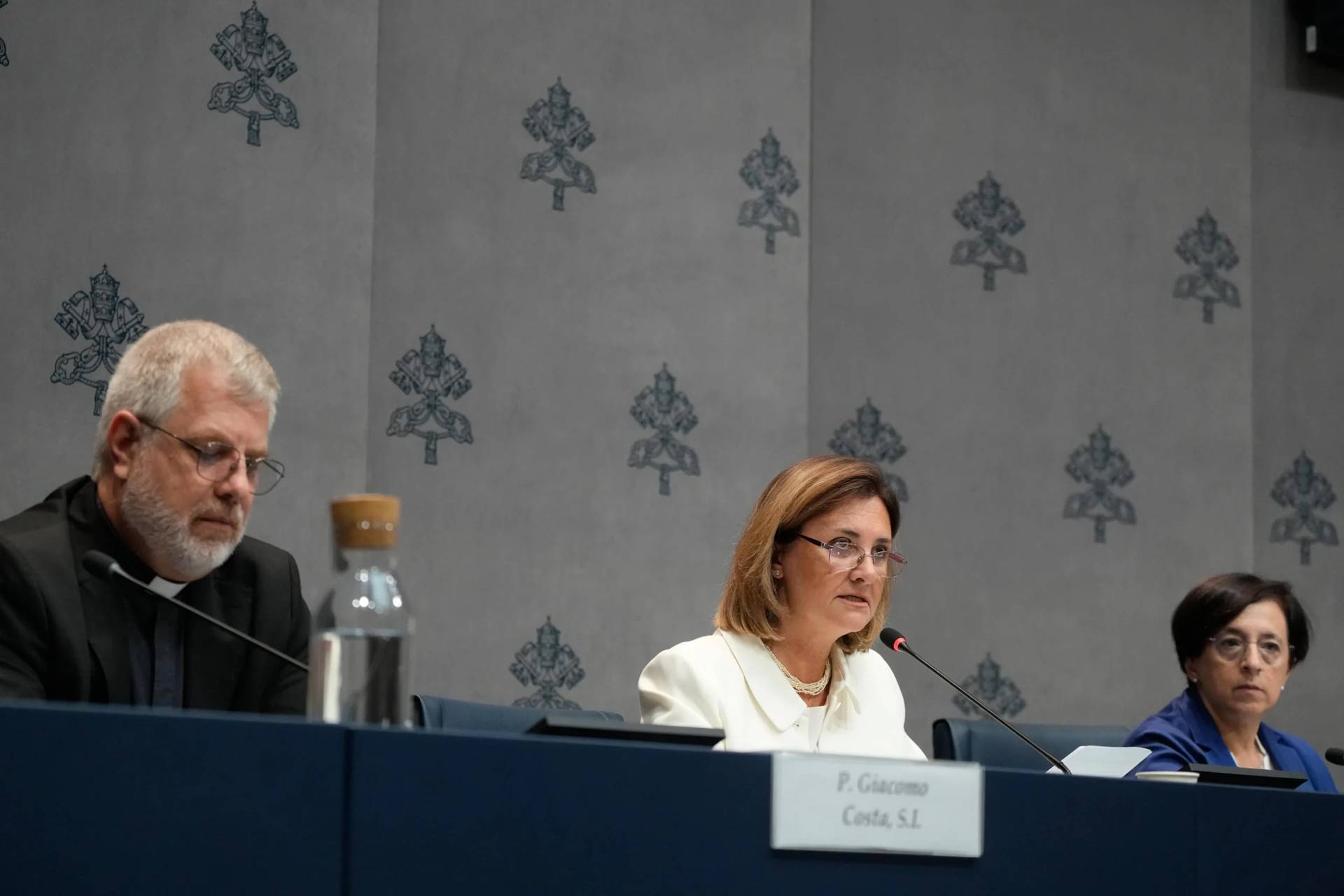
Speaking to the international press ahead of the trip, Vatican spokesman Matteo Bruni said the pope is expected to touch on several key overarching themes throughout his visit, including young people, the family, and dialogue with the world of culture.
The pope, Bruni said, will also address hot-button issues such as migration, as well as dialogue between the church, politics and culture as a remedy to polarization, and the need to pursue peace “at a time when the use of weapons is being justified.”
In this sense, Bruni said, the pope will reflect on “the role of the Church in Spain and, more generally, of the Church in Europe, in light of its history, its entire history, as a precious treasure, in times of greatness and in times of crisis.”
Boosting faith amid secularism
Leo, an Augustinian and former prior general of the Order, knows Spain well, as the Order’s largest province is San Juan de Sahagún in Spain, and he has visited the country nearly 50 times.
For centuries, Spain was one of the Catholic Church’s leading evangelizers, with missionaries spreading the faith throughout Latin America, Africa, and Asia, using the Philippines as a key launching pad to dispatch missionaries to Japan, China and other Asian lands.
Though entangled with the complex legacy of Spanish colonialism, such was the impact of the country’s evangelization efforts that at one point during Pope Francis’s January 2015 visit to Manila, in the Philippines, a laywoman waiting outdoors overnight to attend a papal Mass thanked the pope for coming, and thanked Spain, specifically, for bringing the Catholic faith to the nation, now home to the largest Catholic population in Asia.
Spain’s legacy of evangelization has been overshadowed in recent years, however, by a rapid growth in secularism.
Though the majority of the population, some 54-70 percent identify as culturally Catholic, that number has fallen from 90 percent in the 1970s, with much of the population, and an increasing number of youths, identifying as atheist or agnostic. According to the Spanish bishops’ conference’s official activity reports, the number of annual baptisms in the country fell by nearly half in less than 20 years, standing at 325,271 in 2007, and 159,693 in 2024.
Part of the shift has been cultural, amid a much broader European trend toward secularism in recent decades, and part has been related to scandals such as the clerical abuse crisis, including a 2023 investigation by Spain’s human rights ombudsman which reported that since 1940, over 400,000 Spaniards suffered abuse by members of the clergy.
Despite an uptick in lay-led youth faith movements in recent years and a fresh zeal for the faith among the younger generations, Leo will have to navigate opinions diverging from Church teaching on issues such as same-sex marriage and abortion, making his comments on the value of life and the family an important message for the local Church.
Speaking to a broader audience
Famous for his preference for the peripheries, Leo’s predecessor Pope Francis routinely opted out of visiting major European nations such as France, Spain, and Germany, preferring instead to travel to small nations never previously visited by a pope, or where the church was a tiny minority.
Though he visited cities in France on several occasions, including Strausburg, Marseille, and Corsica, for example, Francis never made a formal state visit to France.
So far, Pope Leo with his choice of international trips has demonstrated a balancing act between Catholicism in the old world and the new, visiting the Middle East, Africa, now Spain, and with future trips planned to France and Latin America.
A missionary to the core, Pope Leo is making a concerted effort to engage the Catholic Church at its historic roots in the West, as well as where it is growing fastest in the Global South, bridging these two worlds to encourage a blossoming flock in so-called “mission territories,” and to reinvigorate the faith in areas where pews are increasingly empty, but where the Church still has a message to offer.
For years, Europe’s bishops have made repeated appeals for nations and EU entities to return to the Christian values at the foundation of Europe, and which had long been the ethos of institutions such as the European Union and the United Nations, at a time when these institutions, and multilateralism more broadly, are in crisis.
Bruni said Leo is likely to invoke the plight of migrants and the “history of welcome in Europe” generally, when he speaks in Madrid to national authorities.
Whatever message Pope Leo delivers on thorny political issues such as migration, war and peace, and the rapidly developing tech industry, will have a resonance not only in Spain, but throughout the continent.
A packed itinerary of faith, politics, and culture
Pope Leo’s itinerary in Spain, a trip that holds the motto, “Lift your gaze,” is jam-packed with official state events, liturgies and moments of prayer, outings to charitable initiatives, and cultural moments.
In Madrid he will be greeted upon arrival by King Felipe VI and will meet with national civil authorities as well as members of Spanish Parliament. He will also visit a center that serves the homeless and preside over meeting with the world of culture, art, economy and sport.
A highlight will be his Mass and procession for the solemnity of Corpus Christi, as well as his visit to the Cathedral of Holy Mary of Almudena, where he’ll pay homage to the local devotion.
Leo will also meet with young people, bishops, and members of the diocese, and will preside over several prayer events before moving onto Barcelona.
His stop in Barcelona is centered on perhaps the most highly anticipated event on his schedule: the blessing of the recently completed Tower of Jesus Christ of the Sagrada Familia, the Basilica of the Holy Family, topped by a white cross, which makes it the tallest church in the world.
The event, and Leo’s presence, commemorate the centenary of the death of Venerable Antoni Gaudí, called “God’s architect,” on June 10, 1926. There is currently a cause open for his beatification.
Leo in Barcelona will also visit a prison, hold a meeting with diocesan charity and welfare workers, and will meet with bishops, priests, deacons, religious, seminarians and diocesan workers, in addition to holding a public Mass and recitation of the rosary in the historic Abbey of Our Lady of Montserrat.
He will then move onto the Canary Islands, where, according to Bruni, he will likely address the struggles of migrants and speak of Spanish missionary efforts.
Pope Leo will stop in Las Palmas, where he’ll meet with organizations assisting migrants, hold an encounter with bishops, priests, deacons, religious, seminarians and diocesan workers, and celebrate Mass.
On his last day in Spain, the pope will visit Tenerife, where he will meet with migrants and organizations involved in integration efforts before celebrating Mass and boarding his return flight to Rome.
Balancing political engagement, human issues, and moments of prayer and devotion, Leo’s itinerary signals his desire to engage the complex geopolitical context and touch issues of the day, while reminding Spain – and Europe – what the guiding principles of the discussion ought to be: the Gospel, and the faith that keeps the wellbeing of humanity at the center.
Follow Elise Ann Allen on X: @eliseannallen