
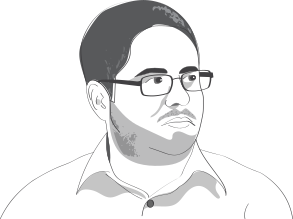

SÃO PAULO – The Cardinal Archbishop of Manaus has decried a startling increase in violence against indigenous persons in Brazil, as Indigenous communities face various attempts to drive them off what little they still hold of their ancient lands and further into marginalization.
“Our society is experiencing tremendous tension when it comes to human dignity,” Cardinal Leonardo Steiner told Crux Now, “and Indigenous people, of course, suffer because their lands are coveted.”
A Franciscan friar since 1976 and a bishop since 2005, Steiner was appointed by Pope Francis to lead the Manaus archdiocese in 2019. Francis created him a cardinal – the first from the Amazon region – in 2022.
In a wide-ranging exclusive interview with Crux Now, Steiner also shared his view of upcoming general elections, praising the accomplishments of President Lula da Silva’s administration and lamenting legislative obstruction, especially on measures favoring Indigenous rights and dignity.
“The [Lula da Silva] government has accomplished a great deal from an economic and social standpoint,” the cardinal told Crux Now, “but if the makeup of Congress were different, the government could have done even more, especially when it comes to Indigenous issues.”
“In Congress, there are only a few representatives and senators who are truly interested in defending Indigenous causes,” Steiner said.
The cardinal told Crux Now he hopes there will be a change in the national legislature, which “has become a place where economic groups think only of themselves and has ceased to be a place for thinking about Brazil,” he said.
Brazil’s national legislature has two houses – a Senate and a Chamber of Deputies – and is politically complex, with dozens of parties holding or contending for seats.
“Unless we change the makeup of Congress,” he said, “it will be very difficult to bring about broader change on this issue [of indigenous rights].”
Earlier this month, the CIMI released an annual report documenting a startling increase in deadly violence against Indigenous persons.
258 Indigenous people were murdered in 2025, compared with 211 cases reported by CIMI in 2024. Other incidents involving bodily injury, attempted murder and repeated acts of violence also increased.
The number of land disputes reached 169.

There is an ongoing legal dispute over the demarcation and official recognition of traditional Indigenous territories in Brazil, currently at an impasse.
Large landowners and the politicians they support contend that only territories effectively occupied by Indigenous groups when the current Constitution was promulgated in 1988 can be officially recognized as Indigenous lands today.
Their position, known as the time-limit thesis, has faced resistance from the judiciary branch.
The Supreme Court ruled the time-limit thesis unconstitutional in 2023, but Congress managed to pass Law 14.701, which incorporates the same legal framework, just a few months later. Supreme Court justices have been reviewing the constitutionality of law 14.701 ever since, but no final decision has been reached.
“I hope that by the end of this year, or early next year, the Supreme Court will reach a position and free us from this struggle, which is an insane one and has been going on for many years,” Steiner told Crux Now.
Below, please find a transcript of Crux Now‘s conversation with Cardinal Leonardo Steiner of Manaus…
Crux Now: Cardinal Steiner, the CIMI report mentions not only murders, assaults and other forms of violence, but also horrific cases such as that of an Indigenous young man who was branded with a hot iron on a farm, just as cattle are branded. How did we get to the point of treating Indigenous people in such an inhumane way?
Cardinal Leonardo Steiner: There is real prejudice.
In fact, we have discussed including a new element in next year’s report: This issue of contempt and prejudice against Indigenous peoples, which has been growing.
Branding someone is bestial. To call it inhumane is not enough. It also means treating a person as someone who can be owned.
For a human being to be someone’s property – we are going back to the days of slavery, which, incidentally, Indigenous people in Brazil also endured in the early days of the country.
Indigenous people have been treated as nonpersons.
Our society is experiencing tremendous tension when it comes to human dignity.
There is a great deal of aggression in people’s words, for example. The dignity of others is not respected. An adversary is always treated as an enemy who must be eliminated.
And Indigenous people, of course, suffer because their lands are coveted. There is a great deal of greed for their lands.
Do you think the hatred toward Indigenous people that we see among powerful sectors of society in Brazil and other Latin American countries has been growing, or has it simply found ways to express itself more openly in recent years?
This hatred is not directed only at Indigenous peoples. It is also directed at the poor.
Look at what is happening in Africa, Asia and Latin America.
Sometimes you get the impression that poor people are not considered human beings. Whereas the Gospel tells us that every person is a child of God and has a dignity that no one has the right to trample on.
That is why, at CIMI, we are not afraid to say what needs to be said.
Sometimes we are attacked. That doesn’t matter. What matters is that we stand alongside these children of God and the way of life they want to have.
I have been to many Indigenous villages. They don’t want anything else. They simply want to continue living the way they live, even when they adopt some of our technologies.
They want a way of life in which people respect one another, live together, sing together, and share in their rituals. From the perspective of our contemporary mindset, this way of thinking is seen as laziness.
Today, many people think that we always need to make a profit. This was particularly pronounced under the previous government [of President Jair Bolsonaro, from 2019 to 2022].
But at the root of it all, there is always one very simple issue: land.
Do you think the Supreme Court will rule on the time-limit thesis anytime soon?
I’m getting the sense that perhaps by the end of this year or the beginning of next year, we may reach some kind of conclusion.
Whether it will be very favorable to Indigenous people or not, I don’t know.
The vote Justice [Luiz Edson] Fachin issued is an excellent one. And from what I have been reading, Justice Cármen Lúcia Antunes Rocha and Justice Cristiano Zanin have joined him in that position.
Back in 2023, the Supreme Court ruled that the time-limit thesis was invalid. Of course, Law 14.701 was subsequently enacted, and Congress even threatened to enshrine the time-limit thesis in the Constitution.
But that cannot be done, because there are provisions of the Constitution that cannot be amended.
I hope that by the end of this year, or early next year, the Supreme Court will reach a position and free us from this struggle, which is an insane one and has been going on for many years.
CIMI has been working very hard on this, and it has taken a tremendous toll on us as well.
How do you assess the Lula da Silva administration’s record on Indigenous rights as it approaches the end of its term in December?
The [Lula da Silva] government has accomplished a great deal from an economic and social standpoint, but if the makeup of Congress were different, the government could have done even more, especially when it comes to Indigenous issues.
The government made a major effort, for example, in the case of the Yanomami people [who were facing a humanitarian crisis and a massive invasion of their territory in January 2023], increasing the presence of the state and cracking down on illegal mining.
RELATED: Church supports Brazil’s Yanomami people amid ongoing challenges
Several Indigenous territories have been officially demarcated. The previous government had promised not to demarcate any Indigenous lands, and in fact it did not demarcate any.
The government also created a Ministry of Indigenous Peoples, which was a significant and demanding step, but the government always runs up against a barrier in Congress.
Unless we change the makeup of Congress, it will be very difficult to bring about broader change on this issue.
In October, Brazil will hold general elections [voters will elect members of Congress, senators, state governors and the president; President Lula da Silva, who is seeking reelection, will face Jair Bolsonaro’s son, Flávio Bolsonaro. What do you hope to see over the next four years?
I hope there will be a change in Congress, which has become a place where economic groups think only of themselves and has ceased to be a place for thinking about Brazil.
In Congress, there are only a few representatives and senators who are truly interested in defending Indigenous causes. There aren’t many.
This has put pressure even on us at CIMI. It has also compelled Indigenous people to speak out more and more forcefully, to see whether we can be heard, to see whether people will recognize their dignity.
But it is very difficult.
It seems they don’t want to listen. In the Church, we have increasingly tried to listen to Indigenous peoples, but in Brazilian society this has almost disappeared.
Since the Amazon Synod in 2019, would you say there has been progress toward a Church that listens to Indigenous peoples and works with them in a more horizontal way?
We have taken many steps forward.
In São Gabriel da Cachoeira, Amazonas state, liturgical texts are being translated into three different languages.
At the seminary, we have always sought to listen and to incorporate certain gestures into the liturgy that can help express Indigenous cultures.
Of course, the Synod was an expression of what was already being done – at least in many local churches.
But the apostolic exhortation Querida Amazonia and the Synod brought new impetus. They are seeds sown in the earth that are gradually bearing fruit.
Each Indigenous people has its own way of life, its own language, its own culture. Society lumps all of them together.
At the seminary, we have people from different Indigenous groups, and they think in different ways.
We hold meetings among them so that each person can explain what their people are like, how they think, how they live their faith.
As a Church, we are careful not to treat everyone as if they were the same, but rather to encounter each people individually, always welcoming them, as Pope Francis wished.
There are many elements in the liturgy through which it is possible to express respect for others and respect for their culture.
Does the fact that Pope Leo XIV spent so many years working in Peru, in contact with Andean peoples, including people who only speak Quechua, make his pontificate more sensitive to Indigenous issues?
When I was in Rome, one of the local newspapers asked me what could be expected from the pope, and I said: “Our Pope comes from among the poor. No one who has lived among the poor comes away the same. They always come away transformed.”
And we have sensed this in the pope.
He is attentive, he is simple, he seeks what is good for the Church, and he has sought to listen to everyone.
I think he is continuing Pope Francis’ pontificate. Of course, in his own way. But he is leading the Church along the paths of the Gospel.