MANILA, Philippines – Filipino Jesuit Father Henry Ponce, 51, knows the feeling of a migrant. He himself was one.
For seven years, before he entered the Society of Jesus in 2004, Ponce worked as a design engineer who had to stay in Japan for one to six months at a time. He was one of the millions of overseas Filipino workers, popularly known as OFWs, seeking a better life for their families even as they boost their country’s economy.
Looking back at his experience as an OFW, Ponce now stands with abandoned migrants in a Jesuit parish in war-torn Lebanon. It has been a decade since he became the first priest from the Philippine Jesuit Province to be assigned to the Middle East in 2017.
Ponce spoke to Crux Now via video call at 8 pm, Beirut time, on Thursday — or 2 am, Manila time, on Friday — about his experience sheltering migrants at the Arrupe Migrant Center in Beirut. The center is based in Saint Joseph Church, where Ponce is the parish priest.
Ponce, who broke into tears in parts of our interview, talked about the pains and the life-giving joys of a pastor facing the “madness” of war.
Crux Now: How would you describe the situation in Lebanon?
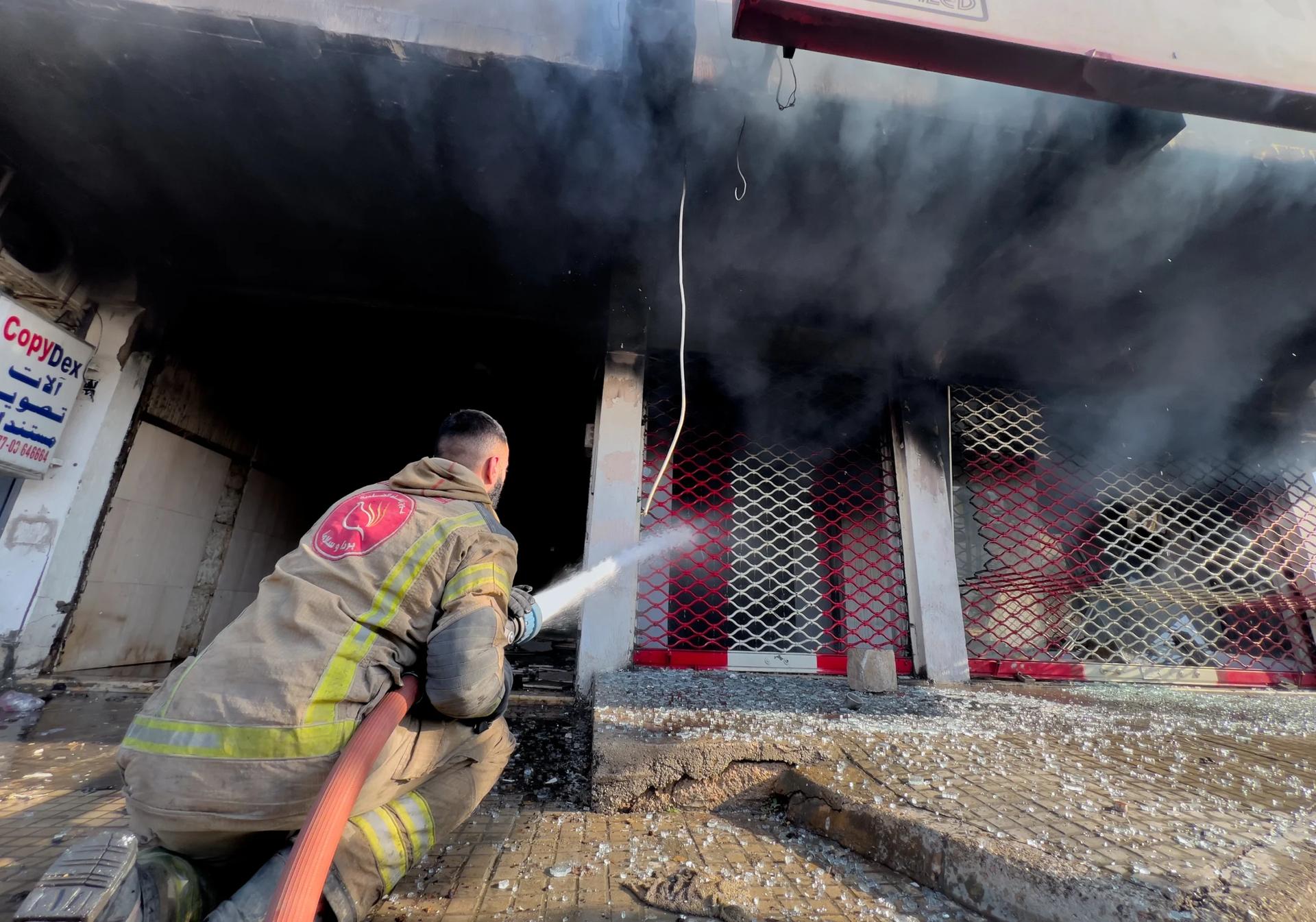
Ponce: It is really tense and very alarming. Before, when Israel would attack a particular building, they would send a warning to the community in that area to evacuate because they were targeting a specific spot — very precise, like in the movies. But this time, their warning isn’t just for a building; it is for an entire area.
The coverage is massive. Imagine residents panicking to evacuate while being given specific routes to follow. If you are from Hadath, you go one way; if you are from Chyah, you go another. It’s madness. Where will the people go? This is the first time they have made an announcement of this scale, so it’s terrifying.
How are the Filipinos there?
Many are seeking shelter with friends. There is a specific complication for OFWs married to Lebanese nationals, particularly in the Dahieh area. If the husband is a Shia Muslim and they try to go to a shelter, they are often not accepted because it is considered risky. People fear that because Hezbollah is a Shia group, anyone who is Shia might be a target or have a connection to the group. They struggle to find accommodation in general shelters.
This is what I am trying to do with the help of Tres Marias.
Tres Marias is a Filipino NGO that is very organized and active here. It was formed by women like Myra Aragon, May Ibrahim, and Mimi Nashef during previous crises in Lebanon — the revolution, the economic crisis, the 2020 Beirut explosion, and then the COVID-19 pandemic. I saw their initiative and I said, “I am going to help you. I will look for funds, and then you do the work on the ground.” I collaborate with them by forwarding the donations I receive. I’ve told them to take care of the OFWs because our church shelter is already overflowing.
It’s so sad, on my part, that we cannot accommodate Filipinos because we are fully booked. So I tell them to look for places to rent — we receive monetary donations so let us use them — and prepare food for them.
You are currently sheltering 130 to 150 people. Where are they from?
Mostly from Sudan and Bangladesh. Our capacity is supposed to be only 80 people. It is so painful to turn people away, but we are doing what we can. Even for the Filipinos, I tell them: “I’ll put your name on a list. If you have absolutely nowhere else to run, just come. Even if you have to stay outside, as long as you are in the church compound, it is a safer space for you.”
Can you recount one interaction with someone who wanted to take shelter in your parish but you could no longer accommodate the person? What did the person tell you? How did you respond?
The shelter is run by the Jesuit Refugee Service (JRS), which is very organized. They register those who come and get their information, then it is “first come, first served.”
A Filipina came to us, but we were already full. Her situation was different because she was still working; she only wanted to come to the shelter during actual attacks.
I told her, “We are full, but if that happens and you have no other choice, just come here and I’ll take you.” I also coordinated with Tres Marias to see if they could accommodate her.
So, just a while ago, when this late warning came, I called the Tres Marias and asked how to go about it. Because sadly, the place that she was trying to book as a temporary shelter backed out due to fear. Now, we are looking for another place and asking Filipino neighbors to accommodate the person who has no place to go, and then we will provide food and other needs in the meantime.
It’s painful when our own kababayan (countrymen) are struggling, and I can’t accommodate them because of the lack of space. But we’re trying to find ways to find a place for them. I’m sure other Filipinos are willing to help.
Why do you say that it is painful?
It is painful because they are our kababayan. I am a Filipino parish priest, and I feel helpless because we are fully booked and there is nothing I can do.
I wake up early to feed the people currently in the shelter, and while they aren’t my nationality, they were the ones who responded to the warnings first.
You said that other nationals respond immediately to the warning. What about Filipinos? Don’t they respond immediately?
No. I think they are used to it; they’ve survived similar situations before. They also can’t just leave their houses or their jobs. The Philippine embassy has a shelter, but my understanding is that once you enter, you cannot leave until the situation is cleared. For those who still need to work, they cannot leave.
How can people outside Lebanon help your mission?
I am deeply grateful to the Tanging Yaman Foundation and Father Manoling Francisco, SJ, and his team. They initiated a call for donations on Facebook, and those funds are sent directly to us. There is also immense support from international Jesuit organizations. I am moved to tears knowing that I am not alone in this mission.
Did you choose to be assigned to Lebanon?
We have a vow of obedience as Jesuits, as religious. When our superior sends us to a mission, we obey.
But I was an OFW. I used to work in Japan before I became a Jesuit. That’s my vocation story. I know the struggles of an OFW, so when God called me, I wanted to respond to the calling to minister to OFWs.
That’s why it is painful for you to turn away OFWs, because you were an OFW before.
Yes, exactly. And I know how hard it is. I feel what they feel.
When there was a request for a missionary in Lebanon, my superior said, “I have the right person for this job.” I had no idea what Lebanon was. I readily said yes.
How does this ministry to OFWs give meaning to your life as a priest?
It isn’t just meaningful; it is life-giving for me. This is where God called me to be. I feel most alive in responding to God here, even though it is challenging.
What do you say to those who “cheer” for war or justify the destruction?
Every war destroys lives, and I don’t think God is pleased with that. Nothing good comes from it. The victims are always the powerless. People have their polarized narratives and their seemingly valid reasons, but from God’s perspective, I don’t know how anyone can rationalize it. As the Pope says, we must find another way to resolve such conflicts.
What is your deepest prayer right now?
Peace. I pray that this will be resolved and that the crisis will not escalate further. My immediate prayer is: “Lord, have mercy.” We surrender everything to Him.