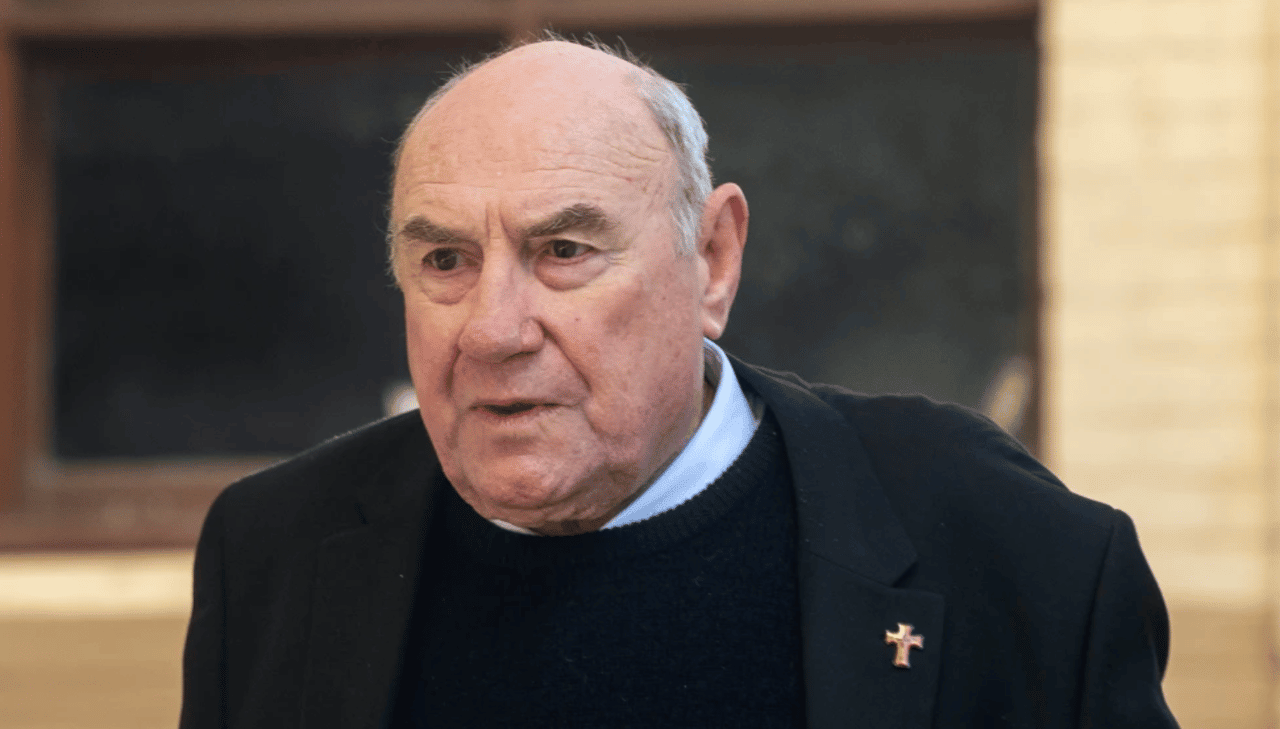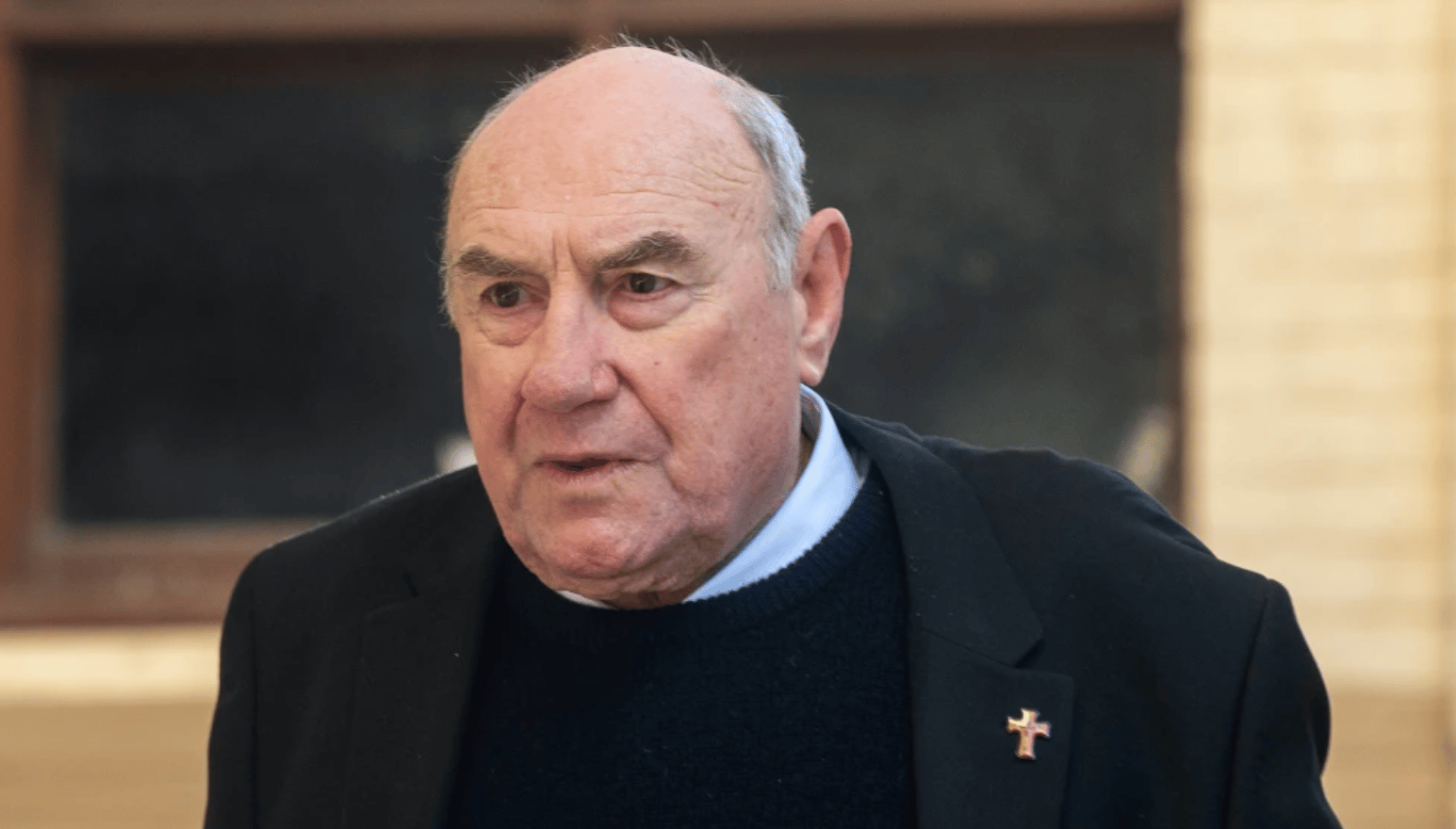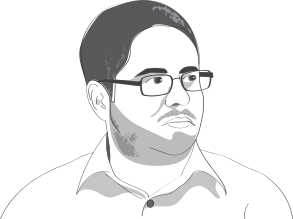
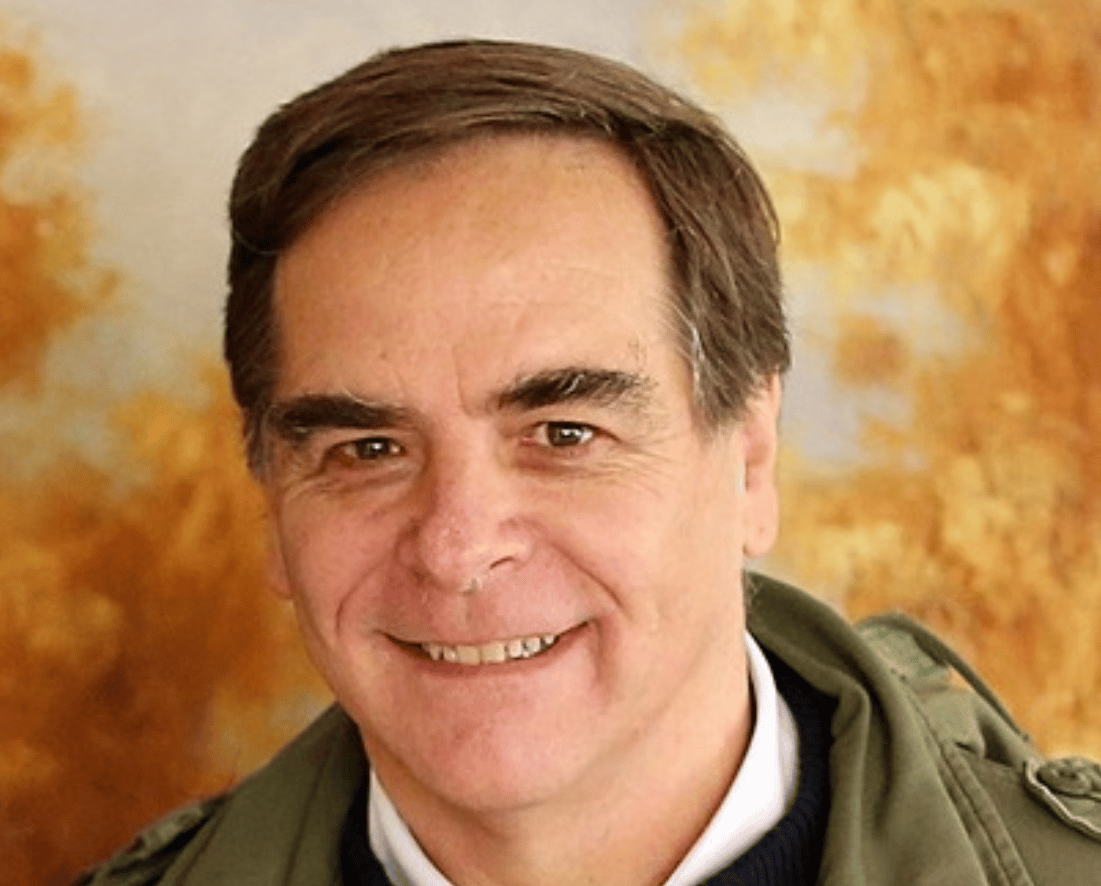
SÃO PAULO, Brazil – Cleared of abuse allegations by the Vatican in October of 2025 and reinstated in Chile’s Society of Jesus, Father Felipe Berríos, who had been expelled from the order in 2024, said that he decided to leave the Jesuits for good.
Berríos, well-known in the Andean country for his housing activism, claimed the final ruling of the Dicastery for the Doctrine of the Faith exonerating him from all charges should put an end to the case, but that’s not what’s happening.
“A canon law expert, who’s a friend of mine, said that’s unprecedented. The Dicastery told the Order to readmit me, but they decided to keep punishing me,” he told Crux.
Indeed, after the Dicastery for the Doctrine of the Faith dismissed the case for “having failed to reach sufficient moral certainty as to the commission of the alleged crimes,” the Jesuits maintained a number of disciplinary measures against Berríos, including restrictions on his ministry.
On Jan. 12, Berríos sent a letter to Father Juan Cristóbal Beytia, the provincial of the Society of Jesus in Chile, in which he announced his departure from the Jesuits.
“I cannot accept the ultimatum given to me by the Society, both because of the disproportionate measures it imposes on me and because it is clear that the fraternity that once existed between us has been broken,” the letter reads.
Berríos was accused in 2022 by 8 women of acts of sexual abuse. The alleged victims were aged 14 to 23 when the supposed crimes were perpetrated.
An investigation was launched by the Jesuits, and it cited the “plausibility of acts of sexual nature” against 7 victims. An eighth case was added to the suit, which was then remitted to the Jesuits’ curia in Rome.
In parallel, Berríos asked to be investigated by the Chilean Judiciary to prove his innocence.
“I submitted myself to Chilean justice. The canonical suit is secretive, and I wanted to be judged as any Chilean citizen. That’s more transparent,” he said.
Due to the alleged dates of the abuse cases, they were divided between two different legal systems, an older one – in which a judge both heads the inquiry and issues the final ruling – and the new one, in which the district attorneys investigate, and a court dictates the sentence.
The cases had reached their statute of limitations, so Berríos ended up being acquitted. But the judge in charge of the lawsuit taken to the older judicial system ruled that one of the allegations was true.
The priest then appealed to a higher court, which established in December 2025 that the fact that a case was dismissed due to its statute of limitations “legally prevents determining the veracity of the events under investigation and, in particular, the culpability of the person investigated.”
Berríos was, therefore, completely acquitted by the Judiciary. He also appealed the Society of Jesus’s administrative procedure, which ended up with his expulsion in 2024, and took the case to the Dicastery of the Doctrine of the Faith, which exonerated him and established that he should be reinstated to the Jesuits.
“But when the decision was announced, instead of celebrating my innocence, they imposed a new ultimatum as if I was guilty,” he said.
He said that since the first denunciation the Society of Jesus treated him the same way.
“In every public communication, they didn’t have any consideration for me. They never worried about me, even before any investigation was launched,” Berríos recalled.
On Jan. 19, after it was publicly known that Berríos was leaving the Jesuits, the Society of Jesus released a statement in which it reaffirmed that in its view he is guilty.
“Even if, in certain instances, the moral certainty required by the canonical process with respect to some of the facts was not attained, conduct was nevertheless identified that violated boundaries and caused harm, which we deeply regret,” the declaration reads.
The Society of Jesus said that the measures adopted “respond to the merits of the available background information and to the duty to act responsibly.”
“These measures are based on what was gathered during the Preliminary Investigation and the Penal Administrative Process, carried out by independent experts, as well as on the conviction reached by the Society of Jesus,” the document said.
According to Eneas Espinoza, a founding member of Chile’s Network of Survivors of Clerical Abuse, the allegations against Berríos were made in different moments by different victims and are all “provable.”
“He has been protecting himself behind the statute of limitations of the crimes, as if the crimes didn’t occur. Those crimes shouldn’t have a statute of limitations, because they’re crimes against humanity,” Espinoza told Crux.
In his opinion, Berríos is disappointed with the Jesuits because the traditional “pact of impunity” in congregations and the Church didn’t occur for him.
“In the face of the media and social pressure, the order had to sanction Berríos. He became angry because the tacit agreement of silence between them – the omertà – was broken,” Espinoza said.
For his part, the priest said he thinks that the media scandal provoked by the denunciations made the Society of Jesus afraid.
“I think that in the past the Church used its power to silence the victims and cover up cases of abuse. But now it’s the opposite. The ones who accuse look for ‘justice’ in the media,” Berríos said.
Over the past years, serious sex abuse scandals have greatly impacted the Church’s reputation in Chile.
The most infamous case involved ex-Father Fernando Karadima, accused by numerous victims of abuse cases dating back to the 1950s. The scandal erupted in 2010, when a victim talked about Karadima on a TV show.
Karadima was the vicar of an upscale parish in Santiago and had ties with the business and ecclesial elite of the country.
As the investigation unfolded, major members of the hierarchy ended up implicated, including Juan Barros, who was appointed as Bishop of Osorno by Pope Francis in 2015.
Italian-born Archbishop Ricardo Ezzati, then in charge of the Archdiocese of Santiago, was also accused by Karadima’s victims of covering up the abuse. He was created cardinal by Francis in 2014, when the scandal had already emerged.
Cardinal Francisco Errázuriz, Ezzati’s predecessor, and Cardinal Fernando Chomalí, his successor and current leader of Santiago’s Church, have both been accused of mismanaging accusations involving Karadima as well.
Berríos said he sees the Jesuit’s current procedure as “pathological” and partially motivated by politics.
He was one of the founders of Un techo para Chile (A roof for Chile), a nongovernmental organization founded in 1997 that builds emergency houses for the poor and struggles for public policies for housing.
He doesn’t have ties with the NGO anymore but works for another social organization and lives in a slum in Antofagasta.
“I’ll talk to the local bishop about a potential incardination,” he said.