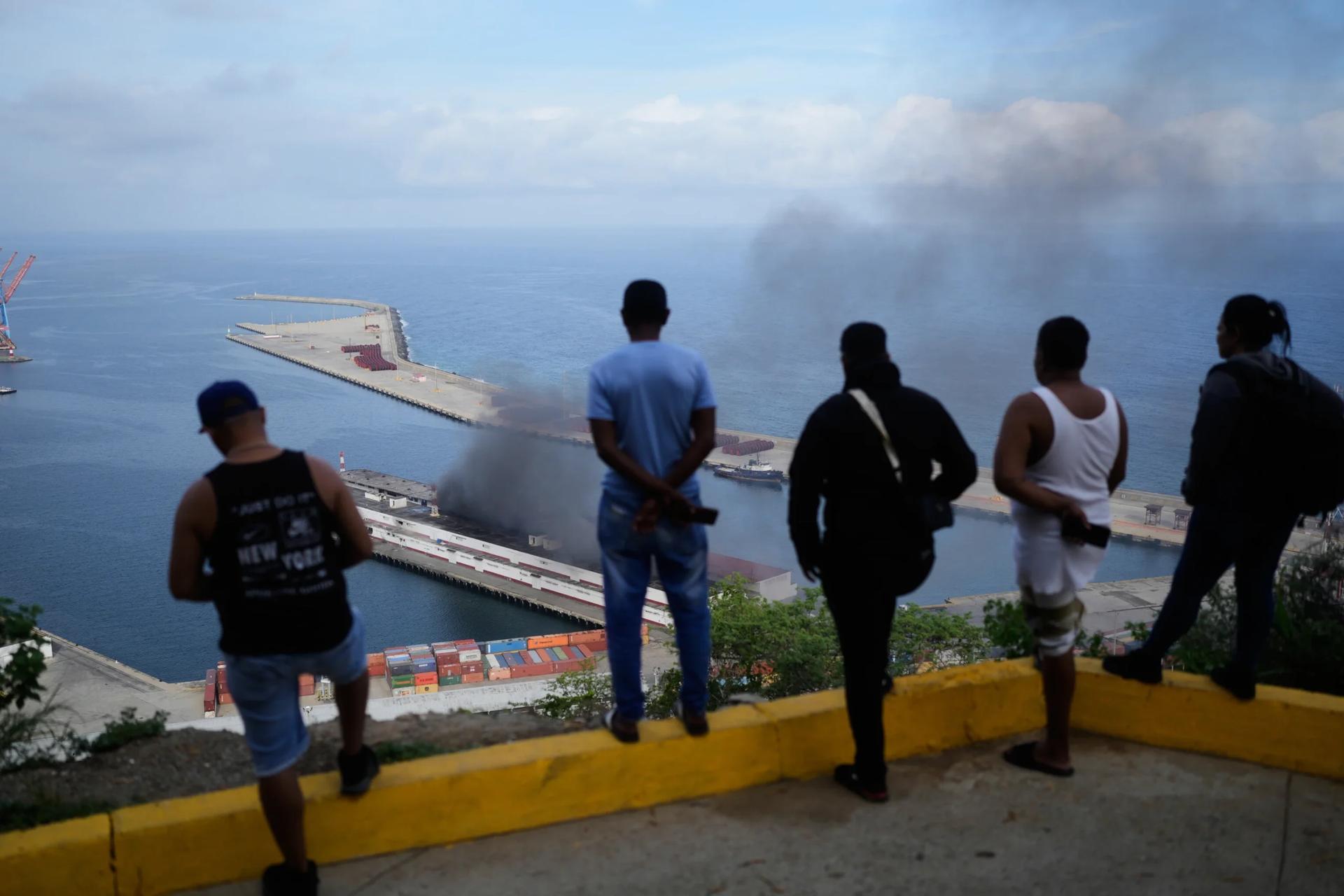
SÃO PAULO, Brazil – While the U.S. strikes in Venezuela and the seizure of President Nicolas Maduro, occurred early in the morning on Jan. 3, were received with joy and relief by many Venezuelan exiles in the United States, inside the country most people reacted with caution, including the Church.
The operation, called Absolute Resolve by the administration of President Donald Trump, was launched shortly before 11 PM on Jan. 2 and involved several military aircraft that left U.S. sea and land bases near Venezuela and flew to Caracas.
According to the BBC, two Venezuelan military compounds were targeted, besides a port and an airport. The U.S. troops broke through Caracas’s air defenses and arrived at Maduro’s compound by 1 AM, capturing him and first lady Cilia Flores. A couple of hours later, they arrived at the USS Iwo Jima, which took them to New York City.
The White House’s announcement of Maduro’s capture was celebrated by numerous Venezuelans in locations like Doral, where 40 percent of the residents come from the South American country, and other parts of South Florida.
“We received the news with much joy and hope,” Father José Palmar, who lives in Miami, told Crux.
In U.S. communities with large concentrations of Venezuelan exiles, people began gathering in the streets early in the morning, carrying Venezuelan flags and shouting “Venezuela libre” (free Venezuela).
“Despite the celebrations, we’re still worried. The head was extirpated, but the body still lives – in all leves of government, city administrations and so on. That body still can create a visible head,” Palmar said.
He said it’s time to make agreements and secure a new government.
“If that successfully happens, I think at least 30 percent of the Venezuelan exiles would go back to Venezuela in 6 months or one year,” he added.
In Venezuela, people knew something like that could happen, but they are shocked anyway. Chavista groups took to streets against the U.S. intervention in Caracas and other cities, but most people preferred to stay home.
“In middle-class neighborhoods, some people have been panic buying goods due to the uncertainty regarding the future. But the poor, the majority of the population, can’t afford to do that. They’re just at home, waiting for things to evolve,” Father Piter Rivas of the Barcelona diocese told Crux.
The diocese decided to close the churches, celebrate Masses for small groups and live stream them, similarly to what was done during the COVID-19 pandemic.
“Sunday Masses are being held only in the morning. After noon, people are being told to remain at their houses in order to avoid potential hazards,” Rivas added.
He said that most dioceses during Jan. 3 issued statements with similar decisions, recommending caution and restraint.
The Venezuelan Episcopal Conference (CEV) released a short statement on the crisis.
“In light of the events that our country is living through today, let us ask God to grant all Venezuelans serenity, wisdom, and strength. We stand in solidarity with those who were injured and the families of those who passed away. Let us persevere in prayer for the unity of our people,” the bishops said.
According to Brother Giovanni Luisio Mass, who heads the canonical association Order of the Poor Knights of Christ in Venezuela, rank-and-file Catholics have been united in “hope, resistance and change “
“Our fear is that opportunistic politicians may take advantage of the situation and sieze power,” he told Crux.
In his city of El Tigre, the atmosphere is one of calm, Luisio Mass claimed.
He himself persecuted by the regime, Luisio Mass affirmed that any kind of change brings hope.
“We have been through many difficulties, with arbitrary arrests, for instance,” he added.
Since the strikes, Luisio Mass has been untirelessly talking to people by the phone, helping them translate U.S. statements, observing the popular reaction.
“We didn’t understang why Trump said in the press conference that María Corina Machado [opposition leader and Nobel Peace prize recipient] wouldn’t be able to assume the goverment,” he declared.
Like most Venezuelans, Luisio Mass is waiting for the developing facts.
“President Trump affirmed there might be new strikes. Let’s see if they will be really carried out,” he said.
Luisio Mass is confident that the US actions will put and end to the regime.
“But Chavismo will keep existing as a political force,” he said.