

Bishops from both sides of the Colombia-Ecuador border recently came together to discuss joint relief programs and pastoral strategies to address an ongoing humanitarian crisis in the border region.
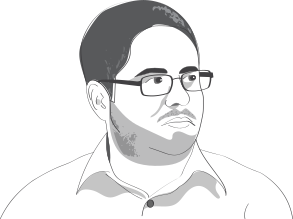
The gathering was led by Monsignor Héctor Fabio Henao Gaviria, who has served as a peace broker for more than 30 years, representing the Catholic Church in negotiations between armed groups and the government.
Henao spoke with Crux Now about the meeting, which took place in the southern Colombian department of Putumayo, where local communities have been caught between left-wing guerrillas, right-wing paramilitary groups, and criminal organizations.
He also discussed his expectations for peace along Colombia’s southern border and in the country as a whole, after the new administration led by President Abelardo de la Espriella has ended the peace talks between the government and armed groups that were initiated by former President Gustavo Petro.
Henao was ordained in 1980 and, after earning a Ph.D. in Social Sciences from the Pontifical Gregorian University in Rome, he returned to Colombia and was sent to working-class neighborhoods in Medellín in 1983.
Those were the worst years of violence in Medellín, when Pablo Escobar dominated a massive drug cartel and waged war against both security forces and other criminal organizations.
Political violence was also intense, with guerrillas launching attacks on military and civilian targets and causing numerous deaths. Henao soon understood that he had to assist the most vulnerable communities amid such a chaotic situation.
Please find Crux Now‘s Q&A with Monsignor Héctor Fabio Henao Gaviria, edited for length and clarity, below…
Crux Now: What are the current challenges on the southern border?
Msgr. Henao: The most urgent issue is the humanitarian situation.
There is a political and economic context for that crisis, but we are focused on the humanitarian dimension, which involves numerous displaced communities on both sides of the border.
We divide the border into three parts: the Andean region, the Amazonian region, and the Pacific region. Each region has different complexities.
People are either forced to cultivate illicit crops or to engage in illegal mining. Entire villages are forced to leave their territories because of violence.
How can the Church help the rural poor find alternatives to the illicit activities they have been forced to engage in?
Adequate economic infrastructure would allow families to find alternatives and abandon illicit crops. Many communities have told us that they want to abandon them.
The Church is very committed to seeking economic alternatives. But the presence of the state and international organizations needs to be increased. For many years, there have been efforts to replace illicit crops with stable alternatives.
People’s livelihoods cannot depend solely on illegal mining and illicit crops. Illegal mining has become increasingly important. There are many gold mines, the activity is very intense, and gold prices are very high on the international market.
For more than two decades, the Ecuadorian-Colombian border has been an area of conflict. But back then, Ecuador wasn’t as violent a country as it is now. Has that transformation somehow affected the situation on the border?
The problem back then was not so much violence as the thousands of Colombians going to Ecuador in search of refuge or protection. It was a cross-border displacement from north to south.
Historically, Colombians fled for various reasons. In the border department, there was a strong presence of the Fuerzas Armadas Revolucionarias de Colombia [Revolutionary Armed Forces of Colombia] and paramilitary groups. There was a struggle over crops and drug-trafficking routes. This was difficult on the Colombian side and created problems for Ecuador.
A few years ago, Colombia was a country that expelled immigrants, and suddenly it also became a receiving and transit country. Many people were seeking to reach the United States, coming through Ecuador and Brazil. It is a complex border.
The new element is that transnational organized crime emerged, with drug cartels on both sides of the border. This led us to seek contacts and ways of bringing the bishops together again, to examine the lessons learned and so on.
How did the Border Pastoral Ministry begin?
Border ministry began around 2000, when we began drawing closer to the bishops of Ecuador and Colombia. Several meetings were held.
There was an urgent need to denounce the situation, share and pool experiences, and learn more about where the immigrants arriving in Ecuador were coming from. Ecuador was much more peaceful than Colombia back then.
Unfortunately, the group from the first phase did not continue.
The border was closed, and the initiative did not prosper. Now, with the emergence of transnational criminal organizations, a new crisis has begun and the pastoral work has resumed.
People from that first period are back at work, and pastoral agents are already active.
How did you become involved in peace negotiations and humanitarian assistance as a priest?
I began working as a priest in Medellín in 1983, and that was the most violent time in the city, with militias armed by Pablo Escobar and guerrillas launching continuous attacks.
As a priest, I accompanied the process through the Social Pastoral Ministry. I was also the vicar for the Workers’ Pastoral Ministry, and we had responsibilities in many areas, including efforts to reduce violence in the city.
I began to become more involved with civil society actors. In 1993, we organized a mobilization and a march called Elige la Paz (Spanish for “Choose Peace”).
With that march, I began my journey toward peace. That was in 1993.
I continued along that path and became director of the National Secretariat of Caritas. I worked with victims of forced displacement, and we conducted a major investigation into the problem, the very first one.
What about your expertise in peace talks?
There was a negotiation in Medellín in 1994, the first one involving an urban guerrilla group called Milicias Populares del Pueblo y para el Pueblo (“People’s Militias, of the People and for the People”). That was the first negotiation I took part in. Others came over the years.
When I left Caritas four and a half years ago, the Bishops’ Conference appointed me as a delegate for relations between the Church and the State.
Over decades, I participated in the release of kidnapped people and in other very significant humanitarian efforts.
As a Church delegate, you participated in peace dialogues between the government and armed groups, especially the Ejército de Liberación Nacional [National Liberation Army], during President Gustavo Petro’s tenure, which ultimately reached an impasse and was suspended. Now, President Abelardo de la Espriella has canceled all the dialogues. What do you think of that?
We still do not have clarity at this point about the new government’s decisions. We do not know how it will implement the announcements.
There has been talk of mass fumigation of illicit crops, closing the negotiating tables, and ending the temporary location zones [spaces for the transition of armed groups toward civilian life, established when peace dialogues are successful].
We embarked on the path of dialogue with great conviction and hope. As a Church, we will not lose hope.
We understand that the government’s strategy has changed, and we accept that. But we will always keep the door open to building dialogue for peace.
Does the new zero-negotiation policy affect the situation on the southern border?
Negotiations with groups such as the Comuneros del Sur [Southern Comuneros] and the Coordinadora Nacional Ejército Bolivariano [National Coordination of the Bolivarian Army] have been suspended.
Ninety-nine people from the Coordinadora, in Putumayo, handed over their rifles and uniforms and entered a temporary location zone to make the transition to full civilian life.
It is not clear how the process will continue. It is a specific case.
The government has terminated the zone, and we are waiting to see what will be done. Solutions need to be found. We will support whatever is in the best interest of those who laid down their arms.
We have undertaken efforts and are in contact with people in the government and with those who are in the zone.
We do not have clarity about how the other groups are operating. I imagine they are analyzing the circumstances. The government is not talking about political negotiations, but rather about a process of sometimiento [“submission” or “surrender”].