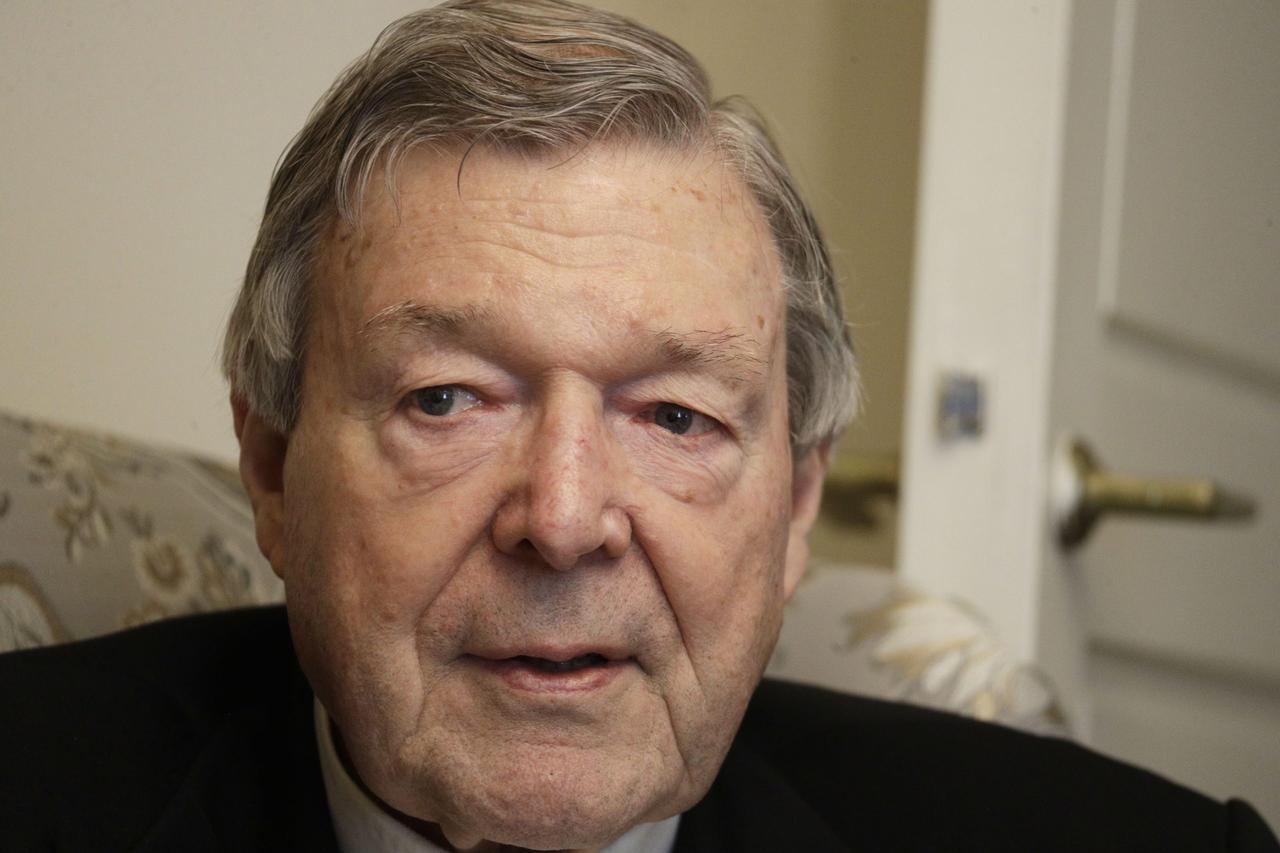
Australian Cardinal George Pell died three years ago on January 10, 2023.

On Friday evening in Rome, in the Domus Australia, a Requiem Mass was held for him.

Pell was the first prefect of the Secretariat for the Economy, posted to the role by Pope Francis in 2014, before leaving three years later to face charges of abuse in his homeland, which he denied, and of which he was finally acquitted.

After his death at the age of 81, it was revealed he was the man behind the pen-name “Demos,” under which he had authored a memo the year before, condemning the papacy of Pope Francis as a “catastrophe.”

The statement complained about issues such as the appointment of officials it considered heretical, the “Pachamama” statue, and the softening attitude towards homosexuals.

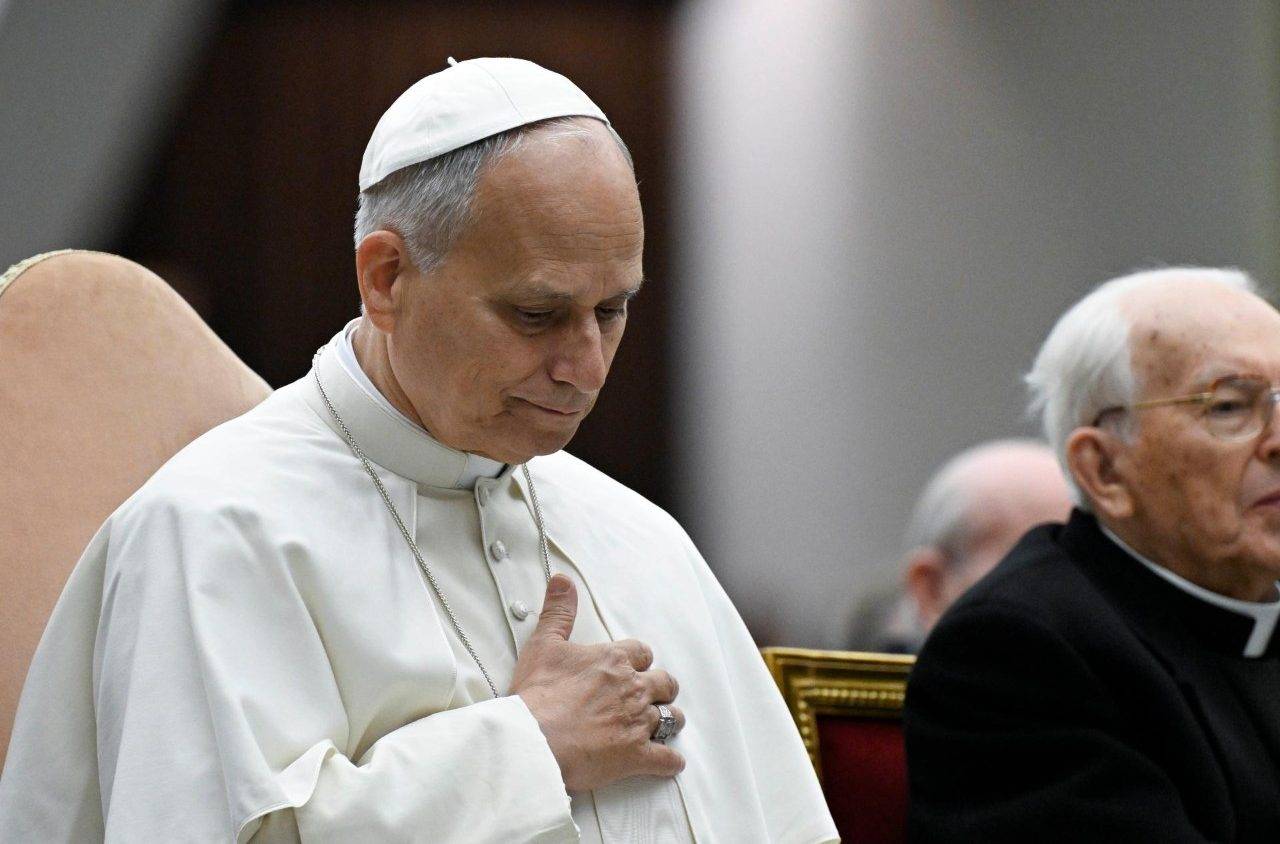
Pell died before the election of Pope Leo XIV, but it is interesting to look at what the cardinal wrote regarding “The Next Conclave” – the one that would elect Francis’s successor – which happened to choose Cardinal Robert Francis Prevost as Pope Leo XIV.

The Australian noted the cardinals met infrequently under Francis, and many of them were unknown to one another, adding a new dimension of unpredictability to the next conclave (which proved to be a correct assumption after the election of the American-Peruvian Prevost.)

Many cardinals read the “Demos” document, especially after it became known that Pell, who was not only a leading figure in the “conservative” wing of the worldwide Catholic Church but also one of their number, had authored it.

It gives one to wonder: Did “Demos” have any influence on the cardinals’ thinking – if not directly on their choice – in the May 2025 conclave?

“After Vatican II,” wrote Pell (as Demos), “Catholic authorities often underestimated the hostile power of secularization, the world, flesh, and the devil, especially in the Western world, and overestimated the influence and strength of the Catholic Church.”

“We are weaker than 50 years ago and many factors are beyond our control, in the short term at least, e.g. the decline in the number of believers, the frequency of Mass attendance, the demise or extinction of many religious orders,” he added.

The cardinal said the pope does not need to be the world’s best evangelist, nor a political force.

“The new pope must understand that the secret of Christian and Catholic vitality comes from fidelity to the teachings of Christ and Catholic practices. It does not come from adapting to the world or from money,” he wrote.

Looking at the first months of Pope Leo’s tenure, we see this approach to evangelism is central.

“Since we live in a confusing society of noise,” Pope Leo XIV said on Dec. 12, “today more than ever we need servants and disciples who announce the absolute primacy of Christ and who keep His voice clearly in their ears and hearts.”

This is something the Demos document emphasized.

“The first tasks of the new pope will be to restore normality, restore doctrinal clarity in faith and morals, restore a proper respect for the law and ensure that the first criterion for the nomination of bishops is acceptance of the apostolic tradition. Theological expertise and learning are an advantage, not a hinderance for all bishops and especially archbishops,” Pell said in the Demos document.

He also complained of the seemingly endless synodal gatherings around the world, saying they “will consume much time and money, probably distracting energy from evangelization and service rather than deepening these essential activities.”

In his letter, Pell also complained about the Synodal Way of Germany, which he said promoted homosexuality, women priests, communion for the divorced.

“If there was no Roman correction of such heresy, the Church would be reduced to a loose federation of local Churches, holding different views, probably closer to an Anglican or Protestant model, than an Orthodox model,” the Australian cardinal wrote.

“An early priority for the next pope must be to remove and prevent such a threatening development, by requiring unity in essentials and not permitting unacceptable doctrinal differences. The morality of homosexual activity will be one such flash point,” Pell said.

The Demos document also noted that younger clergy and seminarians are almost completely orthodox, and even sometimes quite conservatively so – and most data certainly confirms this – but said the next pope “will need to be aware of the substantial changes effected on the Church’s leadership since 2013, perhaps especially in South and Central America,” adding that there is “a new spring in the step of the Protestant liberals in the Catholic Church.”

Pell admitted schism is not likely to occur from the Left, “who often sit lightly to doctrinal issues.”

“Schism is more likely to come from the right and is always possible when liturgical tensions are inflamed and not dampened,” the cardinal wrote.

In these opening months of his pontificate, Pope Leo XIV has certainly emphasized the unity of the Catholic Church.

He has also indicated his intention to work toward resolving conflicts that have been simmering – and occasionally boiling over – since the conciliar and post-conciliar era in 1960s.

On Wednesday, at the opening of his extraordinary consistory of the college of cardinals, the pontiff placed Pope Paul VI with Pope John Paul II and Pope Benedict XVI with Pope Francis – pairing popes together, even thought they were seen as polar opposites in the media.

Leo also tied all of the post-Vatican II popes together as deeply holding to the last ecumenical council.

It also bears mention that the Demos document touched on the more “earthly” issues facing the Holy See.

Turning to his previous Vatican office, Pell said a lot of work is needed on the financial reforms in the Vatican, “but this should not be the most important criterion in the selection of the next Pope.”

“The Vatican has no substantial debts,” Pell wrote as Demos, “but continuing annual deficits will eventually lead to bankruptcy.”

“Obviously,” he wrote, “steps will be taken to remedy this, to separate the Vatican from criminal accomplices and balance revenue and expenditure.”

“The Vatican will need to demonstrate competence and integrity to attract substantial donations to help with this problem,” Pell also wrote in the Demos document.

One of Pope Leo XIV’s first major acts was to abolish the Commission for Donations for the Holy See, which was established by Pope Francis in February 2025. Leo also sent its head, Monsignor Roberto Campisi, to France, to be Permanent Observer of the Holy See to UNESCO.

Campisi had come up in the diplomatic service, and the donations commission was hastily created in what proved to be the waning days of the Francis pontificate. the abolition of the commission was not earth-shattering, and Campisi’s appointment had a certain logic to it.

Still, it was one sign of Leo’s willingness to part ways with his predecessor and of his concern for what has proven to be a thorny problem through several pontificates.

Another was Leo’s repeal of a Francis-era law placing management of the Holy See’s assets under the “exclusive responsibility” of the Institute for the Works of Religion, the IOR or “Vatican Bank” as it is commonly known.

Observers took those measures as indication Leo is taking financial reform seriously, even as he has downplayed doomsaying regarding the Vatican’s financial stability.

Although Cardinal Pell exchanged time for eternity three years ago, there is reason to think the Church – the Vatican, at least – may still be feeling his influence.

Follow Charles Collins on X: @CharlesinRome