Does a recent speech by U.S. Secretary of State Marco Rubio represent a small step toward restoration of U.S. relations with NATO after the most serious strain to the alliance since its founding in the wake of WWII?

Perhaps, and then, perhaps not.

What is certain, however, is that the speech served as a subtle signal to voters and Republican party leaders ahead of the 2028 presidential election and therefore may bring the real political issues at stake in the November 2026 midterm elections more sharply into focus.


It also provides an opportunity to see how some of the recent strains in the North Atlantic Treaty Organization (NATO) parallel recent developments in the Vatican stance toward the alliance, and helps see how the “Catholic moment” in U.S. politics is really developing as well.

Frist, there are the recent events that offer the background to Rubio’s speech.

U.S. President Donald Trump’s pledge to take over Greenland – the sovereign territory of NATO member Denmark – has shaken the alliance more than any other since it was formed in 1949. Trump personally walked back the threat not long after he made it, but the damage was done.

Trump’s early reluctance to oppose too strongly Russia’s aims in Ukraine had not helped things with the other alliance members, either, but the talk from several staunch and longstanding U.S. allies in the wake of the Greenland threats from Trump has caused irrevocable shifts in world order.

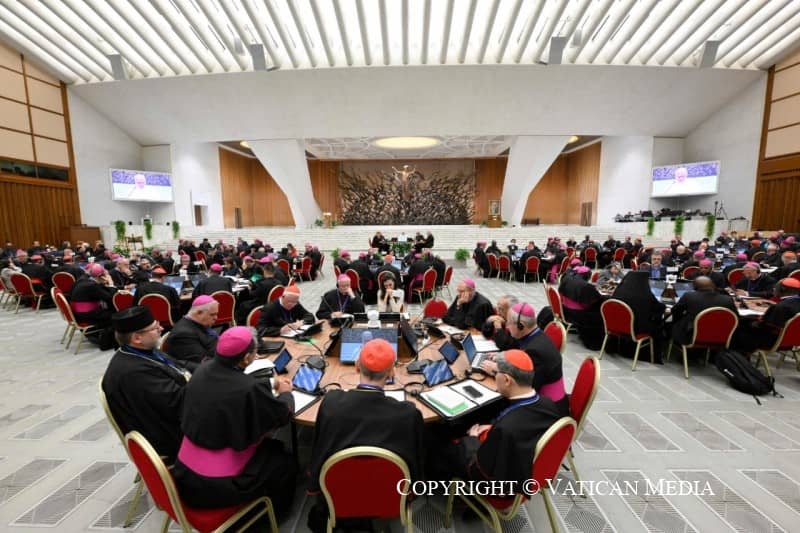
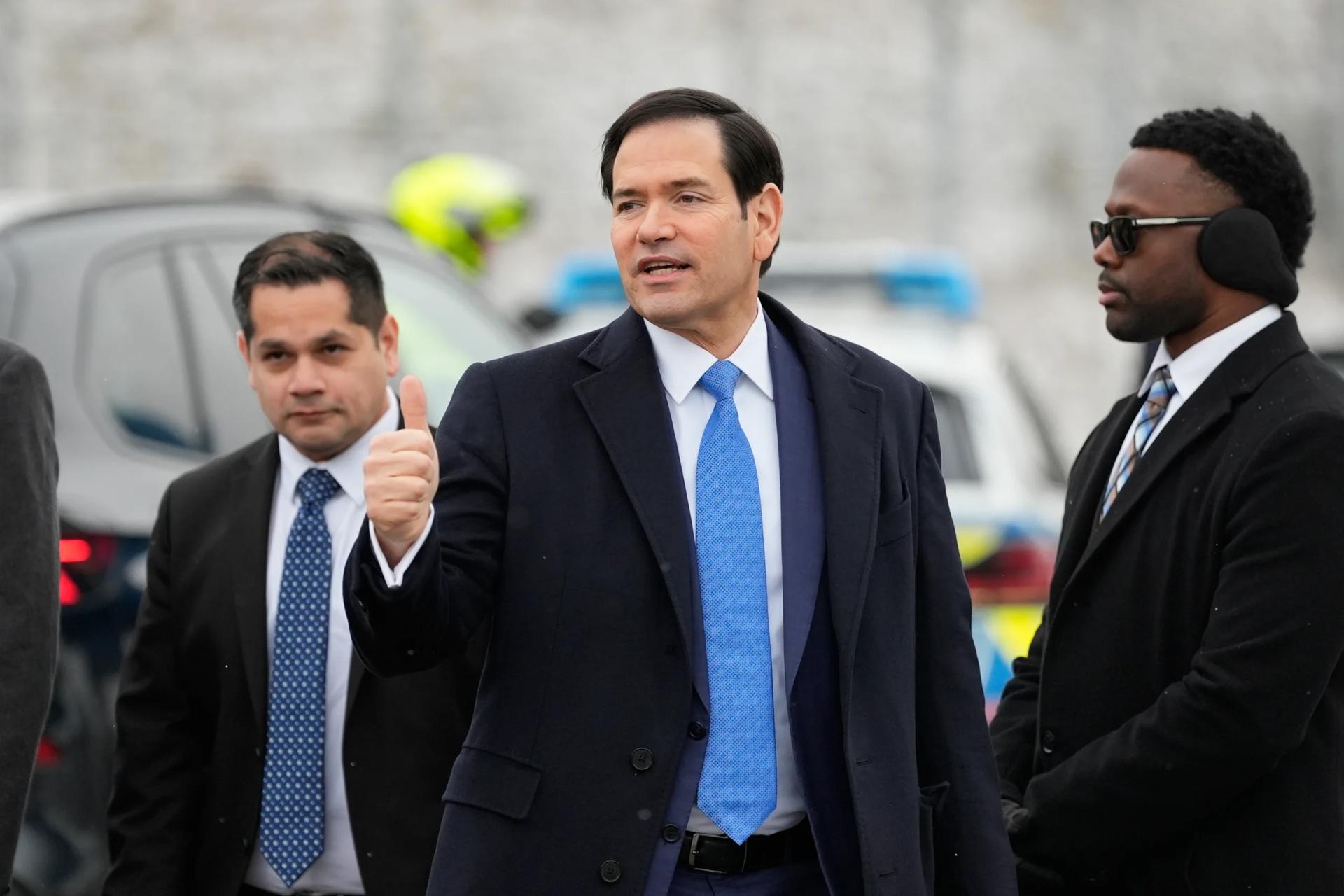
Speaking at the Munich Security Conference on Feb. 14, however, Rubio said the United States and Europe “belong together.”

“We are bound to one another by the deepest bonds that nations could share,” Rubio said, “forged by centuries of shared history, Christian faith, culture, heritage, language, ancestry, and the sacrifices our forefathers made together for the common civilization to which we have fallen heir.”

“This,” Rubio said, “is why we Americans may sometimes come off as a little direct and urgent in our counsel,” and “why President Trump demands seriousness and reciprocity from our friends here in Europe.”

“Only if we are unapologetic in our heritage and proud of this common inheritance can we together begin the work of envisioning and shaping our economic and our political future,” Rubio also said.

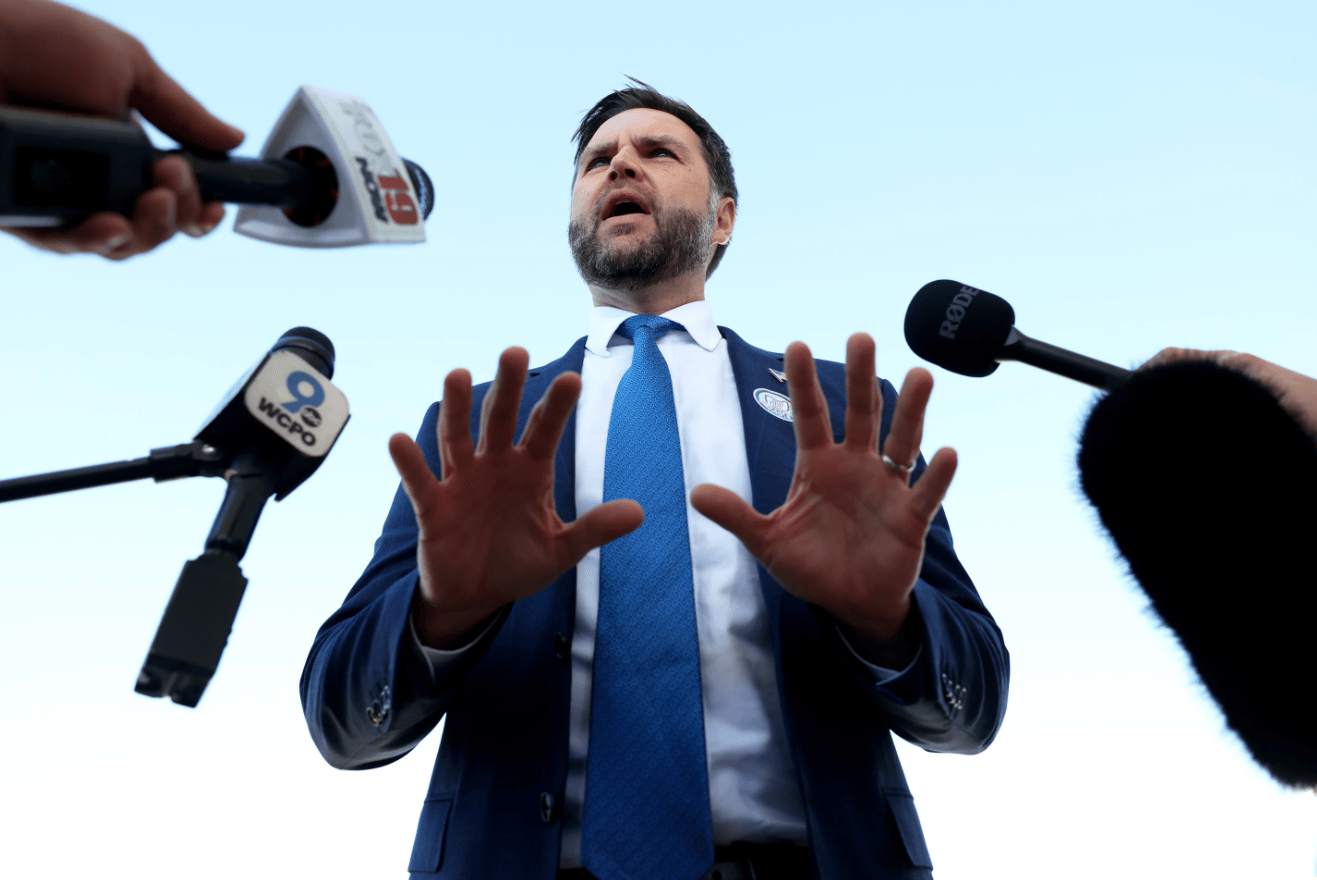
The line was more than merely conciliatory, and stands in stark contrast to the remarks U.S. Vice President JD Vance delivered at the conference one year ago.

“While the Trump administration is very concerned with European security and believes that we can come to a reasonable settlement between Russia and Ukraine,” Vance said in his Munich remarks at the 2025 iteration of the conference, “and we also believe that it’s important in the coming years for Europe to step up in a big way to provide for its own defense, the threat that I worry the most about vis-à-vis Europe is not Russia, it’s not China, it’s not any other external actor.”

“What I worry about,” Vance said, “is the threat from within, the retreat of Europe from some of its most fundamental values – values shared with the United States of America.”

Without entering into the merits of Vance’s concerns or into questions of how well he articulated them in the rest of his speech, suffice it to say his remarks went over like a lead balloon.

It would be easy to frame Rubio’s remarks as those of the “good cop” after Vance’s “bad cop” turn the year before. It would be too easy, because Vance positioned himself as a mouthpiece for Trump while Rubio harkened to a strain of American rhetoric much older than the Trump-era MAGA notes that informed Vance’s discourse.

The contrast is also interesting in light of the broader history of the Munich conference, which began meeting annually in 1963 to let NATO officials meet with other leaders – including those in the East – and discuss issues in an “unofficial” way.

The Vatican has regularly sent an official to Munich for the event since it began, attesting to the Holy See’s quiet – if somewhat uneasy – relationship with NATO.

As the late John Allen noted in a 2022 column for Crux, it was sometimes jokingly said in Catholic circles at the time of NATO’s establishment that the pontiff at the time, Pius XII, “should be appointed its chaplain.”

“In part, that was a result of Catholicism’s demography,” Allen wrote, noting how there were in 1950 there were just over 400 million Catholics worldwide, “roughly half were in Europe, which depended heavily on the American security umbrella against what was perceived as the threat of a European land war, and also the anti-religious policies of the Soviet Union weighed heavily.”

The pope never was offered the chaplaincy – not officially, anyway – but Pope St. John Paul II would receive the officers of the NATO war college annually during the early years of his pontificate, and his remarks on those occasions arguably make for more fascinating reading today than they did when they were delivered.

Pope St. John Paul II would form a virtual alliance with U.S. President Ronald Reagan after Reagan won the 1980 election, and many observers saw their alliance as key to the fall of the Berlin Wall in 1989 and the collapse of the Soviet Union two years later.

The fall of the “Evil Empire” also made some wonder on what the role of NATO could be in the future, as well as the decades-long relationship with the Vatican.

John Paul II opposed both the Gulf War started by Reagan’s successor President George H. W. Bush in 1991 and his son George W. Bush’s Iraq War, which started in 2003.

When Trump was first elected in 2016, his admiration for Russian President Vladimir Putin was notable, as well as his expressed frustration with the amount of money the U.S. was still spending to provide security for a wealthy Europe.

RELATED: Why Francis won’t be the chaplain of BRICS, just as Pius XII wasn’t of NATO

Meanwhile, the election of the Argentinian Pope Francis in 2013 brought a new and different vision of the Cold War to the center of power in the Church.

In South America – as well as Asia and Africa – the war between the West and East wasn’t viewed as a battle between the goodies and the baddies, because it often played in those areas as a conflict between one set of oppressors against another set of oppressors.

After Russia invaded Ukraine in 2022, Francis said it was partly because NATO “are barking at the gates of Russia.”

“I am simply against reducing complexity to the distinction between good guys and bad guys, without reasoning about roots and interests, which are very complex,” he said in an interview that year with La Civiltà Cattolica.

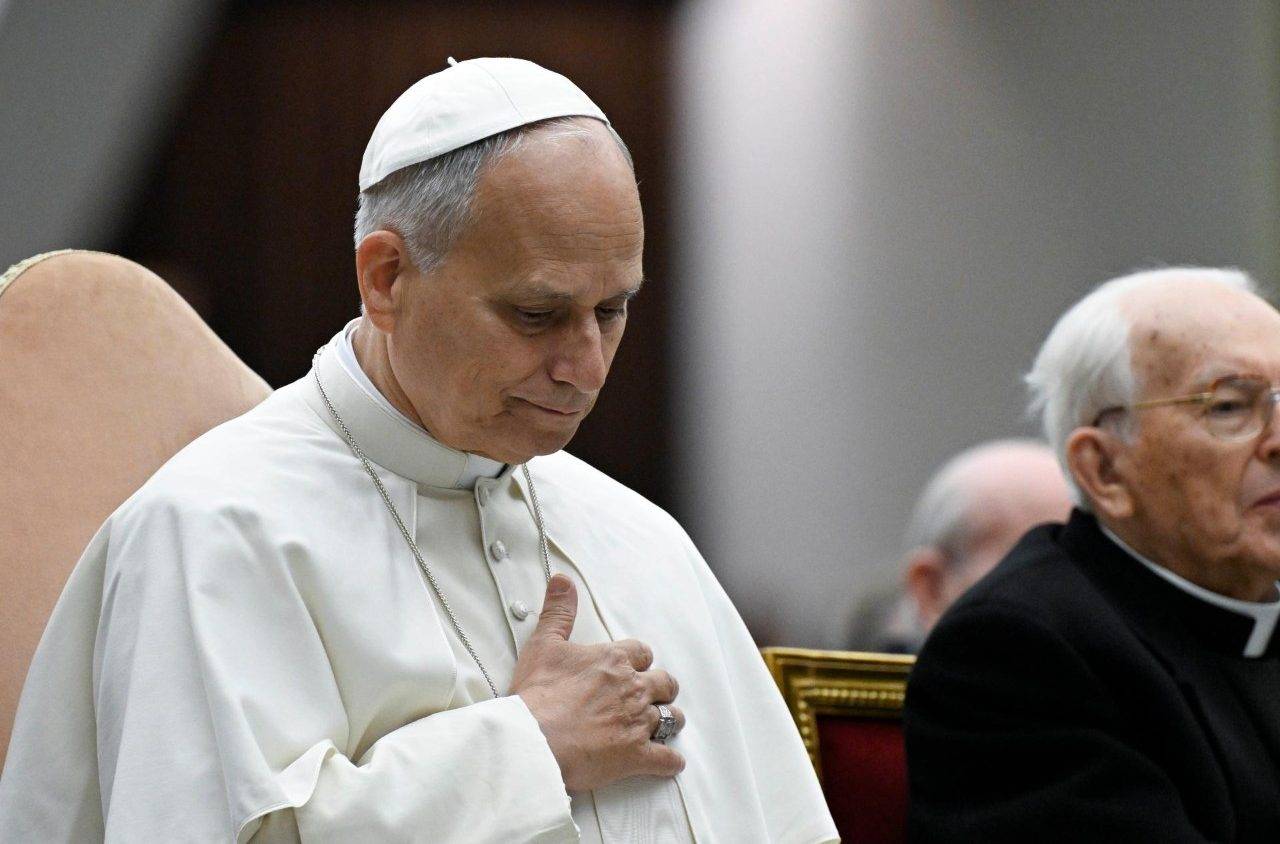
Pope Leo XIV expressed a different view shortly after his election.

After Russia sent a swarm of drones into Poland in September of last year, Leo said, “NATO has not started any war.”

“The Poles are worried because they feel their airspace has been violated; it is a very tense situation,” the pope told reporters.

Early in his pontificate, Leo had  also told Ukrainian President Volodymyr Zelensky the Russian aggression against his country was “senseless.”

RELATED: Vatican’s top diplomat calls use of NATO weapons against Russia ‘disturbing’

In his remarks on Saturday in Munich, Rubio pointed out the United States has not only led the peace efforts to end the Russia-Ukraine War, but has also supported Ukraine in various ways.

“The United States has imposed additional sanctions on Russia’s oil. In our conversations with India, we’ve gotten their commitment to stop buying additional Russian oil. Europe has taken its set of steps moving forward.  The Pearl Program continues in which American weaponry is being sold for the Ukrainian war effort. So, all these things continue,” the U.S. Secretary of State said.

Rubio also highlighted the relationship between the United States and Western Europe in his talk, speaking of “an unbreakable link between the old world and the new.”

“It was here in Europe where the ideas that planted the seeds of liberty that changed the world were born. It was here in Europe where the world – which gave the world the rule of law, the universities, and the scientific revolution,” he said, adding it was Europe that produced the genius of Mozart and Beethoven, of Dante and Shakespeare, of Michelangelo and Leonardo da Vinci, of the Beatles and the Rolling Stones.

It can’t be ignored that 2026 is the year of midterm elections in the United States, and polls show a strong majority of Americans disapprove of Trump’s verbal attacks on NATO allies. Although Rubio has stated he would support Vance if Vance does decide to run for president – and here, it bears mention that both men are Catholic, making the situation part of the present “Catholic moment” in U.S. and in world politics – neither Rubio nor Vance has stated his intentions vis-à-vis the presidential contest coming in 2028.

Midterms are considered the opening period for the next presidential election, and observers – many of them – see Rubio as more in line with “Reagan Republicans” while Vance is more aligned with the pro-Trump MAGA electorate. Republicans, therefore, will be watching the midterms closely.

Trump in ineligible to run for a third term, and one real question facing the Republican party is whether MAGA represents its future or only its recent past.

Perhaps that is why Bishop Robert Barron of Winona-Rochester, a member of Trump’s Religious Liberty Commission, said he was impressed by Rubio’s speech at the Munich Security Conference.

Writing on X – the website formerly known as Twitter – the bishop said what most grabbed his attention was Rubio’s stress on the common culture that unites Europe and America.

“He cited Dante, Shakespeare, the Sistine Chapel, Cologne Cathedral—even the Beatles as expressions of basic cultural intuitions that still inform the West. But he pressed the matter further, insisting, in the spirit of both Christopher Dawson and Pope Benedict XVI, that that culture is grounded ultimately in the Christian faith,” Barron wrote.

“It is simply the case that reverence for the dignity of the individual, for human rights, for political freedom, and for equality comes, in the final analysis, from the Christian Gospel. Basic to his presentation was the conviction that Europe and America will truly flourish when each re-discovers its spiritual mooring,” he added.

Catholic Republicans will need to decide how important they think this “spiritual mooring” really is for the country and for the Church, and the decisions they make will likely have consequences both in the proverbial smoke-filled rooms of party decision-makers and at the ballot box.

Follow Charles Collins on X: @CharlesinRome