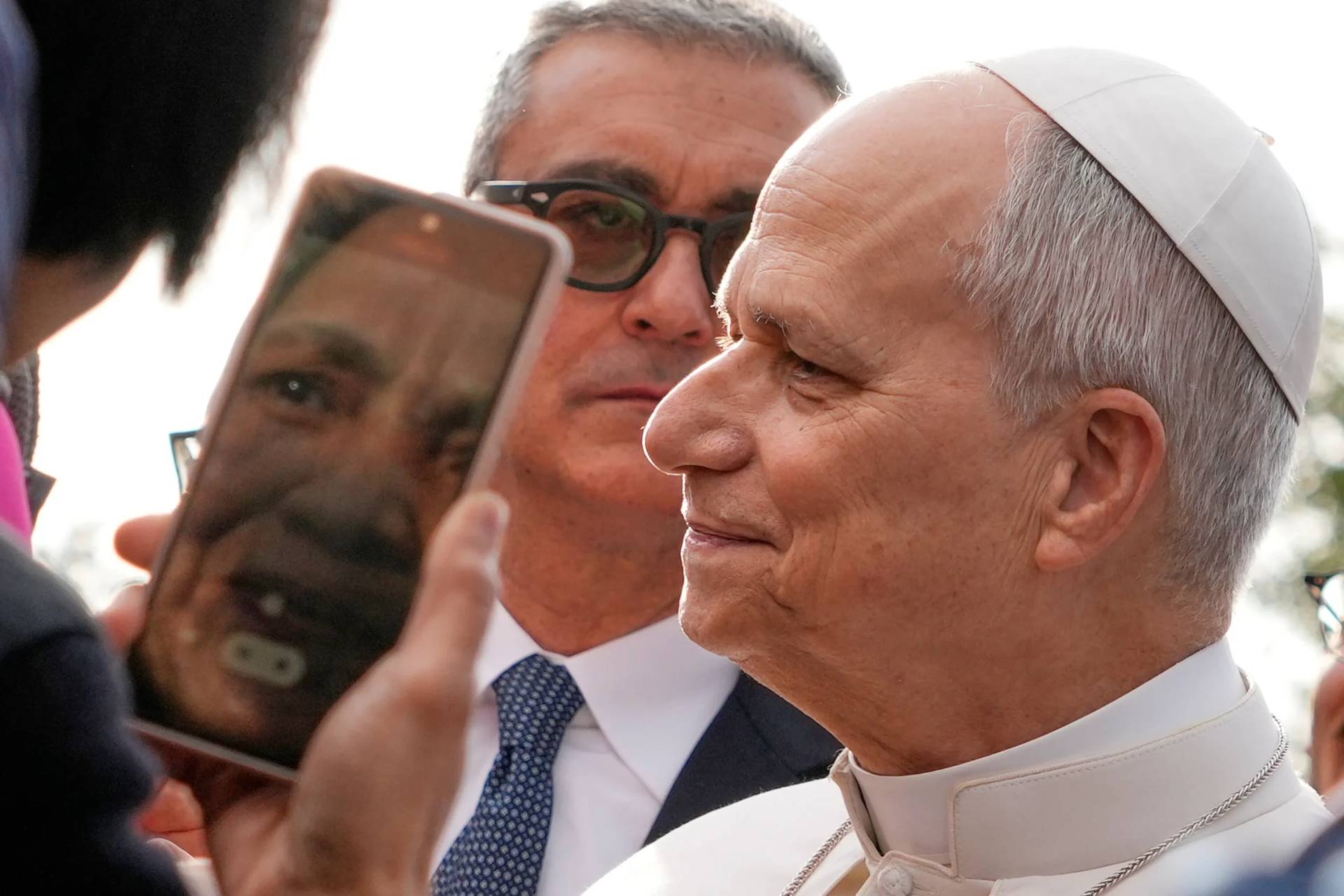
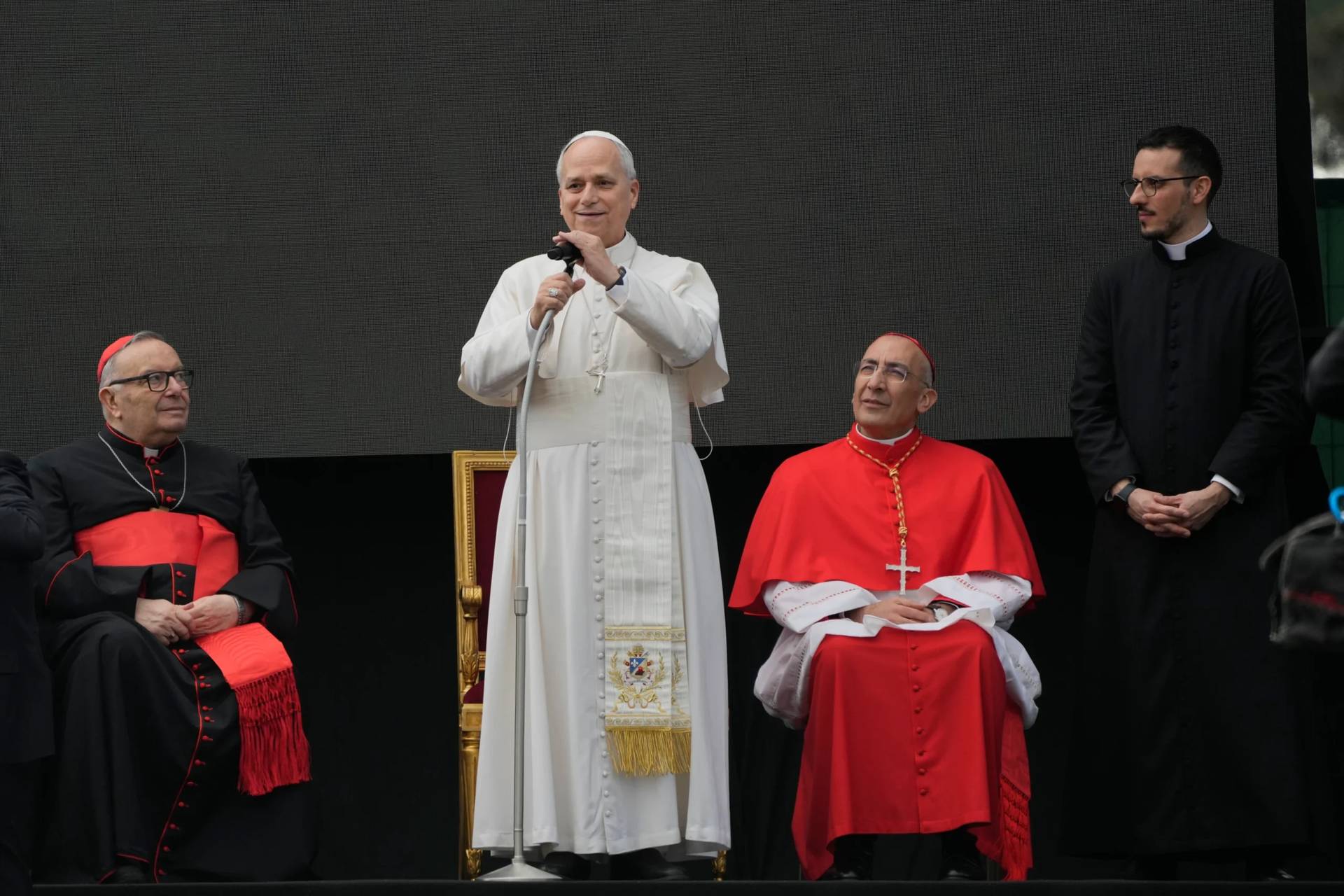
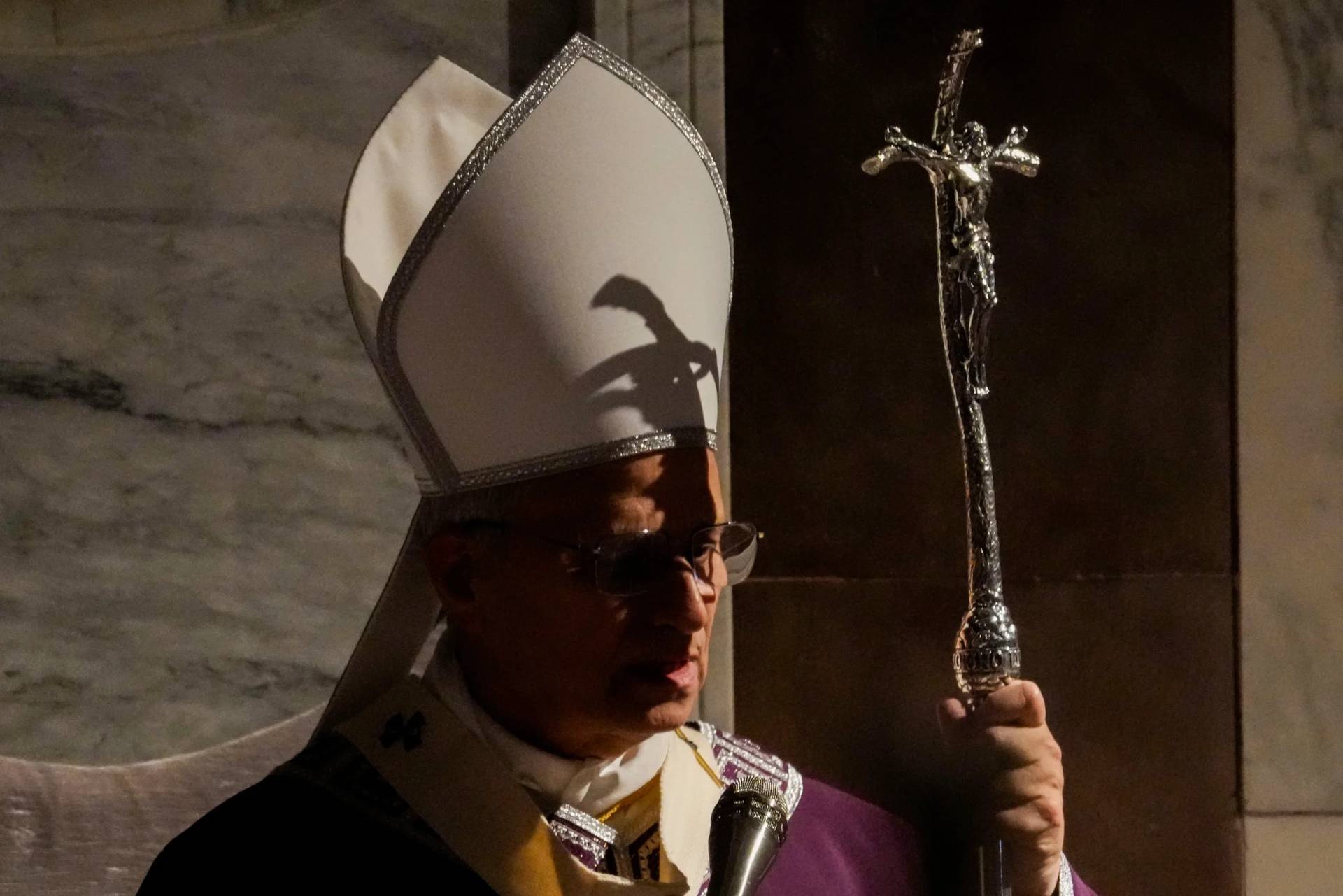
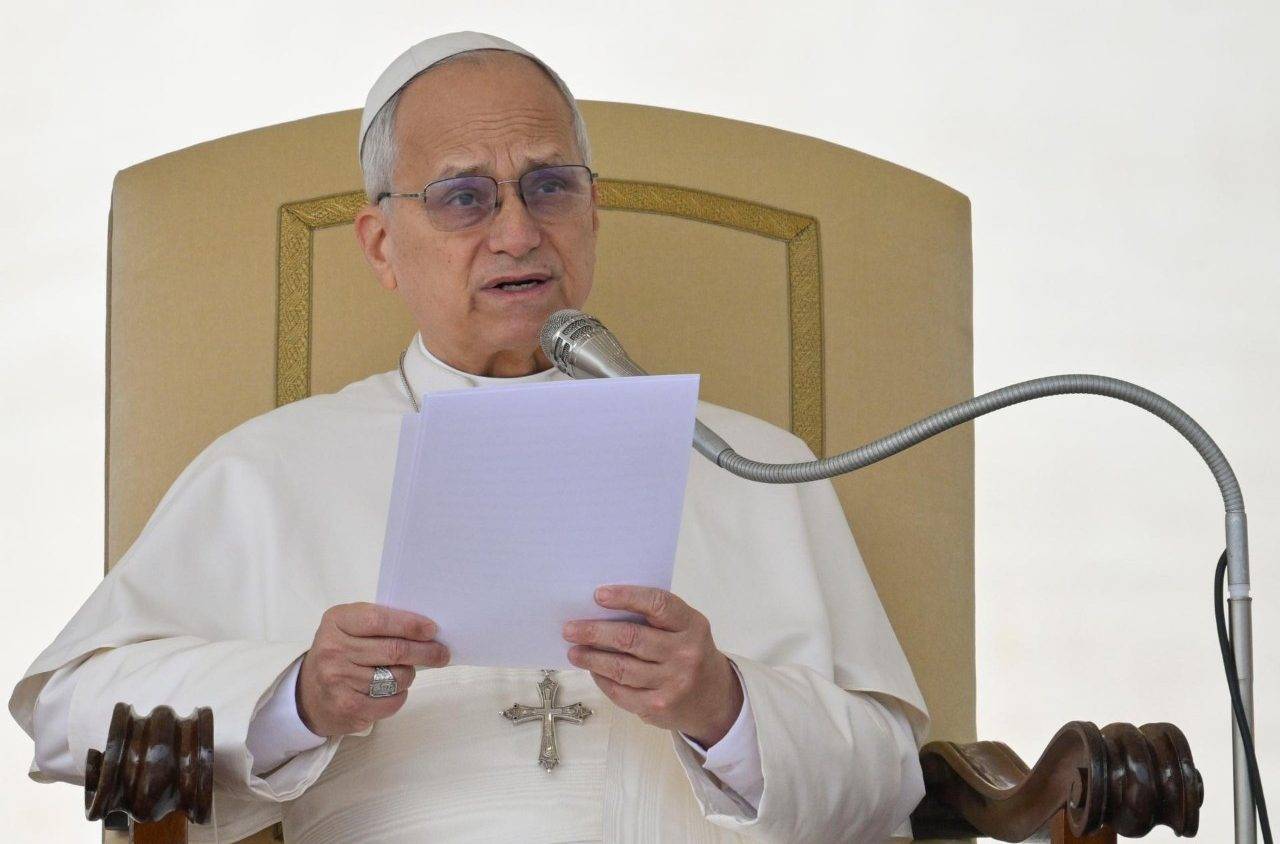
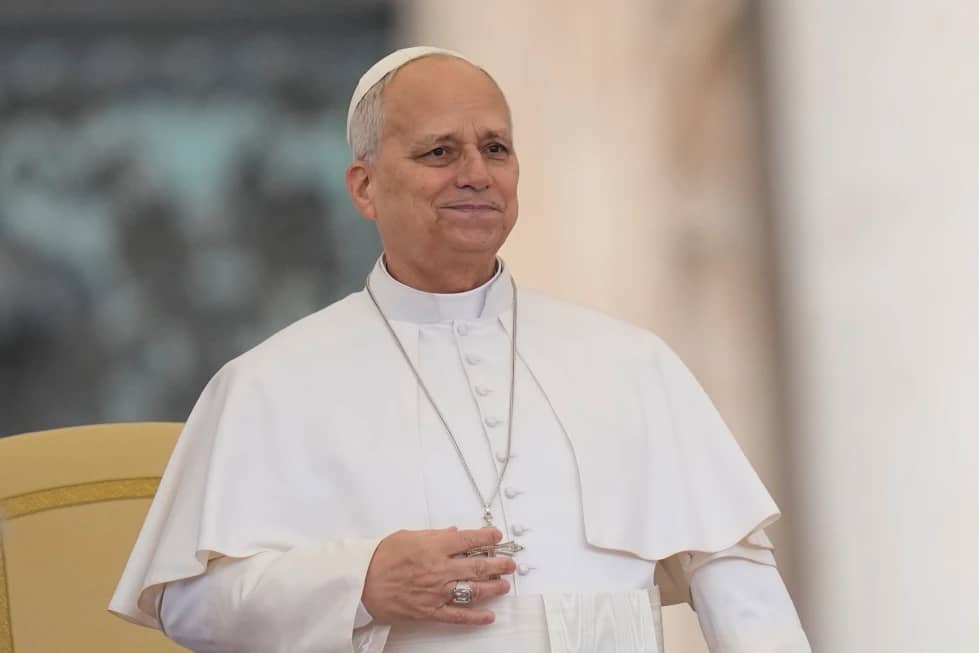
ROME – Pope Leo Thursday offered the world his first official Christmas blessing since his election, telling believers that peace begins with personal conversion, and urging faithful and those with authority to work for dialogue and reconciliation at all levels.
“Sisters and brothers, responsibility is the sure way to peace,” the pope said in his Dec. 25 Urbi et Orbi address on Christmas day.
“If all of us, at every level, would stop accusing others and instead acknowledge our own faults, asking God for forgiveness, and if we would truly enter into the suffering of others and stand in solidarity with the weak and the oppressed, then the world would change,” he said.
Pope Leo inaugurated the Christmas season with a Christmas Eve vigil Mass in St. Peter’s Basilica Dec. 24, and by celebrating Mass Christmas morning, prior to offering the Urbi et Orbi blessing, “to the city and to the world,” which comes with a plenary indulgence, and which is traditionally only given at Christmas and Easter.
In his address, the pope noted that Jesus, responsible for the creation of the world, was born in a stable and laid in a manger, because there was no room for him at the inn.
“Out of love, he wanted to be born of a woman and so share our humanity; out of love, he accepted poverty and rejection, identifying himself with those who are discarded and excluded,” Leo said.
In the circumstances of Jesus’s birth, he said, believers see God’s decision to do what only he can do, which was to bear the burden of sin and open the pathway to salvation, but Jesus in his incarnation also shows humanity “what we alone can do, which is to take on our own share of responsibility.”
“God, who created us without us, will not save us without us, that is, without our free will to love. Those who do not love are not saved; they are lost. And those who do not love their brother or sister whom they see, cannot love God whom they do not see,” he said.
Jesus, the pope said, is a source of peace not only because he freed humanity from sin, but also because he shows the way to overcome conflicts, both interpersonal and international.
“Without a heart freed from sin, a heart that has been forgiven, we cannot be men and women of peace or builders of peace. This is why Jesus was born in Bethlehem and died on the cross: to free us from sin,” he said.
With God’s grace, each person, the pope said, “can and must” do their part “to reject hatred, violence and opposition, and to practice dialogue, peace and reconciliation.”
To this end, he offered Christmas greetings and prayed for peace throughout the world, specifically mentioning countries and regions marred by violent conflict and war.
He prayed for peace throughout the Middle East and recalled his first foreign trip to Turkey and Lebanon in November. He also prayed for peace throughout Europe, asking God to “inspire a spirit of community and cooperation, in fidelity to its Christian roots and history, and in solidarity with – and acceptance of – those in need.”
Praying for “the tormented people of Ukraine,” Leo asked that “the clamor of weapons cease, and may the parties involved, with the support and commitment of the international community, find the courage to engage in sincere, direct and respectful dialogue.”
Leo also appealed for peace in the “forgotten” wars raging and prayed for consolation for the victims and “for those who suffer due to injustice, political instability, religious persecution and terrorism.”
He made specific mention of conflicts raging throughout Africa, and also prayed for Haiti, “that all forms of violence in the country will cease and that progress will be made on the path of peace and reconciliation.”
He then turned to Latin America, asking that God would inspire political authorities in the region “so that, in facing the numerous challenges, space may be given to dialogue for the common good, rather than to ideological and partisan prejudices.”
Pope Leo prayed for peace in Asia, specifically in Myanmar, Thailand, and Cambodia, and he prayed for populations in Oceania impacted by natural disasters.
“In the face of such trials, I invite everyone to renew, with heartfelt conviction, our shared commitment to assisting those who suffer,” he said, saying, “Let us not allow ourselves to be overcome by indifference towards those who suffer, for God is not indifferent to our distress.”
Jesus in becoming human took upon himself human fragility, “identifying with each one of us: with those who have nothing left and have lost everything, like the inhabitants of Gaza; with those who are prey to hunger and poverty, like the Yemeni people.”
God through his incarnation also chose to identify “with those who are fleeing their homeland to seek a future elsewhere, like the many refugees and migrants who cross the Mediterranean or traverse the American continent,” the pope said.
He also offered prayers for the unemployed, for prisoners, and for victims of various forms of exploitation.
The pope then quoted German Israeli poet Yehuda Amichai, appealing for peace which is “Not the peace of a cease-fire, not even the vision of the wolf and the lamb, but rather as in the heart when the excitement is over and you can talk only about a great weariness… Let it come like wildflowers, suddenly, because the field must have it: wild peace.”
Pope Leo urged believers on Christmas to “open our hearts to our brothers and sisters who are in need or in pain,” saying that in so doing, “we open our hearts to the Child Jesus, who welcomes us with open arms and reveals his divinity to us.”
He noted that he will formally conclude the Jubilee of Hope Jan. 6, when he closes the basilica’s holy door during Mass for the feast of the Epiphany.
While the holy door will close, Christ and the hope he brings will remain always, Leo said, saying Jesus “is the door that is always open, leading us into divine life.”
“This is the joyful proclamation of this day: the Child who was born is God made man; he comes not to condemn but to save; his is not a fleeting appearance, for he comes to stay and to give himself,” he said, saying, “In him, every wound is healed and every heart finds rest and peace.”
Follow Elise Ann Allen on X: @eliseannallen