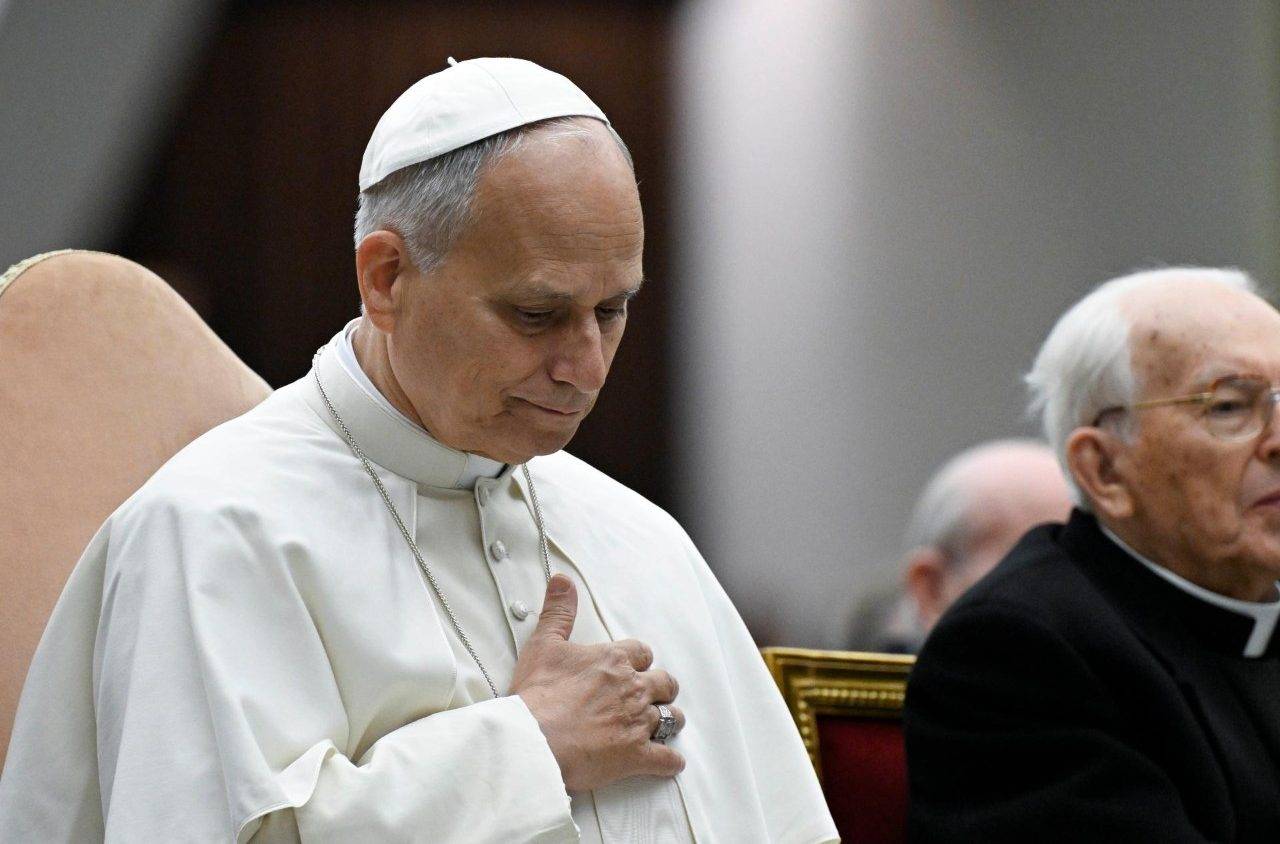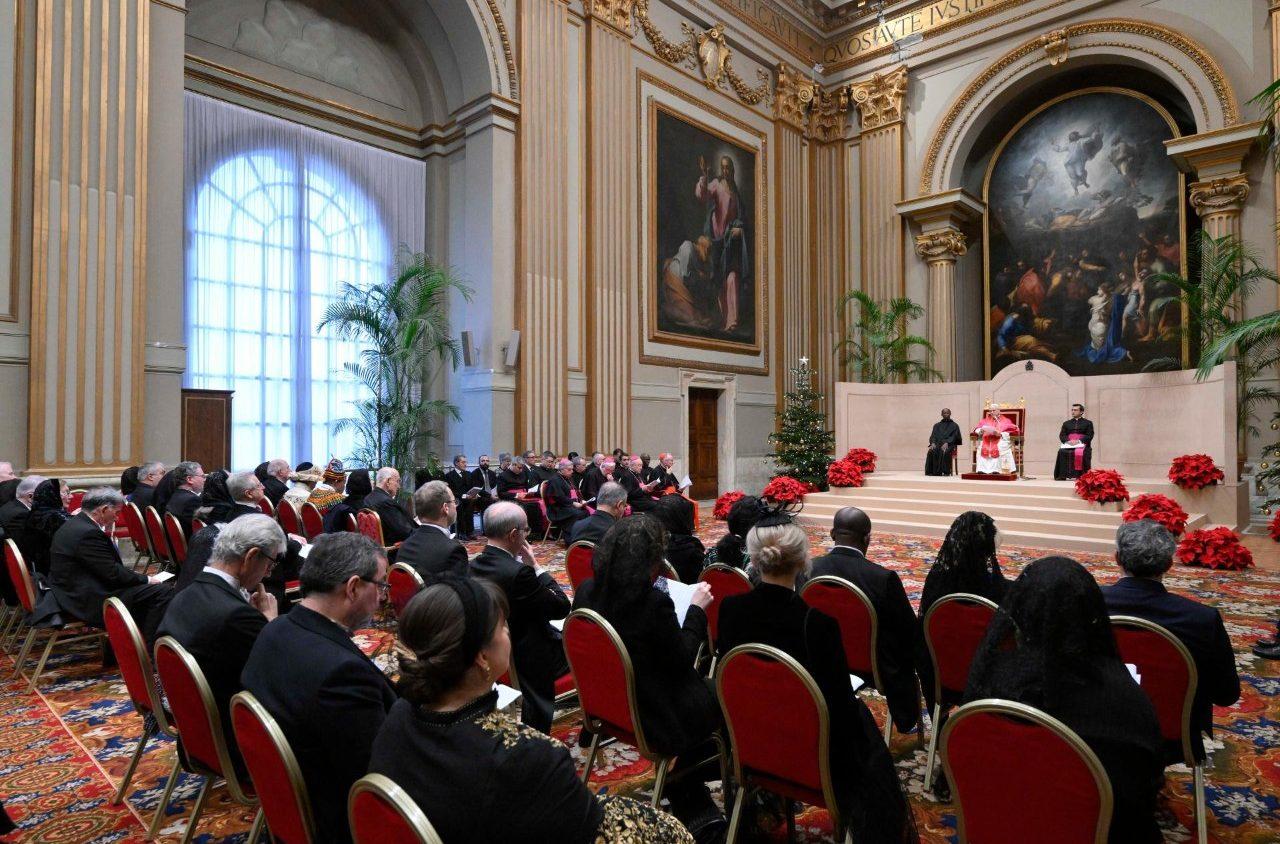
In his address to the diplomats accredited to the Holy See on Jan. 9, Pope Leo XVI spoke about the problems facing families in the world today and lamented the rise of abortion in several countries.
It was Leo’s first time to give the annual address given by pontiffs to the diplomats, and for the first time in history, it was given in English.
The pope said the Christian vocation is revealed in a “privileged and unique way” within the family.
“It is in this context that we learn to love and foster the capacity to serve life, thus contributing to the development of society and the Church’s mission,” he said.
Leo said despite its centrality, the institution of the family “faces two crucial challenges today.”
“On the one hand, there is a worrying tendency in the international system to neglect and underestimate its fundamental social role, leading to its progressive institutional marginalization,” he said.
“On the other hand, we cannot ignore the growing and painful reality of fragile, broken and suffering families, afflicted by internal difficulties and disturbing phenomena, including domestic violence,” the pontiff added.
“The vocation to love and to life, which manifests itself in an important way in the exclusive and indissoluble union between a woman and a man, implies a fundamental ethical imperative for enabling families to welcome and fully care for unborn life,” he said.
“This is increasingly a priority, especially in those countries that are experiencing a dramatic decline in birth rates. Life, in fact, is a priceless gift that develops within a committed relationship based on mutual self-giving and service,” Leo continued.
“In light of this profound vision of life as a gift to be cherished, and of the family as its responsible guardian, we categorically reject any practice that denies or exploits the origin of life and its development,” the pope said.
“Among these is abortion, which cuts short a growing life and refuses to welcome the gift of life. In this regard, the Holy See expresses deep concern about projects aimed at financing cross-border mobility for the purpose of accessing the so-called ‘right to safe abortion.’ It also considers it deplorable that public resources are allocated to suppress life, rather than being invested to support mothers and families,” Leo explained.
“The primary objective must remain the protection of every unborn child and the effective and concrete support of every woman so that she is able to welcome life,” he said.
He also spoke against the practice of surrogacy.
“By transforming gestation into a negotiable service, this violates the dignity both of the child, who is reduced to a ‘product,’ and of the mother, exploiting her body and the generative process, and distorting the original relational calling of the family,” the pope told the diplomats.
Leo said considerations for respecting life should be used when looking at the sick and to those who are elderly or isolated, “who at times struggle to find a reason to continue living.”
RELATED: Persecution against Christians needs to be addressed, Pope Leo tells Vatican diplomats
“Civil society and States also have a responsibility to respond concretely to situations of vulnerability, offering solutions to human suffering, such as palliative care, and promoting policies of authentic solidarity, rather than encouraging deceptive forms of compassion such as euthanasia,” the pope said.
Leo then noted that many young people are forced to confront numerous hardships, including drug addiction.
“In order to prevent millions of young people around the world from falling victim to substance abuse, concerted efforts are required to eradicate this scourge upon humanity and the drug trafficking that fuels it,” he said.
RELATED: The Vatican needs to embrace English, especially with an American pope
“Together with these efforts, there must be adequate policies for recovery from addiction, as well as greater investment in human development, education and the creation of employment opportunities,” the pope said.
“In light of these challenges, we firmly reiterate that the protection of the right to life constitutes the indispensable foundation of every other human right. A society is healthy and truly progresses only when it safeguards the sanctity of human life and works actively to promote it,” he said.
Leo told the diplomats that the world is now seeing an actual “short circuit” of human rights.
“The right to freedom of expression, freedom of conscience, religious freedom and even the right to life are being restricted in the name of other so-called new rights, with the result that the very framework of human rights is losing its vitality and creating space for force and oppression,” he said.
“This occurs when each right becomes self-referential, and especially when it becomes disconnected from reality, nature and truth,” he told the diplomats.
Follow Charles Collins on X: @CharlesinRome