Relations between the Congolese government and the influential Catholic Church in the country have become tense after the government struck a strategic agreement with the United States.
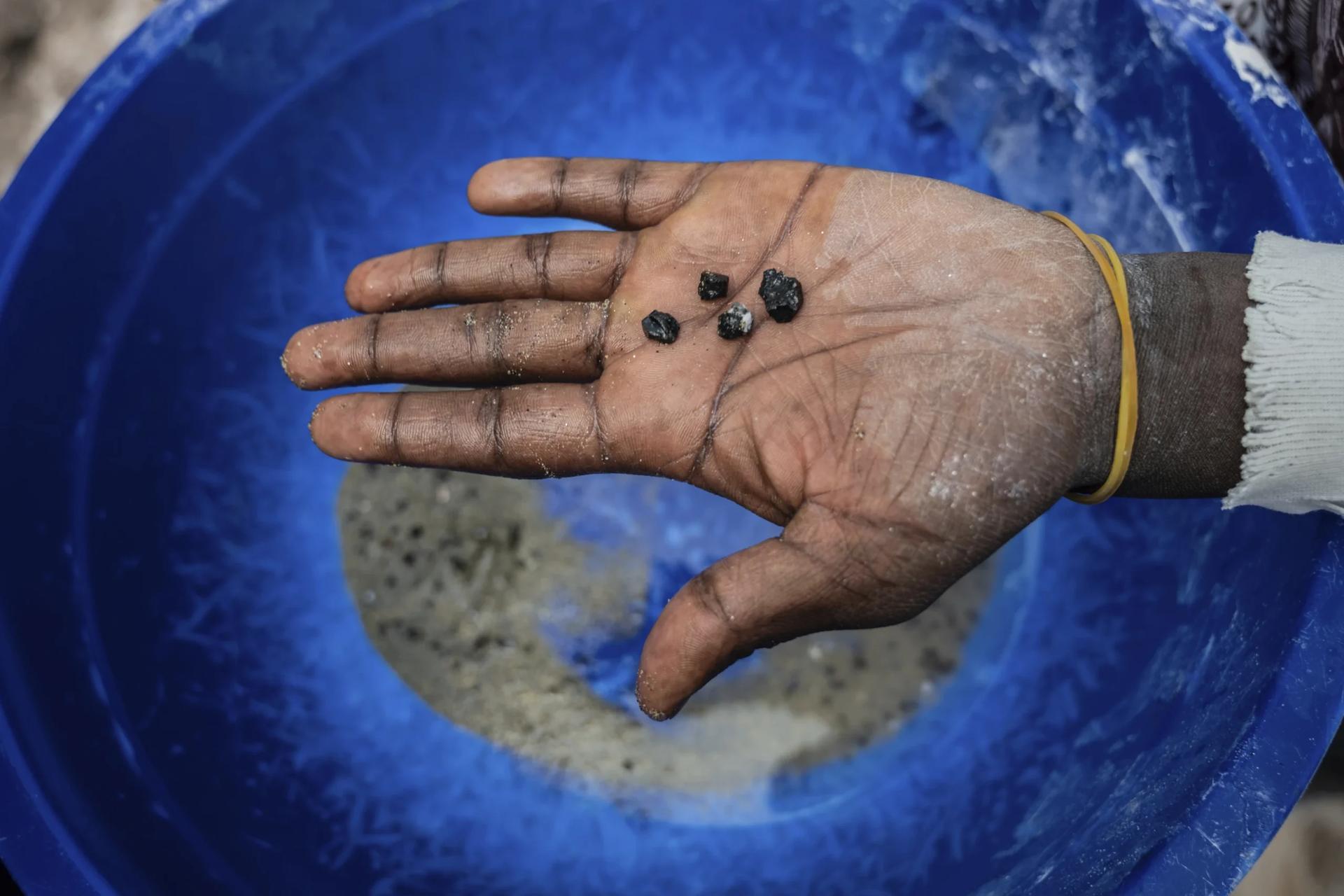
Signed December 4, the agreement will allow the US privileged access to mineral resources in the DRC, such as cobalt, copper, lithium, and gold, all critical to western industry.
For the Congolese government, this partnership symbolizes a renewed international confidence and a historic opportunity for structural transformation of the national economy.
The agreement provides for the identification by the DRC of designated strategic projects (DRC Designated Strategic Projects) within 30 days of the agreement’s entry into force.
It calls for the creation of a Strategic Asset Reserve (SAR) comprising mining assets and exploration areas related to critical minerals and grants first-offer rights to the United States on projects covered by the SAR.
It also calls for the rehabilitation of key infrastructure, including the DRC-Angola railway line in the Sakania-Lobito corridor, a key route for the export of minerals from Katanga.
But the Catholic Church believes it is tantamount to mortgaging the future of the country in order to sustain the Tshisekedi regime as the US benefits from the spoils.
In a scathing critique, Archbishop Fulgence Muteba Mugalu of Lubumbashi – who is also the president of the bishops’ conference of the DRC – said the deal is built on the basis of a “false friendship” and symbolizes a new form of colonialism.
The archbishop was particularly alarmed by a supposed 99-year exploitation agreement, which he presented as a denial of intergenerational justice.
“How can we mortgage the future of a nation for 99 years?” he asked.
According to the prelate, the strategic partnership would not serve the Congolese people but primarily aims to ‘save a regime’ at the cost of sacrificing national development and mortgaging the well-being of future generations.
He voiced concern that the DRC could once again become a battleground in a proxy war, as it was during the Cold War.
This time, the adversaries would be the US and China, with the Congolese people paying the ultimate price.
“All these agreements you hear about are in fact agreements of false friendship, unbalanced cooperation agreements, agreements based on greed for natural resources,” Muteba said.
Muteba cited his experience negotiating a Framework Agreement with Qatari mediators between the Democratic Republic of Congo (DRC) government and the M23 rebel group (Congo River Alliance). Signed in November 2025, the agreement sought to end conflict in eastern DRC through an 8-pillar roadmap covering ceasefires, prisoner exchanges, state authority restoration, IDP returns, economic recovery, and justice.
“I went to Doha to seek peace,” Muteba said. “What I saw in the eyes of that oil-rich country was not primarily a desire to bring us peace or help us out of our situation,” he said.
“After talking about peace, they immediately started asking us questions about minerals,” he continued.
“Outrageous, I tell you,” the archbishop offered.
Invoking the words of Pope Francis, the Church leader criticized the global economic system that enables such agreements.
He views the deal as a symptom of a system designed to perpetuate a “logic of predation” under the guise of development and cooperation.
The government of the DRC has pushed back on the Church’s criticism of the agreement, with its spokesperson, Patrick Muyaya describing the Church’s claims as “factual untruths.”
The Communication Minister said the agreement doesn’t include any transfer of mines, no sell-off of natural resources, nor any infringement of national sovereignty.
He said the agreement is limited to establishing principles of cooperation, within a transparent framework, in which the Congolese state retains complete freedom to accept or reject any project that is contrary to the national interest.
Johan Viljoen, the Director of the Denis Hurley Peace Institute of the South African Bishops’ Conference agrees “100% with the bishops.”
In exclusive quotes to Crux, the priest said the Congolese government, by signing that agreement, is effectively “mortgaging the country’s future.”
“That’s exactly what the Americans did in every other country they were present in, be it Iraq or wherever,” Viljoen said.
“They will get their big companies in,” he said, “they’ll get concessions, they’ll mine all the critical minerals, they’ll export it to America, and they will repatriate the earnings, the profits to America as well.”
Viljoen cited the case of Mozambique, saying that mining companies in that country paid less than a quarter of the tax they were supposed to pay in 2024.
“If the experience in Mozambique is any indication,” Viljoen told Crux, the only thing the Congolese government will benefit from the American firms exploiting those minerals will be the taxes they pay, but they don’t even respect that minimal requirement.”
“So,” Viljoen said, “the government [of the DRC] is not even going to get that if they were hoping to make a windfall. The US companies will move in, all the minerals will be mined and Congo will be left poor.”