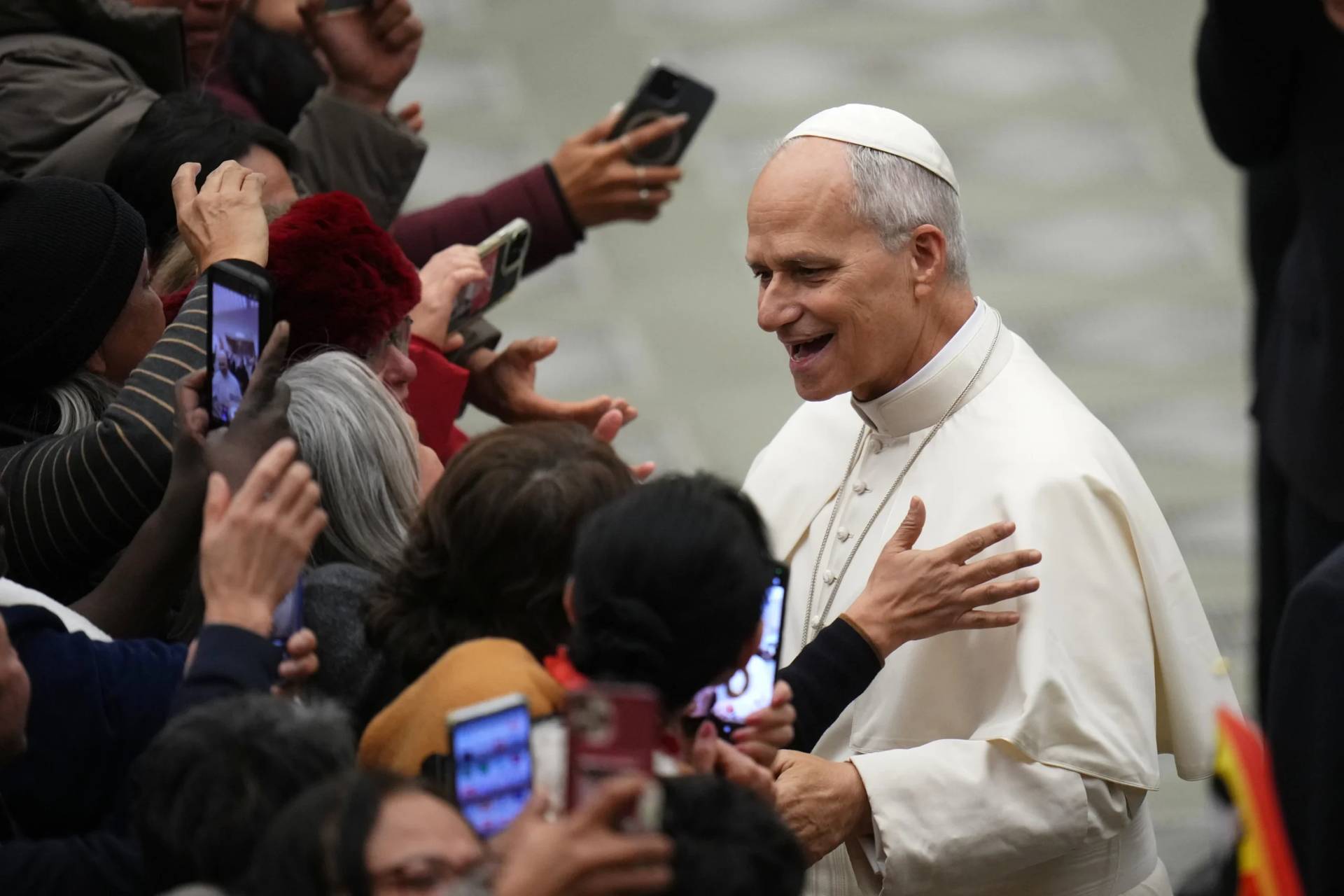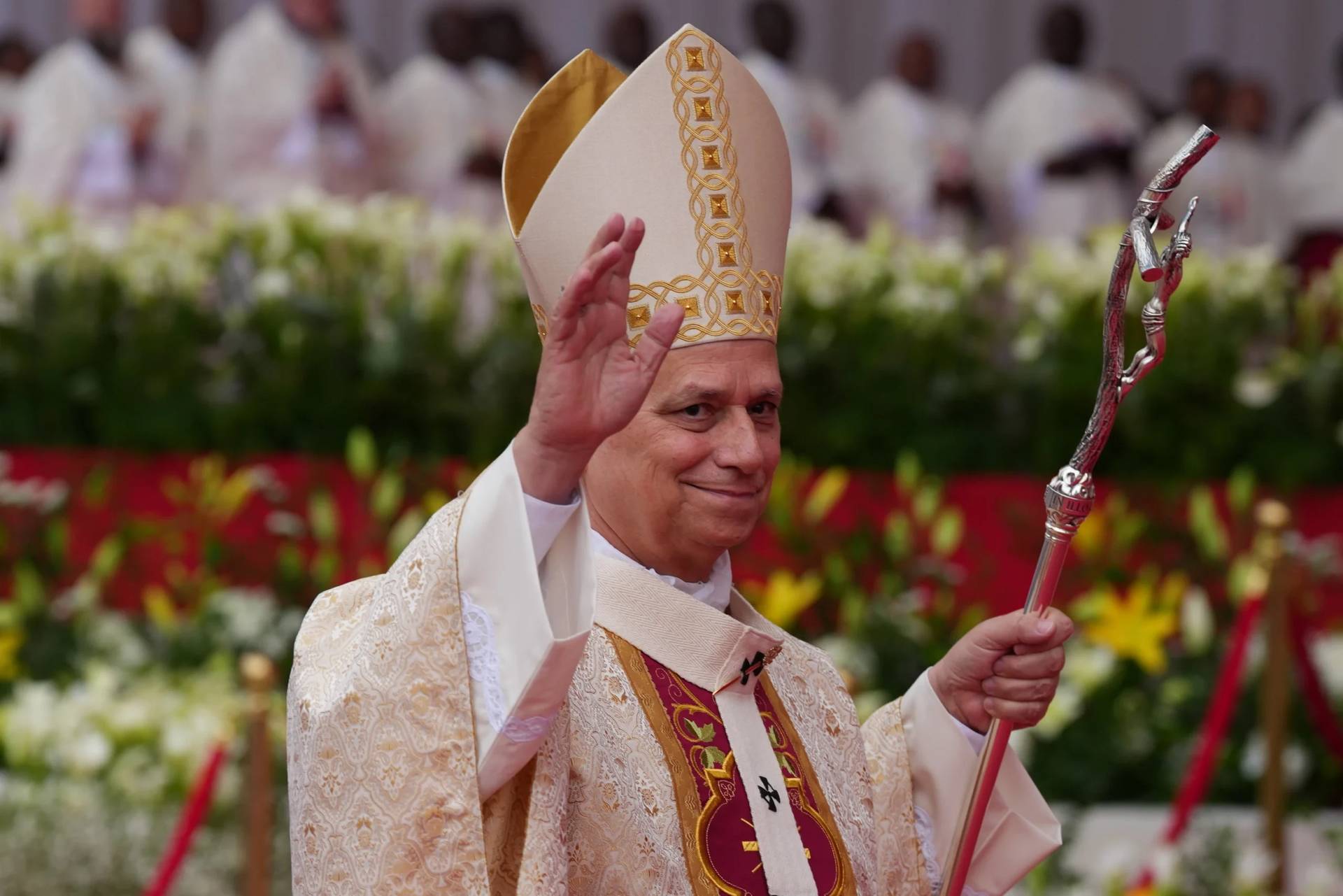
As the Catholic Church in South Africa commemorates the 75th anniversary of its hierarchy’s establishment, Cardinal Stephen Brislin, Archbishop of the Catholic archdiocese of Johannesburg has offered a reflection on a journey marked by transformation, resilience, and hope.
In an interview, the South African prelate traces the evolution of South Africa’s Catholic community from its colonial roots through the dark days of apartheid to its emergence as a truly local church.
With South Africa still grappling with the legacy of its past while facing new socio-political realities, Brislin provides unique insights into how the Church is working to build bridges in a divided society and why he remains optimistic about its future, particularly among the youth.
In the first of a two-part interview, the leading African prelate examines the Church’s history, from the establishment of hierarchy, the progress made over the last 75 years, and what the Church had to go through during the apartheid era.
Crux: Your Eminence, this is a very important year for the church in South Africa, because it marks 75 years after the establishment of the hierarchy. For those of us unfamiliar with this concept, what does it really mean to establish the Hierarchy?
Brislin: The establishment of the hierarchy in South Africa occurred in 1951, and what that meant is that the whole structure of the Catholic church was re-looked at, and part of the restructuring that took place was to erect four archdioceses, namely Cape Town, Bloemfontein, Pretoria and Durban, and to elevate certain vicariates as dioceses, and to create a more local structure.
So it wasn’t just about structuring the dioceses, it was to give over leadership of the church to the people of South Africa, always of course in communion with the Holy Father and with the universal Catholic church. So it just brought about the impetus now to work for a truly local church that is Catholic and in communion with the Holy Father.
75 years down the line, what do you see as the elements of progress? How has the Church in South Africa grown?
Oh, we’ve of course progressed greatly in many, many respects. First of all, in terms of our clergy. Previously, of course, the majority of clergy were missionary, and we express our deep gratitude to the missionaries who brought the faith to Southern Africa, who planted the faith here, and who continue to care for the church for many, many years, and in fact we still depend a lot on missionaries. But the church has become much more local, the clergy has become much more local, so the majority of priests are local priests.
And this is true of the situation in the country. When one looks at the bishops, the bishops are now predominantly local bishops. You still get some bishops, of course, who are from other countries who are missionaries, but the vast majority are local people.
And in terms of our parishioners, the growth of parishes, there’s been phenomenal growth of the Catholic Church in the past 75 years and of course since our inception. You mustn’t forget the Catholic Church in Southern Africa is actually quite a young church, because we only celebrated 200 years about six years ago in 2019.
And in all these years, the Church obviously had to overcome a certain number of challenges, including going through the apartheid era. What was it like?
Firstly, there was colonialism. At different times we were either under the Dutch or under the British and that in itself created a lot of tensions, particularly for local people, the indigenous people.
But then, of course, that led to the establishment institutional apartheid in 1948, just three years before the hierarchy was established. And that, of course, presented an enormous challenge to the church, because the church is a universal body that welcomes anybody who professes the one true faith. It doesn’t matter whether you’re black or white, or what language you speak, what nation you come from.
And apartheid, of course, separated people according to race. So one of the biggest impacts it would have had, and which we still live with, is the fact that you therefore had to have churches that were reserved for blacks and churches that were reserved for whites and others in between, because it was against the law for people to actually meet together and intermingle. It had an enormous effect, for example, on the training and formation of priests, where the church at that time had to have two seminaries, one for whites and one for blacks.
And it was really only in the late 70s or the early 80s that the religious women showed the way, and with great courage. They opened up the schools that they were operating to all races. And that was in gross violation of the apartheid laws of the time, and in many ways that led to the great change that would happen in the future. But, you know, in the apartheid era, there was a concerted effort of the government to close Catholic institutions, and particularly the schools, because the vast majority of our schools were serving indigenous people, local people.
There were some schools that were what one would call white schools, but the majority of schools were for the local population, the black population, and the government knew that the Catholic Church was giving good education, and they wanted to prevent that. And so they did everything in their power to make it difficult for us to operate schools, and it was only through the great efforts of the bishops and the people who rallied around them to do a lot of fundraising to keep our schools open. Even so, a lot of them had to close, but, thank God, a lot of them continued, and we continued to give good education to even the poorest of the poor.
So, I think that that was one of the achievements of the Church, but also really a great battle that we had to fight. And, you know, I think just in terms of the dehumanization of people that apartheid involved, and the fact that people were conceived or looked upon as being second-class citizens, the fact that the Church believes that each and every person has the dignity of the image of God, every person is created in God’s image, and every person has human dignity, and apartheid really tried to destroy that.
You talked a while ago about this all-white hierarchy before 1951, when it was given to indigenous people. How has this indigenization of the Church shaped theology?
During apartheid, a distinctive form of theology emerged in South Africa. This included what’s known as black theology and liberation theology – approaches that interpreted Christian faith through the lens of people’s suffering under racial oppression.
Theologians like Father Albert Nolan and others (both Catholic and Protestant) developed these ideas by taking the real experiences of people living under apartheid’s racist system as their starting point. They looked at how Christianity could address the injustice and domination that people were facing daily.
In essence, they asked: ‘What does our faith mean for people who are being oppressed?’ and then built their theological understanding from the ground up, based on these lived experiences rather than abstract ideas.
And from that, they created a theology of liberation, a theology of the dignity of the human person. So, it has shaped theology. But I think, as we have continued into the future, the Church is much more natural now that we are in a democratic era.
And those problems of the past, while we still live with the consequences in many respects- we live with the consequences of both colonialism and of apartheid, nonetheless we’ve become much more of a self-reliant country, not only in financial terms, but also in terms of resources and in terms of, if I could put it biblically, drinking from our own wells, from our own talents, our own resources.
The second part of the interview will address contemporary issues (funding challenges, current social issues, and future outlook) for the Church. It will also touch on the impending visit of Pope Leo to Africa.


![The Pelourinho Novo (lit. 'New Pillory'), also known as Hath Katro Khamb[b] (lit. 'Hand-Cutting Pillar'), in Old Goa. (Credit: Wikimedia.)](https://cruxnow.com/cdn-cgi/image/width=1920,quality=70/https://wp.cruxnow.com/wp-content/uploads/2026/04/pillar-in-india.jpg)