MUMBAI – In India, Allahabad High Court recently asked the Uttar Pradesh state government to crack down on people who have converted to Christianity but continue to avail benefits meant for Scheduled Castes (SC), observing that the retention of SC status after conversion amounts to a “fraud on the Constitution.”
Bench of Justice Praveen Kumar Giri in its order passed on November 21 cited an order of the Andhra Pradesh High Court which said that caste-based discrimination does not exist within the Christian faith, and therefore the basis for Scheduled Caste classification stands nullified upon conversion, irrespective of the existence of any previously issued caste certificate.
The Bench also cited a Supreme Court order which observed that claiming caste-based benefits merely for the purpose of availing reservation after conversion amounts to a “fraud on the Constitution.”
The court set a strict deadline of four months for all district magistrates in the state to act in accordance with the law to identify and prevent such occurrences.
Uttar Pradesh is the most populous state in India, with nearly 200 million people. However, only about 350,000 Christians live in the state, a miniscule 0.18 percent of the population.
The northern state, like the national government, is run by the Bharatiya Janata Party (BJP), with strong links to the Rashtriya Swayamsevak Sangh (RSS), a militant Hindu nationalist organization.
Hindu nationalists often accuse Christians of using force and surreptitious tactics in pursuing conversions, often storming into villages and leading “reconversion” ceremonies in which Christians are compelled to perform Hindu rituals.
These pressures on Christians, which also affect Muslims and other religious minorities, are part of what observers describe as a broad program for the “saffronization” of India under Prime Minister Narendra Modi, meaning an attempt to impose Hindu values and identity while squeezing out rival faiths.
In his statement, Giri passed the order while dismissing an application filed by Jitendra Sahani, who has been accused of mocking Hindu deities and promoting enmity. Sahani had filed the plea to quash a charge sheet in the case, arguing that he had sought permission from the concerned authorities to preach the “words of Jesus Christ” on his own land and was being falsely implicated.
The court dismissed the application, holding that it lacked merit. However, during the course of the hearing, while reviewing the affidavit filed in support of the applicant’s petition, the court noted that he had mentioned his religion as “Hindu” in the affidavit, even though he had converted to Christianity.
At this point, the court was informed that the applicant was a member of the Scheduled Caste community before his conversion, and yet he mentioned his religion as “Hindu” in the affidavit before the courts.
The court asked the district magistrate of Maharajganj to enquire about the religion of the applicant within three months and take action against him if he is found guilty of forgery.
The court also asked the Uttar Pradesh government to look into the matter and take action or pass orders directing the authorities “so that law may be executed in reality/true sense”.
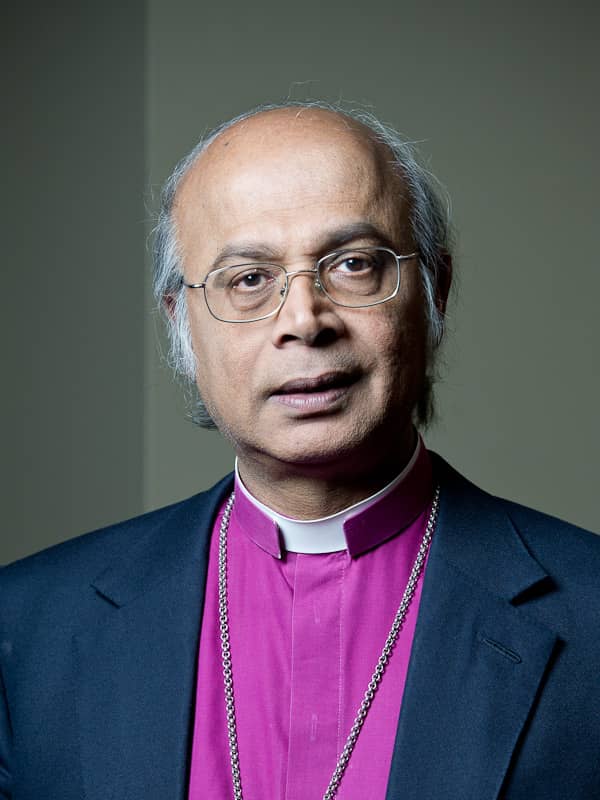
Bishop Sarat Chandra Nayak of Berhampur chairperson of the Office for Scheduled Castes and Backward Classes in the Catholic Bishops’ Conference of India.
“They were to give the judgement of the particular case. Now they have made their own statement which has no relationship with that particular case,” the bishop told Crux.
“This is going beyond the particular case. They know that the Christians are being harassed. You should give judgement on that case and punish that person if guilty. The government will take advantage of this order. The courts have gone beyond the scope of their judgement,” he said.
“When giving a judgement they should investigate and give judgement on that particular case. Not give a sweeping order to the Government to find out everybody who is doing similar activity. That is Government responsibility. That is why the court has gone beyond their responsibility in giving this order,” Nayak said.
“The 2007 Justice Ranganath Mishra Commission for Religious and Linguistic Minorities, recommended allowing Dalit converts to Christianity and Islam to access Scheduled Caste (SC) reservation benefits, based on the principle of delinking SC status from religion,” he told Crux.
“Currently, it is estimated that between 50 and 75 percent of Indian Christians are Dalits, but this figure is not officially recognized in government data. A 2008 report by the National Commission on Minorities estimated the number of Dalit Christians at 2.4 million, but many experts believe the number is much higher,” the bishop said.