ROME – At a time when Euroscepticism and a broader anti-Europe sentiment are rising globally, the bishops of the European Union have condemned a new court ruling requiring member states to recognize lawful same-sex marriages completed in other EU nations.
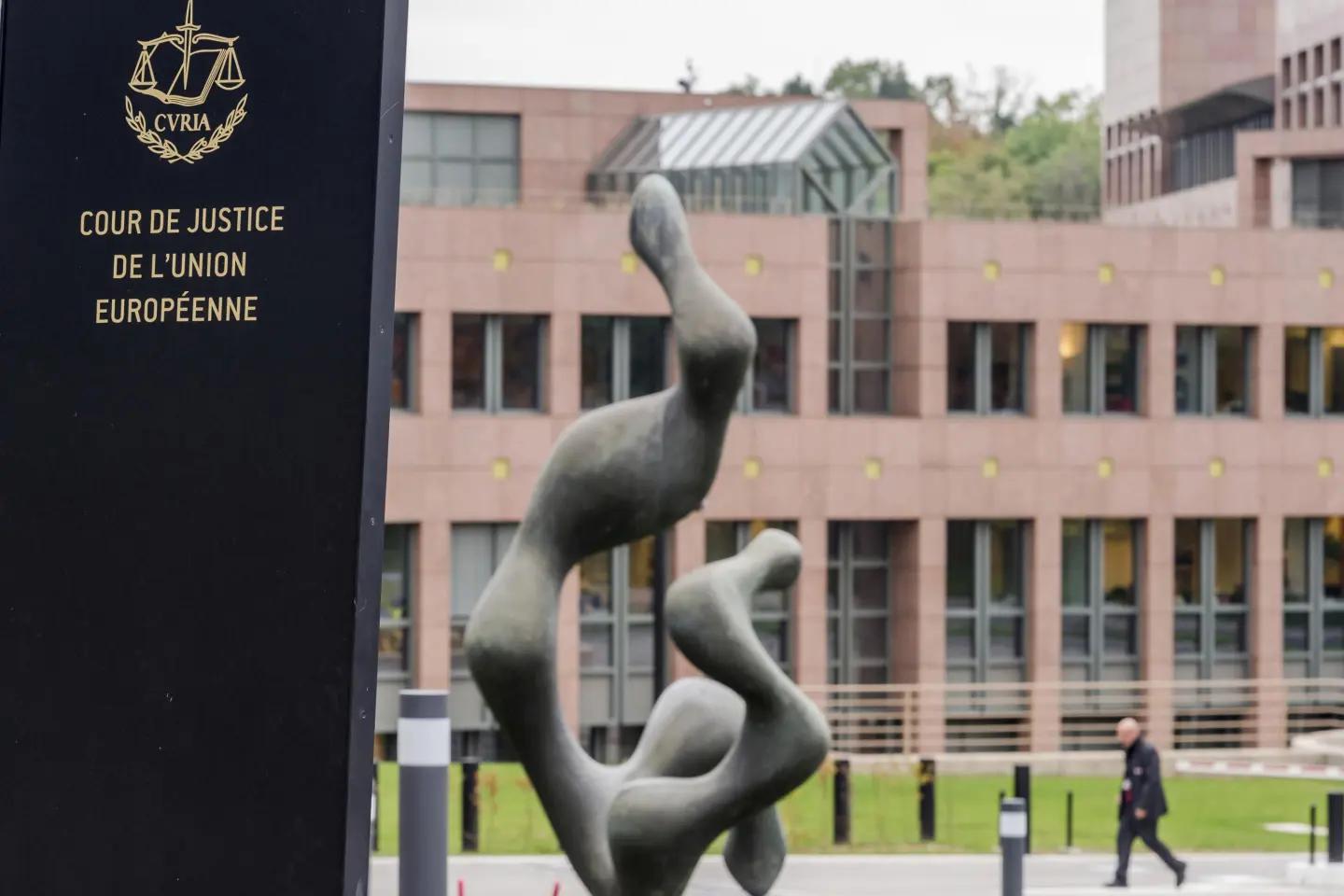
The ruling, the culmination of the Wojewoda Mazowiecki case, was issued Nov. 25 by the European Court of Justice.
In a statement published Tuesday, the presidency of the Commission of the Episcopates of the European Union (COMECE) said the ruling contradicts EU guarantees of the autonomy of national judiciaries to determine their own policies on matters such as marriage and family life.
They said it also opens the door to further skepticism and hostility toward Europe at a time when the continent’s role in global affairs is facing unprecedented challenges.
“We note with worry the trend to apply provisions that should protect sensitive components of national legal systems in a way that impoverishes their meaning,” COMECE said following a Dec. 3 meeting on the matter.
“Bearing in mind the importance of acknowledging the richness and diversity of the EU juridical panorama and traditions, we also note the disappointingly limited role attributed by the Court to the respect for Member States’ ‘national identities’ and to their public policy/ordre publique,” the bishops said.
The ruling is problematic because it imposes acceptance of same-sex marriage, even on more traditional member states, for many of whom “the definition of marriage forms part of their national identity.”
COMECE referring to a growing attitude of suspicion and even hostility toward Europe, evidenced by the United States’s bold new security strategy, which is sharply critical of Europe, soft on Russia, and signals a further realignment of traditional western alliances.
“Recalling the challenging context the European Union is currently facing – also in reference to its perception in various countries – it comes as no surprise that these kinds of judgments give rise to anti-European sentiments in member states and can be easily instrumentalized in this sense,” the bishops said in their statement.
Europe has long been criticized by the global right for the growth of rampant secularism on the continent, with a new wave of rightwing nationalist political parties and leaders increasingly challenging the EU over disputed policies on topics such as the LGBTQ+ issue, migration, and financing, questioning the benefits of membership.
Critics, for example, have challenged the emphasis on “protecting the rights of national minorities,” such as LGBTQ+ individuals, in negotiations for Ukraine’s accession to the EU.
The Wojewoda Mazowiecki case involves two Polish men who were married in Germany, and who requested that their marriage certificate be transcribed into the Polish civil register, allowing their marriage to be officially recognized in Poland, a traditionally Catholic and deeply conservative country where same-sex marriage is currently illegal.
Polish authorities refused to comply with the couple’s request on grounds that Polish law does not allow marriage between individuals of the same sex. This decision was challenged by the couple.
In response to a question referred by a national court, the European Court of Justice ruled that EU member states are bound to recognize the lawful marriage of two EU citizens in a different member state on grounds that refusing to do so infringes on the right to respect for private and family life.
According to the ruling, all EU member states, then, are required to recognize, invoking EU law, the marital status lawfully acquired in another member state, even if that marriage directly contradicts national law.
In their statement, COMECE said the ruling was at odds with “the core of national competences.”
COMECE said that for years it has been reflecting on the issue of family law with cross-border implications, with an emphasis on “a prudent and cautious approach and of avoiding undue influences on national legal systems.”
While previous cases have moved in a similar direction, the Wojewoda Mazowiecki ruling, they said, “appears to push jurisprudence beyond the boundaries of EU competences.”
To this end, COMECE quoted article nine of the Charter of Fundamental Rights of the EU, the “right to marry and right to found a family,” which states that, “The right to marry and the right to found a family shall be guaranteed in accordance with the national laws governing the exercise of these rights.”
“Marriage is defined as a union between a man and a woman in the legal systems of various EU member states, including, in some cases, by means of constitutional provisions,” they said.
They noted that the Wojewoda Mazowiecki ruling does not require that same-sex marriage be legalized under domestic law for all member states, and nor does it enforce methods of recognition for marriages completed in other member states.
However, COMECE argued in their statement that “the rules on marriage come within the competence of the member states, and EU law cannot detract from that competence.”
“The member states are thus free to decide whether or not to allow marriage for persons of the same sex under their national law,” they said, adding, “the EU Court strictly narrows down the significance of such affirmation by underlining that in exercising this competence, each member state must comply with EU law.”
COMECE lamented that the new ruling will likely impact national family law in domestic legal systems, and “may foster pressure to amend them.”
“It also requires the introduction of recognition procedures and even calls for the disapplication, if need be, of the national provisions concerned,” the bishops said, saying the ruling “effectively creates a convergence of matrimonial-law effects.”
This, they said, was done despite the fact that the EU “does not have a mandate to harmonize family law.”
“There is also an impact on legal certainty, as increasingly member states will not be able to foresee in a clear manner which parts of their family law will remain within their autonomy,” they said.
COMECE also voiced concern that the new judgement would potentially lead to negative developments in other sensitive areas for cross-border family law, such as paving the way to legal surrogacy, which Pope Francis in his later years broadly and vocally condemned.
Follow Elise Ann Allen on X: @eliseannallen