The Trump administration has ordered the US embassy in Madrid to investigate the circumstances surrounding the death of Noelia Castillo, the 25-year-old woman who died by euthanasia last week after nearly two years of legal battles with her father.
The U.S. State Department instructed the embassy to tell the Spanish government that due to the “many systemic human rights failures” that led to Castillo’s death, the Trump administration now has “serious concerns”, according to a leaked diplomatic cable obtained by The New York Post.
Of particular concern for Washington is the way that the police and judiciary handled the multiple sexual assaults that Castillo said she suffered in her life before she tried to commit suicide in 2022, leaving her in a wheelchair and paraplegic.
RELATED: ‘Barbaric’ – Spain’s bishops condemn the euthanasia of Noelia Castillo
“We are deeply concerned by allegations that Ms. Castillo was repeatedly sexually assaulted while under state care and that no perpetrators have been brought to justice,” the cable reads.
“We are also aware of reports that Ms. Castillo expressed hesitancy to undergo euthanasia in her final hours, but that these indications were ignored,” the cable also states.
“This case raises serious concerns about the application of Spain’s euthanasia law, particularly in cases involving psychiatric conditions and non-terminal suffering,” it adds.
Castillo went into state care when she was a teen, and rumors circulated on social media that she was a victim of multiple sexual assaults by unaccompanied foreign minors while in care, although this is not what she said happened in interviews, nor is there any record of this taking place.
Regardless, the State Department made it clear it considers Spain’s immigration laws partly to blame for Castillo’s death and the cable stated “we are investigating allegations that the sexual assault of Ms. Castillo was perpetrated by individuals of a migration background.”
RELATED: Spanish woman to undergo euthanasia after fierce legal battle with her father
“Mass and illegal migration is a human rights concern, and Spain’s facilitation of mass and illegal migration represents a dangerous threat to the rights and liberties of Spanish citizens, as well as broader regional and global security,” it went on to say.
Spain’s Minister of Health, Mónica García, quickly took to social media to tell Trump he should stop “sticking his nose into every single place.”
“In the United States, thousands of people die each year without health insurance, while Trump supports and carries out human rights violations between Gaza and Iran,” she said.
“Spain is a serious country, with a solid healthcare system and a rights framework that protects and cares for all people, including those who choose to request help to die with dignity in legally regulated contexts, evaluated by clinical committees and endorsed by the courts,” she added.
In recent weeks, the governments of Spain and the US have criticized each other on a range of issues, including the US’s ongoing war in Iran, which Prime Minister Pedro Sánchez opposes.
Public controversy
Castillo’s death last week sparked huge controversy in Spain and elsewhere, and her father had tried to use legal means to stop the euthanasia for nearly two years.
The Spanish bishops also waded into the debate, and Archbishop Joan Planellas of Tarragona, who is president of the Conferencia Episcopal Tarraconense – a Catalonian regional bishops’ assembly established in 1969 – told Crux Now it was “a very sad situation.”
Bishop José Mazuelos of the Canary Islands, and president of the Spanish Episcopal Conference’s Subcommittee for the Family and the Defense of Life, said it was “barbaric that, when faced with a vulnerable person, the middle ground is chosen: Eliminating them and applying euthanasia.”
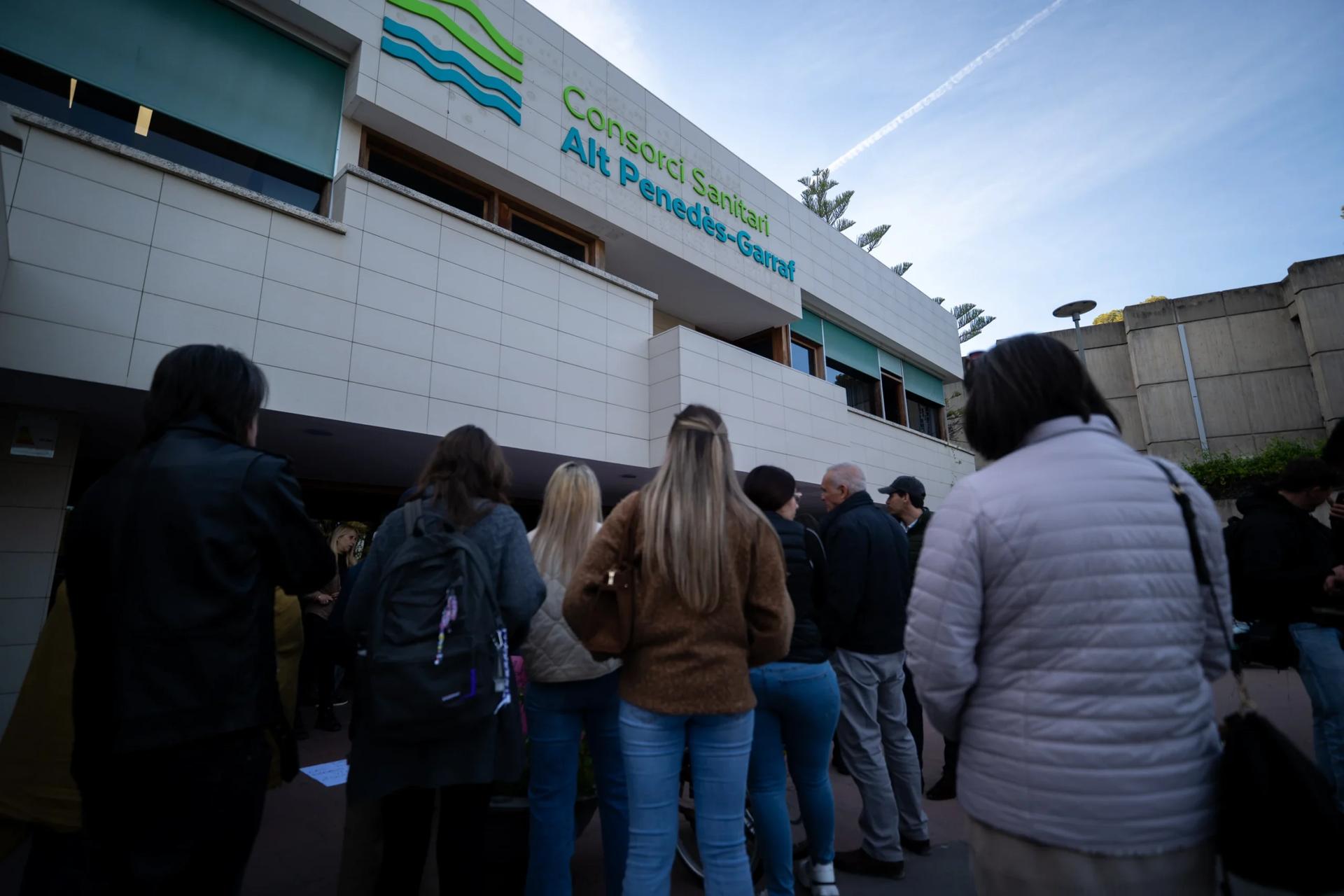
After her failed suicide attempt in 2022, Castillo was granted approval for euthanasia in July 2024 by the Guarantee and Evaluation Commission of Catalonia.
Her father immediately attempted to prevent it and exhausted all legal options in Spain, eventually taking the case to the European Court of Human Rights (ECHR), which rejected his efforts to stop the euthanasia, although the court said judges would analyze the case at a later date.
He and the Christian Lawyers Foundation who represented him argued that she required psychiatric support and that her psychological disorders of borderline personality disorder and obsessive-compulsive disorder gave her a disability of 67 percent, which went up to 74 percent following her suicide attempt.