SÃO PAULO – Repeated restrictions imposed by state governments and prison directors on the spiritual assistance provided to inmates in Brazil prompted the Bishops’ Conference to directly request help from Justice Minister Ricardo Lewandowski at the end of November.
Prison Pastoral Ministry agents report that many correctional facilities block their access for long stretches, citing ongoing construction works or an alleged inability to guarantee safety. But it’s not only that.
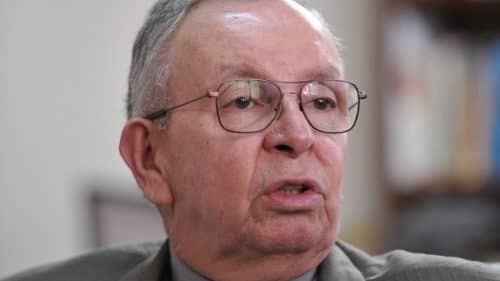
Father Almir Ramos, Vice President of the Prison Pastoral Ministry, told Crux that both the access to prisons and the carrying out of planned activities have been limited all over Brazil over the past years.
“The penal system enforces several restrictions. In many places, pastoral agents cannot get close to the inmates. We can only talk to them through a small hatch or from an upper level to a lower one,” he said.
Pastoral agent Rosilda Ribeiro affirmed that in her region in Mato Grosso do Sul state, everything has changed with the COVID-19 pandemic.
“Before it, we were allowed to visit the inmates each two weeks. Now, it’s only once a month – and only for one hour,” she said.
While women’s prisons have fewer inmates, men’s penitentiaries can have hundreds or even thousands of prisoners. With a team of five or six agents working for only an hour, the actual time available to speak with each person would be very limited.
Now, the Prison Pastoral Ministry has been scheduling weekly Masses there – a strategy to be near the prisoners despite the limitations.
Father Marcelo Moreira Santiago, a leader of the Prison Pastoral Ministry in Minas Gerais state, told Crux that many penitentiaries have fewer guards and staff members than they should.
“So, when we arrive for our visit, they tell us they are short-staffed and that, for safety reasons, we can’t go in. But that happens quite frequently,” he said.
To make matters worse, visits are usually scheduled for the morning or afternoon, when many pastoral agents are at their regular jobs.
“In the city of Mariana, where I accompany those visits more frequently, they take place on Fridays at 3 p.m. It’s impossible for most people to go,” he added.
Ramos said that some penitentiaries have implemented a prison radio system and told the Prison Pastoral Ministry that it should submit a flash drive with the content it wants to broadcast to the inmates — and that this would be the only contact it would have with them.
“In other words, they don’t want the Pastoral to get into the prison,” he explained.
The delay in issuing credentials for pastoral agents is another common problem. At times, it takes so long for the documents to arrive that, when they are finally handed to the agents, they have already expired.
“Getting into prisons with liturgical objects and wine is another challenge. In some institutions, it’s almost impossible,” Ramos added.
The pastoral agents know there are real reasons for the penal system to create obstacles to their work. First of all, the Prison Pastoral Ministry is not limited to providing spiritual support. It also monitors inmates’ living conditions, denounces injustices and human rights violations, and presses the authorities for the necessary changes.
“Our pastoral ministry is often punished for reporting mistreatment. The system imposes restrictions or bureaucratic hurdles on our visits,” Santiago said.
Rosilda Ribeiro agrees.
“The system is partially closed to the Catholic Church because our perspective takes human dignity into account — and that is often not accepted,” she explained.
At the same time, many prisons are quite open to Evangelical churches, such as the Universal Church of the Kingdom of God.
“There are specific cell blocks dominated by Evangelical churches, with inmates that are pastors. We heard of prisoners who had to convert and become Evangelicals in order to survive in the system,” Ramos described.
According to Santiago, some of those churches work hard for the conversion of prison guards and directors, leading to the creation of privileges to their actions inside the correctional institutions.
During former President Jair Bolsonaro’s administration (2019-2022), the penal system in Brazil was partially militarized. The Catholic presence was limited in several states, while that of Evangelical churches grew.
“With the current administration [of President Luiz Inácio da Silva] some policies approved by the government have already begun to change that scenario. We hope they will succeed,” Ramos said.
German-born Sister Petra Pfaller, who heads the Prison Pastoral Ministry, visited Minister of Justice Ricardo Lewandowski on Nov. 18, along with Auxiliary Bishop Ricardo Hoepers of Brasília, who is the Secretary General of the Bishops’ Conference, in order to give him a report on the obstacles on spiritual assistance to prisoners.
The document showed that 64 percent of the pastoral agents have already been impeded to enter prisons due to the religious items they were carrying. Between June of 2022 and October of 2025, there were 18 cases of violation of the right to religious assistance to inmates.
According to Pfaller, Lewandowski listened carefully to the pastoral ministry’s needs.
“He committed to help us. Next year, there will be an event about the problem,” Pfaller said.