SÃO PAULO, Brazil – As Haitians are set to lose their Temporary Protected Status (TPS) on Feb. 3, around 330,000 refugees and immigrants are expected to be forced to leave the United States and return to their violence-plagued Caribbean nation.
The Haitian Church fears the consequences of such a measure for local communities and for its own charitable work.
When President Donald Trump took office in Jan. 2025, revoking Haitians’ TPS was one of his first decisions.
Lawsuits have been filed against the measure, and uncertainty about how the process will unfold remains high.
The prospect of hundreds of thousands of Haitians losing their right to live in the US is concerning not only for communities settled there, but also for people in Haiti.
“Having 300,000 additional Haitians here would be a disaster,” Father Gilbert Peltrop, secretary general of the Conference of Religious of Haiti, told Crux.
He said hardships have been so intense in the Caribbean nation that the sudden arrival of such a massive number of people would further amplify the chaos.
“Internally displaced people are living in very difficult conditions,” he said.
The Church, Peltrop added, would be of little help in that scenario.
“We do not have the infrastructure capable of receiving such a large number of people,” he said.
Established by law in 1990, TPS was applied to Haitians after a devastating earthquake hit the country in 2010. It allows immigrants and refugees to legally stay in the U.S. for a given period and can be extended if conditions in their countries of origin remain dangerous.
Critics of the program, such as Trump adviser Stephen Miller, have argued for years that it allows foreigners to obtain jobs to the detriment of U.S. citizens. Another frequent argument against TPS is that it has been maintained for citizens of countries where the catastrophic conditions have long since changed.
But that is definitely not the case with Haiti. The country not only still faces the consequences of the earthquake — with housing and infrastructure never fully rebuilt — but has also plunged into growing social chaos since the murder of then-President Jovenel Moïse in 2021.
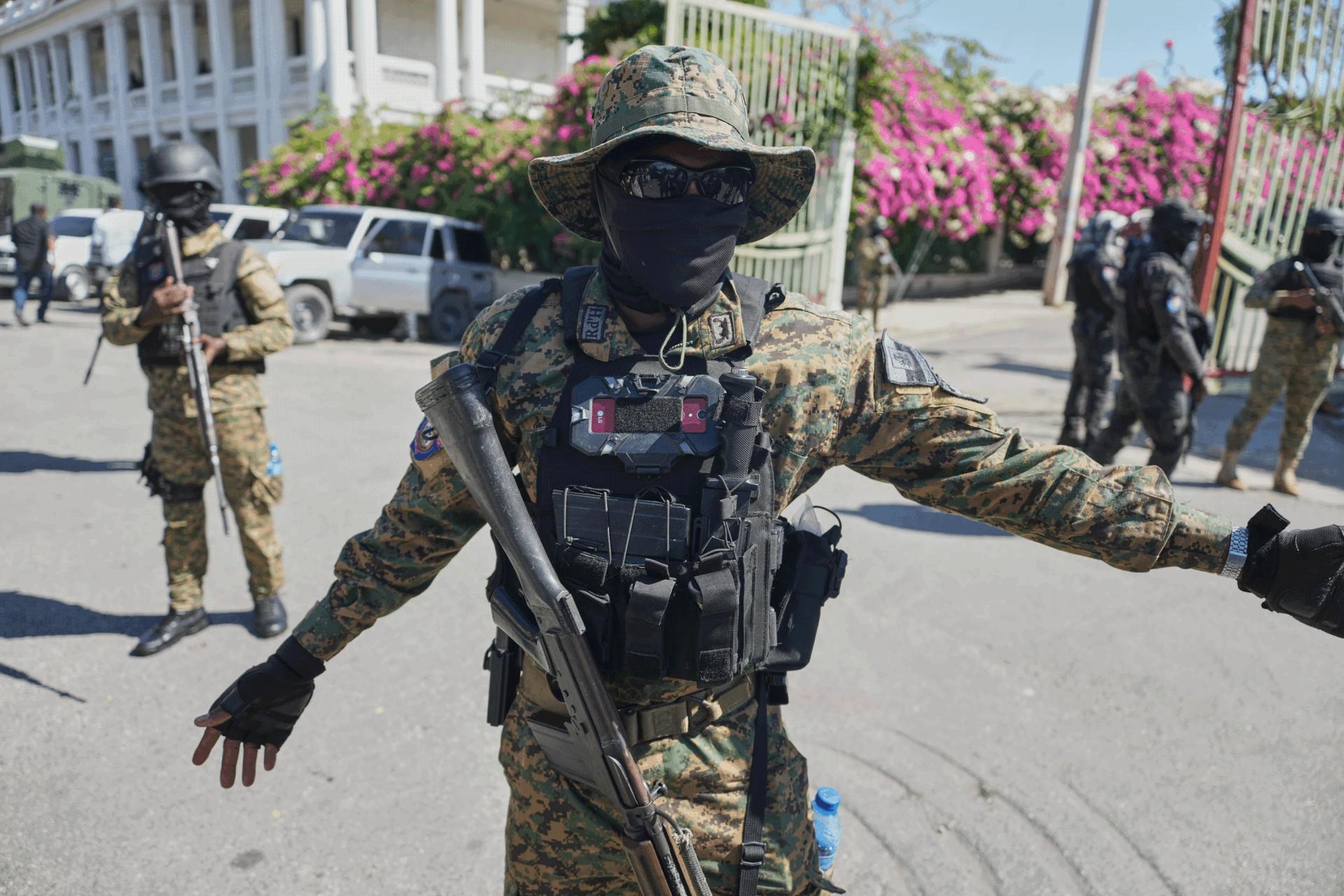
At the moment, criminal gangs such as Viv Ansanm control 90 percent of the capital, Port au Prince. Attacks carried out by armed groups against civilians led to at least 8,100 killings between January and November 2025, according to the United Nations Integrated Office in Haiti (BINUH).
Sexual violence has become endemic. Between January and September 2025, there were 7,470 cases of gender-based violence.
The combination of violence and natural disasters — Haiti was hit by floods in the Northeast Department in May and by a hurricane in October and November — further deteriorated living conditions for millions of Haitians last year.
According to the United Nations, 1.4 million people are displaced — about 12 percent of the total population — and 5.7 million are experiencing food insecurity.
Diseases such as cholera have plagued various parts of the country. Children have been especially affected, with 3.3 million in need of some form of humanitarian assistance. Nearly 330,000 children under five are suffering from acute malnutrition.
Countries in the region, especially the Dominican Republic, forcibly returned 270,000 Haitian immigrants and refugees last year.
“Normally, we should not be talking about deporting Haitians to Haiti, since the country is going through extremely difficult times, both in terms of security and at the sociopolitical level,” Scalabrinian Father Agler Cherizier told Crux.
Deportation will increase the hardships faced by families, “because every migrant living abroad serves as a source of support for their family,” Cherizier added.
Haiti will struggle to receive its deported nationals in terms of providing support and creating jobs for them, the priest said, but that is no easy task.
Manufacturing and commerce have largely become virtually impossible in many parts of Haiti due to gang violence. Criminal groups have been expanding their areas of operation in a continuous movement into other cities and rural regions.
A U.S. missionary living in Haiti told Crux that several raids over the past couple of weeks have caused deaths in places such as Kenscoff, a few miles from the capital.
On the night of Jan. 29, Viv Ansanm members attacked the locality of Kajak, in Kenscoff, killing seven people — six adults and one child. Houses were set on fire and shops were vandalized.
The missionary and his group received some of the survivors. One of them lost a leg.
A week earlier, armed men raided the Tabarre commune. A woman fleeing the attackers fell into a septic tank and sustained serious injuries, leaving her face disfigured. She underwent surgery with the help of the missionary’s group.
“Those are examples of why return is not safe,” he said.
On Jan. 29, Bishop Brendan J. Cahill, chairman of the U.S. Conference of Catholic Bishops’ Committee on Migration, and Bishop A. Elias Zaidan, chairman of the USCCB’s Committee on International Justice and Peace, released a statement urging the Trump administration to reconsider canceling Haitians’ TPS.
“There is simply no realistic opportunity for the safe and orderly return of people to Haiti at this time,” the statement read.
Cahill and Zaidan said that “the Trump Administration still has the opportunity to do the right thing — to safeguard human life, to uphold the law, and to promote greater stability for people in this country and beyond.”
In Haiti, the Church will continue playing a similar role, Cherizier said, seeking to “awaken the consciences of political leaders.”
“Also, insofar as possible, through the Church’s social ministries, it can continue to carry out works of charity simply to bring them some relief,” he concluded.