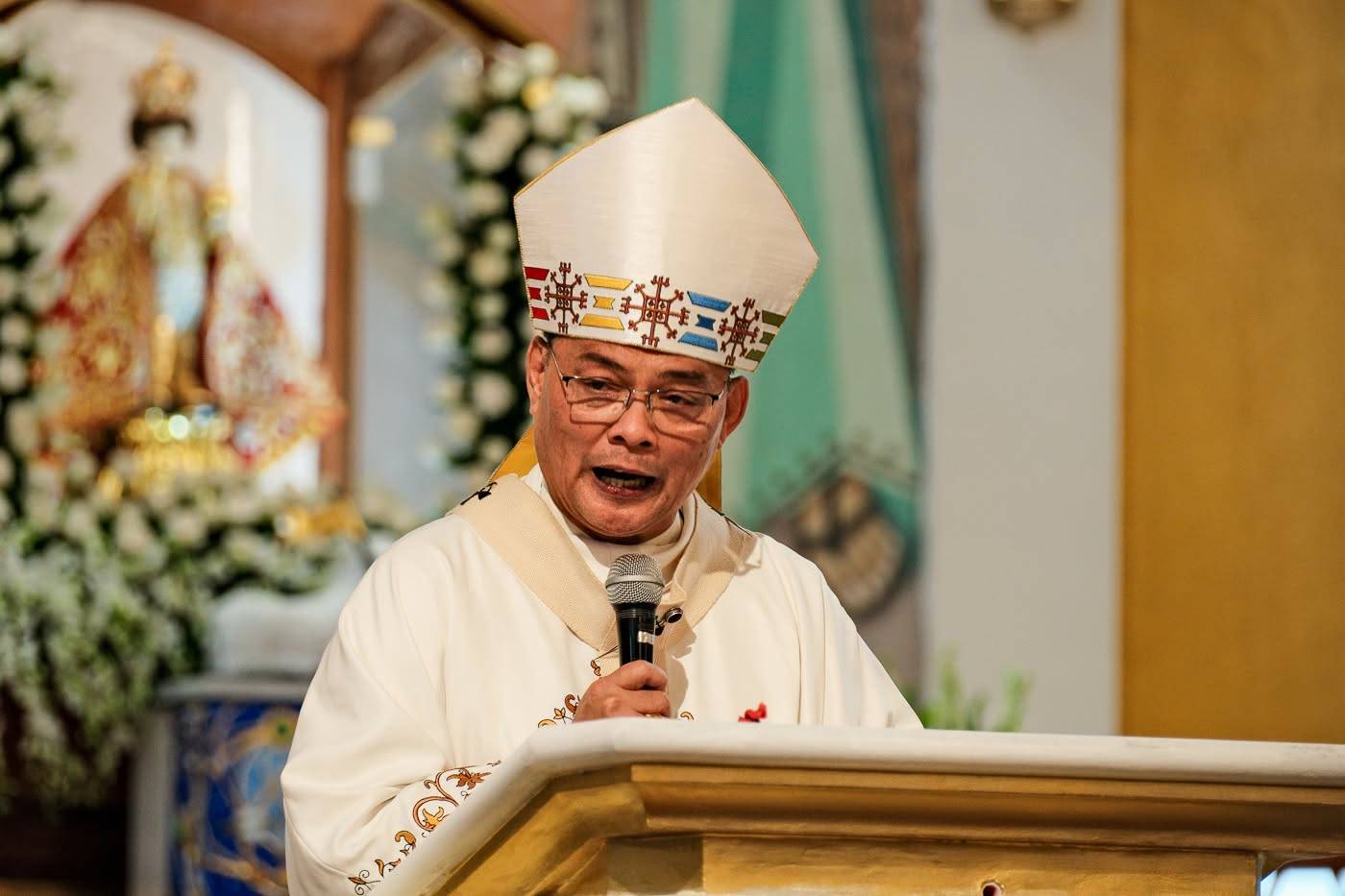
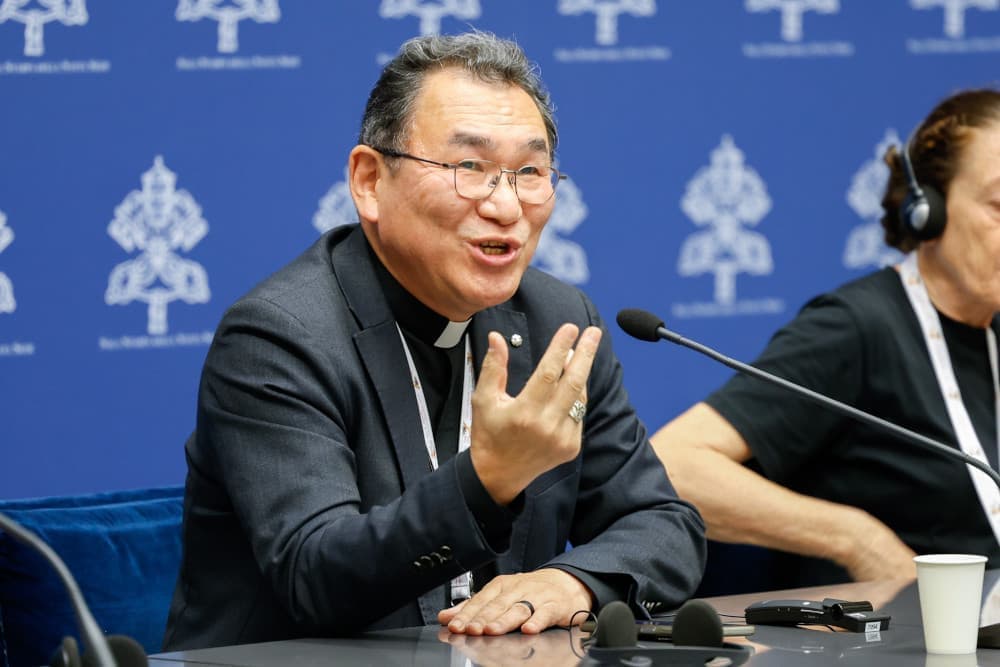
A “polite persecution” is facing Japan that threatens the guarantees given to the freedom of religion, according to Cardinal Tarcisio Isao Kikuchi, the archbishop of Tokyo.
The Japanese cardinal was responding to recent remarks made at the United Nations Human Rights Council in Geneva, Switzerland, marking the 20th anniversary of its founding.
Among those who addressed the anniversary session was Monsignor Daniel Pacho, the Holy See’s Undersecretary for the Multilateral Sector of the Section for Relations with States and International Organizations.
Pacho said so-called “new rights,” a term often used by the Holy See to refer to more recently articulated human rights claims — particularly in areas such as abortion, assisted suicide, gender identity and sexual orientation — are being used to take away traditional human rights, like religious liberty.
RELATED: Vatican official tells UN so-called ‘new rights’ can attack religious freedom
In his conversation with Crux Now, Kikuchi said this even affects the situation in Japan.
“It is often argued that, because of the principle of separation between religion and state, the Church should refrain from speaking about any matters related and considered as political matters,” the cardinal said.
What follows is Crux Now’s conversation with Kikuchi, edited for length and clarity.
Crux Now: In Japan, Catholics are a tiny minority, and Christianity is often met with quiet social indifference rather than hostility. How does these “new rights” shape the way you lead the Church and nurture faith in such a context?
Cardinal Kikuchi: Japan’s present post-World War II Constitution, drafted in light of the negative experience of the union of State Shinto and government, which resulted in persecution and serious difficulties for non-Shinto religions, including the Catholic Church, guarantees freedom of religion and a strict separation between state and religion.
We are nonetheless facing a challenging situation that could be described as a form of “polite persecution.”
In the current context, religious activities are generally welcomed by the public as long as they remain confined within their own premises, such as temples and churches. However, the principle of separation between state and religion is often misunderstood to mean that religious matters should never appear in the public arena.
In addition, Japanese culture places a high value on conformity and social harmony. For this reason, whenever the Church takes a public position on a government policy, especially when such policies negatively affect human dignity, or when it issues public statements, for example calling for the abolition of nuclear weapons in the pursuit of lasting peace, or calling for fair treatment of migrants, the Church is criticized for being “too political.”
It is often argued that, because of the principle of separation between religion and state, the Church should refrain from speaking about any matters related and considered as political matters.
This makes it difficult for the Church to speak up regarding matters negatively affecting human dignity. Religion is not recognized as a moral authority in this country and as long as we contain ourselves in the Church premises, we are considered harmless and fine.
Japan is a highly secular society, yet Asia is increasingly central to global Catholicism. What role do you see the Church in Japan playing in the broader mission of the Church in Asia and the world?
Catholics in Japan sometimes find it difficult to even gather regularly on Sundays, not because of persecution, but because such consistent religious commitment does not easily fit within the broader cultural understanding of religion. Public schools frequently organize events even on Sundays. Sunday is not strictly regarded as a day of rest, but rather as a day for various activities that cannot be done during the week.
Only religious observances based on traditional cultural activities are given public recognition. This contributes to a general indifference toward organized religion in Japanese society.
You also serve as President of Caritas Internationalis. As conflicts and wars escalate worldwide, Caritas often provides aid in regions with complex political and moral challenges. How does Caritas uphold its Catholic identity while promoting peace and justice?
Regarding Caritas, maintaining our Catholic identity is one of the highest priorities in our work, even as we remain attentive to local realities. At times, we are advised to avoid explicit Christian identification in order to prevent tension within the local context or to avoid arousing suspicion, as occurred in Japan after the 2011 earthquake and tsunami.
However, this concerns a fundamental principle of Caritas. Our activities must be rooted in the Catholic understanding of human dignity, the sanctity of human life, and ethical values.
As for Japan, although it is no longer considered “Number One” in the modern world, it continues to attract people, not only visitors, but also workers and students. It still possesses significant economic capacity to support other Asian countries.
The younger generation has increasingly strong language skills and is better able to communicate with people throughout Asia. Moreover, the Church in Japan has a long history dating back to 1549.
Together with this increasingly multicultural younger generation in Japan, the Catholic Church in Japan has capacity to to collaborate with others in Asia in carrying forward the mission of the Church.”