ROME – In one of his many and extensive trips abroad, who quickly gained a reputation as an avid globetrotter, a local news commentator once said of Pope Saint John Paul II, “that is a pope who knows how to pope.”
“Pope” in itself is a term that derives from the Greek word pappas, meaning “father,” signifying spiritual leadership, unity and universal authority as the Vicar of Christ on earth.
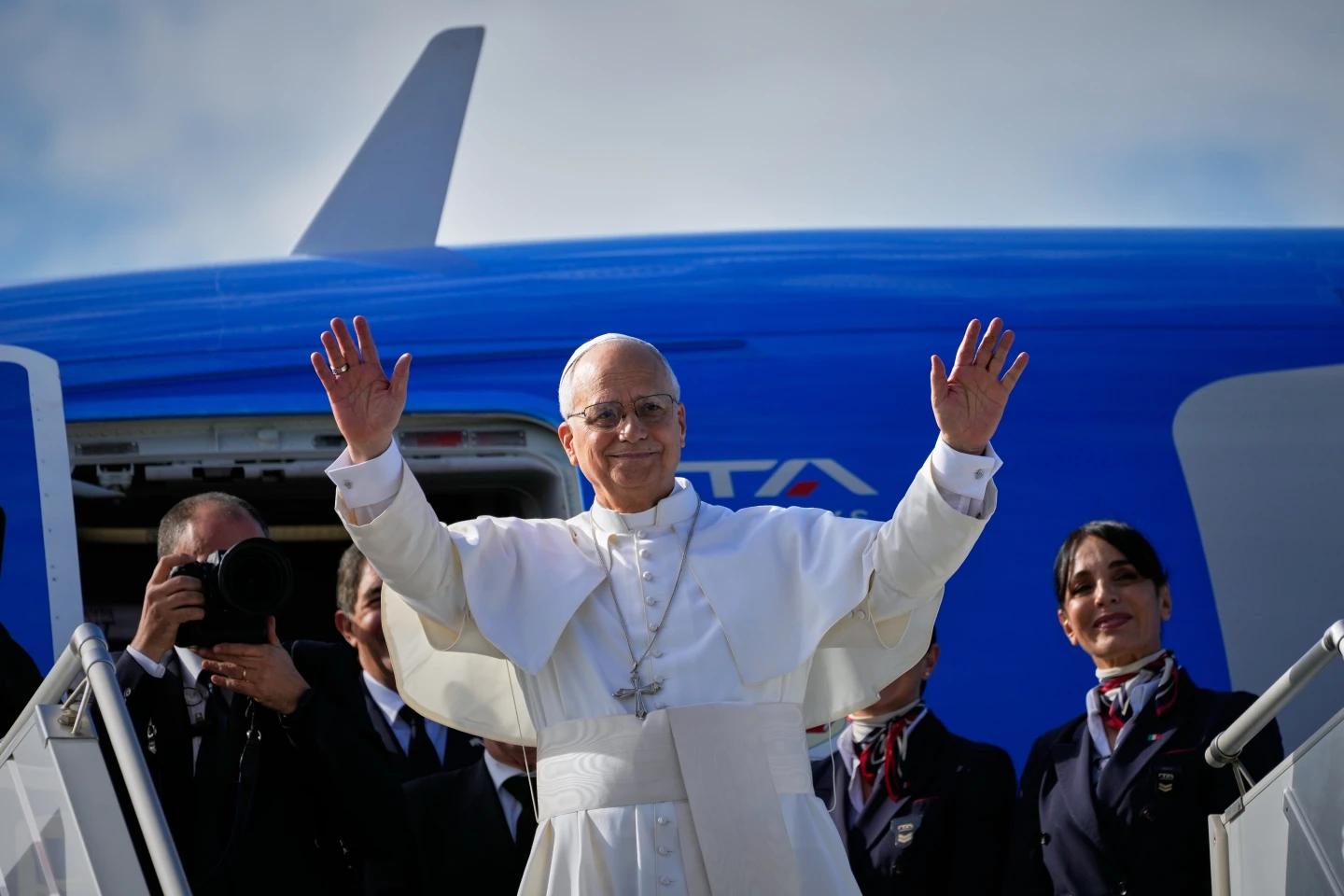
In that sense, when a timid and low-profile Pope Leo XIV made his debut foreign trip to Turkey and Lebanon from Nov. 27-Dec. 2, he was thrust onto the international stage and made his voice heard in a way that it had not been in the seven months since his election.
His every gesture was documented, explained and interpreted, and his every word, spoken before audiences of tens of thousands, Catholics and those belonging to other religious confessions, had an echo heard around the world.
Until his election, the world knew precious little about then-Cardinal Robert Prevost, an Augustinian missionary whose lengthy service abroad and extensive experience in leadership had been carried out largely under the radar, effectively but without drawing attention.
Despite being an American, he spent the bulk of his ministerial life in Peru, meaning he was unknown to many of his American peers, and the Catholic flock in the United States.
Similarly, even in Peru, where he served as a missionary from 1985-1999, and as apostolic administrator and bishop of Chiclayo from 2014-2023, he was a largely unknown figure outside of the north of Peru.
Despite serving as second vice president of the conference for several years, organizing Pope Francis’s high-profile visit in 2018, and forming part of or leading many other episcopal conferences and commissions, he was still a mystery to many – so much so that after his election, while Chiclayo celebrated, much of the rest of Peru scratched their heads, wondering who this new ‘papa Peruano’ they’d never heard of was.
Once he came to Rome in 2023 to lead the Vatican’s Dicastery for Bishops, that profile changed slightly, because nobody is unaware of who the red hats are, especially those working so close to the flame inside of the Roman Curia.
However, even inside of the church’s central governing bureaucracy, he didn’t make much noise, despite his weekly meetings with Francis and the many jobs he was entrusted with: He almost never gave interviews, and he didn’t have a big public profile, and his circle of friends was small, centered almost entirely in his Augustinian community in Rome.
Leo is someone who was used to working in silence, who got the job done but without calling too much attention to himself. At no juncture in his life, despite the increased authority he was given, has he ever been the center of attention, nor has he sought the spotlight.
Robert Prevost simply embraced the modus operandi of working in silence, operating behind the scenes and with extreme discretion.
The papacy, in its own way, has been an experience of whiplash for the low-profile Prevost, forcing him out of his shell and changing completely overnight the way he conducts business.
From one day to the next, he cast from relative obscurity into the center of the world’s attention, meeting world leaders, presiding over massive throngs of tourists and pilgrims alike, and conducting international diplomacy from practically the day after his election.
Through it all, Leo has remained very much himself: A quiet and timid personality who carries out the duties of his office consistently and with great energy, but without making much noise.
Early on, in one of our conversations for my biography of him, Pope Leo told me that while the pastoral aspect of the papacy came naturally, he was on “a learning curve” and that becoming a world leader overnight was something he was adjusting to.
Leo seemed to adjust relatively quickly to his new role at home, jumping into jubilee commitments; maintaining a packed calendar of meetings; publishing his first major teaching document; carving out a personal routine with weekly visits to the papal villa in Castel Gandolfo and offering a comment or two to the gaggle of journalists gathered outside; and lighting up the internet with his energetic and largely always joy-filled rides around St. Peter’s Square in the popemobile ahead of Masses and public audiences.
However, his first international trip took the job of “pope-ing” to a whole new level.
As both universal pastor and world leader, the trip to Turkey and Lebanon carried high stakes, as Leo visited a region ravaged by war, and with religiously and ethnically diverse populations.
Stepping off the plane in Istanbul, Leo was calm and confident as he eased into the program, which included closed-door meetings with world leaders, high-profile ecumenical meetings, and largescale encounters with the local Catholic population.
While none of this was new to Leo, especially since he’d accompanied Pope Francis on many of his own international travels, the dynamics of his first foreign trip as pope left their mark.
Especially as he stepped in front of large crowds, or entered churches or shrines packed with his local flock, Leo often appeared tearful and overcome with emotion as crowds cheered and chanted, “Long live the pope!”
Conducting business at home is one thing, but a foreign trip is another. And while Leo has gotten used to “pope-ing” in Rome, he transitioned into a whole new level of the job while in Turkey and Lebanon.
The trip was a crescendo, of sorts – while sticking to his prepared remarks and gripping the text with both hands, with each speech he spoke a little louder, with greater passion, energy, and enunciation, and more pauses for applause and effect.
His delivery increasingly matched the energy of the masses gathered to hear his message, speaking more loudly and with greater confidence as the trip went on, while maintaining his same measured, reflective and quiet style.
In that sense, he managed to embrace a whole new level of “pope-ing”, without sacrificing his personal low-key style or trying to become something he is not.
While occupying arguably one of the world’s most important roles, Leo is still very much his prudent, discreet, and low-profile self, and in his own quiet way, he was able to make his message of peace and unity boom across the masses.
This, according to Leo himself, is because despite being one of the most globally relevant figures in the world, he is still not the center of attention, nor does he see himself or his role as pope that way.
Speaking to journalists on his return flight from Beirut to Rome Dec. 2, he reflected on the personal impact of the trip and the cheering crowds, saying, “It’s always marvelous to me; I think to myself, ‘These people are here because they want to see the Pope,’ but I say to myself, ‘They are here because they want to see Jesus Christ and they want to see a messenger of peace.’”
“To just listen to their enthusiasm, and to hear their response to that message is something that I think is – that enthusiasm is awe-inspiring,” he said.
Currently, at the global level, soft power is increasingly seen as being more influential, important, and effective, than hard power in negotiations and in international diplomacy.
Perhaps much the same can be said about spiritual leadership: Leo does not have the loud, bold, in-your-face personality that predecessors such as John Paul II or Francis did, but his meek, measured and reflective style will perhaps prove more effective over time.
This, ultimately, is because his message is not inherently tied to his own personality or his own delivery – in a world of loud and dominating leaders vying for the global spotlight, Leo is not promoting himself, but is “pope-ing” in a way that allows the Gospel to speak for itself.
Follow Elise Ann Allen on X: @eliseannallen