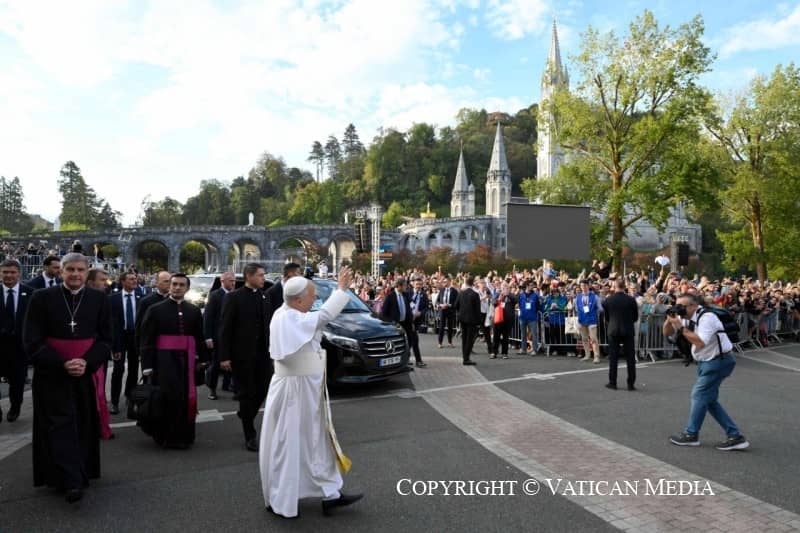
BEIRUT – Pope Leo closed his second day in Lebanon telling young people not to be discouraged by the challenges they face due to poverty and conflict, but to root themselves in Christ and commit to building a future of hope for the troubled nation.
“Lebanon’s history is interwoven with glorious moments, but it is also marked by deep wounds that are slow to heal,” the pope told some 15,000 youth gathered in front of the Maronite Patriarchate of Antioch in Bkerke, Beirut.
Leo lamented that Lebanon’s historic wounds have causes “that transcend national borders and are intertwined with very complex social and political dynamics,” but said the war and social injustice that cripples the region have not stifled their hope.
As young people, “you have more time to dream, to plan and to do good,” he said, telling the youths that they are “the present, and the future is already taking shape in your hands! You have the enthusiasm to change the course of history!”
“The true opposition to evil is not evil, but love, a love capable of healing one’s own wounds while also caring for the wounds of others,” he said, and urged them to establish generous, selfless friendships and to commit themselves to living the Gospel.
By doing this they will help Lebanon rise again and flourish, he said, saying the good things in Lebanese society are the fruit of many humble people who work with honesty without calling attention.
“Draw from the good roots of those dedicated to serving society without using it for their own interests. With a generous commitment to justice, plan together for a future of peace and development. Be the source of hope that the country is waiting for!” he said.
Pope Leo arrived in Lebanon on Sunday after first visiting Turkey, meeting with the country’s political leadership and national civil authorities after landing in Beirut. Prior to meeting with youth, he visited the tomb of Lebanon’s famed Saint Charbel Maklūf and held meetings with the country’s bishops, pastors and religious, and presided over an ecumenical and interfaith encounter.
After a greeting from Maronite Catholic Patriarch Bechara Boutros al-Rahi, he heard the testimonies of two volunteers who spoke about the solidarity that emerged in Lebanese society as a result of the Beirut Port Explosion in 2020, and their work with families and individuals who lost everything.
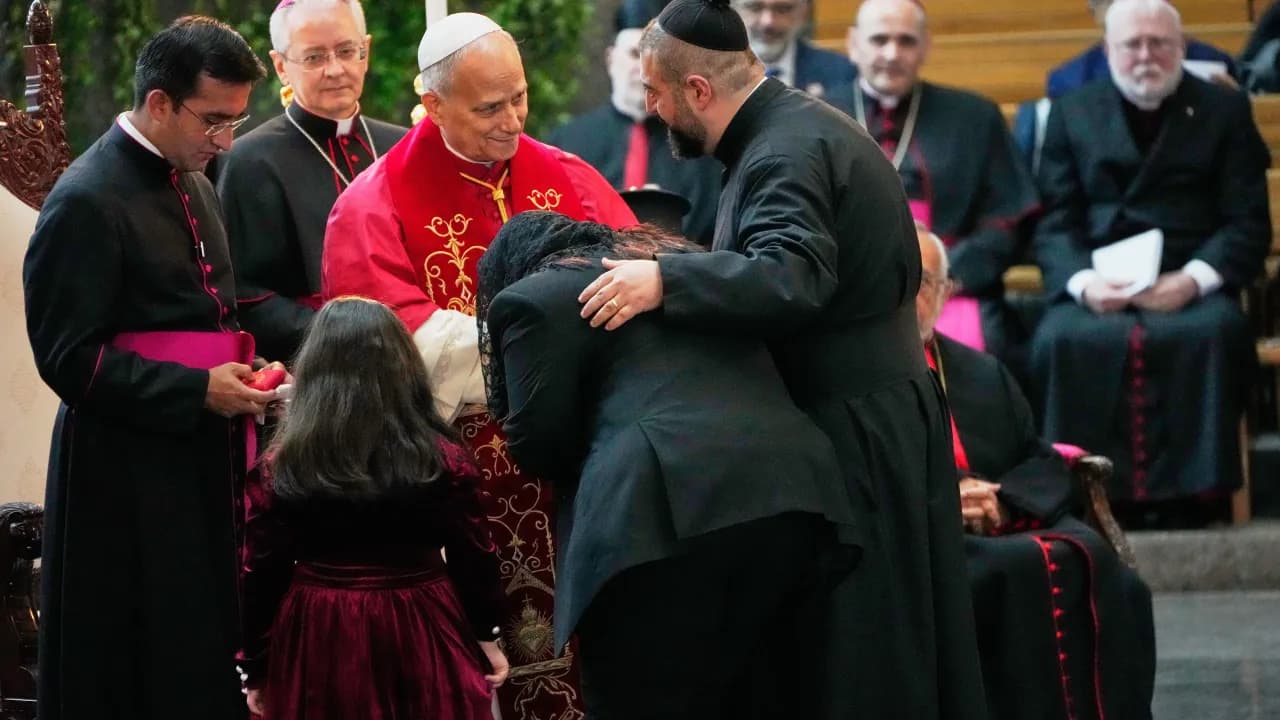
He also heard the testimonies of a young woman who spoke about the difficult decision to stay in Lebanon despite its crippling economic crisis, and a woman accompanied by her mother who shared their story of helping a Muslim family by providing shelter when their city was being bombed.
Questions were then posed by two young people on how to preserve peace and nurture hope amid violence and instability, and how to preserve relationships in a society that is increasingly superficial in the digital era.
Pope Leo in his speech thanked youth who came from surrounding countries, including Syria and Iraq, and Lebanese who flew back from abroad to participate in the meeting.
Referring to the testimonies given, he said they spoke of both great suffering and hope, and of finding inner peace during times of war.
In terms of how to preserve peace in a conflicted society, he said the quest for building peace must be concrete, and “cannot be just an idea, contract or moral principle. The true principle of new life is the hope that comes from above: it is Christ himself!”
“Peace is not authentic if it is the product of partisan interests. It is only genuinely sincere when I do to others what I would like them to do to me,” he said.
Stressing the value of forgiveness in healing from inflicted wounds, he said there is “no peace without justice, no justice without forgiveness.” Quoting his predecessor Pope John Paul II, he added, “This is indeed true: forgiveness leads to justice, which is the foundation of peace.”
The same is true in how to preserve relationships, he said, saying relationships are often fragile and consumed as if they were objects.
“Even among the young, personal interests can sometimes take precedence over trust in others, and caring for others is replaced by one’s own gain,” he said, lamenting that this mentality can upsent friendship and turn it into something superficial, “confusing them with a sense of selfish satisfaction.”
If one’s own ego is the center of a friendship, it cannot bear fruit for anyone, he said, saying real friendship “places ‘you’ before ‘I.’”
“This respectful and welcoming way of looking at others makes it possible for us to build a greater ‘we,’ open to society as a whole and to all of humanity,” the pope said, saying friendship must be rooted in God.
These solid and fruitful relationships must be built together on a mutual trust and a sense of “forever” that is “the beating heart of every vocation to family life and religious consecration.”
Leo stressed the importance of charity as needing to be at the center of their lives and encouraged young people to be inspired by the lives of the saints, who were not discouraged in the face of difficulty or bad examples, “even those found within the Church.”
“Drawing on the strength you receive from Christ, build a better world than the one you inherited!” he said, saying this can be done with simple gestures such as “welcoming those near and far, offering a hand to friends and refugees and forgiving enemies – a difficult but necessary task.”
He also urged young people to develop and maintain a strong prayer life, saying that in a world of distractions and temptations to vanity, “take time each day to close your eyes and look only at God. He sometimes seems silent or absent, but reveals himself to those who seek him in silence.”
Pope Leo told young people to go forward by putting into practice the prayer of Saint Francis of Assisi, who prayed, “Lord, make me an instrument of your peace: where there is hatred, let me sow love; where there is injury, pardon; where there is discord, unity; where there is doubt, faith; where there is error, truth; where there is despair, hope; where there is sadness, joy; where there is darkness, light.”
“May this prayer keep the joy of the Gospel and Christian enthusiasm alive in your hearts,” he said, saying, “When the Lord dwells in us, the hope he gives us bears fruit in the world.”
Follow Elise Ann Allen on X: @eliseannallen