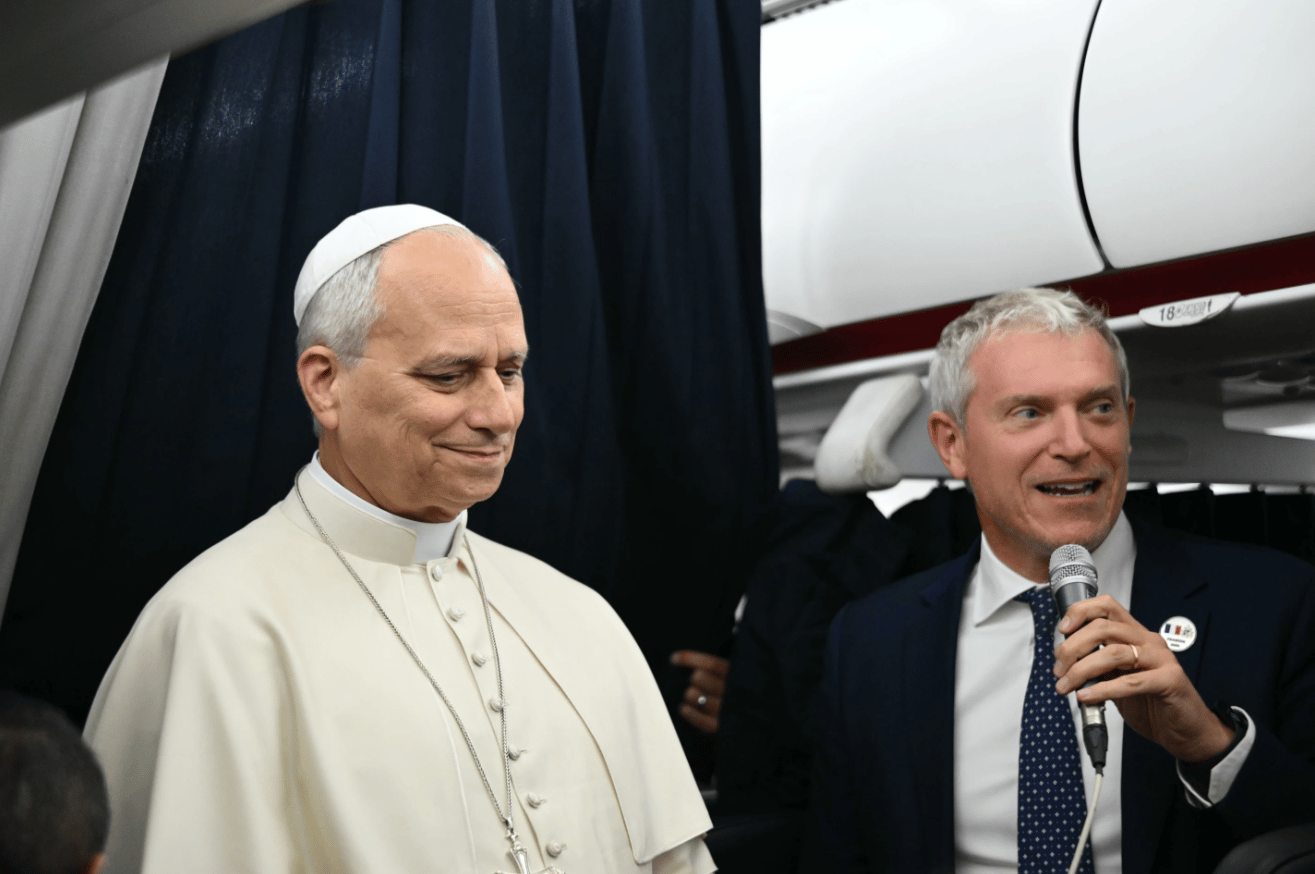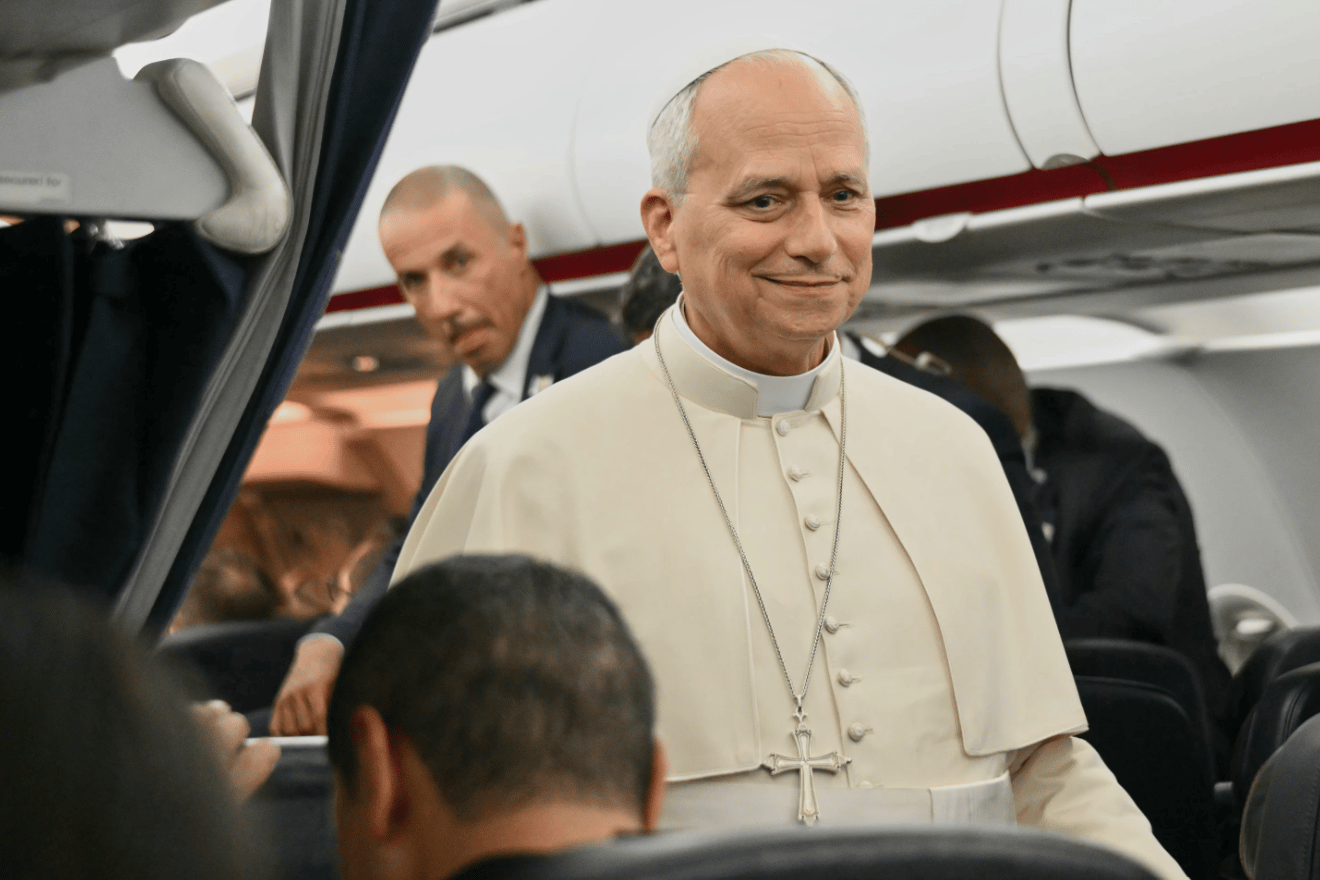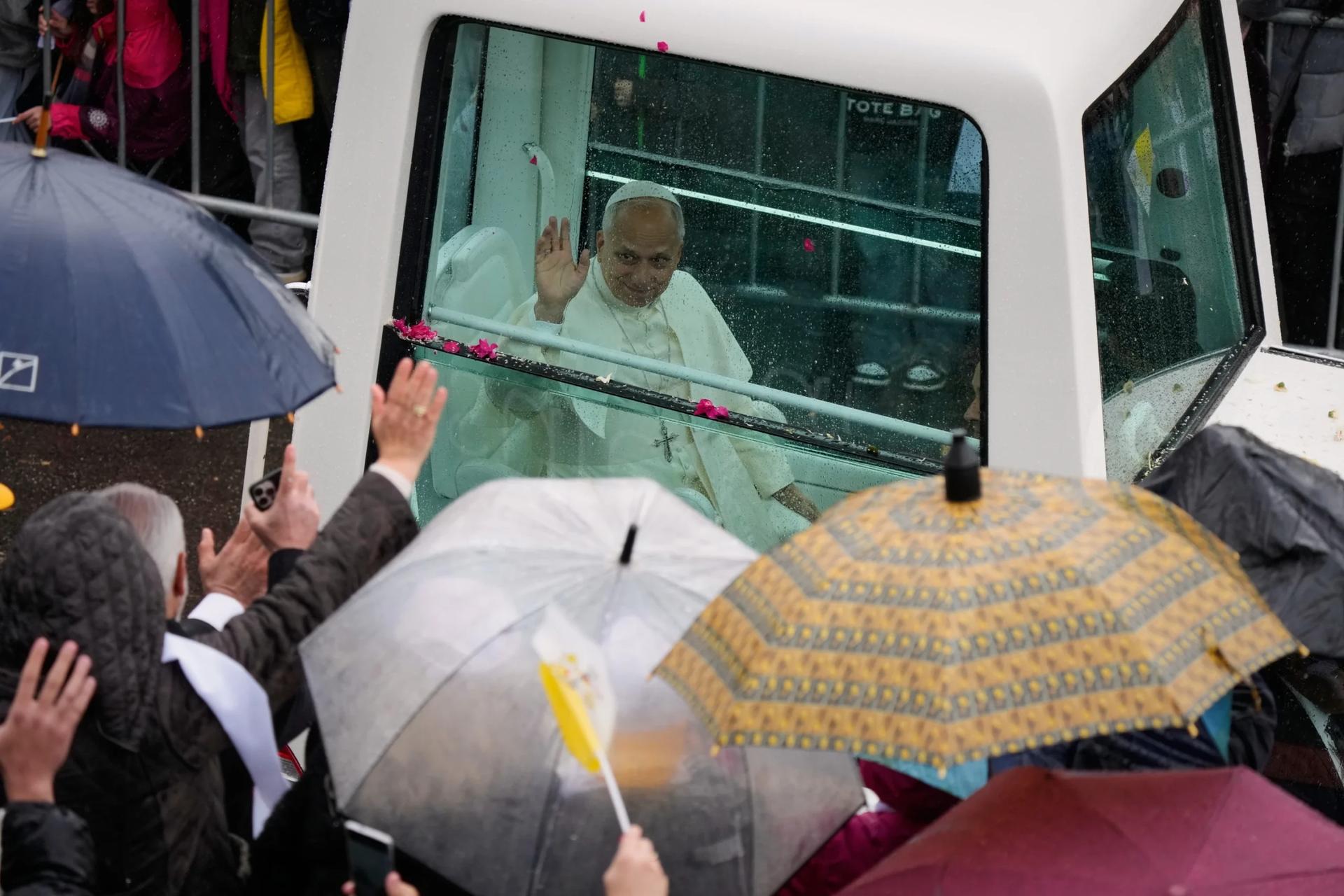
BEIRUT – On his first day in Lebanon, Pope Leo urged the country’s pastors and religious to continue striving for unity and to embrace a spirit of solidarity with those who are suffering, regardless of their background.
During his Dec. 1 visit to the Shrine of Our Lady of Lebanon in Harissa, Beirut, the pope said the shrine is “a symbol of unity for the entire Lebanese people.”
“It is in being with Mary at the foot of Jesus’ Cross that our prayer, that invisible bridge which unites hearts, gives us the strength to continue to hope and work, even when surrounded by the sound of weapons and when the very necessities of daily life become a challenge,” he said.
Leo noted that the logo for his visit to Lebanon displays an anchor, which he said is a symbol of the faith which “permits us to always move forward, even in the darkest moments, until we reach heaven.”
“If we wish to build peace, we must anchor ourselves to heaven and, firmly set in that direction, let us love without being afraid of losing those things which pass away and let us give without measure,” he said.
Pope Leo landed in Beirut Nov. 30, as part of a broader visit to Turkey and Lebanon. He met with the country’s leadership and national civil authorities and the diplomatic corps after his arrival, calling them to put the pursuit of peace “above all else.”
Prior to visiting the Shrine of Our Lady of Lebanon in Harissa, he paid a visit to the tomb of Lebanon’s most famous said, Saint Charbel Maklūf, at the Monastery of Saint Maroun in Annaya.
Speaking in French for the first time publicly as pope, Leo praised Charbel’s witness and said the church, following his example, must “ask for communion and unity, beginning with families who are small domestic churches, then parish and diocesan communities, and finally for the universal Church.”
RELATED: Pope in Lebanon prays for peace at tomb of saint revered by Christians and Muslims
“For the world, we ask for peace. We especially implore it for Lebanon and for the entire Levant,” he said, but insisted that “there is no peace without conversion of hearts. May Saint Charbel, therefore, help us to turn to God and ask for the gift of conversion for all of us.”
He then made his way to the Harissa Shrine for his meeting with the bishops, clergy, religious and pastoral workers of Lebanon, where there is a large community of mostly Maronite Christians, he heard various testimonies.
After his arrival, the pope heard the testimonies of various priests and religious, including a Father Youhanna-Fouad Fahed, a pastor serving in northern Lebanon, on the border with Syria; Filipina laywoman Loren Capobres, who works with migrants in Lebanon; Sister Dima Chebib, who works in a majority Muslim area; and Father Charbel Fayad, who works with prisoners.
In his speech, delivered in English, Pope Leo pointed to the necessity to work together regardless of religion or ethnicity, pointing to the work of Fahed in northern Lebanon.
“Even when faced with extreme need and threatened by bombardment, Christians and Muslims, Lebanese and refugees from other lands, live together peacefully and help their neighbors,” he said.
When it comes to peacemaking and acts of solidarity, “each one of us has something to give and to receive in love,” he said, saying “the gift of ourselves to our neighbor enriches everyone and draws us to God.”
Leo underlined the importance of performing acts of solidarity, which he said is rooted in “the unifying power of love even in the moments of trial.”
“Only in this way can we free ourselves of injustice and oppression, even when, as we have heard, we are betrayed by people and organizations that ruthlessly exploit the desperation of those who have no alternative,” he said.
By adopting this attitude, it is possible “to hope once more for tomorrow, even in the bitterness of the present difficulties that we must face,” he said.
Pope Lepo also stressed the importance of valuing and empowering young people, making them protagonists in building the future by allowing them to get involved, drawing on their creativity and enthusiasm.
“It is necessary, even among the rubble of a world that has its own painful failures, to offer them concrete and viable prospects for rebirth and future growth,” the pope said.
He referred to the testimony of Loren, who recounted the story of a migrant couple she assisted, who left behind their jobs and their home when their town was being bombed, walking for three days after the wife gave birth to their third child until they came to her center.
By providing help to those in desperation, “one learns and teaches to share ‘bread, fear and hope,’ to love in the midst of hate, to serve even in exhaustion and to believe in a future that exceeds every expectation,” he said.
Leo noted that Lebanon has always been active in the field of education and encouraged the church to continue making it a priority.
“Let your choices, prompted by the most generous charity, serve to meet the needs, above all, of those who cannot help themselves and those found in extreme situations,” he said.
To this end, he referred to a common teaching of Saint Charbel, who said that “even where the world sees only walls and criminals, we see the tenderness of the Father, who never tires of forgiving, reflected in the eyes of the prisoners, sometimes lost, other times illuminated by new hope.”
“This is true: We see the face of Jesus reflected in those who suffer and in those who mend the wounds that life has caused,” he said.
Pope Leo closed his address saying “the fragrance of Christ” is something that does not discriminate but is intended for everyone.
“It is not an expensive product reserved for a chosen few, but the aroma wafting from an abundant table laden with different courses, where all are called to partake,” he said.
“May this be the spirit of the rite which we are about to perform,” he said, referring to the traditional presentation of a golden rose to the shrine, asking that this also be the spirit “in which we challenge ourselves every day to live united in love.”