ROME – Pope Leo XIV opened his first Holy Week as pontiff with a rebuke of those who pray for war, offering his condemnation mere days after U.S. Defense Secretary Pete Hegseth prayed for “overwhelming violence of action against those who deserve no mercy.”
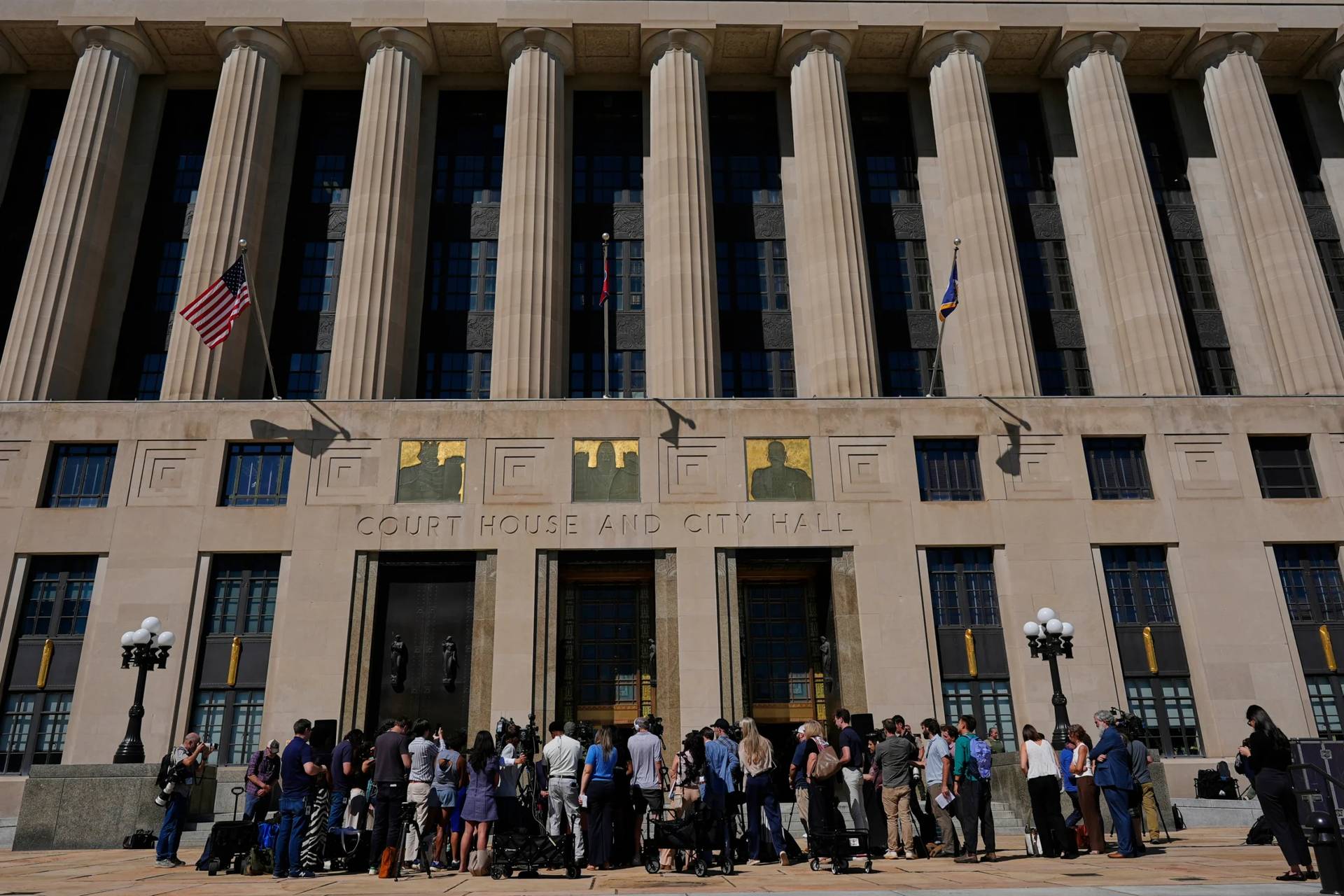
Hegseth – who prefers to be called the “Secretary of War” – made his prayer during a recent Christian worship service at the Pentagon, attended by military and civilian workers.
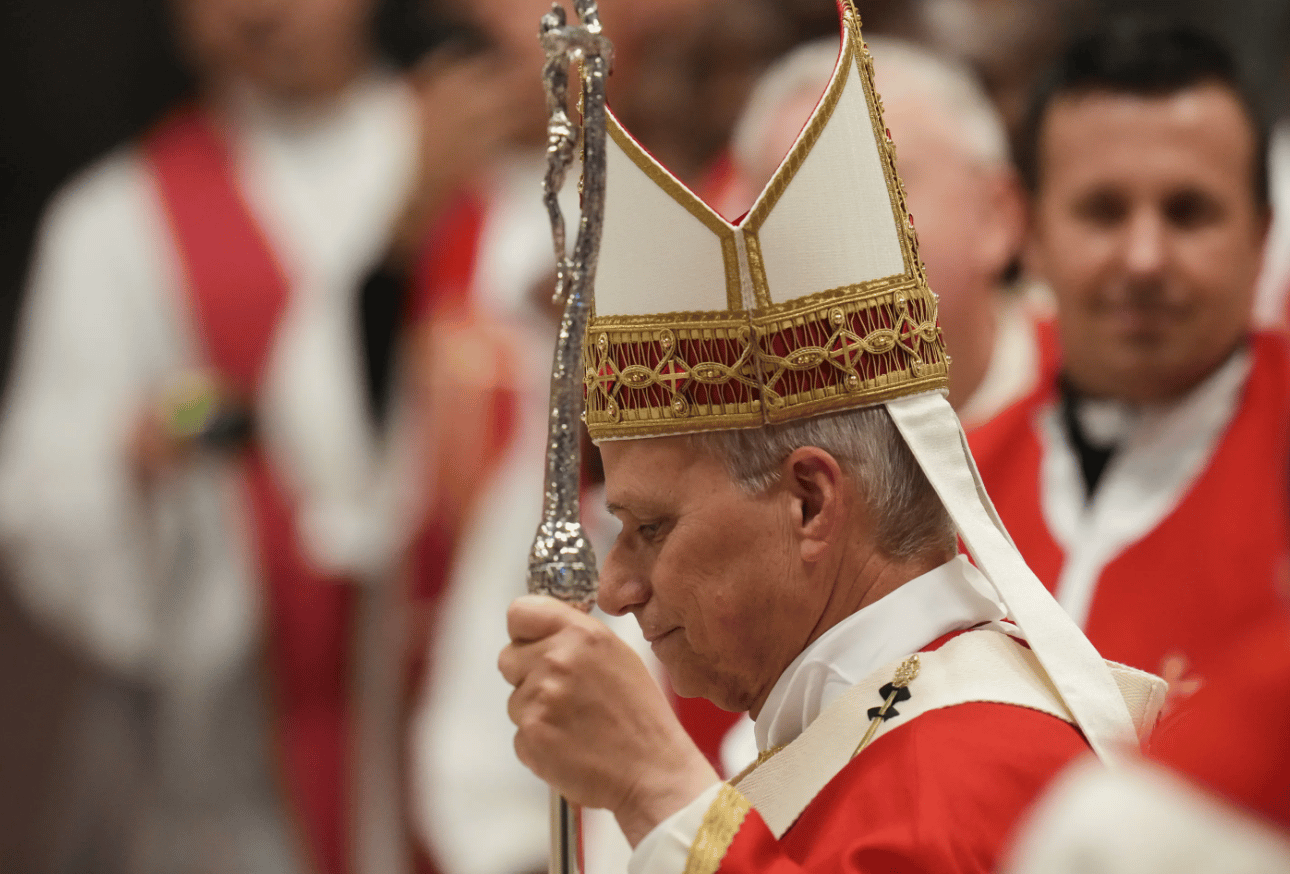
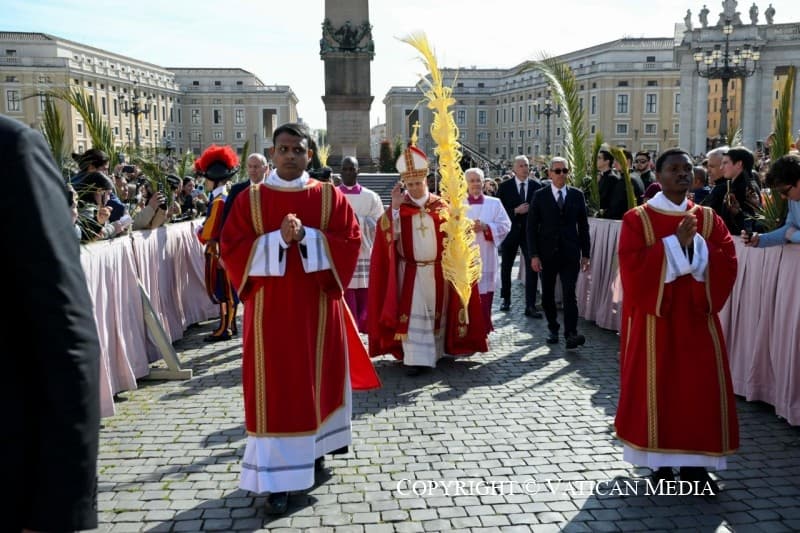
Speaking during his March 29 Mass for Palm Sunday, which celebrates Jesus’s triumphant entrance into Jerusalem mere days before the events of his passion, death, and resurrection and marks the official opening of Holy Week liturgies, the pope said: “[T]his is our God: Jesus, King of Peace, who rejects war, whom no one can use to justify war.”
“He does not listen to the prayers of those who wage war,” the pontiff said, “but rejects them, saying: ‘Even though you make many prayers, I will not listen: your hands are full of blood’.”
The service at the Pentagon was Hegseth’s first since the U.S. and Israel launched a joint military intervention in Iran, which Israel quickly expanded into Lebanon after Iran-backed Hezbollah fighters fired rockets into Israel, and has also spread to several other countries throughout the region.
During the livestreamed Pentagon service this past Wednesday, Hegseth uttered a prayer he said was penned by a military chaplain ahead of the U.S. operation that captured Venezuelan president Nicolás Maduro.
“Let every round find its mark against the enemies of righteousness and our great nation. Give them wisdom in every decision, endurance for the trial ahead, unbreakable unity, and overwhelming violence of action against those who deserve no mercy,” Hegseth said.
A day prior to the Pentagon service – a regular monthly occurrence – Hegseth announced changes to the U.S. military’s chaplainship, which he alleged had been “watered down” and “infected by political correctness and secular humanism.”
Hegseth’s order reduced the number of officially recognized “faith codes” or religious traditions from over 200 to only 31, and also ordered that chaplains – who are commissioned officers – wear only insignia indicating the tradition to which they belong, and that chaplains are no longer to wear their rank insignia on their uniforms.
Pope Leo, who has repeatedly called for an immediate ceasefire in the Middle East, said Christians at the beginning of Holy Week turn to Jesus, “who reveals himself as King of Peace, even as war looms around him.”
“He remains steadfast in meekness, while others are stirring up violence. He offers himself to embrace humanity, even as others raise swords and clubs. He is the light of the world, though darkness is about to engulf the earth,” the pope said, saying Jesus came to bring life, “even as plans unfold to condemn him to death.”
Leo quoted Zechariah’s biblical prophecy about the Messiah riding into Jerusalem on a donkey, which he said speaks of Jesus’s humility and his mission of peace.
That prophecy, Leo said, announces that the Messiah “will cut off the chariot from Ephraim and the war-horse from Jerusalem; and the battle bow shall be cut off, and he shall command peace to the nations.”
Jesus’s commitment to peace is illustrated again in the Garden of Gethsemane, when, after one of his disciples cuts the ear off of the high priest’s servant, Jesus immediately stopped him, saying, “Put your sword back into its place, for all who take the sword will perish by the sword.”
“While he was burdened with our sufferings and pierced for our sins, Jesus did not open his mouth, like a lamb that is led to the slaughter, and like a sheep that before its shearers is silent,” the pope said.
In the face of violence, Jesus chose not to arm or defend himself, “or fight any war,” but rather, “he revealed the gentle face of God, who always rejects violence.”
“Rather than saving himself, he allowed himself to be nailed to the cross, embracing every cross borne in every time and place throughout human history,” he said.
By looking to Jesus on the cross, “we can see a crucified humanity,” Pope Leo said, saying his own wounds are a reflection of “the hurts of so many women and men today.”
In Jesus’s last cry from the cross, “we hear the weeping of those who are crushed, who have no hope, who are sick and who are alone. Above all, we hear the painful groans of all those who are oppressed by violence and are victims of war,” he said.
From the cross, Jesus’s message to humanity, he said, is that “God is love! Have mercy! Lay down your weapons! Remember that you are brothers and sisters!”
Quoting Italian Bishop and sainthood candidate Tonino Bello, Leo XIV asked for the Virgin Mary’s intercession as someone “who stands beneath the cross of her Son and weeps also at the feet of those who are crucified today.”
“Holy Mary, woman of the third day, grant us the certainty that, in spite of all, death will no longer hold sway over us; that the injustices of peoples are numbered; that the flashes of war are fading into the twilight; that the sufferings of the poor are breathing their last,” he said, quoting Bello’s prayer.
Pope Leo, who as a missionary made a habit of peaceful and pastoral engagement of political leadership in tenuous circumstances, closed his homily asking that Mary would grant “that the tears of all the victims of violence and pain will soon be dried up like frost beneath the spring sun.”
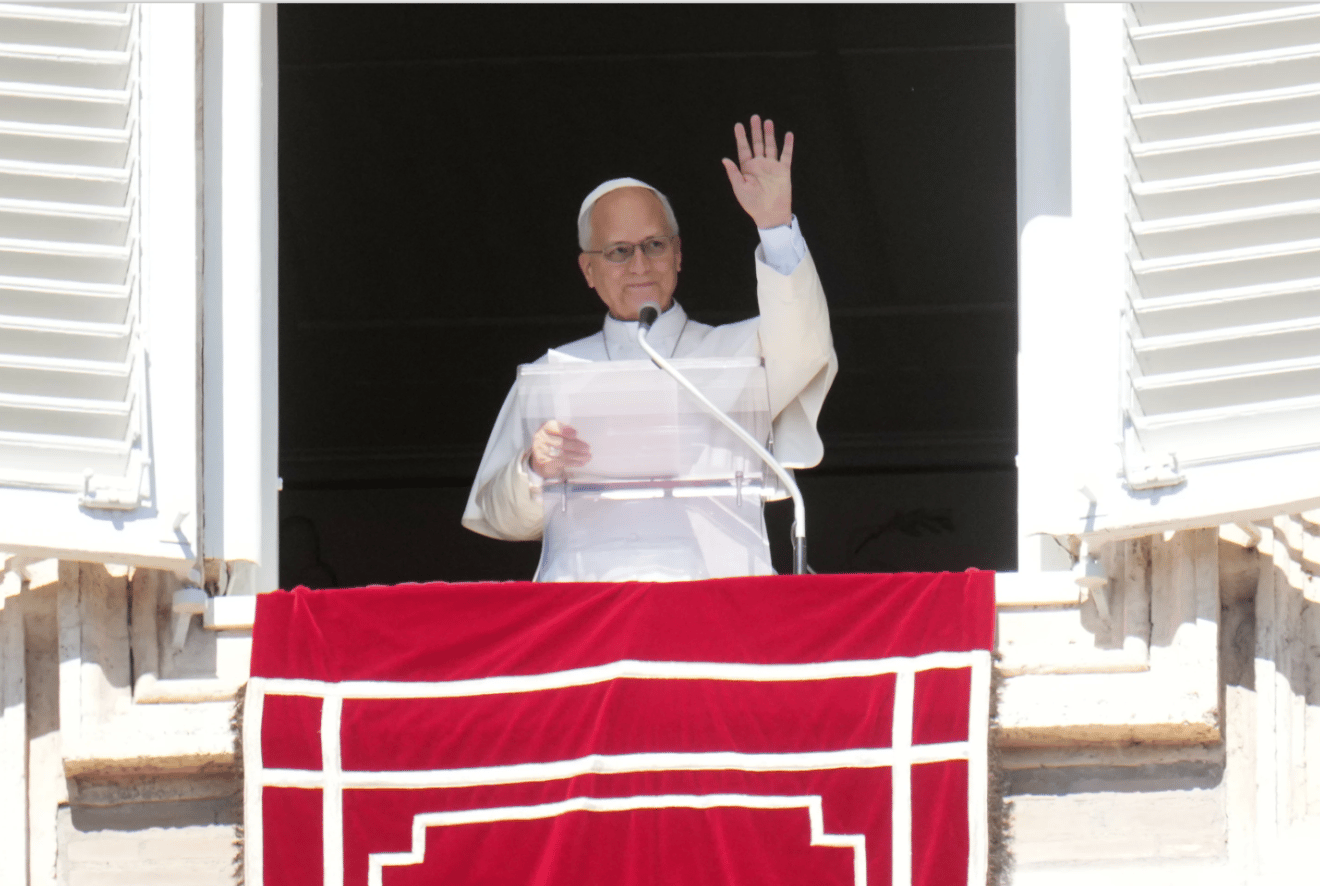
The pontiff renewed his appeal for peace in the Middle East after Palm Sunday Mass, in remarks ahead of the traditional Sunday Angelus prayer with the faithful in St. Peter’s Square.
“At the beginning of Holy Week, more than ever, we are close in prayer to the Christians of the Middle East who are suffering consequences of these holy days,” he said.
“Precisely when the church contemplates the mystery of the Passion of the Lord, we cannot forget how many today participate in a real way in his suffering,” he said, saying, “Their suffering challenges the conscience of everyone.”
Leo urged Christians to pray to Jesus the Prince of Peace, “so that he sustains the people wounded by war and opens concrete paths of reconciliation and peace.”
Pope Leo specifically prayed for “the maritime workers who have fallen victim to the conflict,” offering prayers “for the deceased, the wounded and their families.”
At least seven merchant seafarers have been killed since the U.S.-Israeli attacks began on February 28, with maritime and other rights observers reporting nearly a dozen people injured, at least five of them seriously, and at least four were missing, while as many as 20,000 merchant sailors remain stranded in the Strait of Hormuz.
In addition, the U.S. killed at least 87 Iranian naval sailors in a submarine strike against an Iranian surface vessel in international waters off the southwestern coast of Sri Lanka, as the ship returned from an international exercise in which the U.S. also participated.
“Let us also pray for all the migrants who have died at sea,” the pontiff also prayed, “especially those who lost their lives in recent days off the coast of Crete,” where 22 migrants drowned after six days aboard a dinghy in Mediterranean waters. On Friday, the Greek coast guard reported 26 migrants had been rescued from the vessel, which left from Libya and became disoriented at sea.
“Land, sky, and sea are created for life and for peace,” Leo said.
Follow Elise Ann Allen on X: @eliseannallen