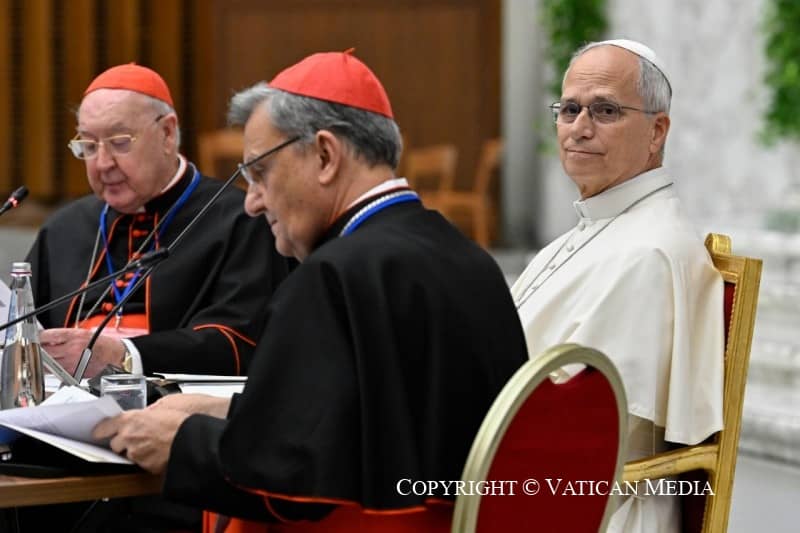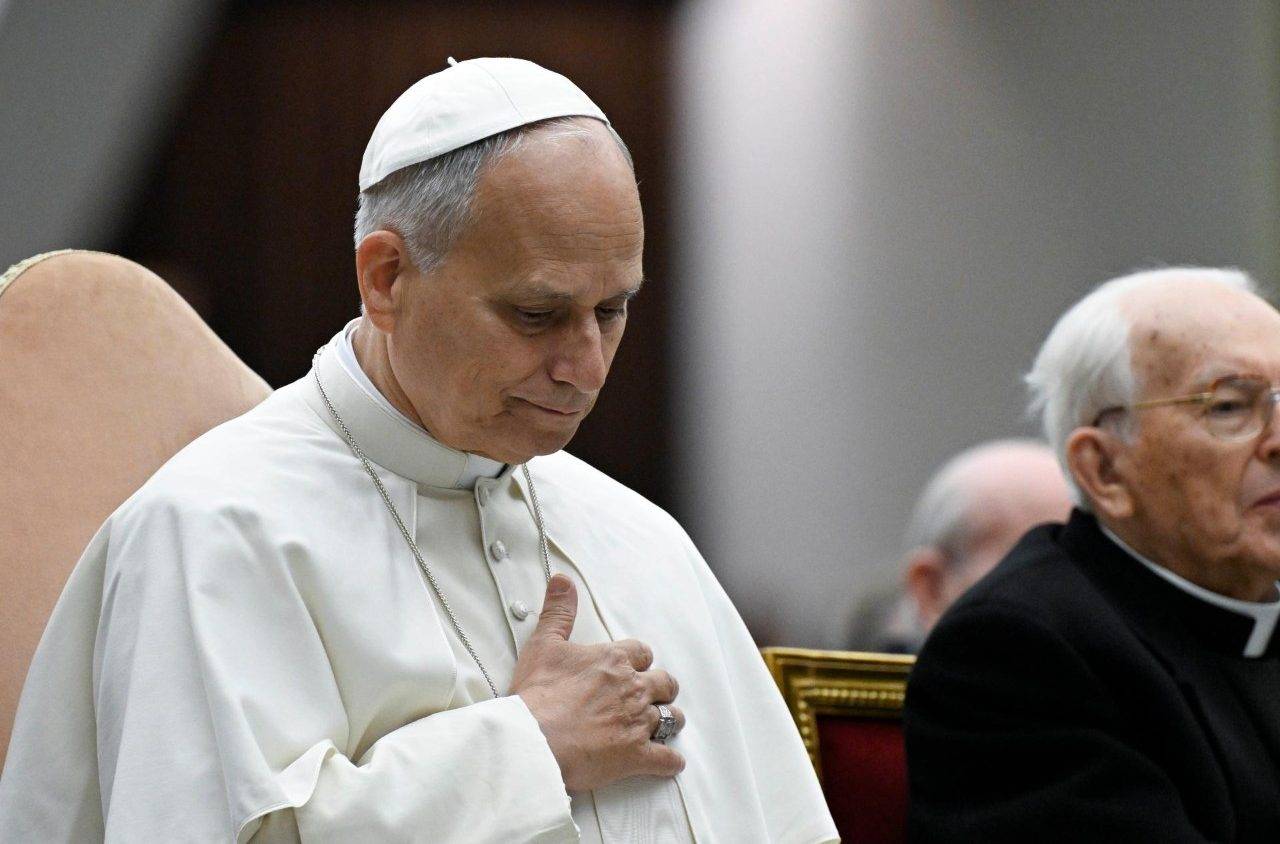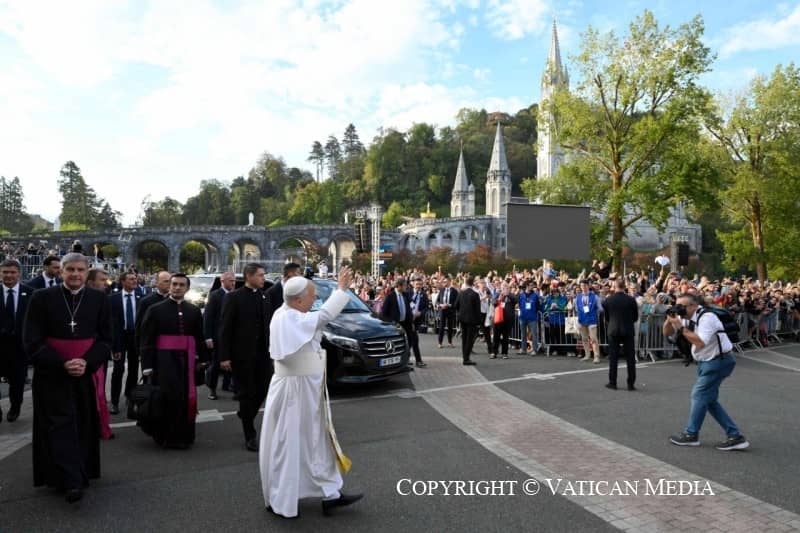
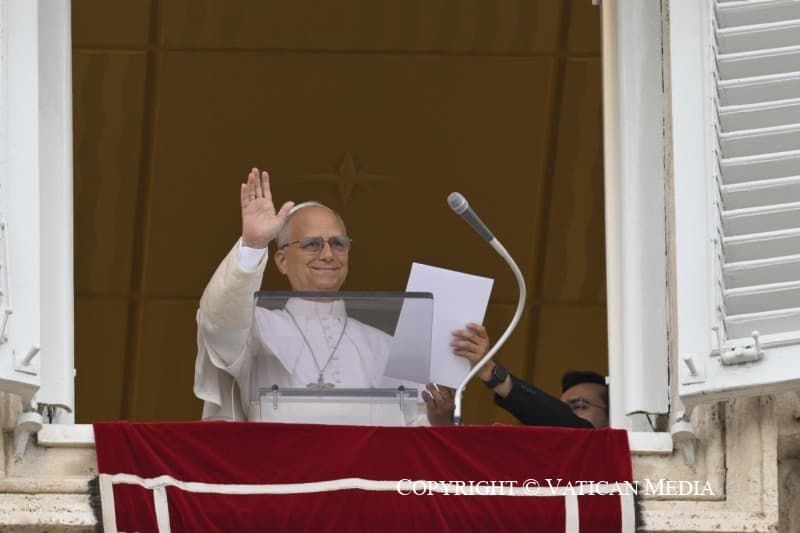
Pope Leo XIV marked the 60th World Day of Social Communications on Sunday, calling on people everywhere to foster forms of communication that “respect the truth of the human person.”
The pontiff was speaking to faithful gathered in St. Peter’s Square to pray the Regina Caeli, the traditional noonday prayer of Marian devotion at Eastertide.
Leo XIV chose “Preserving Human Voices and Faces” as the theme of this year’s Communications Day, a theme that has emerged as central to his thinking and action throughout his pontificate, from the very first day.
“In this era of artificial intelligence,” Leo said Sunday, “I encourage everyone to commit themselves to promoting forms of communication that always respect the truth of the human person, on which every technological innovation should be focused.”
Leo XIV issued his Message for World Communications Day earlier this year – not incidentally on January 24, the feast of St. Francis de Sales, Doctor of the Church and patron of the Catholic press – in which he called for “faces and voices to speak for people again.”
“We need to cherish the gift of communication as the deepest truth of humanity,” Leo XIV wrote in his Message, “to which all technological innovation should also be oriented.”
RELATED: Leo XIV is leveraging the Church’s ‘expertise in humanity’
Technological advances had already begun to change the way we communicate years ago, long before the AI revolution was upon us, in ways that were already working on the very humanity of the people seeking some sort of human connection.
“Media and communication companies, for their part, cannot allow algorithms designed to capture a few extra seconds of attention at any cost, to prevail over their professional values, which are aimed at seeking the truth,” Leo XIV wrote in his Message for Communications Day.
“Public trust is earned by accuracy and transparency,” the pontiff wrote, “not by chasing after any kind of possible engagement.”
Social media had already made the world smaller and meaner, I note in my Leo XIV: The New Pope and Catholic Reform, long before the advent of AI user platforms.
Pope Leo XIV wants us to have our eyes open to the harsh and urgently challenging realities of the moment, and work together not only to limit the baleful effects of new and emerging technologies but harness them to the useful and the genuinely good.
“We are all called upon to cooperate,” he wrote in his Message – the emphasis is in the original – and noted how there is no one power in society as could address the challenge on its own.
“No sector can tackle the challenge of steering digital innovation and AI governance alone,” he wrote. “Safeguards must therefore be put in place,” he wrote, to be crafted and designed by everyone with a stake in the business.
“[F]rom the tech industry to legislators, from creative companies to academia, from artists to journalists and educators,” Leo wrote to name only a few.
“All stakeholders,” he wrote, “must be involved in building and implementing informed and responsible digital citizenship.”
The potential benefits of AI to human beings in fields from archaeology to medicine to zythlogy – that’s the all-important scientific study of brewing beer – are enormous.
That’s something Pope Leo XIV has also noted time and again since taking office, but the benefits will be for nought if the primary result of AI’s ascendancy is the relegation of the human to an incidental consideration.
AI’s advent has coincided with a cultural and civilizational moment in which consensus over what it even means to be human in the first place has become attenuated and elusive.
RELATED: In the AI revolution, Leo XIV wants a third way between Terminator and Wall-E
“Just as the industrial revolution called for basic literacy to enable people to respond to new developments,” Leo XIV wrote, “so too does the digital revolution require digital literacy,” which – he also wrote – can only come when it is mediated through humanistic and cultural education.
“Education aims to do precisely this,” Leo XIV wrote: “To increase our personal ability to think critically; evaluate whether our sources are trustworthy and the possible interests behind selecting the information to which we have access.”
Leo also noted the urgent need “to understand the psychological mechanisms involved; and to enable our families, communities and associations to develop practical criteria for a healthier and more responsible culture of communication.”
“[T]o understand how algorithms shape our perception of reality,” is also urgent, Leo XIV wrote, as is understanding “how AI biases work, what mechanisms determine the presence of certain content in our feeds, what the economic principles and models of the AI economy are and how they might change.”
Literally from Day One of his pontificate, Leo XIV has been making his intention to recover the genius of the Church’s reflection on human nature abundantly clear.
He has also shown he intends to bring the Church’s “expertise in humanity” – to say it with Pope St. Paul VI, who instituted World Communications Day – to bear on problems that are already disruptive on a scale and with a scope not seen since the days of Leo XIII.
Follow Chris Altieri on X: @craltieri