
MUMBAI – In India, the Allahabad High Court in the state of Uttar Pradesh says handing out Bibles or preaching the Christian faith does not violate the state’s anti-conversion laws.
Court criticised the Uttar Pradesh Police for what it described as “bending backward” to make arrests even though no victims had come forward.
Uttar Pradesh passed the Unlawful Conversion of Religion Act, 2021 nearly five years ago, causing Christians to accuse the government of discrimination.
Uttar Pradesh is the most populous state in India, with nearly 200 million people. However, only about 350,000 Christians live in the state, a miniscule 0.18 percent of the population.
The northern state, like the national government, is run by the Bharatiya Janata Party (BJP), with strong links to the Rashtriya Swayamsevak Sangh (RSS), a militant Hindu nationalist organization.
Hindu nationalists often accuse Christians of using force and surreptitious tactics in pursuing conversions, often storming into villages and leading “reconversion” ceremonies in which Christians are compelled to perform Hindu rituals.
These pressures on Christians, which also affect Muslims and other religious minorities, are part of what observers describe as a broad program for the “saffronization” of India under Prime Minister Narendra Modi, meaning an attempt to impose Hindu values and identity while squeezing out rival faiths.
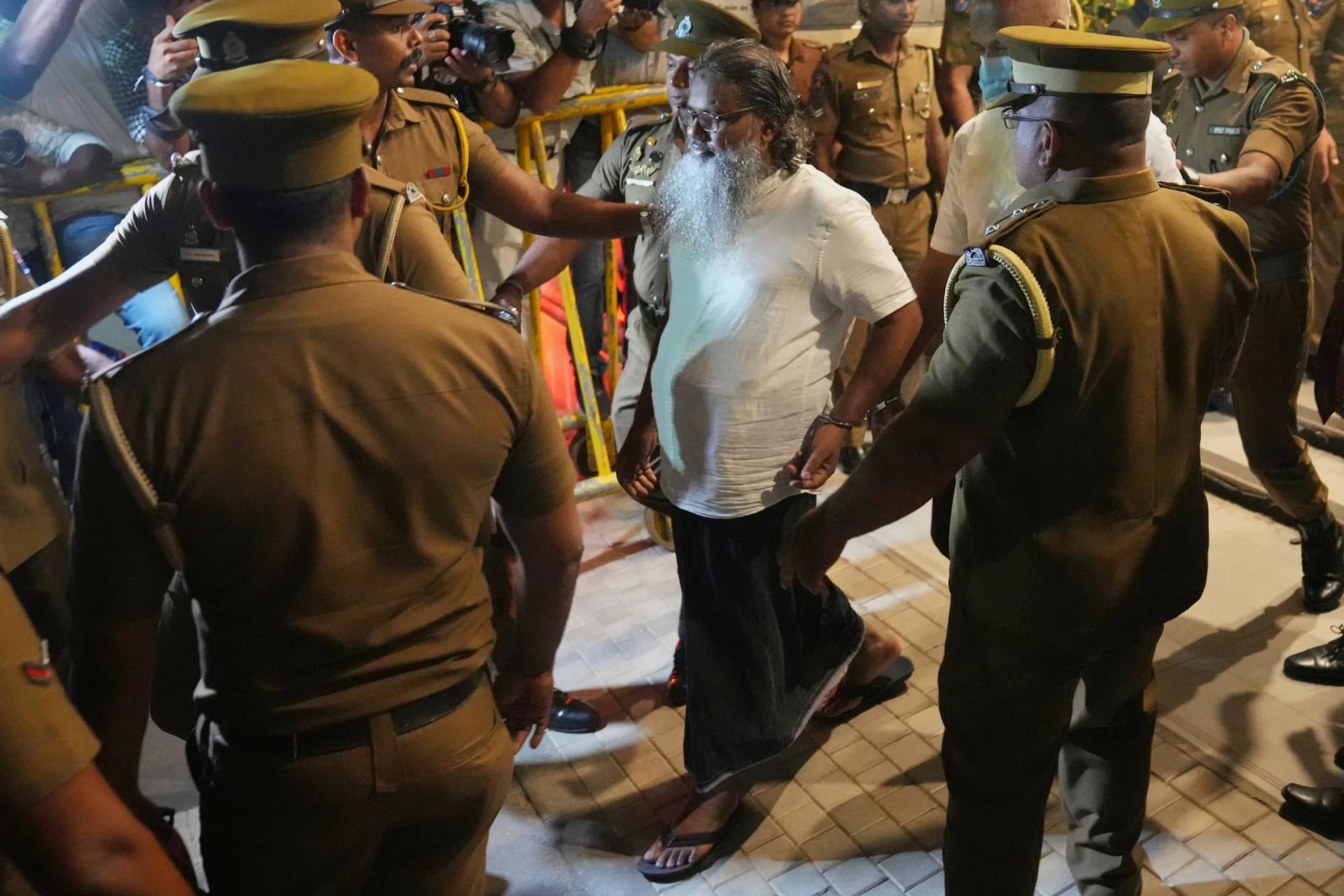
The complaint against the Christian missionaries was launched by a Hindu nationalist who said the accused had conducted a prayer meeting with the intention of converting Dalits and economically weaker individuals. He said the accused were “preaching the tenets of Christianity” and distributing Bibles.
The Court said the law only prohibits conversion through misrepresentation, force, undue influence or allurement.
“Thus, it is prima facie apparent that the authorities have bent themselves backward in order to arrest the petitioner(s) even though it is not known as to how the complainant had got information about any offence… These are all strange facts which need to be explained,” the court said.
Bishop Ignatius D’Souza of Bareilly in Uttar Pradesh said the court’s judgment shows that anti-conversion laws, as implemented, risk being used not just against “forced conversion” but peaceful religious activity.
“That can enable harassment, intimidation or arbitrary arrests of religious minorities — especially vulnerable groups,” he told Crux.
The bishop said the fact that a formal complaint was filed without a complainant stepping forward suggests a pattern of “third-party complaints” is being used to trigger criminal proceedings, “which undermines the spirit of such laws.”
“It highlights the danger of over-broad policing powers: When police act on unverified information … and arrest first, investigate later — that threatens civil liberties and confidence in law enforcement,” D’Souza said.
“This also signals a judicial pushback against misuse of laws — which is important for maintaining rule of law and preventing communal or political misuse of legal provisions,” he added.
The bishop told Crux this matters since given that religious conversion and anti-conversion laws “are a flashpoint in communal politics in India — and often trigger fear among vulnerable communities — this judgment is significant.”
“It provides much-needed legal protection to individuals and religious minorities practising their faith legitimately,” he said.
D’Souza also said it sets judicial boundaries on police powers and demands adherence to due process.
He also says the new judgement also sends a message to authorities: “Concerns of ‘forced conversion’ cannot be used as a blanket excuse to target religious activity or dissent.”
The case will be taken up again after four weeks.