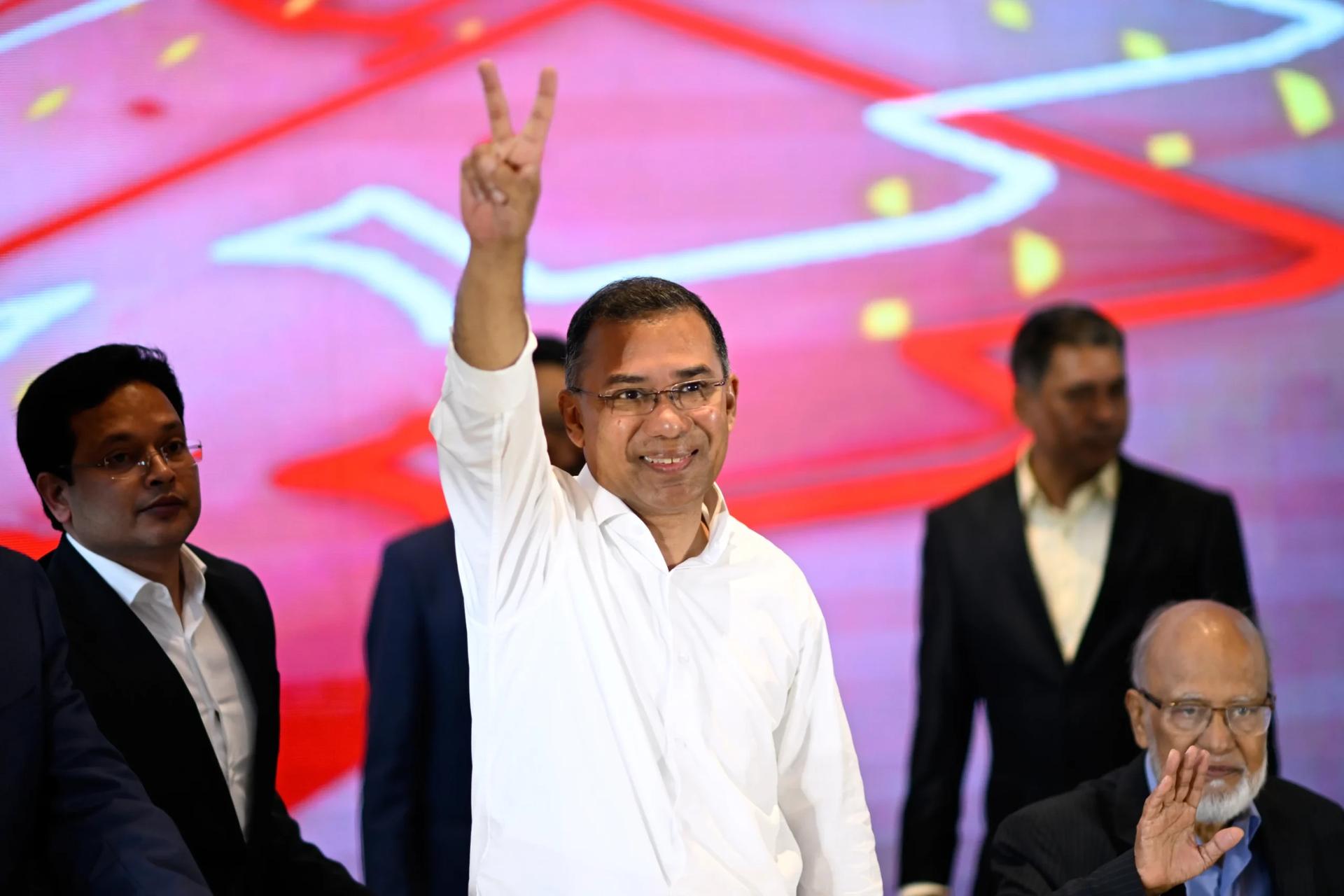
MUMBAI, India – Bangladesh’s small Catholic community is praying for a “peaceful, nonviolent, reconciliatory, and progressive mind and heart” after the election of Tarique Rahman as prime minister on Feb. 12.
Rahman’s Bangladesh Nationalist Party (BNP) won a majority in Thursday’s election. His party is a member of the 11-party alliance led by the Jamaat-e-Islami party, the country’s largest Islamist party.
It was the first election since former Prime Minister Sheikh Hasina fled the country after a student uprising in 2024. The South Asian country had been led since then by Nobel Peace Prize laureate Muhammad Yunus oversaw.
Bangladesh is a country of 170 million people, with over 90 percent of the country Muslim. Less than one percent are Christians and 8 percent are Hindus.
Cardinal Patrick D’Rozario, the Archbishop Emeritus of Dhaka, congratulated the people for a peaceful election.
“Congratulations to the BNP, who has won more than two-third majority to form the government,” he told Crux.
“Congratulations to those who have been elected as Members of the Parliament from other parties and independents who will play an important role,” the cardinal added.
D’Rozario said he wished for “justice, equity, peace and reconciliation, democratic, harmonious journey and governance to achieve the shared vision and performance.”
Bangladesh’s incoming leader said Saturday that he would work to build a more democratic country, overcoming challenges related to weak institutions after his party secured an election victory.
Rahman told reporters his priorities would be to improve law and order and handle a fragile economy.
“We are about to begin our journey in a situation marked by a fragile economy left behind by the authoritarian regime, weakened constitutional and statutory institutions, and a deteriorating law and order situation,” he said.
He is the son of former Prime Minister Khaleda Zia, who died in December. He urged unity, promising that he would not undermine the country.
“To ensure that no evil force can reestablish autocracy in the country, and to ensure that the nation is not turned into a subservient state, we must remain united and uphold the will of the people,” he said.
The BNP is one of the country’s longstanding political forces alongside Hasina’s now-banned Awami League party. Hasina has been accused of increasingly becoming authoritarian during her 15-year rule. She has been in exile in India since her ouster and has been convicted of crimes against humanity involving hundreds of deaths during the weekslong uprising.
This article includes material from the Associated Press.