MUMBAI – The vandalism of a village chapel has shaken a small Christian community in the eastern Indian state of Odisha.
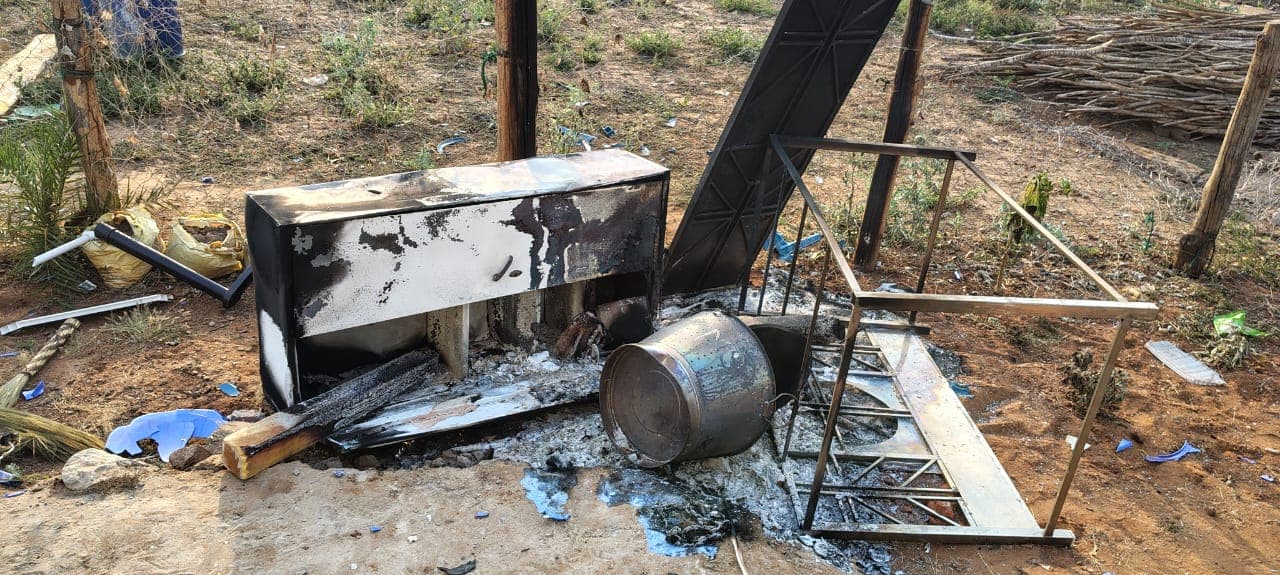
Sacred items were burned and the church building damaged in an attack on March 3 in Dengasorgi village in the Rayagada district of Odisha.
“For the Catholic Church, this is the first time something like this has happened in the diocese,” Bishop Aplinar Senapati of the Diocese of Rayagada told Crux Now.
“This is an isolated incident,” Senapati said.
The state of Odisha, however, is not a stranger to anti-Christian violence. Officially known as Orissa until 2011, Odisha state aw a wave of sustained anti-Christian violence in 2008, after Christians were wrongly blamed for the assassination of Hindu nationalist political leader Lakshmanananda Saraswati.
Three months of violence ensued, in which more than 100 Christians were killed and nearly 60,000 people were driven from their homes.
The bishop said he had personally visited Dengasorgi for a celebration only a few days before the incident. At the time, everything appeared peaceful. However, tensions reportedly developed later within the village.
“We had a celebration there on February 28. I, too, had gone, and we had the celebration and then we came away,” Senapati said.
The village itself is small, consisting of about 70 families, all belonging to tribal minorities. Among them are only three Catholic families and four Baptist families, making the Christian community a tiny minority within a minority.
Father Abed Kumar Khura, priest of the cathedral parish in Rayagada, said the attack occurred on the evening of March 3 in a mission station located about 20 miles from the cathedral.
“This is a mission station in Dengasorgi village,” Khura told Crux Now. “The Catholic families were fearful and remained indoors, terrified of the mob,” Khura said.
Senapati told Crux Now some villagers were apparently upset after a vehicle passed a sacred tribal site, desecrating the area.
Khura said a large group of tribal Hindu villagers gathered when it was roughly 7 o’clock in the evening and demanded the three Catholic families come out of their homes.
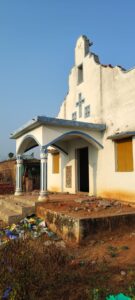
“When the families refused to step outside,” Khura said, “the crowd moved toward St. Paula Montal,” the small mission station dedicated to the nineteenth century Spanish religious foundress of an order for the education of needy children in Barcelona.
Located along the village street, the church was built in 2023 to serve the spiritual needs of Catholics in the village.
“At around 9 in the evening,” Khura said, “the mob broke open the church door and entered the building. They damaged the altar and the cross and desecrated sacred articles including the priest’s vestments, Bibles, and other religious items.”
“These were taken outside and set on fire,” Khura told Crux Now. “They even damaged the front facade of the church building.” Khura said, adding that the incident “has deeply wounded the religious sentiments of our people.”
The priest told Crux Now the cost of the damage is estimated to be ₹850,000 – or $9,250 – a gargantuan sum for the poor villagers who work for daily wages, mostly on local farms.
Acting on the advice of the bishop, the affected families filed a report with the police, though Senapati told Crux Now there was concern immediate arrests could endanger the Christian community.
“If the alleged perpetrators were taken to the police station and kept in custody,” Senapati said, “these Christian families might have their houses burnt or be chased away from the village.”
The bishop said the priority for church authorities was the safety of the Catholic families who continue to live in the village.
A police team later visited the village with church representatives to assess the situation. The Church representatives included Khura and the diocesan vicar general, Father Shanti Chandana Pani, as well as an attorney.
“When we reached the village, most of the accused were not present,” Khura said, adding that police also began verifying the legal status of the land on which the church building stands.
After repeated appeals and some effort, around 80 villagers arrived at the police station along with members of the affected Catholic families, where police heard statements from both sides.
During the inquiry, the senior police officer cautioned villagers against taking the law into their own hands and warned all parties that disagreement or even anger cannot justify violence.
In the presence of police officials, local administrators, and representatives of both communities, an understanding was reached and peace restored for the time being.
Authorities assured protection for the affected Catholic families, continued police presence in the village, and permission for Christians to continue prayer and worship.
Khura expressed gratitude to the police.
“We are grateful to the police administration for their prompt response,” he said, adding that the police presence “helped prevent the situation from escalating further.”
Khura also said the affected families remain uneasy.
“Police have assured that whenever our people call, they will be there to protect them,” he said, but acknowledged “they are under fear and anxiety.”