Allegations of Islamist interference in Catholic Church affairs in India have a significant Catholic lay organization in the far southwest of the country calling for more details from the prelate who made the claims, or else to abandon his contentions.
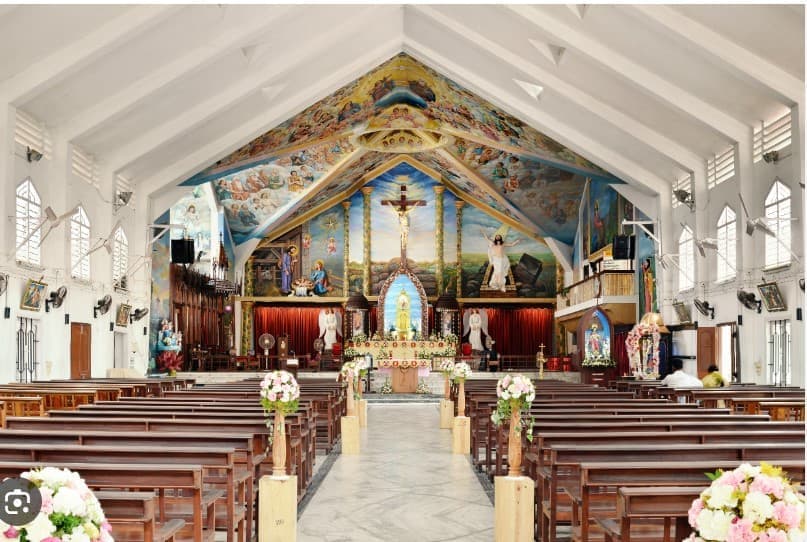
The tensions have flared in the far southwest of India, where Catholic clergy and faithful are working to heal and move forward after a protracted dispute over liturgical practice in the 4.5-million-member Syro-Malabar Church, a self-governing Eastern-rite Church in full communion with Rome, which traces its roots to St. Thomas the Apostle.
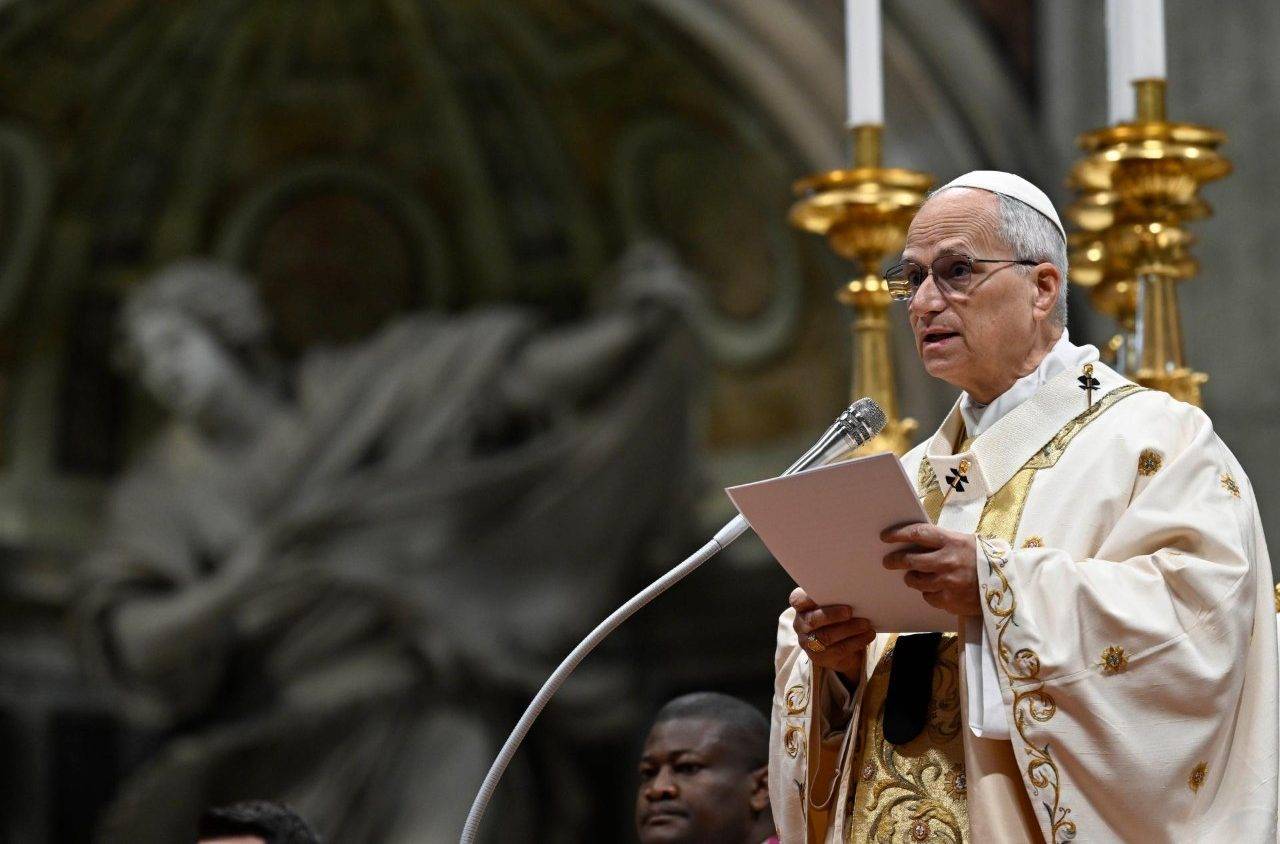
The outgoing president of the Catholic Bishops’ Conference of India, Bishop Andrews Thazhath, claimed earlier this week that there had been “malicious interference” in the liturgical dispute by a Kerala-based Islamic separatist group called the Popular Front of India, which Indian authorities had banned in 2022.
Thazhath, the leader of a major Syro-Malabar jurisdiction and the first Syro-Malabar prelate to have served as president of the Indian bishops’ conference, was replaced in a CBCI vote on Saturday.
A statement from the CBCI on Saturday announced that Cardinal Anthony Poola of Hyderabad was elected as the new CBCI president during the body’s General Meeting on February 7, 2026.
“There was malicious interference in the dispute relating to liturgical practices of the Syro-Malabar Church,” Thazhath said in comments ahead of the CBCI presidential election.
Thazhath cited “an official who raided the Popular Front,” who – Thazhath told the Church-run Deepika newspaper – had claimed “some of [the Popular Front’s] plans included creating divisions within the Syro-Malabar Church.”
“They calculated that by dividing and causing disputes within the most organized section of the Church, they could weaken it,” Thazhath told the paper.
In response, a prominent lay organization in the Ernakulam-Angamaly archdiocese called Almaaya Munnettam held a news conference in which the outfit criticizing the remarks and calling on Thazhath to provide further details or else cease his promotion of a divisive narrative.
Almaaya Munnettam said the statements were not trivial, and need to be supported if they are not to be dismissed as an attempt to sow division.
“It is a serious accusation,” said Almaaya Munnetam spokesperson Riju Kanjookkaran at a news conference on Thursday in India, “made authoritatively by the head of Christian churches in India against another prominent community.”
The spokesperson said Thazhath “has an obligation to fully disclose these matters stated in the interview given to the Deepika newspaper.”
“The vague response that ‘an officer who raided the Popular Front said so’ is not enough,” Kanjookkaran said, demanding that “the officer’s name, how Popular Front attempted this and through whom should be clarified.”
“Otherwise,” Kanjookkaran said, “this can only be seen as a deliberate attempt to create communal discord.”
Thazhath was one of the administrators appointed by Rome to resolve the liturgical dispute in the Ernakulam Angamaly archdiocese in July 2022.
The dispute pertains to an attempt to unify the style of Mass in the Syro-Malabar Church by implementing a uniform liturgy to replace the various styles prevailing in different parts of the state.
It was stiffly resisted in the Ernakulam-Angamaly archdiocese, which led to unrest and sometimes violent protests.
In late July of 2022, Pope Francis took the extraordinary step of appointing Thazhath as apostolic administrator of the chief Syro-Malabar arcdiocese – the Major Archeparchy of Ernakulam-Angamaly – leaving the Major Archbishop nominally in place but effectively sidelining him in the midst of the dispute.
Thazhath served in the administrator’s role until December of 2023, when he resigned the position with the conflict still unresolved.
A resolution to the crisis was finally reached in the middle of last year and appears largely to be holding, though there have been flare-ups reported and tensions remain high.
The New Indian Express quoted Thazhath as also expressing concern over certain organizations trying to foment division among Christians and attributing at least some of the trouble related to the implementation of the uniform mode of Holy Mass – the Holy Qurbana, as the sacrificial liturgy is called in the Syro-Malabar rite – which had been mandated in 2021 by the Syro-Malabar Synod, to the handiwork of these groups.
“Such organizations also have support of Hindu extremist groups,” Thazhath said. “There are even hardline groups among Christians,” he added. “Some politicians, too, are promoting sectarianism,” the bishop said.
Thazhath also expressed concern over declining Christian population in the country.
“What was 2.7% has now decreased to 2.3%. Catholics are only 1.67%,” he said.
Crux spoke to the secretary of the Ernakulam-Angamaly archdiocesan presbyteral council, Father Kuriakose Mundadan, who said the liturgical dispute goes back more than a century, to the establishment of Ernakulam as the chief archdiocese of the Syro-Malabar Church.
“The liturgical issue in the Syro- Malabar church is not a recent one,” Mundadan said. “It all started in 1923 when Ernakulam Archdiocese was announced as the See of Syro-Malabar Hierarchy.”
This is not the first time Thazhath has made similar claims, but he has been reluctant to offer details.
This latest round of claims came ahead of local Kerala legislative assembly elections scheduled for April of this year.