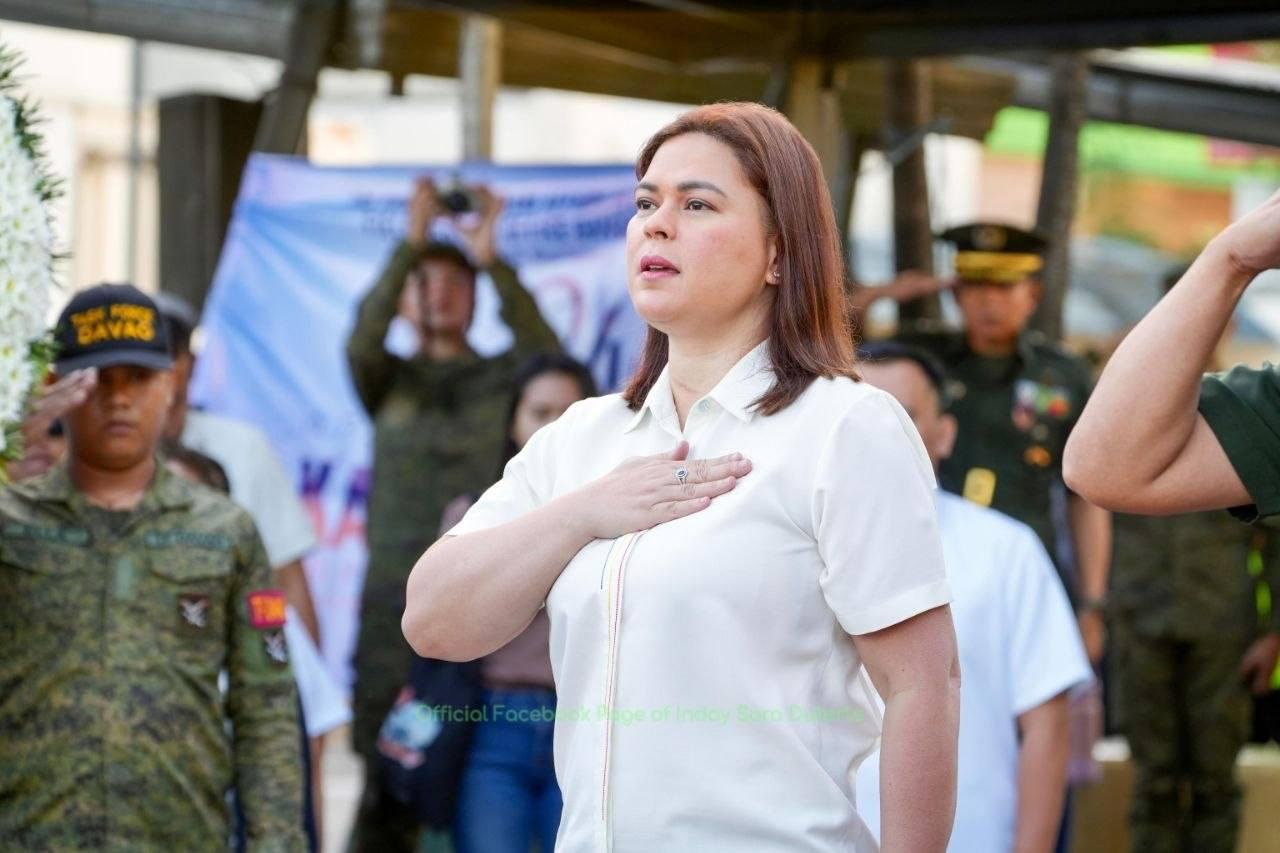
MANILA, Philippines – Filipino Evangelical leaders called for fairness in Vice President Sara Duterte’s impeachment trial and the investigations into the flood control corruption scandal involving allies of President Ferdinand Marcos Jr.
Duterte is accused of misusing about US$10 million in public funds, while allies of the 68-year-old Marcos have allegedly plundered billions of pesos meant for flood control projects.
The flood control scandal and the impeachment trial of Duterte, whom surveys predict could be president by 2028, have sharply divided this Catholic-majority nation over the past year. One point of contention is that lawmakers have doggedly pursued Duterte’s impeachment trial while allowing Marcos’ allies to get away with the flood control scam.
Duterte, 47, was recently impeached by the House of Representatives and will soon face the Senate impeachment court, which is tasked with convicting or acquitting her. If she is convicted, she will be removed from office and prohibited from running for president.
However, no formal charges have been filed against the key figures in the flood control scandal, including former House Speaker Ferdinand Martin Romualdez — the President’s cousin — fueling allegations of a double standard.
These twin controversies have prompted religious leaders — including Filipino Evangelicals, who rarely speak out on sociopolitical issues — to join mounting calls for justice.
In a statement on May 15, the Philippine Council of Evangelical Churches (PCEC) called for “transparency and integrity in all inquiries,” but emphasized that “justice must not be selective.”
“We demand the impartial investigation of every corruption offense, whether committed by ally or adversary, past or present. Selective justice is not justice at all,” the PCEC said.
In a separate statement on May 13, at least 100 individual Evangelical Christians expressed “deep anguish and indignation over the outrageous corruption scandals and cover-ups” involving top Filipino public officials. They said that “these shameless officials enrich themselves at the people’s expense.”
The Evangelical Christians then urged the Senate “to place the genuine good of the entire nation, the Constitution, and the rule of law above their selfish interests and their political and personal loyalties.”
“Let us remember that we are all accountable before God,” the Evangelical Christians said.
Like the PCEC, the Catholic Bishops’ Conference of the Philippines has issued its own pastoral letters calling for fairness in Duterte’s impeachment and condemning the flood control mess.
The head of the country’s biggest archdiocese, Archbishop Alberto Uy of Cebu, recently issued his own statement against selective justice, emphasizing that “justice must never favor only the powerful or the politically convenient.”
Speaking to Crux Now, Christian scholars noted that the twin controversies are pushing the country’s churches toward a rare moment of unity. Both lawyer Romel Bagares and seminary dean Joy Faraz — contributors to the landmark 2025 volume Faith and Politics: Filipino Evangelical Insights in Political Theology — commented on this opening for ecumenism.
Bagares said he “felt represented and relieved” upon reading the PCEC statement. He said he criticized the PCEC in the past “because of its refusal to look at the pressing issues.”
Bagares also said the twin corruption scandals provide opportunities for ecumenism.
“I understand that there are several leaders who have their own networks with other religious groups on different issues, such as peace and interreligious dialogue, so that is a basis for a common direction,” he said in an interview with Crux Now.
Bagares said the need for “human flourishing,” which involves defending the powerless and seeking a good government, is a “common framework for cooperation” among different faiths.
Faraz told Crux Now that the PCEC statement is generally good, especially because it calls for accountability and frames corruption “as a moral and theological problem” — not only political.
Faraz, however, argued that the PCEC’s stance does not go far enough. She noted that the statement fails to fully capture “that corruption is not just an individual sin” but is the result of “the deeper systemic and dynastic conditions that perpetuate the corrupt deeds.”
Regarding ecumenical cooperation, Faraz said that this “is our silver lining, our hope.” She called on religious groups to forge “a long-term commitment” against corruption, “beyond our occasional collaboration in releasing statements.”
She also admitted that anti-corruption efforts seem to remain stuck with the “religious elite,” so they “need to be brought to the grassroots.”
“We need to help the grassroots imagine beyond the only reality they have ever known — that an orderly government is possible, free education for their children is possible, and universal healthcare is possible if we elect the right people into office,” she explained.
“How do we do it? One pulpit at a time. One preaching, sermon, and teaching at a time. This is the long game, because this involves changing belief systems and worldviews,” Faraz said.