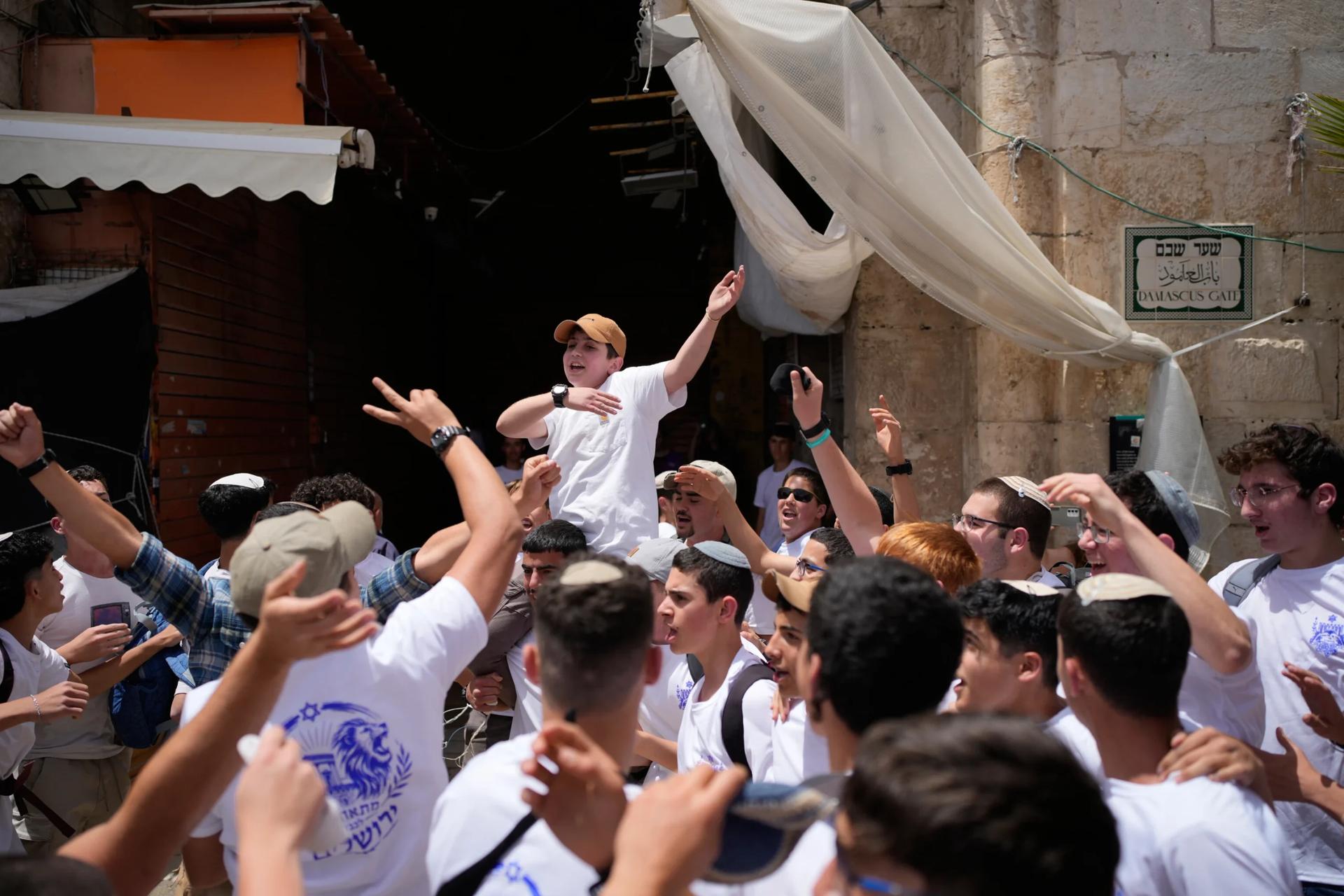
JERUSALEM — Large crowds of ultranationalist Jews gathered Thursday at the foot of Jerusalem’s Damascus Gate, chanting racist slogans like “Death to Arabs” and “May your villages burn” as they began an annual parade through the Palestinian areas of the Old City, a procession often characterized by violence.
The young, mostly male group did their chanting under the eye of Israeli police, who had barred off parts of the plaza for journalists to cover the event safely. Normally a bustling marketplace for Palestinian residents of east Jerusalem, the area was devoid of Palestinians, many of whom had barricaded themselves inside their homes and closed their shops for the day.
The march commemorates what Israel calls Jerusalem Day, marking Israel’s capture of east Jerusalem, including the Old City and its holy sites sacred to Jews, Christians and Muslims, in the 1967 Mideast war. This year it comes as the country moves toward new elections, and Israel’s hard-line government is eager to bolster support among its religious and nationalist base.
The procession often leads to violent confrontations between ultranationalists and Palestinian residents. On Thursday the crowd could also be heard chanting “Muhammad is dead,” in reference to the Muslim prophet and founder of Islam.
Yehonatan Sopher, 21, said he has been participating in the annual march since coming with his family as a child. This year, he said he came with fellow students at a Jewish seminary he attends in northern Israel, spending the night in prayer and Torah study before traveling to Jerusalem.
“Jerusalem is one of the most meaningful things in our religion,” he said. “It’s the root of everything.” He dismissed the racist chants as the acts of a small minority of participants.
Earlier in the day, Israel’s National Security Minister Itamar Ben Gvir staged another provocative visit to Jerusalem’s most sensitive holy site, the hilltop compound that is home to the Al-Aqsa Mosque, the third holiest site in Islam. Jews revere the site as the Temple Mount, where the biblical temples once stood and the holiest site in Judaism.
Ben Gvir raised an Israeli flag, singing and claiming “the Temple Mount is in our hands,” referencing a famous statement from the Israeli paratrooper commander in 1967 who announced Israeli control of parts of the Old City.
His visit threatened to inflame tensions that are rife in the city after two and a half years of near-constant war and fragile ceasefires. Four years ago, clashes between Palestinian protesters and Israeli police at the site set off an 11-day war between Israel and Hamas.
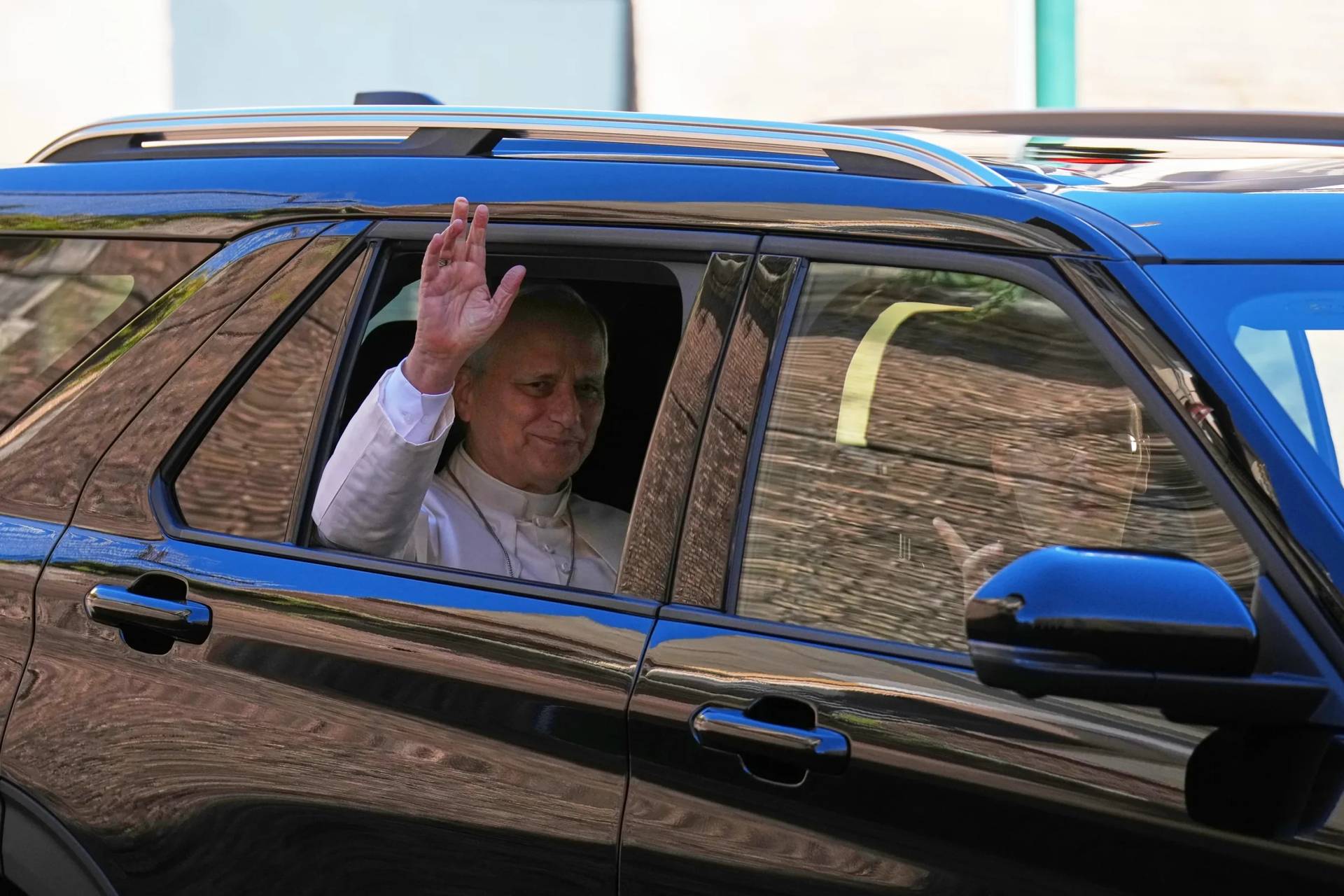
Latin Patriarch of Jerusalem Cardinal Pierbattista Pizzaballa recently told Corriere della Sera that the terrorist attacks of October 2023 and following Gaza War have increased Jewish-nationalist activities.
“Unfortunately, extremism is gaining traction in this context,” the cardinal told the Italian newspaper.
“We are seeing its consequences in certain sectors of Israeli civil society. Not everyone, of course, I would say it is not the majority,” he said.
“But the culture of contempt for everything that is not theirs, not only for everything Arab but for everything that is not Jewish, is unfortunately growing,” Pizzaballa added.
“It is a diseased germ within a society, amplified by the media, and something we must work to contain before it becomes truly alarming,” he said.
Scuffles broke out when groups of young marchers entered the Old City before the start of the march, encountering Palestinians in the Christian quarter. They threw chairs at each other. Activists from Standing Together, an Israeli-Palestinian coexistence group, moved in to try to stop the confrontation, video circulated by the organization showed.
“When we put our bodies on the line, it oftentimes reduces the violence because settlers are less willing to attack when there are Jews there or when we document what’s going on,” said Ori Shaham, the group’s international spokesperson.
Another group opposed to extremist Jewish violence called Tag Meir held an annual “flower march” before the crowds descended, handing out flowers to shopkeepers before they closed early.
Jerusalem lies at the heart of the conflict between Israelis and Palestinians. Each sees the city as a key part of their national and religious identity. It is one of the most intractable issues of the conflict and is often a flashpoint.
Israel considers all of Jerusalem to be its eternal, undivided capital. Its annexation of east Jerusalem is not internationally recognized. Palestinians want an independent state with east Jerusalem as its capital.
Crux Now staff contributed to this story.