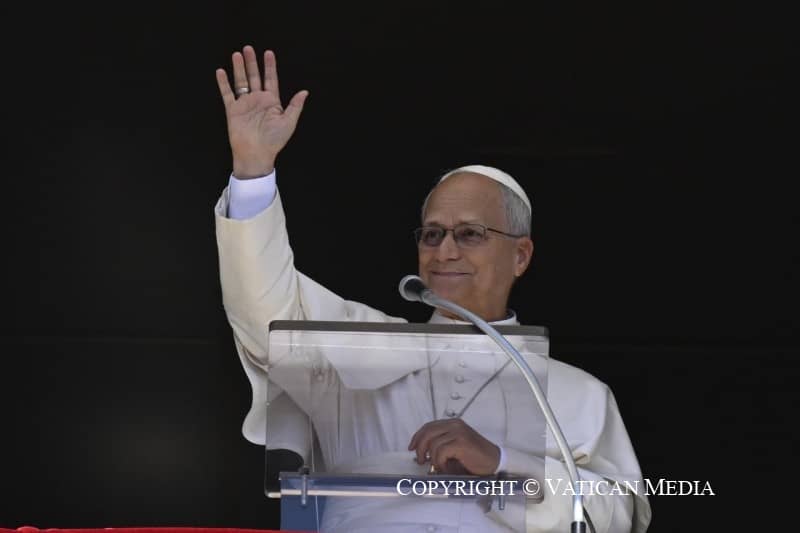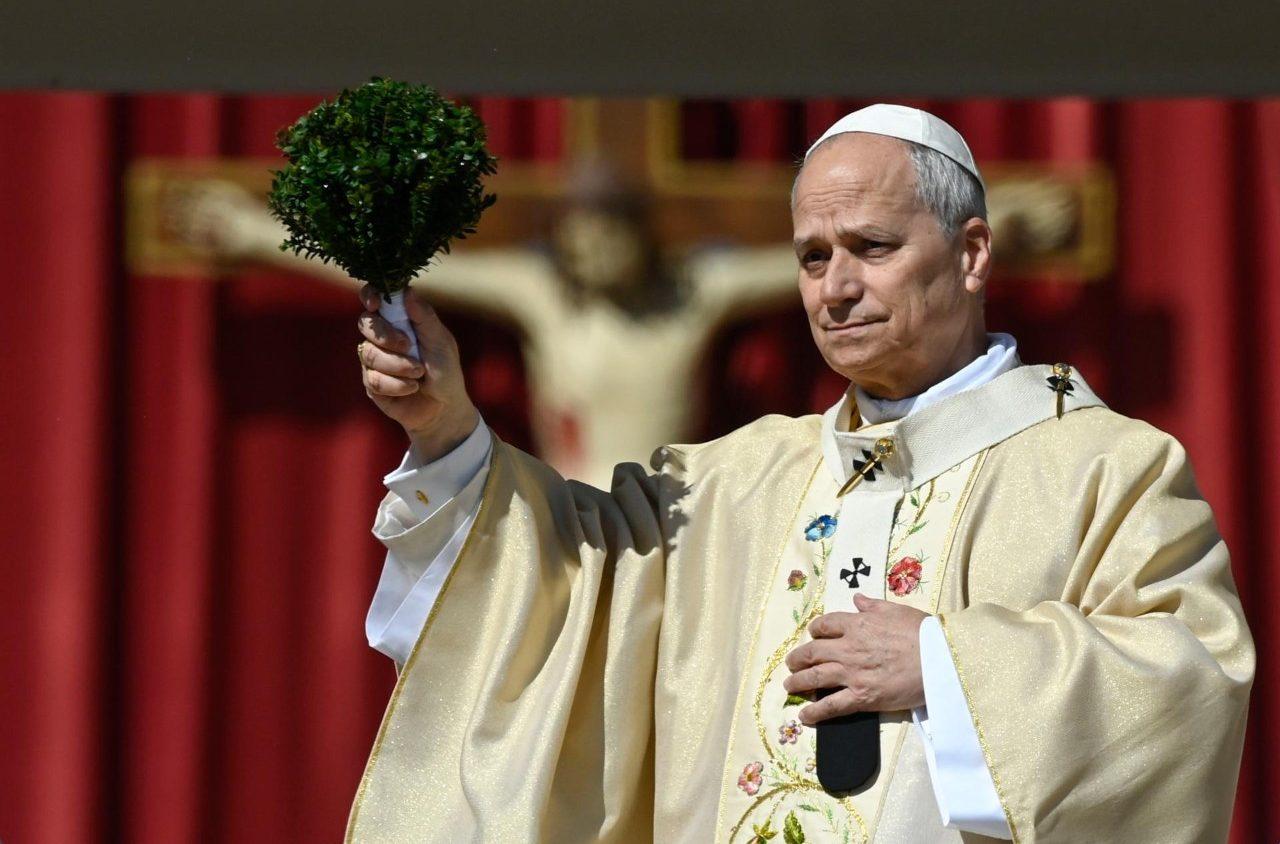
ROME – Pope Leo on his first Easter as pontiff urged the world to choose a path of dialogue and nonviolence in the face of the conflicts lacerating the world and announced a prayer vigil for peace April 11.
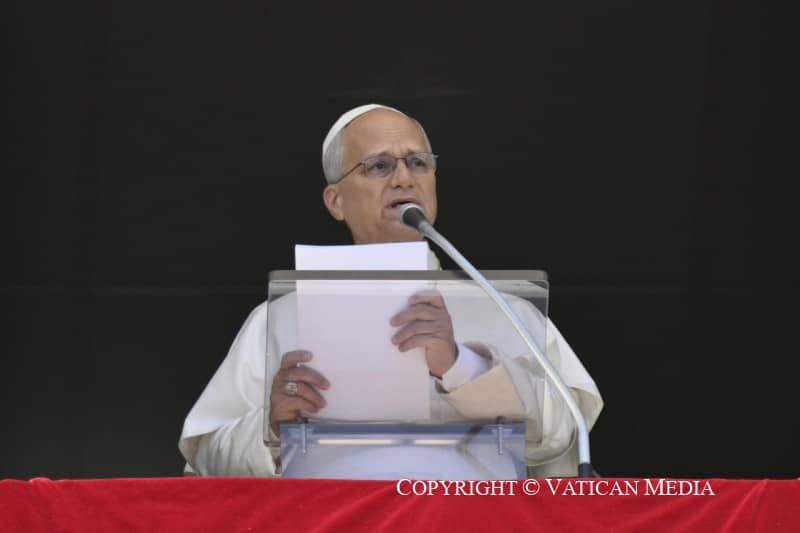
In his traditional Urbi et Orbi Easter address, Pope Leo opted not to list active conflict zones throughout the world in praying for peace, as is customary, but rather focused on the need to overcome what his predecessor Pope Francis had called a “globalization of indifference” to violence and injustice.
“In the light of Easter, let us allow ourselves to be amazed by Christ! Let us allow our hearts to be transformed by his immense love for us! Let those who have weapons lay them down! Let those who have the power to unleash wars choose peace!” he said.
This peace, he said, is not “imposed by force, but is rather forged “through dialogue! Not with the desire to dominate others, but to encounter them!”
Easter, he said, is ultimately the victory “of life over death, of light over darkness, of love over hatred.”
This victory came “at a very high price,” as Jesus was unjustly condemned, mocked, tortured, and put to death in an excruciating way, thus freeing humanity and all of creation “from the dominion of evil.”
Jesus could be victorious because he trusting abandoned himself to his father’s plan of salvation, and “walked the path of dialogue to the very end, not in words but in deeds,” he said, saying, “The power with which Christ rose is entirely nonviolent.”
“We are growing accustomed to violence, resigning ourselves to it, and becoming indifferent. Indifferent to the deaths of thousands of people. Indifferent to the repercussions of hatred and division that conflicts sow. Indifferent to the economic and social consequences they produce, which we all feel,” he said.
Pope Leo condemned what Francis had dubbed the “globalization of indifference,” saying Jesus’s death on the cross is a constant reminder of the suffering, pain, and death in the world.
In the face of the suffering and death in the world, “We cannot continue to be indifferent! And we cannot resign ourselves to evil!” the pope said, and quoted Saint Augustine, who said that “If you fear death, love the resurrection!”
“Let us too love the resurrection, which reminds us that evil is not the last word, because it has been defeated by the Risen One,” he said.
The peace Jesus offers on Easter, Leo said, “is not merely the silence of weapons, but the peace that touches and transforms the heart of each one of us!”
“Let us allow ourselves to be transformed by the peace of Christ! Let us make heard the cry for peace that springs from our hearts!” he said, and announced plans to holy a prayer vigil for peace in St. Peter’s Square Saturday, April 11, days before he departs for a 10-day tour of Africa.
As Christians commemorate Easter, “let us abandon every desire for conflict, domination, and power, and implore the Lord to grant his peace to a world ravaged by wars and marked by a hatred and indifference that make us feel powerless in the face of evil,” he said.
Pope Leo closed his address entrusting to God all those who suffer and await “the true peace that only he can give.”
“Let us entrust ourselves to him and open our hearts to him! He is the only one who makes all things new. Happy Easter!” he said.
Prior to delivering the noontime Urbi et Orbi blessing “to the church and to the world” from the central loggia of St. Peter’s Basilica, Leo celebrated Mass in St. Peter’s Square, focusing on Jesus’s victory over death and the new life he opened to believers with his sacrifice.
In his homily, he said Jesus’s resurrection “opens us up to a hope that never fails, to a light that never fades, to a fullness of joy that nothing can take away: death has been conquered forever; death no longer has power over us!”
“This is a message that is not always easy to accept, a promise that we struggle to embrace, because the power of death constantly threatens us, both from within and without,” he said.
Sin, loneliness, disappointment, or resentment can seep in, making one feel sad, tired, betrayed and rejected, like being in a tunnel with no end in sight, he said.
Death is always lurking in the world, he said, saying it is found in injustices such as “partisan selfishness, in the oppression of the poor, in the lack of attention given to the most vulnerable.”
“We see it in violence, in the wounds of the world, in the cry of pain that rises from every corner because of the abuses that crush the weakest among us, because of the idolatry of profit that plunders the earth’s resources, because of the violence of war that kills and destroys,” he said.
Easter, on the other hand, is an invitation to believers to lift their gaze and open their hearts to heaven, discovering like the women in the Gospel that “Jesus’ tomb is empty, and therefore in every death we experience there is also room for new life to arise.”
“The Lord is alive and remains with us. Through the cracks of resurrection that open up in the darkness, he entrusts our hearts to the hope that sustains us: the power of death is not the final destiny of our lives,” he said.
All believers, Pope Leo said, are called to fulfillment because they have been offered new life in Christ.
“Easter gives us this hope, as we remember that in the risen Christ a new creation is possible every day,” he said, saying Easter represents “a new beginning; it is life finally made eternal by God’s victory over the ancient enemy.”
“Let us then run like Mary Madgalene, announcing him to everyone, living out the joy of the resurrection, so that wherever the specter of death still lingers, the light of life may shine,” he said.