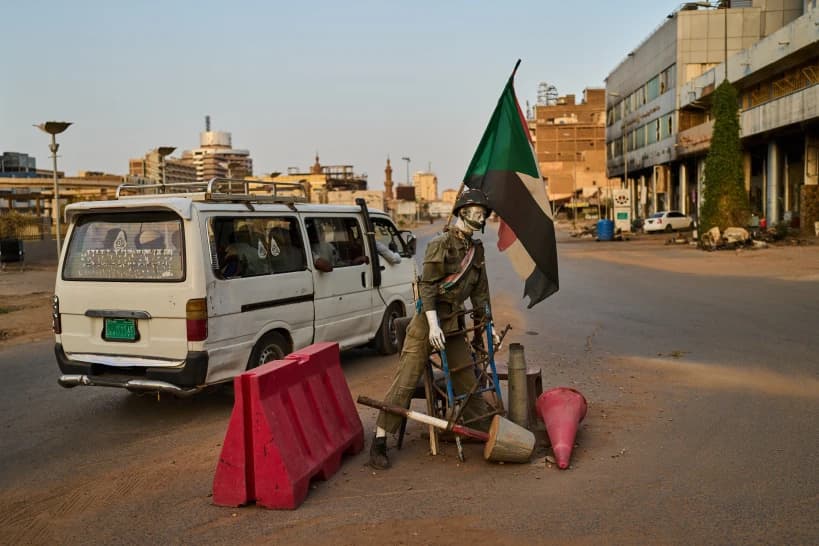
As the conflict in Sudan enters its third year, the nation faces a humanitarian catastrophe, with thousands of people killed, millions of others displaced, and critical infrastructure left in ruins.
The war erupted in April 2023 following a power struggle between the leader of the Sudanese Armed Forces, Gen. Abdel Fattah al-Burhan, and the leader of the powerful paramilitary Rapid Support Forces, (RSF) Gen. Mohamed Hamdan Dagalo, better known as “Hemedti.”
The two men had come together in 2019 to oust Sudan’s long-serving dictator, Omar El Bashir, but failed to agree on much of the post-Bashir power-sharing arrangement.
The conflict has so far left at least 150,000 people dead and more than 12 million displaced.
Yet, it’s a crisis that seems to have been forgotten by the rest of the world.
In an interview with Crux Now, Father John Gbemboyo, Pastoral and Social Communication Coordinator in the Sudan Catholic Bishops’ Conference, offers a stark assessment of the war’s evolution, discussing the rise of ethnic militias, the deep-seated mistrust fueling the violence, and the failure of international peace efforts.
He talks about food shortages and conflict-related sexual violence, and explains how the Church has remained a “field hospital” for the people, providing shelter and unity even as other aid groups evacuate.
Following are excerpts of that interview…
Crux Now: Father, as the conflict enters its third year, is there still hope among the people, or has fatigue completely set in?
Gbemboyo: Indeed, Sudan has entered its third year of conflict, which is unfortunate. Human beings have an inherent desire for a better tomorrow — another day of positive change. I believe that there is still hope among the people, even though their current circumstances are not encouraging.
With the rise of ethnic militias, is the war becoming more fragmented and difficult to contain? And what is your message to the generals regarding the suffering they are causing?
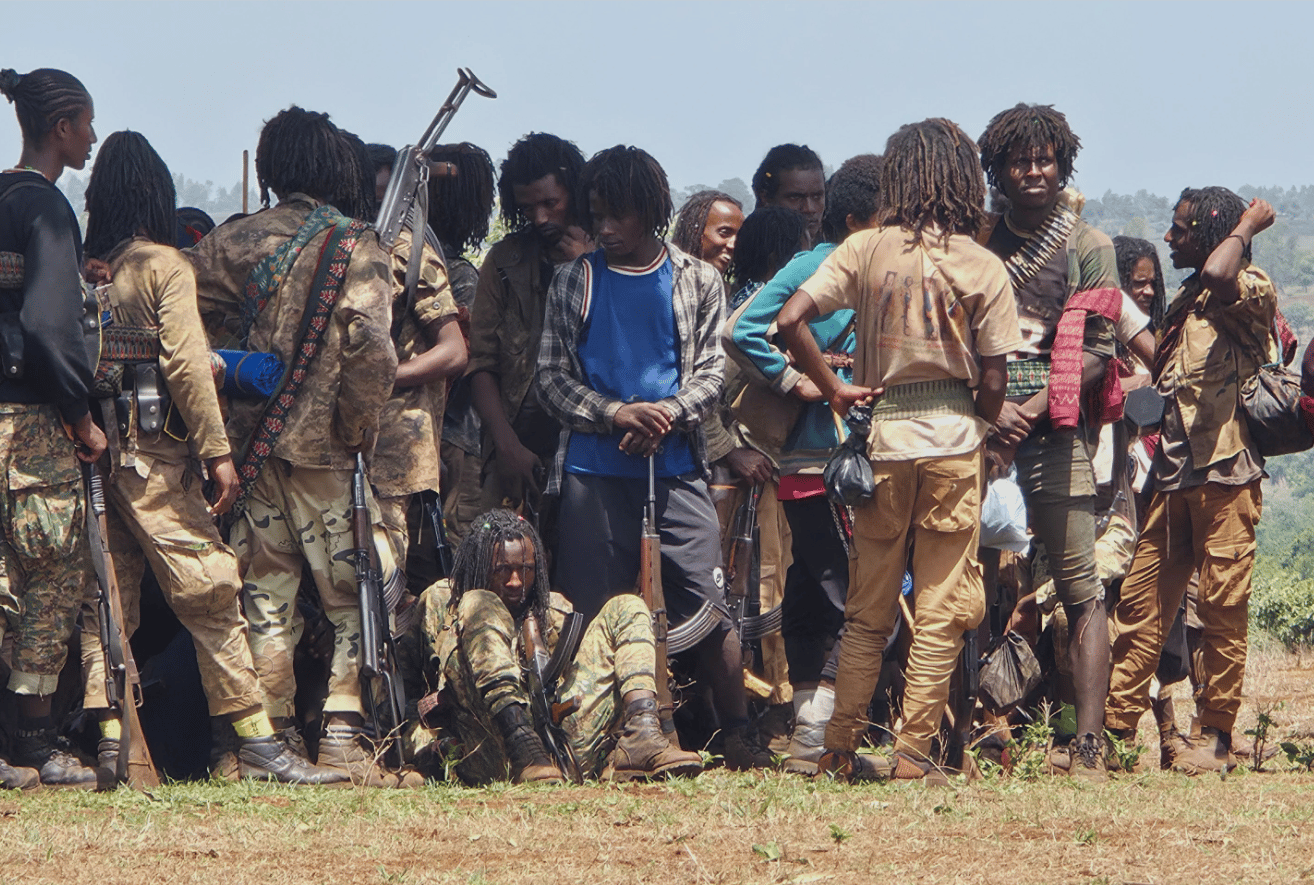
The rise of ethnic militias might have come about as a result of the politics of divide and rule, intended to weaken the population so that they remain confused about the reality. My message to the leaders remains this: let them show concern for the people, for whom each group claims to be fighting. If the basic cause is to rule the Sudanese, then it is better to be mindful of the safety and well-being of the people.
While the conflict is often portrayed as a power struggle between two generals, what are the deep-rooted historical and economic grievances that brought us to this point? To what extent is this a continuation of unresolved issues from the Bashir era and the failed democratic transition?
The history of the conflict in Sudan is a long one, and I will not go into it in detail. Where there is a lack of a good relationship between the center and the peripheries of any society—regarding decision-making and participation in the community—conflict can arise. A rise in mistrust makes it so that members of the same community are unable to negotiate. The conflict in Sudan results from such scenarios of mistrust. Unless there is a strong will to negotiate, there may be no shortcut to a stable country.
Sudan is currently facing one of the world’s largest displacement crises. Can you describe the scale of internal suffering regarding food and healthcare? How is the refugee exodus straining host communities in East Africa, and is the weaponization of aid prolonging this humanitarian catastrophe?
It is difficult to gauge the full scale of how people are suffering in Sudan due to the active conflict. The conflict is worsening the situation for the people every day in terms of food and medicine shortages, active fighting in some areas, and attacks by drones.
Movement from one area to another is limited. There are still people seeking refuge in neighboring countries as far away as East Africa. It is very difficult for humanitarian organizations to operate freely due to suspicion among the warring parties. There is an increase in cases of malnutrition and other diseases among the people who are confined by the conflict to specific areas.
We have received harrowing reports of conflict-related sexual violence, ethnic targeting, and attacks on civilians. Do you believe the combatants feel they have “impunity” to commit these atrocities without consequence, and how is that affecting the psychology of the population?
There are reports of such behaviors, specifically crimes of sexual violence and ethnic targeting. These crimes can sometimes take place during war when there is no control over the combatants. It is the responsibility of the leaders to be aware of such crimes and enforce discipline if they truly love their people.
The trauma resulting from sexual violence and ethnic targeting leaves an indelible mark on the people. Leadership among the opposing parties needs to be demonstrated to address this.
A war of this magnitude requires massive resources. How are the warring factions financing their operations, and are there external actors prolonging the conflict?
War is a channel for wasting resources in the interest of winning over the enemy. During war, one can witness the citizens of the same country fighting each other, destroying their country and community, and misusing their own resources without any concern for their people. In a war situation, there are third parties who benefit from the chaos, and Sudan may be no exception. What is needed at present is to look at the suffering of the people and gear resources toward their needs, especially toward what builds peace.
Why is a resolution proving so elusive despite numerous peace talks, and how would you grade the international community’s response so far?
For the moment, the wars in Ukraine and now Iran have overshadowed the suffering of the Sudanese people, and as such, Sudan is not given priority by the international community. There is no intermediary body persuading the opposing parties in Sudan to make peace.
There is still hope that the plight of the Sudanese will be considered important and given priority. The voices of the humanitarian agencies now in Western Sudan and other parts of the country need to be listened to by international and regional groups like the African Union and IGAD. The humanitarian agencies present on the ground are witnesses to the plight of the people; they need to be listened to and helped to care for the people.
While many NGOs have evacuated, the Church has remained a “field hospital.” Can you share specific examples of how the Church is providing shelter, acting as a mediator, and maintaining unity among the traumatized population?
The presence of the Church in Sudan is still visible, although not as widespread across the country as before due to the insecurity. Wherever the priests are present in the parishes, there are communities of displaced persons who live together and are united in their prayers, preserving unity and sharing their ideas and whatever else is available to them.
The two dioceses of Khartoum and El-Obeid have their bishops present in those dioceses with the people, and this gives the people the energy to remain together and hopeful. One cannot overlook the needs of the internally displaced persons, which include shelter, medical care, food, and a conducive environment for living. The Church is doing what it can, but it is very much overwhelmed regarding how to do more, especially in caring for the basic needs of the priests and catechists who are fully at the service of their people.
Finally, what is your prayer for the healing and reunification of Sudan?
My prayer for the healing and reunification of Sudan is that God, in His own way, touches the hearts of people of good will and the leaders to listen to the cry of their people who need peace. May those who preach human rights discover the situation going on in Sudan and try their best to come to the aid of the traumatized Sudanese communities.
War is the defeat of human ability to negotiate, but peace demonstrates the true strength of human beings. Let everyone be on the side of peace so that the true strength of peace, unity, love, and development may result in the prosperity of Sudan for all.