ROME – This has been a rollercoaster of a year, in every area of life and all across the globe, complete with seismic shifts in geopolitics and the Catholic Church itself, 12 months during which the one constant appeared to be change.
From the inauguration of a new political administration in the United States to the election of a new pope, to global conflicts, political violence, tenuous ceasefires and a celebration of papal fashion, 2025 was a tumultuous year, full of challenges and new beginnings, with reasons for both concern and hope.
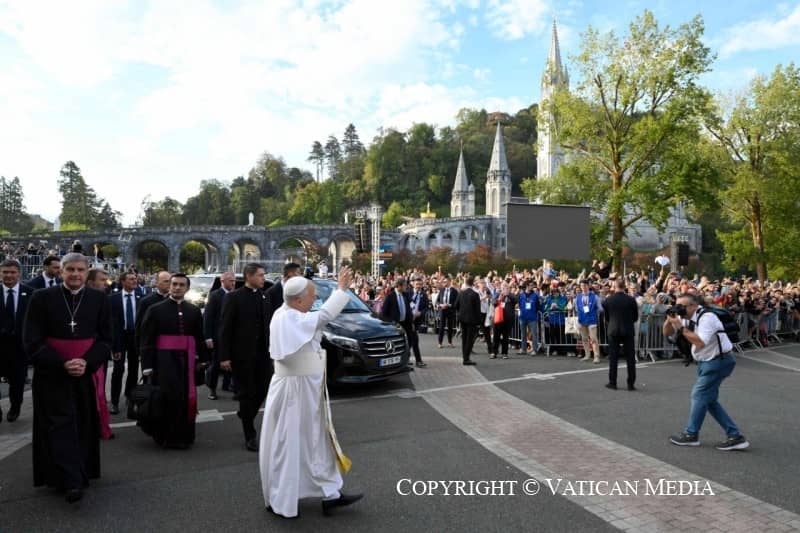
Under the heading, “a picture is worth a thousand words,” here is a look back at the images of some of the most evocative and defining moments of 2025.
January
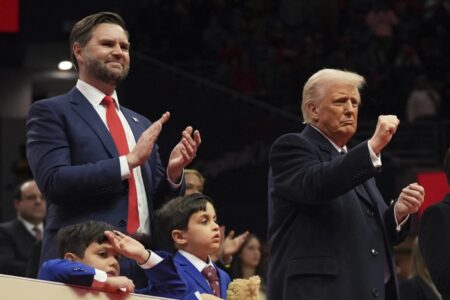
On Jan. 20, Donald Trump was inaugurated for his second term as president of the United States of America alongside JD Vance, a Catholic convert, as his vice president, setting into motion a series of actions and policies that have shaken the international community and unsettled global markets and geopolitical alliances.
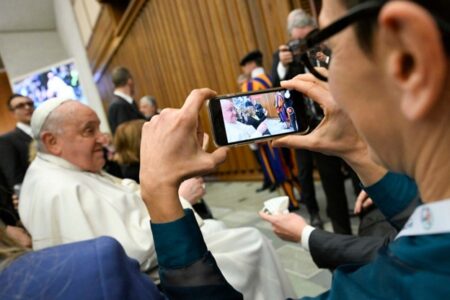
When the Jubilee of Hope kicked off with the first major event Jan. 25, dedicated to the World of Communications, it represented the promise of the jubilee year and posed significant challenges for an ailing Francis, who skipped his lengthy prepared speech and instead gave brief off-the-cuff remarks. Two weeks later, Francis would be hospitalized.
February
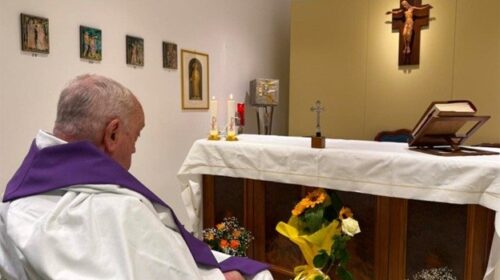
Pope Francis was admitted to Rome’s Gemelli Hospital Feb. 14. He spent 38 days there, fighting double pneumonia and a polymicrobial respiratory infection, nearly dying twice during his stay.
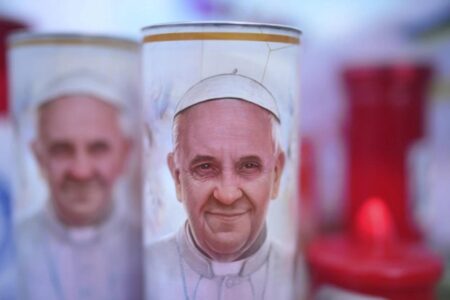
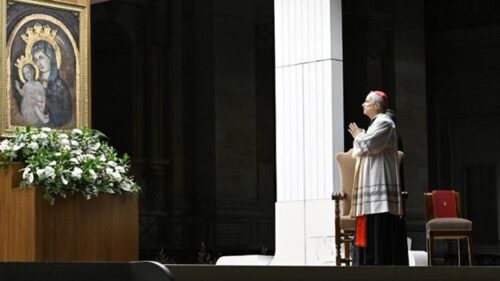
During his hospitalization, members of the Roman Curia began gathering along with the faithful in St. Peter’s Square nightly to pray the rosary for Francis’s health. The prefects of the different Vatican dicasteries led the rosary each night, including then-Cardinal Robert Prevost, who was head of the Vatican’s Dicastery for Bishops.
March
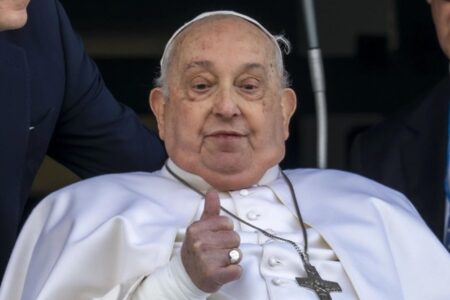
Pope Francis was discharged from Rome’s Gemelli Hospital March 23. He returned to his Vatican residence with strict medical orders of complete and total rest for at least two months.
Francis promptly ignored the doctors’ orders, resuming work almost immediately and beginning to make brief, surprise public appearances just two weeks after leaving the hospital.
April
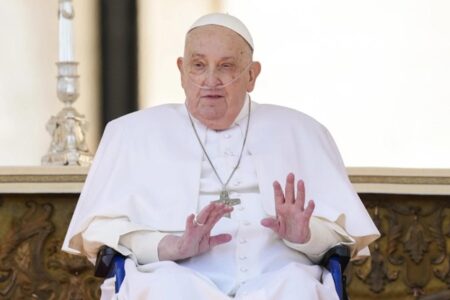
Pope Francis made his first surprise appearance in public at the end of an April 6 Mass in St. Peter’s Square for the Jubilee for the Sick and Healthcare Workers, a moment charged with powerful significance in light of his own illness and hospital stay.
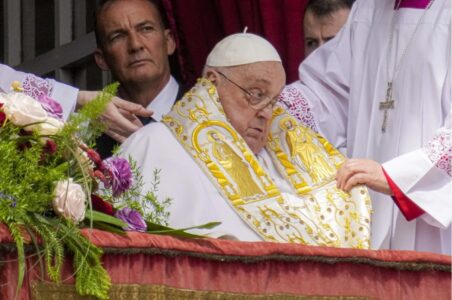
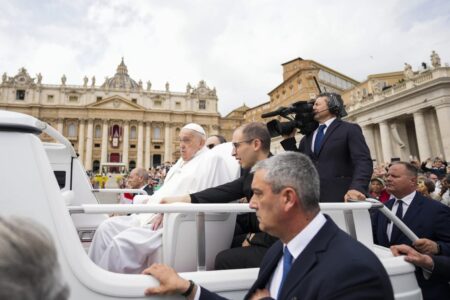
On April 20 – Easter Sunday – Pope Francis despite his ongoing fragile health delivered his traditional Urbi et Orbi blessing from the central loggia of St. Peter’s Basilica, praying for peace in the world before popping out to surprise pilgrims with what would be his final jaunt through the square in the popemobile.
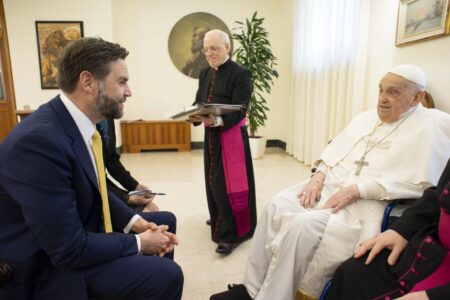
Later that afternoon, Pope Francis met US Vice President JD Vance in a previously unannounced private audience at his Vatican residence.
The day after his surprise ride through St. Peter’s Square, Pope Francis passed away at 7:35a.m. Monday, April 21, after suffering a stroke in the early hours of the morning, bringing his 12-year pontificate to an end.
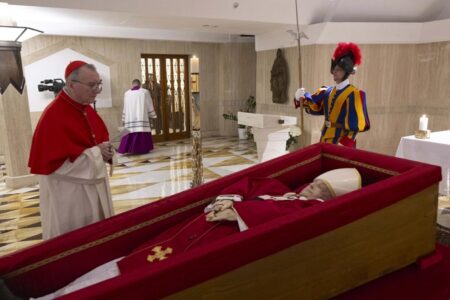
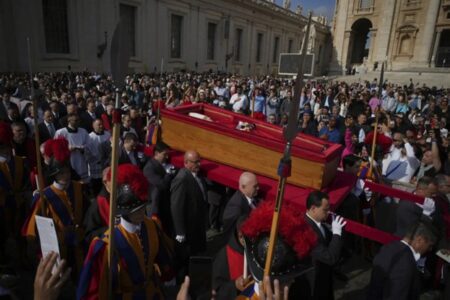
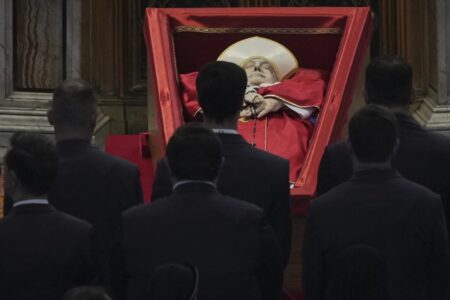
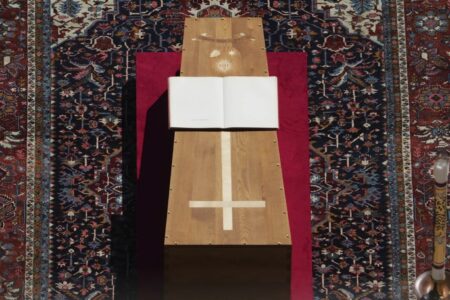
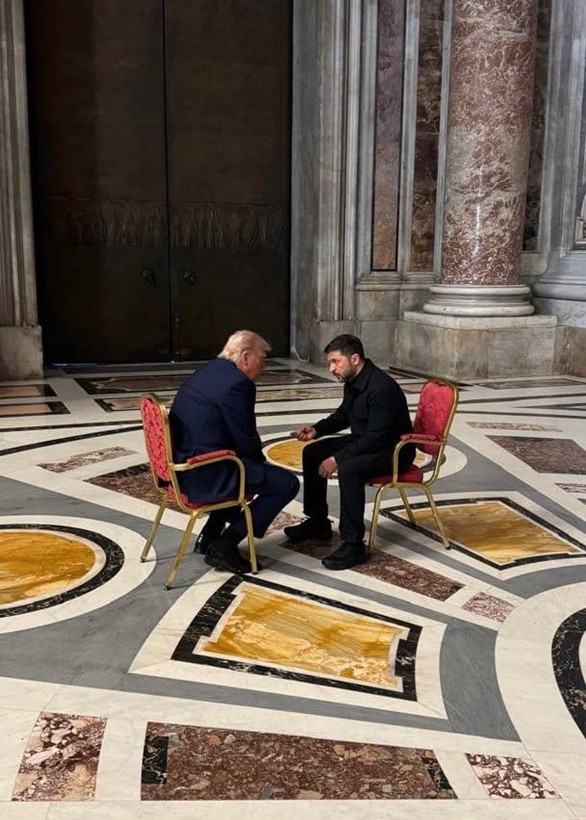
Pope Francis, the “pope of surprises,” gave the world one more on the day of his funeral Mass in St. Peter’s Square: a private, face-to-face conversation away from television cameras was had by Ukrainian President Volodymyr Zelenskyy and U.S. President Donald Trump inside St. Peter’s Basilica prior to the ceremony – a moment of great significance given a tense public encounter between the two just weeks prior at the White House.
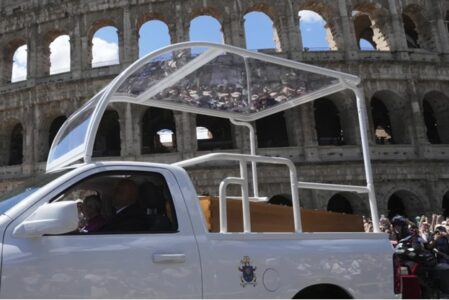
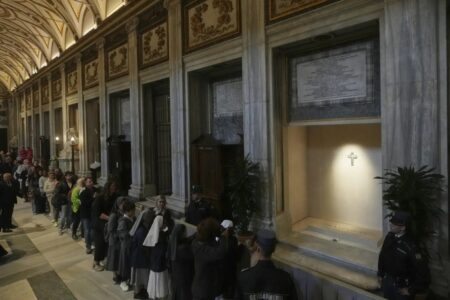
After the funeral Mass, Francis’s coffin was then taken via popemobile to the Basilica of Saint Mary Major, where he was entombed and where visitors and pilgrims continue to flock to pay their respects.
May
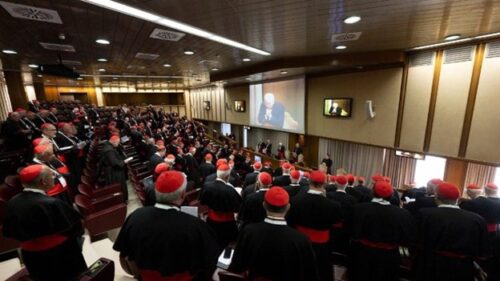
In another historic month for the world, and for the Catholic Church in particular, cardinals began gathering almost immediately after Pope Francis’s funeral, in pre-conclave meetings called general congregations, to discuss the direction of global Catholicism in the future and what qualities a candidate should have to succeed Francis in the See of Peter.
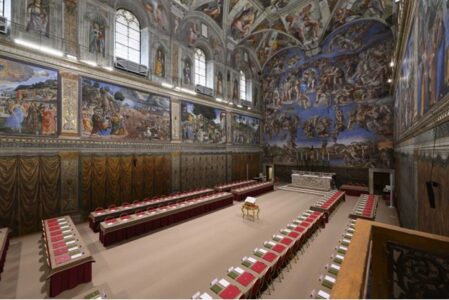
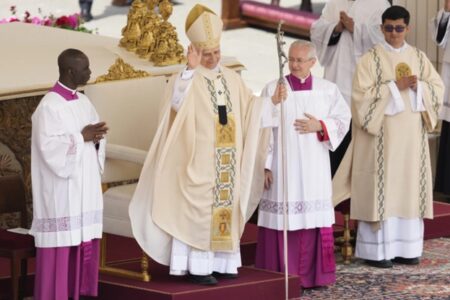
Slowly all 133 of the cardinals under 80 who voted in the conclave arrived for the meetings, gathering together for nearly two weeks of discussion before the conclave began May 7. It ended just one day later, after four rounds of balloting, with the historic election of history’s first pope from the United States, Robert Francis Prevost, who chose Leo XIV as his regnal name.
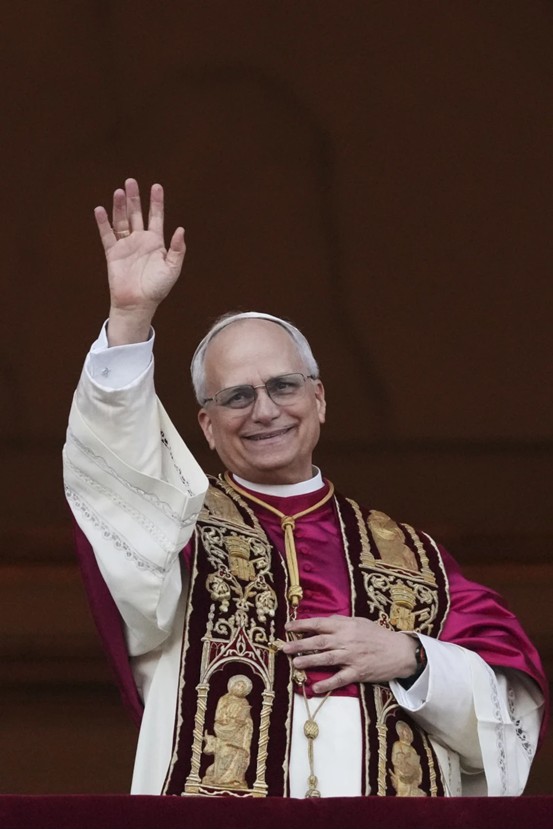
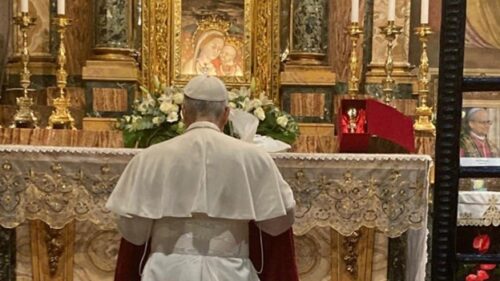
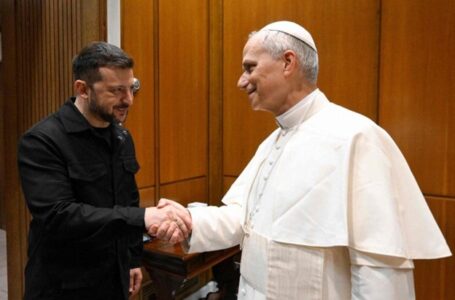
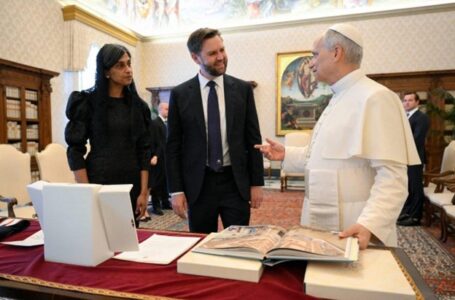
Leo, who spent much of his life and ministry as a missionary in Peru prior to coming to the Vatican in 2023 as prefect of the Dicastery for Bishops, immediately got down to business, holding private meetings with Ukrainian President Volodymyr Zelenskyy and with US Vice President JD Vance and putting his own popular piety on display with a visit to pray before the icon of Mary of Good Counsel in Genazzano, Italy.
His official inauguration Mass was held in St. Peter’s Square on Sunday, April 18, complete with a ride in the popemobile to greet faithful and pilgrims to came to Rome for the celebratory occasion.
June
The month of June was relatively quiet around the Vatican, as Leo eased into his new role and Catholics around the world started getting to know their new pastor.
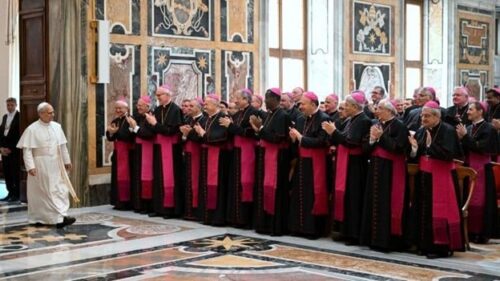
On Leo’s agenda, however, was a series of important meetings and jubilee events with his governing bureaucracy, during which he set a softer and more collaborative tone than his predecessor.
That month, he met with different groupings of the most significant curial and diplomatic bodies of the Holy See, and he also celebrated a broader Jubilee of the Holy See.
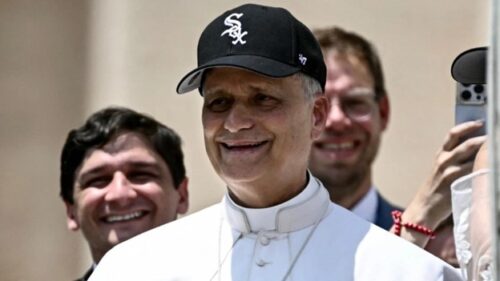
In June, Leo also got in touch with his American roots, sending a video message – his first to the United States – played at the “Chicago Celebrates Pope Leo XIV” event in his native city’s Rate Field, home to the Chicago White Sox, his favorite baseball team.
July
Pope Leo in the month of July officially reinstated a papal tradition abandoned by his predecessor, when he chose to spend his summer vacation at the papal villa in the small Italian town of Castel Gandolfo, roughly an hour’s drive from Rome.
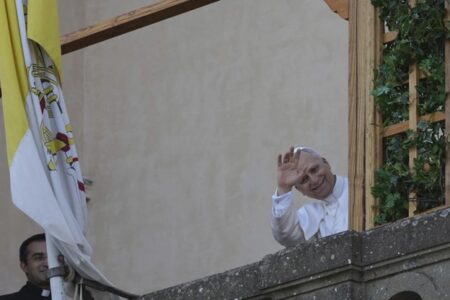
Despite being on vacation, Leo that month had several important engagements, including a second meeting with Zelenskyy, a phone call with Israeli Prime Minister Benjamin Netanyahu, another with Palestinian President Mahmoud Abbas, and a phone call to Gaza’s only Catholic parish.
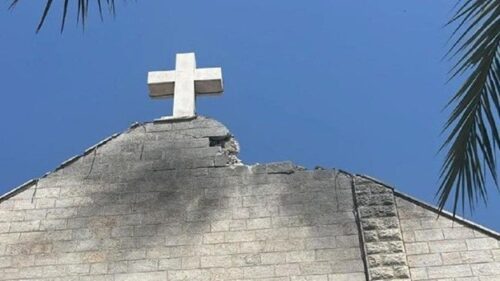
Amid a renewed Israeli ground offensive in Gaza that month, a tank struck the territory’s Holy Family church in Gaza July 17, killing three people and injuring several others, including the pastor, Father Gabriel Romanelli. Damage was also done to the parish building itself, where hundreds of families have been sheltering for months.
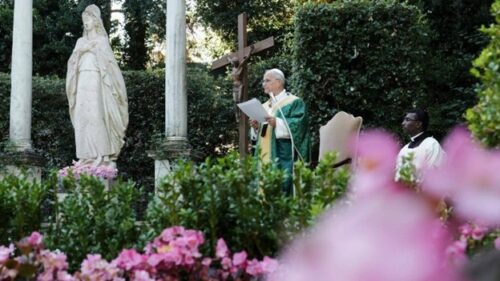
Leo XIV also put his eco-agenda front and center in July, celebrating the Mass “for the care of creation” for the first time in the papal gardens of his villa in Castel Gandolfo. The Mass was added to the Roman Missal by the Dicastery for Divine Worship and the Discipline of the Sacraments June 8 and is among several “civil needs” for which the Mass can be offered, using prayers and readings that speak of the place God’s creation holds in worship.
Later, Leo would inaugurate the eco-project launched by Pope Francis, Borgo Laudato Si’, based on the teachings of Francis’s 2015 eco-encyclical Laudato Si’.
August
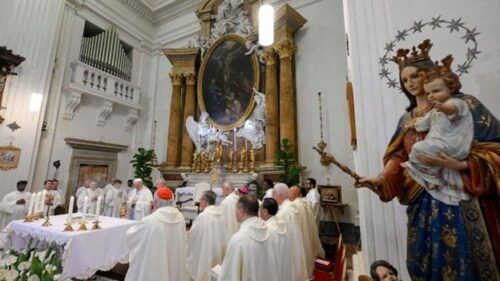
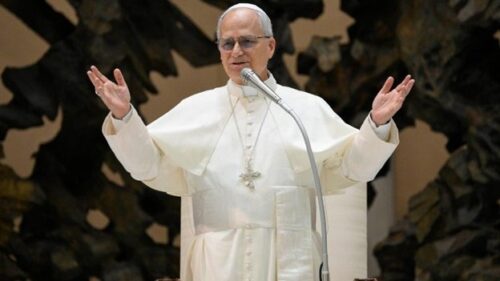
Pope Leo was mostly back in Rome for the month of August to preside over scheduled jubilee events, though he did escape to Castel Gandolfo for the feast of the Assumption on Aug. 15.
Given the tumultuous situation in Gaza and throughout the Middle East, with conflict between Israel, Lebanon and Iran also escalating at the time, Leo declared Aug. 22 a day of prayer and fasting for peace in all areas of the world ravaged by conflict.
September
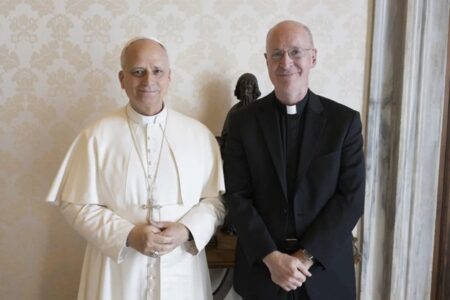
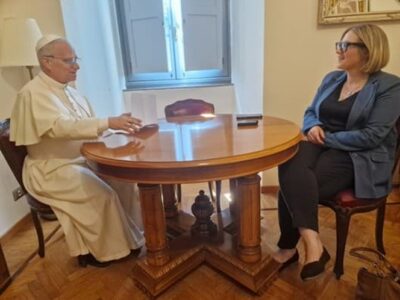
Pope Leo kicked off the month of September by sending a strong signal of his openness to sitting down and listening to everyone when he met with Jesuit Father James Martin, telling the editor-at-large at America Magazine that he would, like his predecessor, maintain an attitude of welcome and inclusion toward the LGBTQ+ community while leaving church teaching on the issue unchanged.
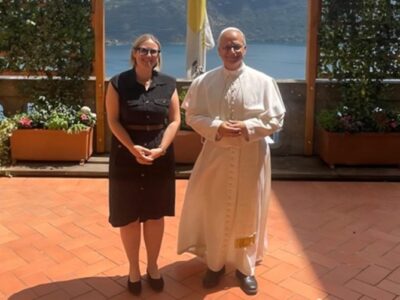
Leo XIV also gave his first interview to Crux’s Elise Ann Allen. Crux published the interview in excerpts on Sept. 14 – Leo XIV’s 70th birthday – and the which appeared in its entirety in Spanish translation as the final chapter of Allen’s biography of the new pontiff, León XIV: Ciudadano del mundo, misionero del siglo XXI.
In the conversation, Leo reflected at length on his life, vocation, missionary experience, and on the various positions he has held, as well as the conclave and his own election to the papacy. He also touched on a variety of contemporary ad intra and ad extra challenges, such as global peacemaking, U.S. politics, liturgical debates, and the role of women in the church, among other things.
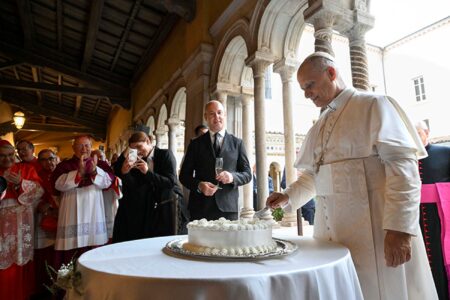
Leo marked his 70th birthday Sept. 14, receiving a special birthday cake for the landmark after presiding over the Angelus that morning, during which a group of Peruvians in Rome organized a pilgrimage carrying an image of Jesus Nazareno el Cautivo, a beloved devotion and shrine in the small town of Monsefu, which is part of his former diocese of Chiclayo. The feast of el Señor Cautivo happens to be on the same day as Leo’s birthday.
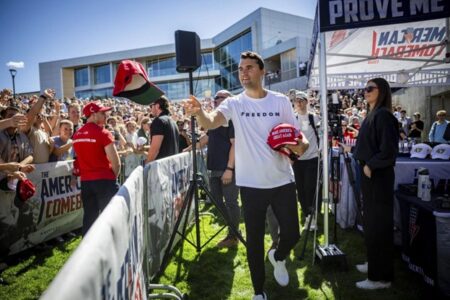
In September, the world was also shocked by the assassination of Charlie Kirk, a conservative political activist who was shot while at an event on the campus of Utah Valley University, a gruesome sign of how contentious the US political climate has become.
His murder was condemned by political leaders across the spectrum of opinion, from Trump and Vance to California’s Governor Gavin Newsom and then-mayoral-candidate Zohran Mamdani of New York, as well as various members of the U.S. church hierarchy, and Pope Leo himself, who prayed for Kirk’s family and expressed concern about political violence, stressing the need to avoid rhetoric and “manipulation” that lead to polarization, rather than respectful dialogue.
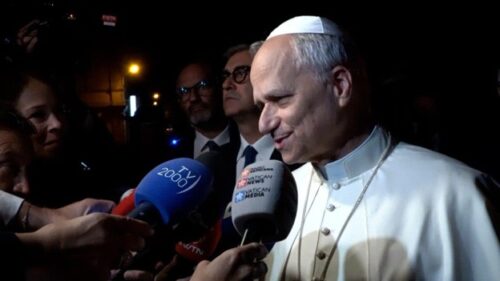
Pope Leo ruffled the feathers of American conservatives Sept. 30, when he was door-stopped by journalists waiting outside as he left his residence in Castel Gandolfo, saying abortion are both prolife issues.
He was asked about a decision by Cardinal Blase Cupich of Chicago to present US Sen. Dick Durbin (D – IL) with a “Lifetime Achievement Award” at a fundraising gala for the archdiocesan “Keep Hope Alive” immigration charity, given the Catholic Durbin’s longstanding pro-choice voting record, despite his consistent defense of migrants.
Leo in his remarks stressed the importance of not reducing one’s entire lifetime of work to one issue, and said that while the political discussions are complex, issues such as abortion, immigration and the death penalty are all pro-life issues and the church must find a way to move forward on them together in light of Catholic social teaching.
October
Pope Leo kicked off the month of October by publishing his first major document, Dilexi te, an apostolic exhortation on poverty. Begun by his predecessor Pope Francis, the document among other things examines the root causes of poverty and global inequalities, and outlines the Christian duty to care for the poor.
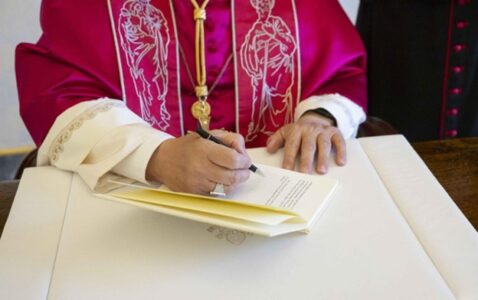
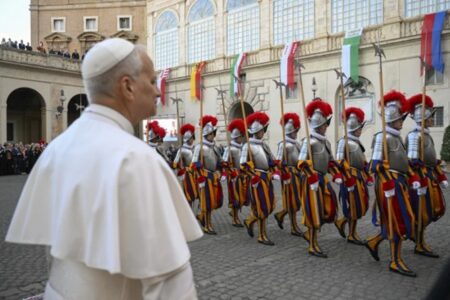
Pope Leo in October also became the first pope since Paul VI in 1968 to personally attend the swearing-in ceremony of the Pontifical Swiss Guard, which usually takes place in May but was postponed due to the conclave.
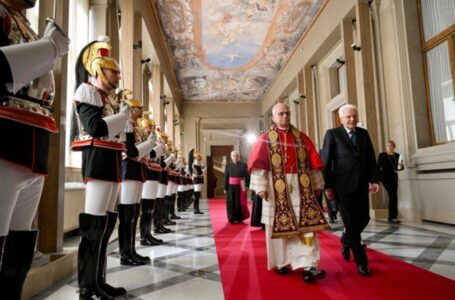
Leo made his first official visit to Italian President Sergio Mattarella in October, visiting the Quirinal Palace where Mattarella resides. In a speech on the occasion, he called for the care of migrants and creation, condemned low birth rates in Europe, and appealed for a strengthening of multilateralism.
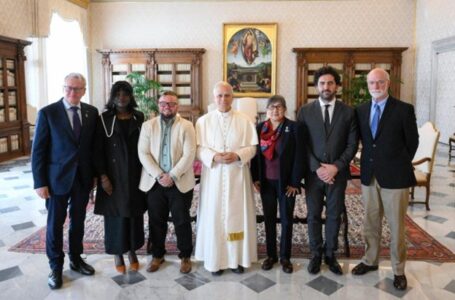
He also held his first meeting with victims of clerical abuse and abuse-prevention advocates, welcoming the board of the Ending Clergy Abuse organization, marking not only his first meeting with survivors and advocates, but also the first-ever meeting between a pope and a global advocacy group for survivors of clerical abuse.
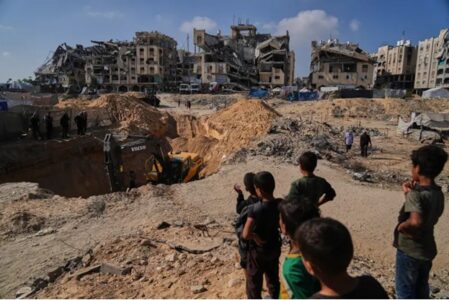
In October, a ceasefire agreement was struck in Gaza which was tenuous from the outset and remains fragile. The agreement, however, marked a significant step in the peace process, for which Leo has repeatedly advocated since taking office in May.
November
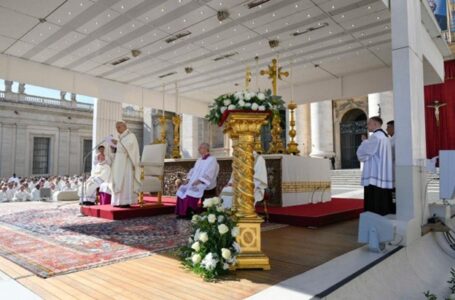
In the month of November Pope Leo declared Saint John Henry Newman a Doctor of the Church, giving him one of Catholicism’s most prestigious titles and touting him as an example intellectual sanctity during a Mass for the Jubilee of the World of Education.
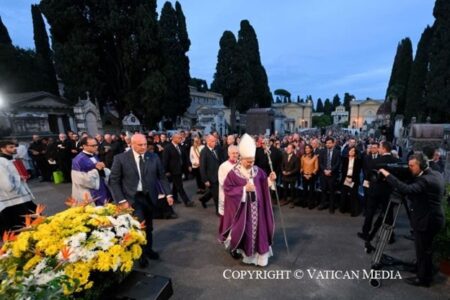
He also celebrated Mass for the souls of the departed at Rome’s Campo Verano cemetery on Nov. 2, All Souls Day, marking his first visit to a Roman cemetery as pope.
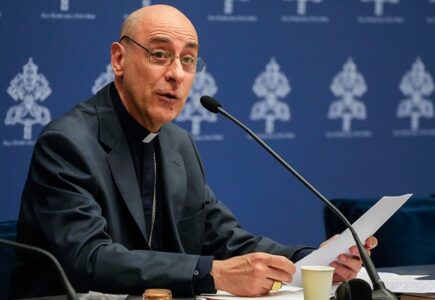
In November the Vatican’s Dicastery for the Doctrine of the Faith (DDF) also published a document on the Catholic understanding of the Mother of God, most notably discouraging use of the title, Co-redemptrix, a favorite among many ardent Marian devotees.
The decision was heavily criticized by Catholics who favor use of the title, and Fernandez later clarified that the title is acceptable for private devotion but will not be used in official Vatican documents or in the liturgy.
Shortly after, the DDF again made news with the publication of another document, Una Caro: In Praise of Monogamy, condemning polygamy, a major issue facing the church in Africa, and upholding the church’s teaching on marriage as a monogamous union between a man and a woman.
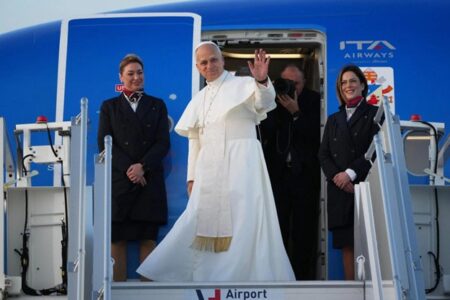
On Nov. 27, Leo departed Rome on his very first international trip as pope, traveling to Turkey to commemorate the 1700th anniversary of the Council of Nicaea before moving on to Lebanon, the second leg of a journey originally planned under Francis.
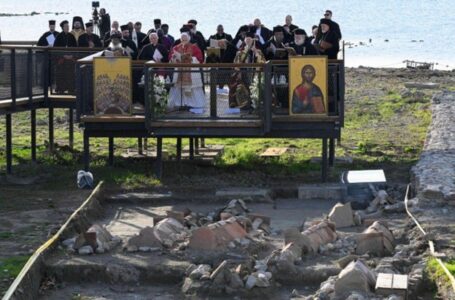
December
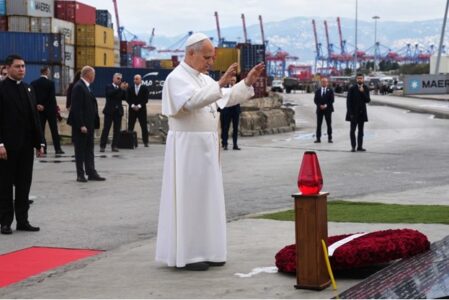
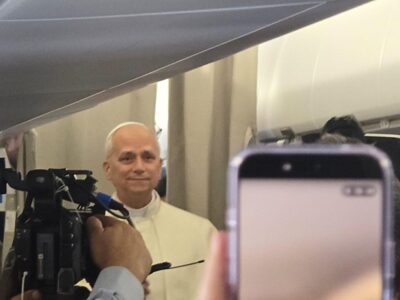
Pope Leo’s December saw him first in Beirut, where he met with national civil leaders, local pastors and religious, interfaith leaders in the region, and young people. He also made a moving visit to the site of the 2020 Beirut Port Explosion before celebrating Mass and hopping on his return flight to Rome.
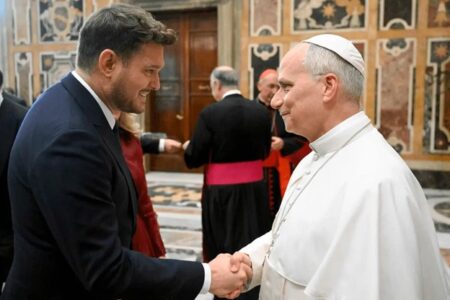
Early in the month, Canadian music icon Michael Bublé performed at a Christmas concert attended by Pope Leo, singing hit classics such as “L.O.V.E.” that the pontiff himself sang along to, and taking requests, including one from Leo himself, who asked Bublé to sing the Ave Maria.
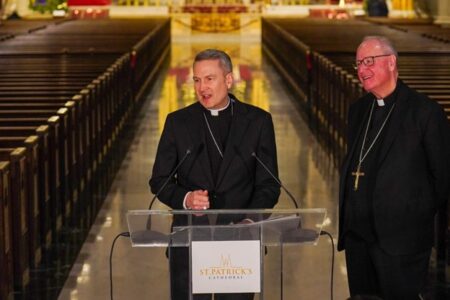
On Dec. 18, in one of his most significant episcopal appointments so far, Leo replaced Cardinal Timothy Dolan of New York, naming Ronald Hicks of Joliet in Illinois as his successor, signaling a clear change in tone, but also a nod for balance and a preference for prelates who occupy the increasingly narrow center ground in a contentious political climate.
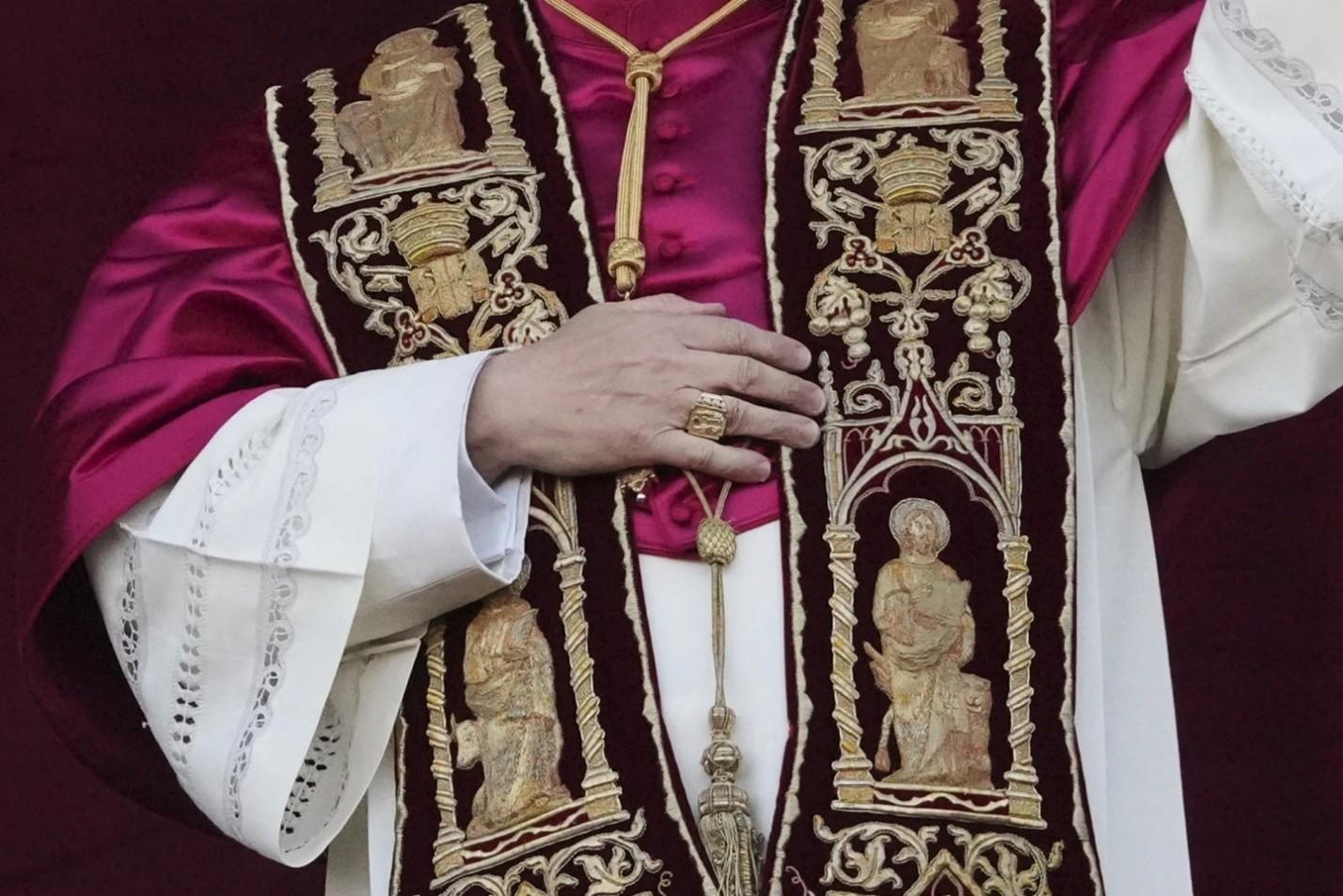
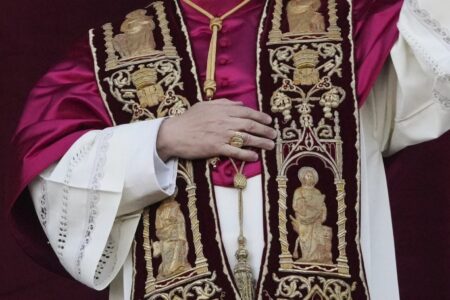
For his classic and delicately embroidered liturgical vestments, and for his decision to use the traditional papal garb including the papal mozzetta red cape – eschewed by his predecessor Francis, who preferred a simpler look – Pope Leo also made Vogue Magazine’s best dressed list for the top 55 most stylish individuals of the year.
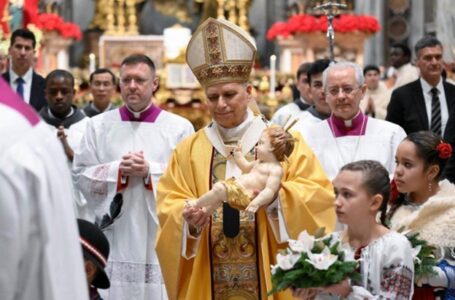
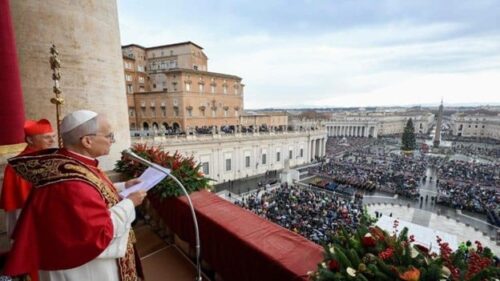
Pope Leo also celebrated his first Christmas as pontiff, presiding over Masses on Christmas Eve and Christmas Day and giving the traditional Christmas urbi et orbi blessing “to the city and to the world.” The polyglot Pope Leo XIV also brought back the tradition of offering Christmas greetings in various languages.
*Elise Ann Allen and Christopher R. Altieri contributed to this piece