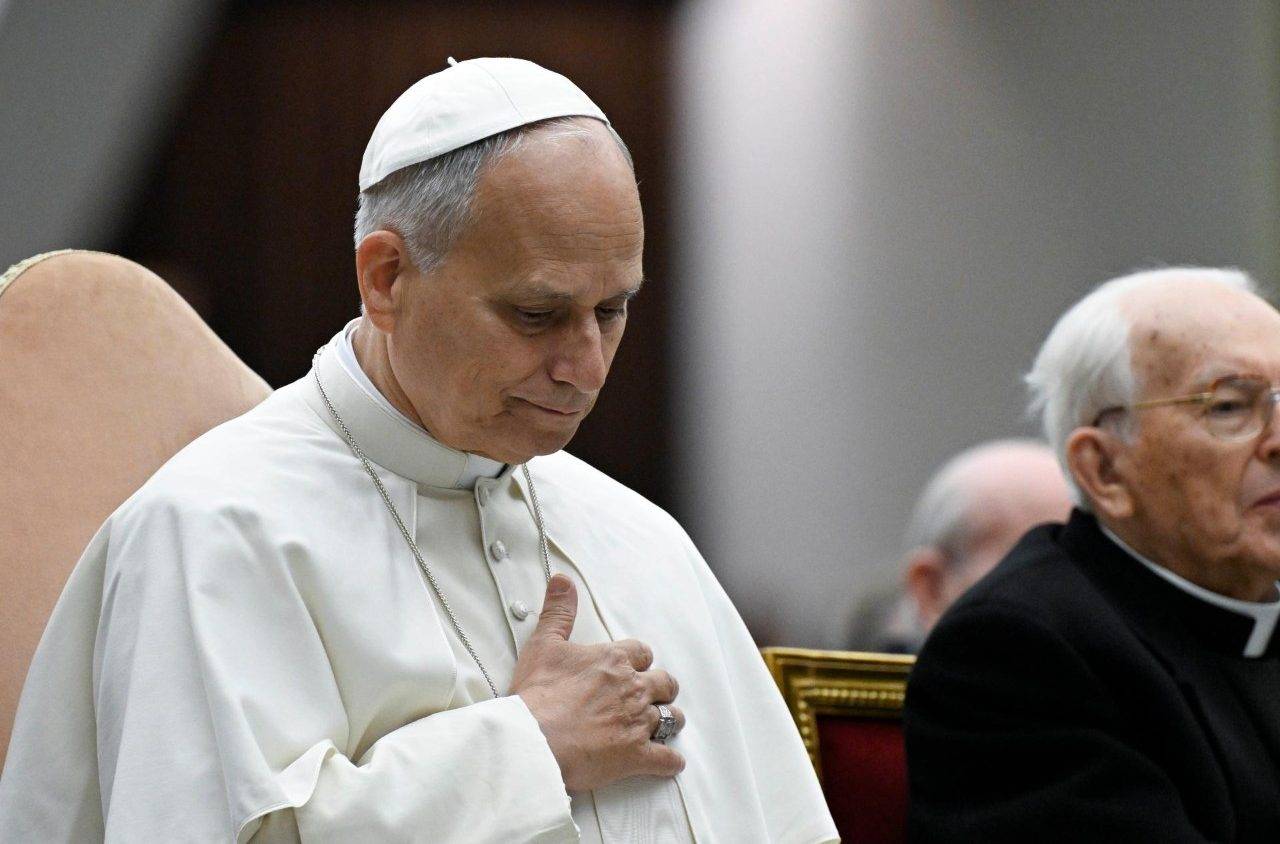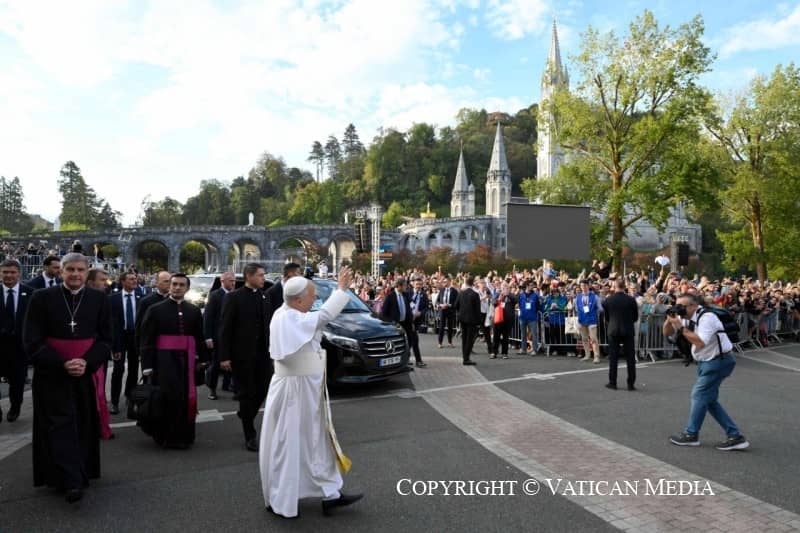
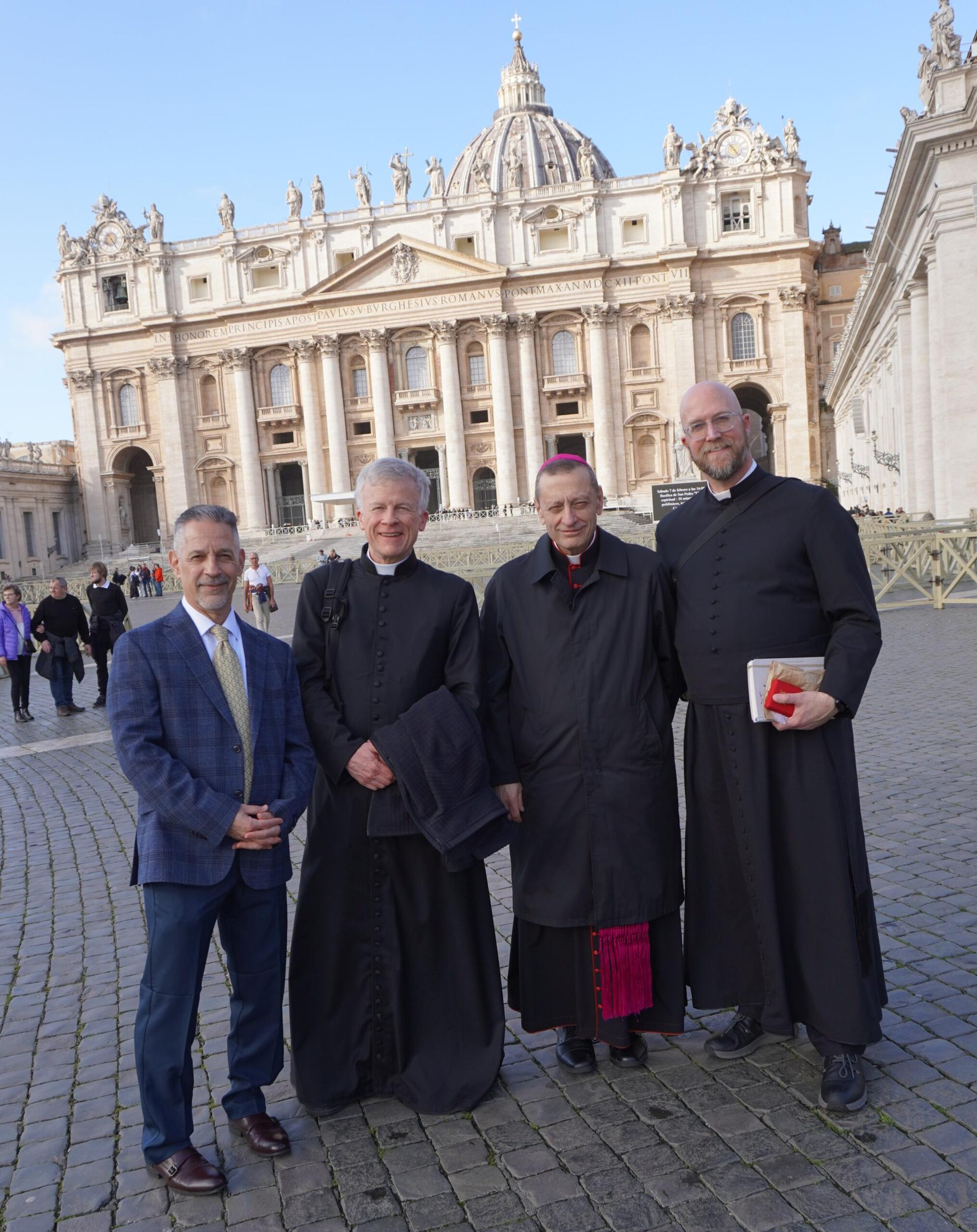
Pope Leo XIV received a delegation on Friday from Courage International, a major international apostolate dedicated to accompanying persons who experience same-sex attraction.
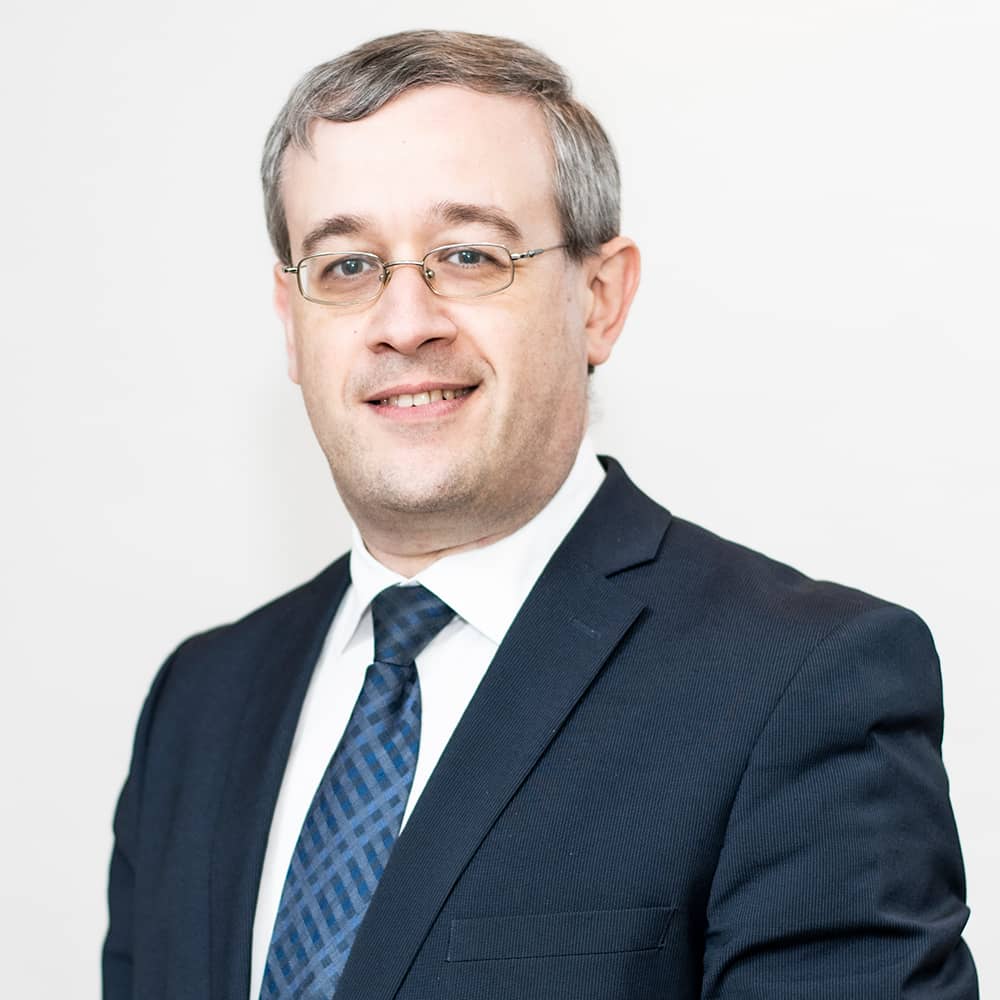
Led by Bishop Frank Caggiano of Bridgeport, CT, who chairs the Courage International Episcopal Board, the delegation included Father Kyle Schnippel of the Archdiocese of Cincinnati, who heads the Courage International Executive Board, Courage executive director Father Brian Gannon of Bridgeport, and 31-year Courage member Angelo Sabella.
A press release from Courage International called the audience a “momentous occasion” for the organization, one that “affirms the peaceful joy of the staff and members of Courage who seek to grow in holiness through living the truth in love.”
The audience was a long time coming.
Courage was founded in 1980 in New York and has since grown to more than 160 chapters in 15 countries.
The U.S. Conference of Catholic Bishops has praised Courage – and the companion ministry to family members of persons who experience same-sex attraction, enCourage – and has highlighted the work of the apostolates as “ministries whose principles are in accord with Church teaching.”
Each individual chapter anywhere in the world, however, needs the express permission of the local bishop, who invites the apostolate and appoints chaplains to lead it in his diocese.
“Courage has been working on getting a papal audience for over 13 years,” Courage International’s associate director, Father Colin Blatchford, told Crux in an exclusive interview on the eve of the event.
Bishop Mark Seitz of El Paso told Crux he had spoken to Pope Francis about the apostolate in September of 2024, but Francis was already in ill health and would pass in April of the following year, before a meeting with him could be arranged.
Courage International works in a delicate and difficult area of ministry, especially in cultural spaces that prize radical autonomy and radically autonomous construction of personal identity.
“The message of Courage is that we’re all called to be saints,” Blatchford said. “Your orientation really doesn’t matter in the end,” he said.
“We have five goals,” Blatchford said of the Courage approach, “good example, prayer, dedication, fellowship, support” in living chaste lives according to Church teaching. “Those are important,” he said, “and they kind of keep us on the rails, but the essence of what Courage does is to accompany people in becoming saints.”
Blatchford told Crux the spirituality of St. Francis de Sales, Bishop and Doctor of the Church (patron of journalists, writers, and the Catholic press), is a key to the Courage approach.
“[St. Francis de Sales] is known for never having a cross word for anybody,” Blatchford said.
“He always spoke the truth,” Blatchford also said, in a way that constantly conveyed his “true willingness to be with anybody at any point.”
“He believed every person – not just the religious, not the priest, not the pope, but every person – is supposed to be a saint,” Blatchford said.
Courage founder Father John Harvey – an Oblate of St. Francis de Sales – brought that spirituality to his pastoral ministry, honing his practice for decades before he founded the first Courage chapter.
“Father Harvey had been doing this work for 20, 30 years before he founded Courage,” Blatchford said.
Blatchford also acknowledged how misunderstanding and even a degree of diffidence, if not suspicion, is part and parcel of the work, especially in a cultural climate that makes consensus regarding ministry and outreach to people with all sorts of different struggles difficult to achieve.
“If something is said directly about us, then we’re happy to clarify it,” Blatchford said. “We’re not going to go after somebody else or tell them they’re wrong,” he said.
Blatchford said the work of Courage is “to go and to be with people who are suffering and try and lead them to Christ.”
“That’s what we’re going to do,” he said, “and that’s what we’re going to concern ourselves with.”
Follow Chris Altieri on X: @craltieri