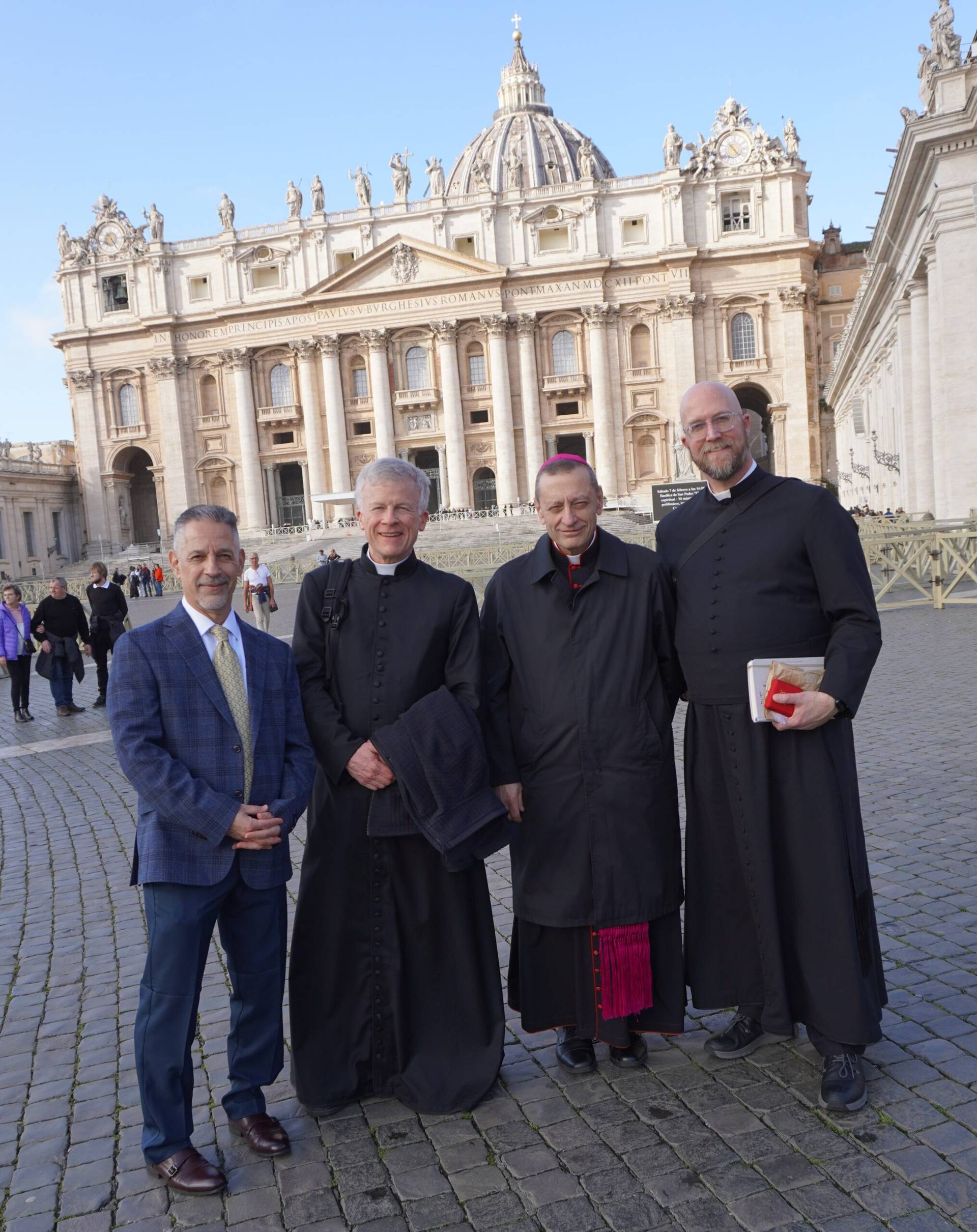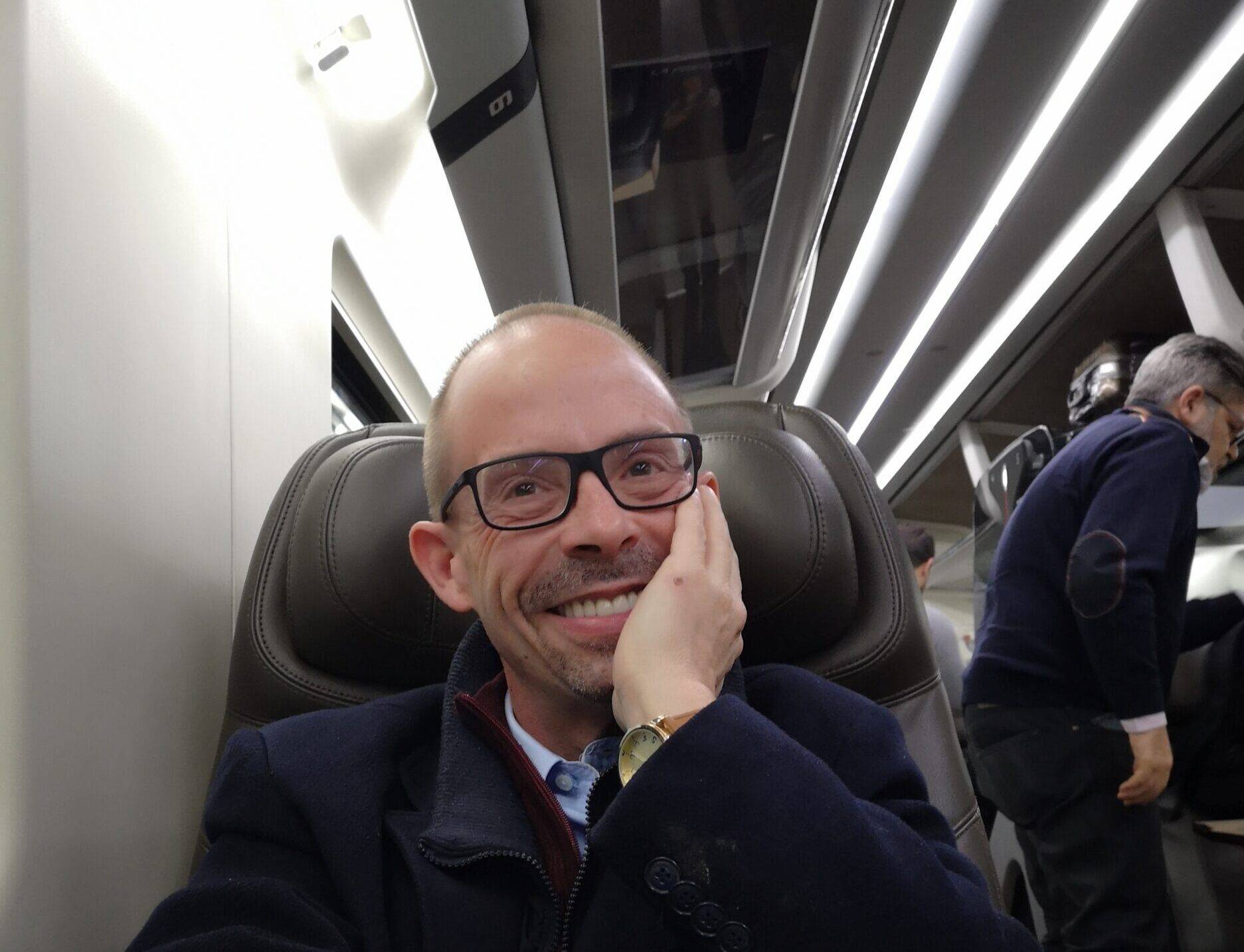
Friends, colleagues, and regular Crux readers will know that my husband, John L. Allen Jr., has been battling cancer for some time, and has largely been absent from the site this year as he underwent treatment and fought for recovery.
It is with great sadness and a heavy heart that I convey, nearly four years after his diagnosis, that John lost his battle with cancer on Thursday, January 22, 2026, and is now resting in the arms of God, free from the pain and discomfort that he lived with for so long.
While words often fail in these moments, I want to offer a few words of thanks:
First, to our friends and community who have accompanied us throughout this journey, especially the past year. You have supported us with the sacraments, prayers, visits, meals, advice, rides to and from the hospital for treatment, and no small amount of chocolate and wine, but most importantly, with your presence, including a call system to ensure that I wasn’t alone at the end. We simply could not have gotten through this without you, and I will never have adequate words to thank you for the love and support you provided when we needed it the most. I’m convinced more than ever that authentic friendship is an image of the divine, because we certainly saw God in new and powerful ways in and through each of you.
Second, a big thanks to the doctors and healthcare professionals at the San Camillo Forlanini, Spallanzani, Salvator Mundi, and Pio XI hospitals and health clinics who treated John, not just his illness, with kindness and humanity over these past few years. Thanks also to Sant’Egidio’s ICare and the Antea Foundation teams who cared for John in his final days – you made one of life’s most difficult transitions bearable, and I will forever be indebted for the attentive and human care you showed not just to John, but to myself.
Third, thanks to all Crux readers: You are the reason we do what we do. John was passionate about his job, he loved being a vaticanista, but he was also passionate about you, his broader Crux community, some of whom have followed his impressive career for decades. You challenged him and made him think, and he loved that – he loved hearing your thoughts and answering your questions, because it kept his finger on the “Catholic pulse.” During this time, you have accompanied John and myself with love and concern, writing frequently to ask about his health, sending notes to assure us of prayers, and offering positive reinforcement online. This made us both feel loved and accompanied, and I want you to know how very much it meant to John.
Ezra Pound in his 81st Canto said, “What thou lovest well remains, the rest is dross/ What thou lov’st well shall not be reft from thee/ What thou lov’st well is thy true heritage.”
In that sense, John’s greatest “heritage” is not his legendary career, the prestige of the Crux website, or even the titanic impact he has had on journalism and the way the Catholic Church is understood and perceived in the world. It is the people he loved: it is me, our friends, our colleagues, and all of you. John’s greatest gift to the world was not his incredible and unparalleled mind, but it was his big and generous heart. Everyone who was blessed enough to call themselves John’s friend bore witness to his gift for friendship, his limitless self-giving, and his insatiable desire to help and empower others whenever and however he could. If he loved you, there were no lengths to which he wouldn’t go to help you or simply make your life easier. I hope that with his passing, the world will look back not just on his lifetime of impressive professional accomplishments, but more so, his personal ones.
John’s biggest lessons
As we mourn John’s passing and reflect on the outsized impact he had, I want to leave you all with two bits of advice that John lived by and which made him the person so many respected, as a man, and as a professional:
1) Be gracious. In a world where anger and contempt often dominate our interactions with others, John would always say, “Just be gracious. I have never regretted being the more gracious party in a dispute, but I’ve often regretted being the more reactionary.” Being gracious to him, in a dispute or not, wasn’t a matter of biting his tongue or a superficial way of blowing off others, it was part of his character. If the world were to put this personal code of his into practice, it would be a very different, and much more human place.
2) “Never reduce someone to their worst moment.” John lived by this motto. In many ways, it’s what gave him his sterling reputation for maturity and fairness. He would always give people the benefit of doubt and chose to interpret their words and actions through the kindest and most generous lens possible. For John, no one was the sum of their worst flaws and failures. He’d often say that people are a “package deal,” a mixed bag of their gifts and weaknesses, and that the best aspects of a person almost always overshadow the worst, so choosing to look at the totality of a person was always a healthier, and more real approach in the end. He treated people like who they were at their best, no matter what, which is a quality I hope many will emulate.
There are many more things I could list, but these two aspects are the most fundamental attitudes that made John ‘the adult in the room’, as he was so often, and so aptly, called. I hope they will remain a lasting part of his legacy, not as something to look back on, but as something that can transform the future.
The meaning of hope
As I close this note, I can’t help but reflect on the fact that John’s passing came just after the close of the Jubilee of Hope. The jubilee year, for us, was spent enduring the most difficult and trying phase of John’s illness. It was agonizing, but at the same time beautiful. We learned that hope is not a superficial wish that everything will get better, or that painful circumstances will change, but it is an attitude and perspective with which to live life that is chosen and which matures the more it is embraced. In the spirit of “where sin abounds grace abounds all the more,” the same can be said about hope. Where pain and suffering are present, so is hope, and it is present everywhere: in the love and generosity of those around us, and in the many little signs and blessings God sends to assure us that we are not alone.
Hope is not empty, and it does not disappoint when things don’t go our way or when God doesn’t answer prayers the way we want; in fact, it is precisely in those moments that hope holds its most precious meaning, because they challenge us. They force us to dig deep, to look beyond ourselves to God, remembering that his design for our lives is one of love, and it is far bigger than our limited understanding. As cliché as this is to say, Christian hope ultimately lies in the fact that we have been offered eternal life. The Jubilee of Hope was a potent reminder of this, and I am so humbled and grateful that after being reminded of this so clearly during the jubilee, John now gets to bask in that beautiful and mysterious gift to which we all aspire.
Looking to the future
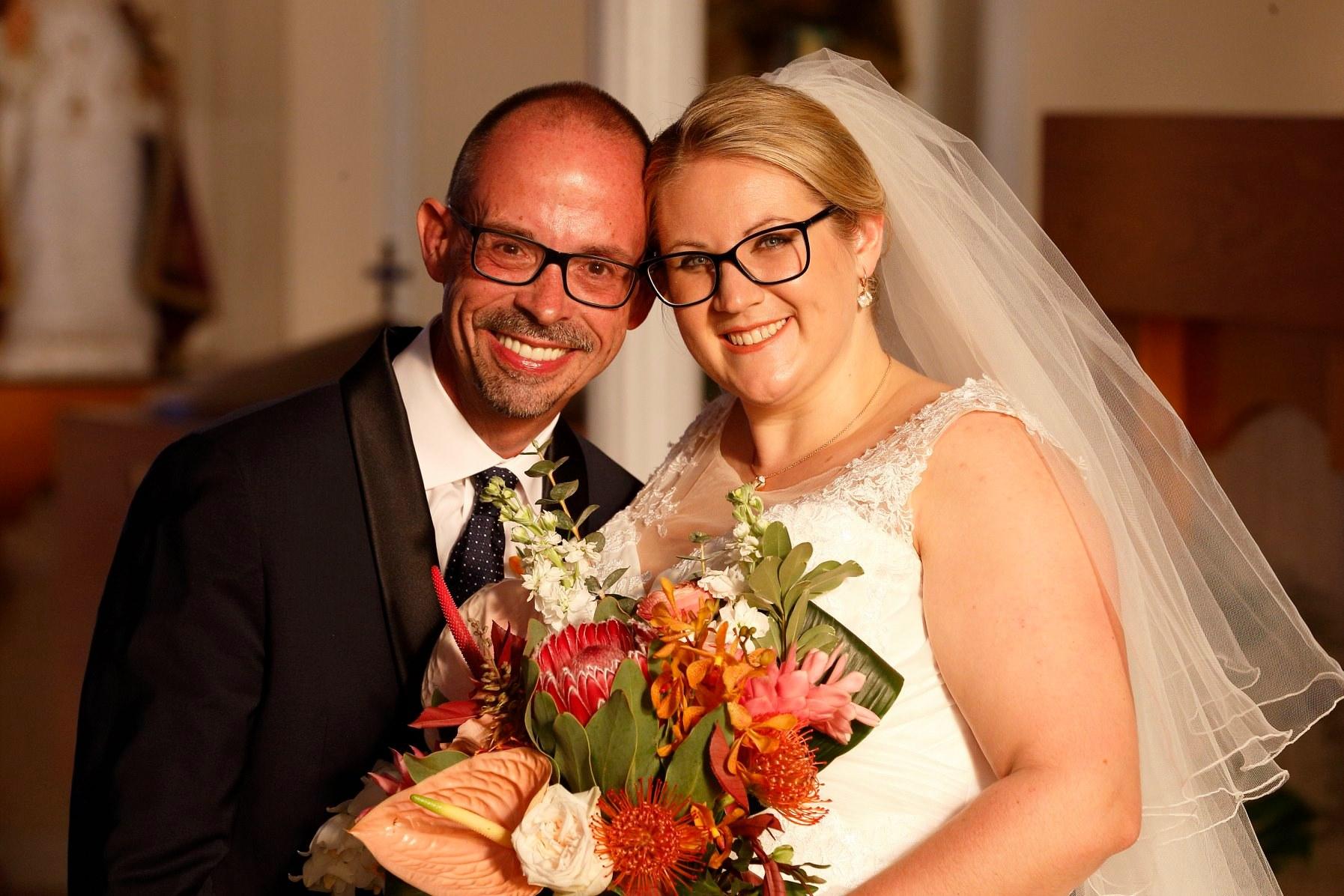
John and I were married in Key West, Florida, where you hit Mile 0, which marks both the beginning of Highway 1 in the United States, and the end. For us, when we were married in the minor basilica of Saint Mary, Star of the Sea six years ago, it was a highly symbolic location for both of us: it marked the end of one phase of life, and the beginning of another; the end of one form and understanding of love, and the beginning of a new love entirely.
In that sense, right now I find myself standing right back there at Mile 0: this moment marks both the end of one phase of my life, and that of Crux, but the beginning of something new entirely; something painful but forged in hope and which I believe, while difficult, is opening to a bright and wonderful future. Thank you for making this journey with us.
The funeral will be broadcast live on the YouTube channel of the Parish of Sant’Eugenio on Jan. 26 at 3pm Rome (9am EST), allowing participation from a distance.
You can access the live stream at the following link:
https://www.youtube.com/live/qm7XfhTM8sQ
The connection will be available shortly before the beginning of the service.